Turkish steel industry leaders have warned that global overcapacity and a wave of protectionist measures risk fragmenting the steel market, and have called for fairer treatment.
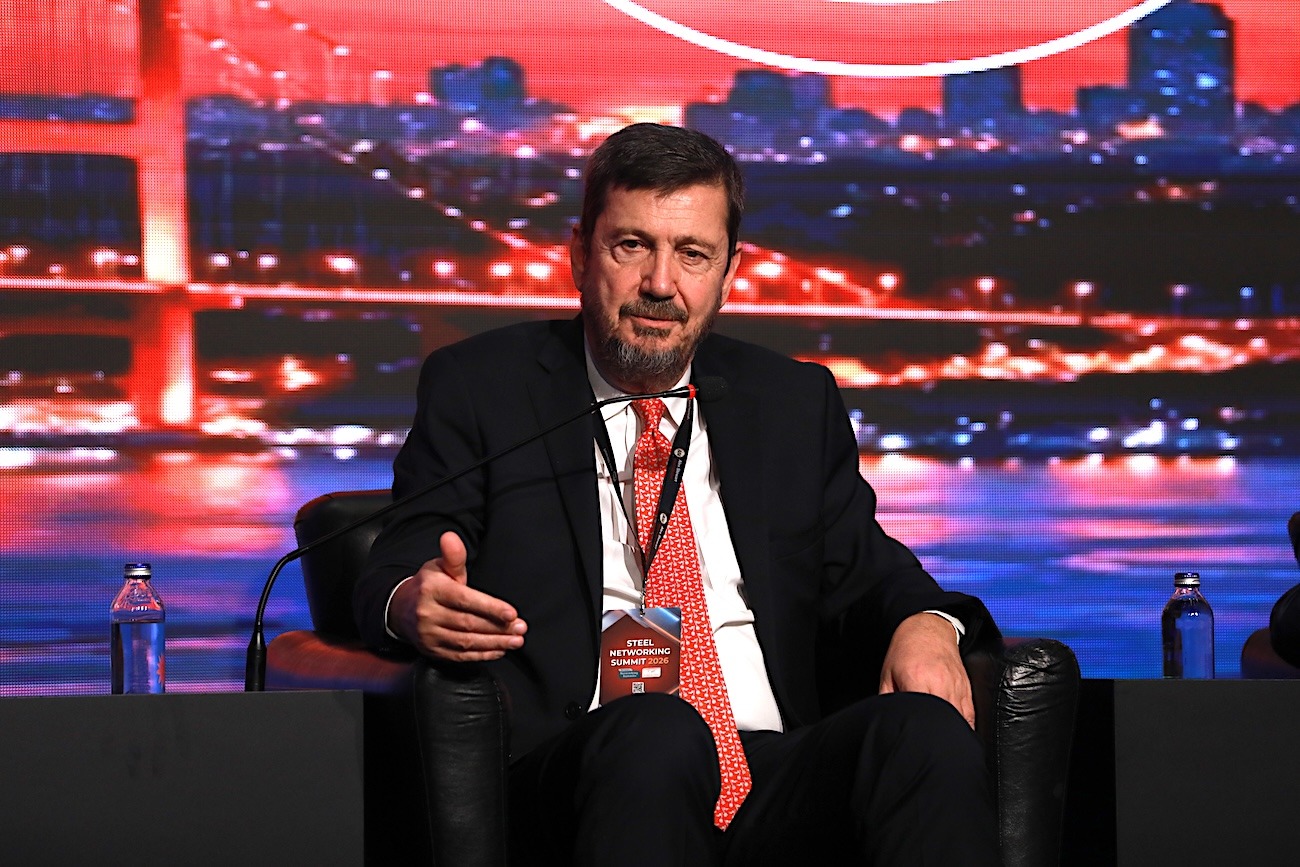
Fuat Tosyalı, chairman of Tosyali group and of the Turkish Steel Producers’ Association, and Uğur Dalbeler, chairman of the Turkish Steel Exporters’ Association (CIB), made keynote speeches at the Steel Networking Summit in Istanbul. The first edition of the event was organised by CIB and attended by Kallanish.
Both speakers identified global overcapacity as the sector’s core structural problem. Capacity created without matching demand does not stay within national borders and inevitably pressures world markets, Dalbeler said. This creates a cycle in which more capacity brings additional export pressure and more protectionism.
Tosyalı said overcapacity and the state-backed production model was making competition destructive in many markets. “The rules of the global steel industry are being rewritten. Decisions on where production will take place, with which technologies, which energy sources, and under what trade conditions are being redefined. Steel is not just an industrial product. It is a country’s production power, its infrastructure, its energy consumption and therefore its energy security, its defence industry, and the foundation of its economic independence.”
“Protecting your industry against unfair competition is one thing; turning the world into closed production zones cut off from each other is another,” he continued, adding that protectionism alone could not be a lasting industrial strategy.
Tosyalı added that it was not right for Turkey to be assessed “from the same perspective as other third countries” in Europe’s steel policies, given decades of integrated value chains with European automotive, machinery, energy and infrastructure sectors.
Meanwhile, Dalbeler called for fairer, more transparent and more predictable trade rules.
The EU’s Carbon Border Adjustment Mechanism (CBAM) and its quota measures on steel imports directly impacts the competitiveness of Turkish producers, Tosyalı noted. If producers lack access to the energy, technology and finance needed for the transition, carbon rules could “stop being a tool of the green transition and turn into new trade barriers”, he said.
Dalbeler echoed this and said decarbonisation policies must reflect differences in producers’ access to energy, finance and technology.
Tosyalı also called for countries that have affordable energy and strong infrastructure to play a larger role. He cited Turkey, Algeria and other regional production centres as offering opportunities in this regard, saying this could lower costs, make supply chains more resilient and cut total emissions faster.
“I believe we should now take our industrial relations with Europe to a more advanced level. By leveraging advantages in energy, raw materials, technology and industrial infrastructure across different geographies, we can develop new, complementary partnerships”, Tosyali added.
He set out three priorities for the sector: protecting domestic capacity against unfair competition, fair and predictable policies from trade partners led by the EU, and mechanisms to finance the move to low-carbon production.
Turkish steelmakers have been seriously affected by high energy costs, financing conditions and trade barriers, but would continue to produce, develop export markets and strengthen international partnerships. The steel sector’s problems are global, but the responses we give to them are becoming increasingly national. The future of the world’s steel sector will be decided not only by our production capacity but by our capacity to work together, he concluded.
Author: Burak Odabasi Türkiye