


ABS integrates 12 Danieli systems in one line
Italian longs producer Acciaierie Bertoli Safau (ABS), the steelmaking division of equipment maker Danieli Group, has broken ground on its new “Hybrid Digital Green Plant” at its Pozzuolo del Friuli facility in northeast Italy. This represent a €400 million ($461.29m) investment of which €355m is devoted to Danieli equipment, a company spokesperson confirms to Kallanish.
The plant, an advanced special steel production line, is part of ABS’s €817m investment plan for the period 2023-2028 with the aim to cut CO2 emissions by 30% by 2030. It includes revamp of the two remaining Cargnacco furnaces. Total capacity will rise from the current 1.4 million tonnes to over 2.1mt/year when the industrial plan is completed, the spokesperson confirms.
With the Hybrid Digital Green Plant, for the first time, 12 Danieli proprietary technologies are integrated within a single production facility. ABS is implementing the full range of Danieli’s latest steelmaking innovations in one line, from scrap handling and melting through to secondary metallurgy, fume treatment, water recovery, continuous casting and full automation.
At the heart of the plant is the Digimelter, Danieli’s next-generation EAF. Fed by the so-called “endless continuous scrap charging (ECS)” system, it preheats scrap to around 400°C using residual fume heat before entering the furnace. The Q-One digital power system minimises grid disturbances, improves energy efficiency and allows direct input from renewable sources. The equipment promises a 50 kWh/t drop in electricity consumption, 20% lower graphite electrode use, 16% lower carbon intensity and a 34% reduction in complex reagents.
With no personnel on the production floor, machine learning systems control the entire plant fully automated. A closed-loop cooling system cuts water use by up to 50%, recovering over 24 MW of thermal energy. The EU-funded “Custard” project will convert combustion CO2 into sodium bicarbonate, cutting emissions by over 13,000/t, with 20 MW of residual heat feeding Udine’s district heating network.
“With the Hybrid Digital Green Plant we are continuing the journey begun over ten years ago with the design of the Saturno-QWR line,” ABS chairman and Danieli vice president Camilla Benedetti says in a note. “Thanks to this new low-carbon footprint line, we will deliver our strategy in the special steels market through two key drivers: efficiency… and the improvement of our environmental footprint.”
Danieli expects its steelmaking division results to improve significantly this year as a rise in shipments has been seen during early 2026 thanks to improved prices and margins. That enables a possible return to profitability for ABS. A growing order book is laying the foundation for potentially stronger revenues and margins in 2026/2027 compared with the current financial year, the company notes in its recent financial statement.
Author: Natalia Capra


Uptrend persists in European domestic long steel market but buying muted by Easter holidays
Mills all over Europe attempted another round of price increases, but the new prices were not widely accepted due to the slowdown of activity amid the approach of Easter holidays.
Some buyers, however, expected no negative price corrections in the near. future and preferred to book what is possible now, to minimize restocking at higher prices as much as possible.
Rebar offers in Northern Europe from both regional suppliers as well as from Southern Europe, varied within the range of €670-690 ($776-800) per tonne delivered, while workable prices were estimated at €655-665 per tonne delivered, which was reflected in Fastmarkets’ index.
Fastmarkets’ weekly price assessment for steel reinforcing bar (rebar), domestic, delivered Northern Europe, rose to €655-665 per tonne on April 1, from €640-655 per tonne on March 25.
The corresponding weekly price assessment for steel wire rod (mesh quality), domestic, delivered Northern Europe, rose to €670-680 per tonne on April 1 from €650-670 per tonne on March 25.
Market sources reported that, in the rebar sector, acceptance of higher prices was better than in the wire rod sector.
In this connection, Fastmarkets’ weekly price assessment for steel reinforcing bar (rebar), domestic, delivered Spain, rose to €715-725 per tonne on April 1, from €695-715 per tonne on March 25.
Mills attempted to raise wire rod offer prices to €710 per tonne delivered but this gained no traction among customers. Most recent sales were reported at €680 per tonne delivered.
In Italy, deal levels varied within the wide range of €650-670 per tonne delivered in the week, but some offers were already being heard at €680-690 per tonne delivered.
As a result, Fastmarkets’ price assessment for steel wire rod (mesh quality), domestic, delivered Southern Europe, remained at €650-680 per tonne delivered on April 1, unchanged week on week.

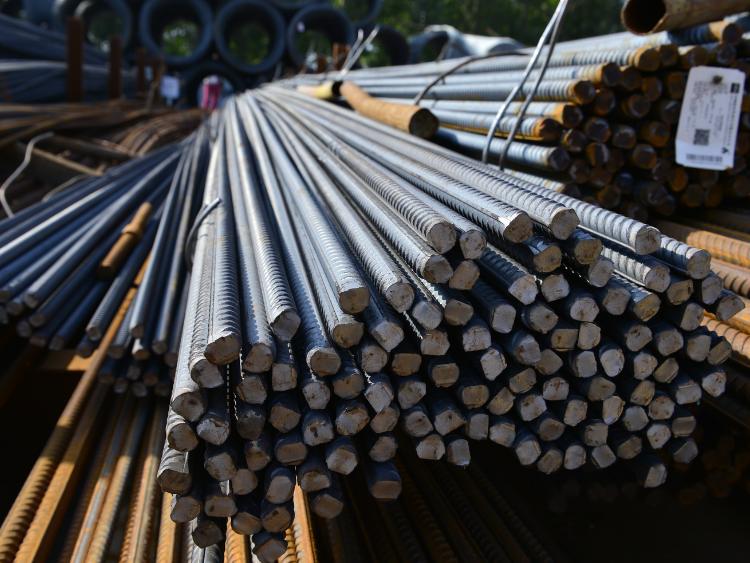
Polish steel rebar prices up despite demand slowdown before holiday
Long steel prices have been increasing across Europe due to higher costs for energy and transportation, although the latest round of higher offers had yet to be absorbed by the market, with activity slowing before the holiday.
Meanwhile, Polish mills were not yet fully booked, according to trade sources.
Over the week, sources reported deals for rebar at 2,700 zloty ($729) per tonne CPT, with no indications of sales below that level.
Deals for lower tonnages were reported within the range of 2,750-2,780 zloty per tonne CPT.
Fastmarkets’ weekly price assessment for steel reinforcing bar (rebar), domestic, cpt Poland, was 2,700-2,780 zloty per tonne on Thursday, rising from 2,650-2,720 zloty per tonne the previous week.
Meanwhile, prices for wire rod widened in the week to Thursday.
Fastmarkets’ weekly price assessment for steel wire rod (drawing quality), domestic, delivered Poland, was 2,800-3,000 zloty per tonne on Thursday, widening downward from 2,815-3,000 zloty per tonne the previous week.
The lower end was attributed to a deal heard around 2,800 zloty per tonne delivered, while market sources also reported tradable levels around 3,000 zloty per tonne delivered.

Trump overhauls Section 232 tariffs, 25% duty to be levied on full value of derivative products
Derivative articles substantially made of steel, aluminium or copper will pay a flat 25% duty on their full value, according to the presidential proclamation on Thursday, a departure from the previous method of collecting 50% tariffs on just the metals component of a product imported into the US.
Some market sources speculated that this move would increase the import prices of derivative products.
“Articles made entirely or almost entirely of aluminium, steel or copper will pay a flat 50% on their full value — for example, steel coils and aluminum sheet,” the proclamation said.
Commodity-grade steel and aluminium are already subject to 50% tariffs on being imported into the US.
Additionally, certain metal-intensive industrial equipment and electrical grid equipment will pay 15% duties through 2027, to “accelerate the massive industrial base buildout currently underway across the United States.”
Also, “products made abroad but entirely with American steel, aluminium and copper will be subject to lower tariffs of 10%,” according to the proclamation, and products made of 15% or less steel, aluminium or copper will no longer be subject to Section 232 metals tariffs.
Kevin Dempsey, president and chief executive officer of the American Iron and Steel Institute (AISI), applauded the action.
“AISI commends the decisive action taken today by President Trump to ensure that all steel mill products, including steel pipe and tube, receive the full benefit of the 50% tariffs on steel products,” Dempsey said on Thursday.
“We also welcome the steps being taken today to simplify the process for applying the steel tariffs to critical steel derivative products,” Dempsey said.
“These measures will ensure that the steel tariff program operates effectively and efficiently and will ensure the long-term durability of the Section 232 tariffs, which remain essential to address the adverse impacts of global steel excess capacity that continues to grow due to foreign subsidies and other trade-distorting practices,” he continued.
Steel Manufacturers Association president Phil Bell had similar words of appreciation for the move.
“The Steel Manufacturers Association applauds the Trump administration’s actions today to strengthen the Section 232 steel tariffs,” Bell said on Thursday.
“By right-sizing the derivatives list and updating the valuation of steel-containing goods, these measures reinforce President Trump’s signature trade achievement, ensuring the tariffs remain precisely targeted to support the revitalization of the American steel industry without undermining broader economic goals,” he continued.
Bell highlighted the importance of expanding metals tariffs to include derivative products as well.
“Last year, the Commerce Department’s introduction of a steel derivatives inclusion process responded to urgent concerns from downstream manufacturers,” Bell said on Thursday. “While domestic raw steel production increased under strengthened tariffs, many steel-containing goods continued to be dumped into the US market, placing significant strain on American manufacturers. The robust derivatives process helped close these gaps, strengthening supply chains and supporting US manufacturing.”
US primary aluminium producer Century Aluminum also welcomed the news.
“Century Aluminum Company is applauding President Donald Trump’s new executive order that will close valuation loopholes that importers have been using to avoid the President’s tariffs on steel and aluminium, leveling the playing field for American manufacturers,” the company said in a statement on Thursday.
“Importers had been abusing valuation loopholes to reduce their liability under the President’s steel and aluminum tariffs. In some instances, importers declared only the value of raw steel and aluminium while excluding value added through processing, thereby lowering the tariff owed and disadvantaging domestic manufacturers,” Century said.
“The order clarifies that importers must declare the full value of covered products, promoting consistent enforcement and fair competition across the aluminium supply chain,” it continued.
Century CEO Jesse Gary enumerated the beneficial impact of the Section 232 tariffs on domestic producers.
“With the 50% Section 232 tariffs on primary aluminum still fully in force with no exemptions or exceptions, today’s executive order reinforces that foreign actors will no longer be allowed to game the system at the expense of Americans,” Gary said.
“Century Aluminum is proof that President Trump’s policies are working. Since President Trump reinforced Section 232 last year, with no exemptions or exceptions, we have expanded US aluminum production by 10% and committed billions to new capacity that will double US production and create thousands of new American jobs,” Gary said on Thursday.
A Canadian distributor had earlier issued a stark warning about the impact on the Canadian manufacturing sector if duties are collected on the entire value of a product rather than just the metals component.
“If they actually go forward with this, it will decimate Canadian manufacturing,” the distributor said. “Paying 25% on the entire invoice value of finished items in the 400+ list of tariff codes considered derivative will increase tariffs paid by many, many multiples.”
A second Canadian source, though, was positive about the development.
“We are paying a 50% tariff on everything top to bottom already; if they tariff 25% on the total commercial value instead of the steel content, it will improve things,” the second Canadian source said.
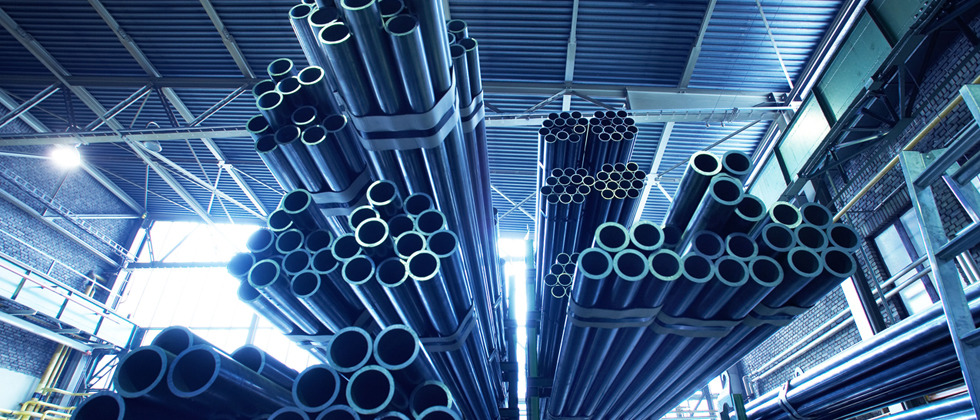
Interpipe acquires ArcelorMittal’s AMTP Roman facility in Romania


European Union proposes measures to enhance stability in ETS

Thyssenkrupp Steel Europe calls on the EU to protect electrical steel production from low-cost imports

CBAM warning from the Turkish iron and steel sector! Default emission values do not align with production realities

Iberdrola supplies renewable energy to Gestamp
Gestamp has signed a long-term power purchase agreement (PPA) with energy company Iberdrola for the supply of 660,000 megawatt-hours of electricity to a number of its European plants, Kallanish notes.
The ten-year deal joins others signed by the Spanish-headquartered supplier of automotive components. These have already allowed it to cover 100% of its production activities in Spain and Brazil with renewable energy sources, as well as a significant portion in India and Mexico.
The latest PPA covers 34 MW of installed capacity and will enable Gestamp’s plants to be supplied with 80% renewable energy sourced from Iberdrola’s wind portfolio and the remaining 20% from its solar farms.
“This agreement enables us to secure a long-term supply of renewable energy at a fixed and competitive price, in line with our strategy to enhance the stability and predictability of production processes, with a focus on energy efficiency and the use of renewable sources,” explains Getsamp. “This forms part of our ambitious sustainability strategy, which aims, among other objectives, to continue contributing to the decarbonisation of the automotive industry’s supply chain.”
Gestamp has 100 production lines and facilities in 24 countries, 29 of which are located in Spain. The electricity consumed at its Spanish facilities accounts for 18% of the company’s total consumption.
UK TRA maintains TRQs on quarto plate, HDG
The Trade Remedies Authority (TRA) has published its final decision on its review of the tariff rate quotas (TRQ) on categories 4 and 7 steel – metallic coated sheet and non-alloy and other alloy quarto plate, Kallanish notes.
The decision that the current restrictions be maintained follows the recommendation issued in February despite submissions by several market players seeking changes. The review came after applications by ISTA and Babcock International Group alleging a change in circumstances.
The effect of the review comes into place from 1 April.
Comments were submitted after the Statement of Intended Final Determination (SIFD) by Spartan UK, Tata Steel UK, Stemcor, Hoa Sen Group, Posco Steeleon, the Korean government, Korea’s Iron and Steel Association (KOSA) and India’s Ministry of Commerce.
Spartan requested the TRA “extend the scope of the TRQ Review to also look into the import volume from Indonesia, to add Indonesia to the list of developing countries non-exceptions, and extend the cap on the amount of imports coming from one country within the residual quota […] to Indonesia”. However, the TRA considered the request to fall outside the scope of the review and will therefore not consider it further.
The TRA reiterates its determinations within the review are based on evidence received of production during and after the period of investigation (POI). UK producers Spartan, TSUK, and Liberty Dalzell each provided evidence of actual production during and after the POI captured by commodity codes in category 7.
The TRA concluded that part of the quota allocations for categories 4 and 7 were exhausted during the POI. Whilst individual country quotas and the residual quota for categories 4 and 7 were not exhausted during the POI, its analysis shows that individual country caps for Vietnam and Korea were routinely reached after the introduction of these caps on 1 July 2025.
It notes that only 34% of the total category 4 tariff rate quota was utilised during the POI and the TRA has concluded that the current safeguard measure is sufficiently liberal to allow downstream users of category 4 products to purchase imports from countries other than Korea or Vietnam without a significant risk of incurring the out-of-quota safeguarding duty.