


EUROMETAL distributors urge rethink of supply chain

Stockholders, service centres and traders find that the supply chain is suffering from both a lack of synchronicity in using modern media, and from the pressure for just-in-time delivery. At this week’s Eurometal International Steel Trade Day in Hamburg attended by Kallanish, representatives gave examples of the soft spots in the chain, and of possibly remedies.
Dirk Müller of Rheinkraft Logistics drew a theoretical “… balanced system” of factors such as costs, infrastructure or transport planning. This is affected by factors that lead to a progressive instability of the system. Some such factors are the increasing complexity of customers’ requirements and of processes, less time for transport and – of most concern just lately – a shortage of truck drivers.
The suggestion of shifting more material from truck to train was dismissed by delegates because “… at the moment, the reliability of trains and barges is not what the customers expect.”
Regarding the efficiency of sea ports, one manager said that a given Rotterdam terminal receives 200-300 trucks on peak days, with many drivers that speak neither Dutch, German or English. “We would have then to expand our working hours until 8 p.m., but then the receivers in Germany have their deadline at 2 p.m., so it’s not doable.”

While Rheinkraft came up with an app for logistics, Müller noted that there are a substantial number of apps now used by various players. Alexander Julius of Macrometal noted that the sender does not always communicates with the receiver at a port which has long queues and drivers arriving at the wrong terminals.
This all makes the “… unpopular” job of a truck driver even more complicated, with an obligation to deal with apps for port terminals and country-specific requirements like road tolls. “On the one hand, the truck driver is a dying species, but those who remain need to be astronauts,” one commentator said.

Turkey’s safeguard case ‘will not affect import volumes’

Trade safeguard measures applied by Turkey will have no effect on the country’s traditional import volumes, delegates to the EUROMETAL Steel Net Forum & International Steel Trade Day in Hamburg, Germany, heard on Tuesday October 9.
This was because the measures do not apply to imports of steel products acquired for processing and re-export, and also taking into account the sufficient volumes of the quotas being used.
In the second half of September, Turkey imposed provisional measures in the form of product-specific tariff rate quotas (TRQs) for imports of flat steel, long steel, iron and steel pipes, stainless steel products and railway equipment. Tariffs of 25% will only be imposed once imports exceed the specific quotas. The additional payments will be levied for a period of 200 days.
The quotas were set at 3.12 million tonnes of flat products, 558,534 tonnes of long products, 273,901 tonnes of iron and steel pipes, 139,934 tonnes of stainless steel products, and 27,044 tonnes of railway equipment.
Turkey imported 4,021,152 tonnes of flat steel in January-June 2018, up by 4.54% from 3,846,450 tonnes in the corresponding period in 2017, according to the Turkish Statistical Institute (TUIK).
The measures set in Turkey were similar to those imposed recently by the EU.
The European Commission (EC) imposed preliminary measures in a safeguard case on July 18, in the form of tariff rate quotas on 23 steel product categories, based on average import volumes over the past three years. Imports will face a 25% tariff if a quota is exceeded. These provisional measures will also remain in place for a maximum of 200 days.
“The quotas set refer only to volumes going to Turkey for final consumption,” Yuriy Rudyuk, partner at Brussels-based law firm Van Bael & Bellis, told the conference delegates. “The processing of imports – for example, bringing hot-rolled coil [HRC] for tube production into Turkey – and the export [of processed products] are not subject to these quotas.”
Fastmarkets’ weekly price assessment for Turkish HRC imports was $530-550 per tonne cfr on October 5, falling from $550-555 per tonne cfr. The assessment fell on lower offers from the CIS, driven downward by oversupply and buyers’ fears of further price reductions.
“The quotas are set at the normal level [of trade], so there will not be any big changes in the Turkish steel market. Plus, the quotas do not include material that is used in the production of exported goods,” a Turkish distributor said.
In addition, the current exchange rate was not helpful toward buyers’ demands for imported steel, sources said.
The Turkish lira has lost a significant amount of value since early August, when political tension between Turkey and the United States worsened. The lira was trading at TRY100 to $16.34 on October 10. It had been trading at TRY100 to $18.39 on August 10, and TRY100 to $21.77 on July 10, according to exchange rate website Oanda.com.
In the meantime, the new safeguard regulations have caused confusion among Turkish customs authorities. They have been trying to obtain bank guarantees for the 25% duty despite the fact that the volume of imported steel has not exceeded any quotas.
“There is a confusion on the customs side because they have not received the details of how the quota will be followed. Customs wanted to guarantee the deposit of [duty at] 25% with the intention to return this money when it became clear that [the material was] not subject to duty,” Tayfun Iseri, vice president of flat steel import, export and industry association Yisad Turkey, said.
The problems with customs were expected to be resolved in about two weeks’ time.
European importers of steel faced similar problems with customs in a number of the EU member states in August, after the EC set its preliminary measures. In this instance, however, market soures said that the problem was solved within a week.
Maria Tanatar, fastmarkets.com

Global protectionism to increase; Canada, Egypt may start safeguard cases
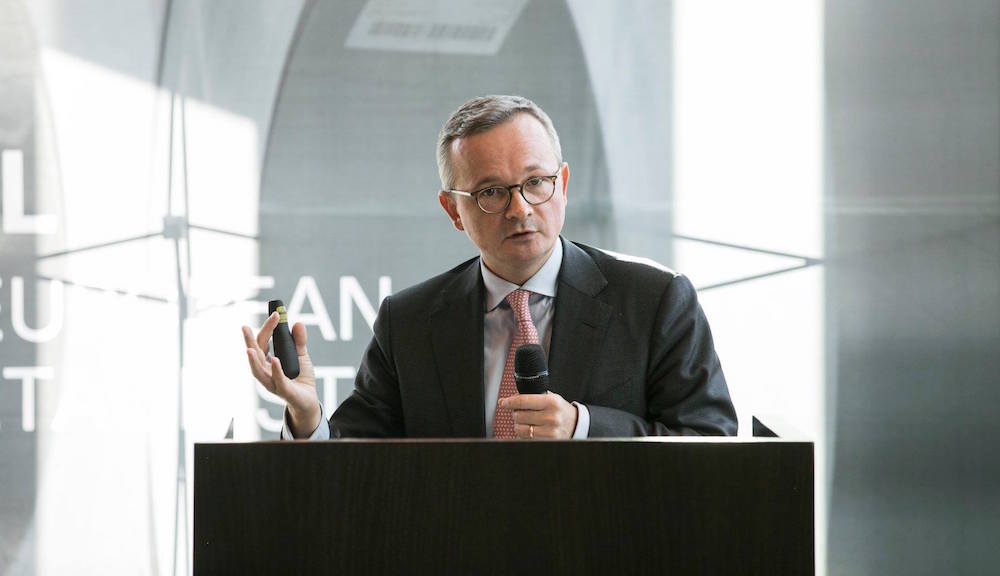
Protectionism in the global steel market will likely become stronger, with Canada and Egypt likely to start safeguard cases, participants at the EUROMETAL Steel Net Forum & International Steel Trade Day in Hamburg, Germany, heard on Tuesday October 9.
“We see many investigations taking place, one copying another, a domino effect on many levels, in many cases. We still would not exclude more escalation, as now the speed of protectionism measures is really too fast,” Yuriy Rudyuk, partner at Brussels-based law firm Van Bael & Bellis, told conference delegates. “The protectionist mood prevails.”
Both Canada and Egypt may start safeguard investigations, similar to those already started in the US, Europe and Turkey, participants said.
In August 2018, Canada’s Department of Finance held public consultations and invited all local companies in the steel sector to comment on a global safeguard action against steel imports. The Department of Finance is currently assessing the written submissions to establish whether the safeguard investigation is required or not.
The European Commission (EC) imposed preliminary measures in a safeguard case on July 18, in the form of tariff rate quotas on 23 steel product categories, based on average import volumes over the past three years. Imports will face a 25% tariff if a quota is exceeded. The case was started in an attempt to prevent steel shipments being redirected to the EU as a result of the Section 232 import tariffs imposed by the United States. These provisional measures will also remain in place for a maximum of 200 days.
Despite the start of the safeguard case the EC continues to open new anti-dumping cases. For example, it started an anti-dumping investigation into imported welded steel tubes, pipes and hollow profiles of square or rectangular cross-section, originating from Macedonia, Russia and Turkey in late September this year.
Although the EU safeguard measures exclude imports of steel products from developing countries, the measures might be applied if any of the developing countries excluded from the measures exceed 3% of total imports per product category or if total imports from those countries increases above 9% of total imports.
European steel association Eurofer asked the EC to install a monitoring mechanism that would allow it the EC to make countries subject to the safeguard measures if imports increase and cross the 3% import mark, sources said.
Participants were also concerned about the impact Brexit would have on the UK’s trade defence measures.
The UK will carry out its own trade defence policy, sources said, and will be able to initiate its own anti-dumping and trade defence investigations. UK authorities already assess the measures applied by the EU and whether to keep them in the UK after Brexit. Although, many participants also felt that a majority of the measures in place are likely to remain.

“We will be carrying out the measures currently in place until December 2020. The only change that there may be to that is if there are new investigations, [the UK] government will do their own investigation,” Simone Jordan, chairwoman of International Steel Trading Association (ISTA), said.
In the second half of September, Turkey imposed provisional measures in the form of product-specific tariff rate quotas (TRQs) for imports of flat steel, long steel, iron and steel pipes, stainless steel products and railway equipment. Tariffs of 25% will only be imposed once imports exceed the specific quotas, and the additional payments will be levied for a period of 200 days.
In the meantime, the Eurasian Economic Commission (EEC) has started a safeguard investigation into flat steel imports to members of the Eurasian Economic Union in August this year.
Maria Tanatar, fastmarkets.com
EU safeguard case may use country quotas, hit fewer products
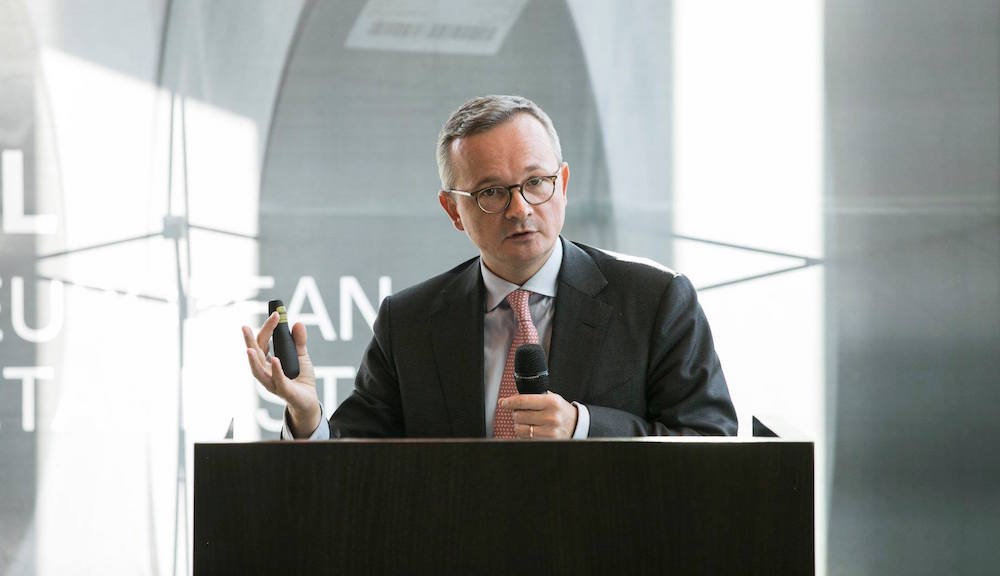
Definitive measures in the European Union’s safeguard case on steel product imports may be imposed in the form of country-specific quotas for some products, according to Yuriy Rudyuk, partner with Brussels-based law firm Van Bael & Bellis.
Further, the number of product categories affected could be reduced from the initial 23, while some categories might include fewer products when the European Commission (EC) announces its definitive decision in the case, Rudyuk told delegates to the EUROMETAL Steel Net Forum & International Steel Trade Day in Hamburg, Germany, on Tuesday October 9.
The EC imposed preliminary measures in the safeguard case on July 18, in the form of tariff rate quotas on 23 steel product categories, based on average import volumes over the past three years. Imports will face a 25% tariff if a quota is exceeded.
The provisional measures will remain in place for a maximum of 200 days.
Originally, the case was opened into 26 steel product categories in late March, in an attempt to prevent steel shipments being redirected to the EU as a result of the Section 232 import tariffs imposed by the United States. Two more products were added to the list in late June.
The development in the current case is similar to the safeguard investigation that was opened in 2002, according to Rudyuk.
“The case in 2002 is a good example of how the Commission is likely to behave in the present case,” he said.
In 2002, the EC opened a safeguard investigation in response to trade measures started by the US, and while it included 21 product categories when it was opened, that number went down to 15 categories when provisional measures were set. Ultimately, definitive measures were applied to only seven product categories.
“[A total of] 23 product categories are subject to provisional measures [in the current case, but] we expect that some product categories will be exempted at the definitive stage,” Rudyuk said.
“We see a number of product categories which are at present subject to provisional measures, but we see no legal or economic grounds to [continue to include them],” he added. “Some of the products are not even subject to a commodity trend.”
In 2002, the measures that were applied took the form of tariff quotas based on historical import levels, with an added 10%.
“At the definitive stage [in 2002], there were country-specific quotas applied, except for hot-rolled coil [HRC],” Rudyuk said. “I think we will see country-specific quotas for a number of product categories [in the current case].”
Countries that supply a 5% share or more of the total imports of a particular product are likely to be subject to a country-specific quota.
But for some product categories there will be a global quota. The EC is under pressure from importers of some products, so it needs to keep the market open and not to impose restrictions that would be too severe.
For example, suppliers from China, and from Russia, Ukraine, Brazil and Iran, which had historically supplied the majority of HRC to the EU, were hit by definitive anti-dumping duties last year.
“Individual country-specific allocations for these countries would not allow them to use the volumes [without sanctions] because of the application of the [pre-existing] anti-dumping duties,” Rudyuk said.
European mills managed to achieve some price rises in August because of the positive sentiment after the preliminary finding in the case was announced. But prices then fell in September due to slow demand and competitive offers from Turkey.
Fastmarkets’ weekly price assessment for domestic HRC in Northern Europe was €560-575 ($643-660) per tonne ex-works on October 3.
European steel importers have said that they need guarantees that the volumes that the EC allocates to suppliers will be used by exporters.
And Rudyuk added that “there is still a possibility that a licensing system will be introduced.”
In the 2002 safeguard case, a licensing system was introduced at the definitive action stage, and importers then required licenses from the EU authorities before being allowed to import steel.
Some buyers were now trying to refine the definitions of certain product categories, because within some categories there were products which went to different end-user sectors.
“We also know that, at the moment, there is a very active group of companies that is trying to obtain exemption for automotive flat steel products from the current product categories. That is another [area] where we could see narrowing of product category definitions,” Rudyuk said.
The EC intends to release definitive findings in the safeguard case in late November or early December this year. All interested parties will then have 10 days to comment, and then there will be an additional stage when suppliers can request consultations with the EU.
After the consultations, the EC will propose the imposition of the definitive measures to the EU member states, for a vote in January 2019. Definitive measures would come into force at the end of January or early in February next year.
Maria Tanatar, fastmarkets.com