

Italian distributors welcome domestic steel sector reorganisation
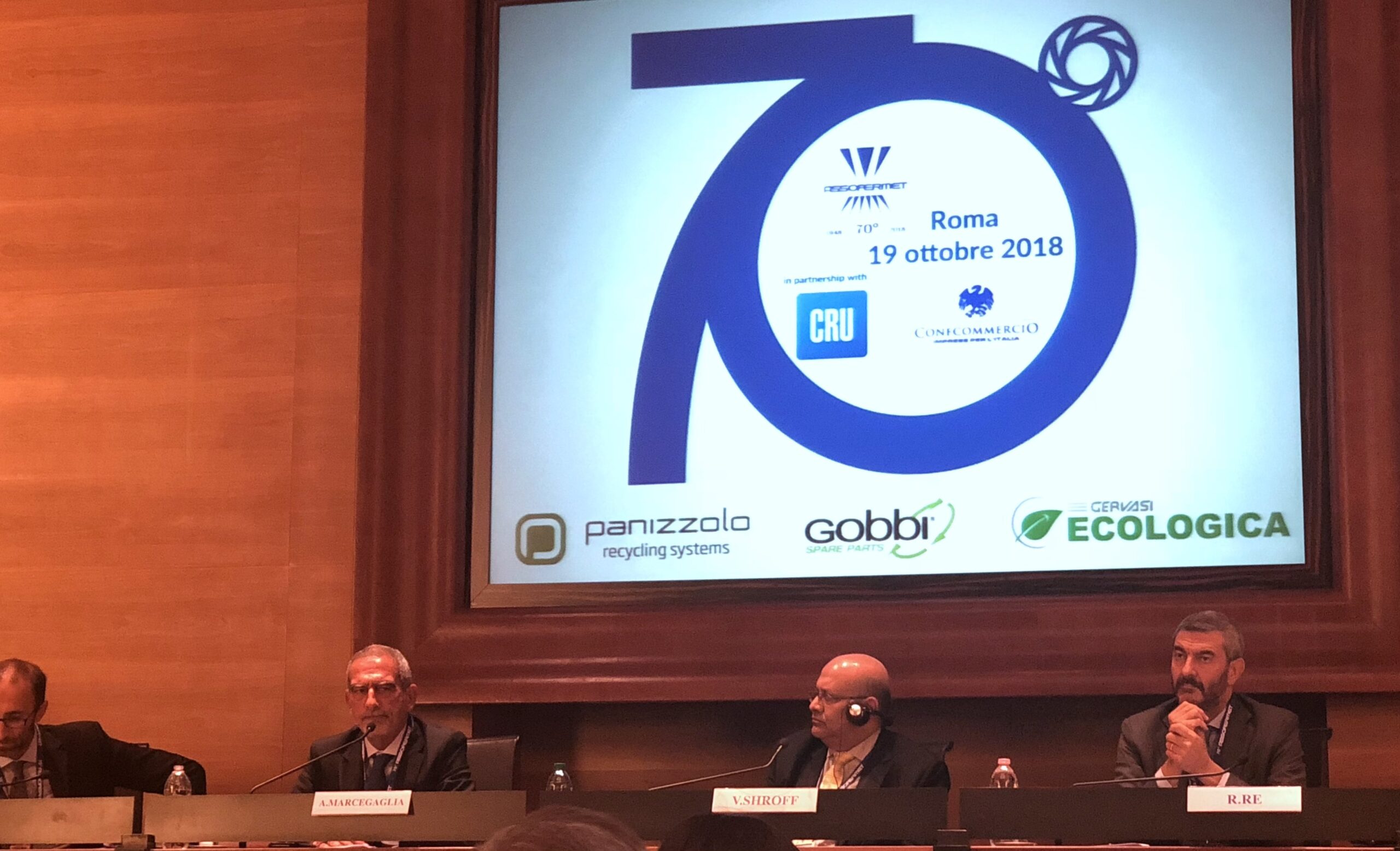
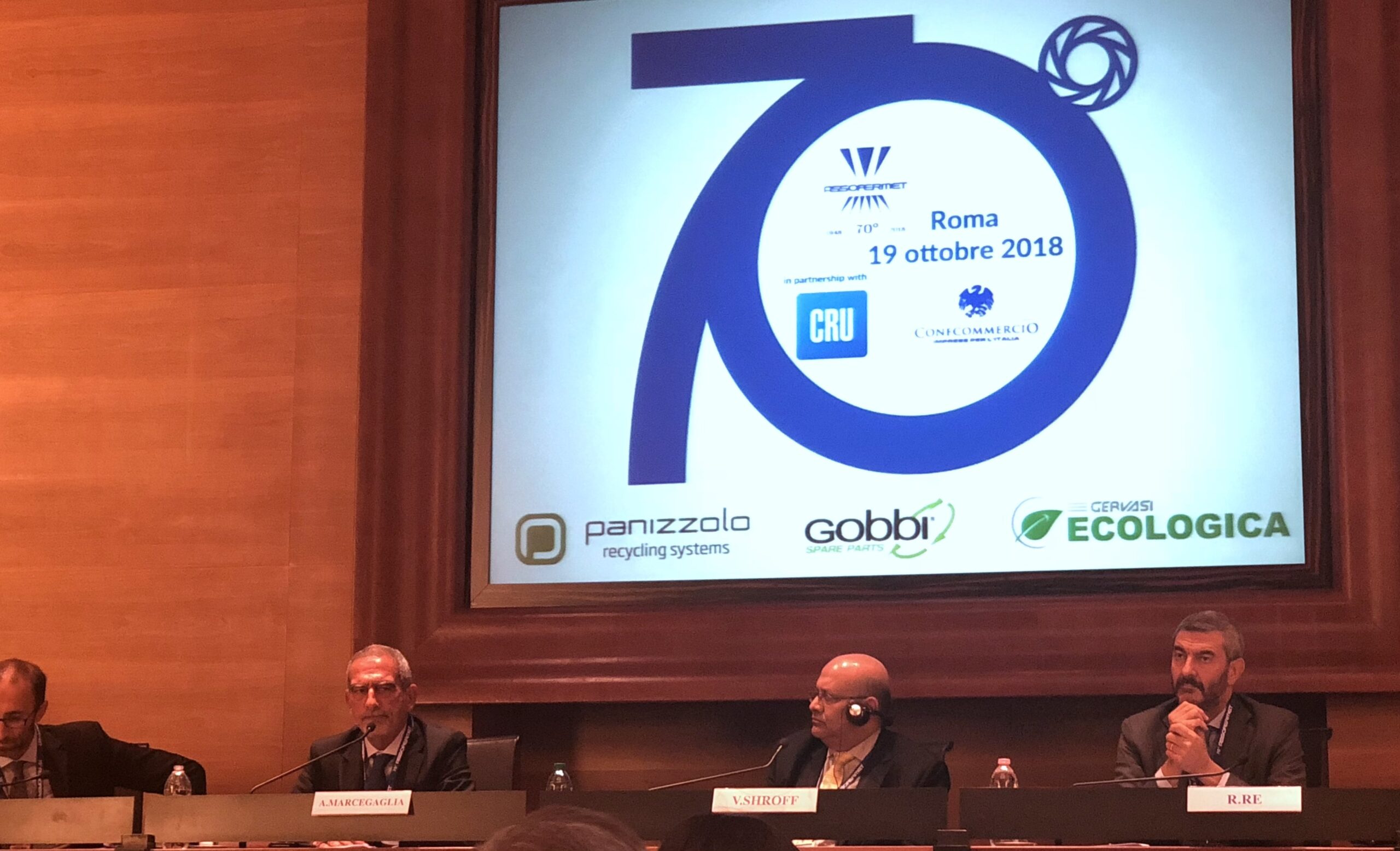
The recent conclusion of the reorganisation of the Italian steel production sector is set to bring positive effects to the local market. This follows a long period of uncertainty, according to sources at last week’s meeting of the Italian steel distributors’ association Assofermet attended by Kallanish.
Roberto Re, head of sales for western Europe of the Ukrainian group Metinvest, noted that the market has suffered from a lack of leadership during the last two years. This has been so because of the problems at Ilva and Aferpi, (formerly Lucchini).
Competition in the market has grown in recent months with the expansion of ArcelorMittal through the acquisition of Ilva and the entrance into the market of JSW and, imminently, Liberty House. Nevertheless, this reorganisation is set to bring more stability and further market discipline.
Representatives from distributors, service centres and traders in Italy also officially welcomed the arrival of India’s JSW into the local market following the acquisition of the former Lucchini operation in Piombino.
Vinay Shroff, executive vice president of the JSW group, explained that for the Indian company Piombino represented an opportunity to establish a foothold in Europe. He noted that while capacity expansion in India is ongoing, JSW is reducing its volumes available for the export market, therefore a direct presence in Europe can be strategic. The company is evaluating the possibility of expanding its presence in Italy with the relaunch of crude steel production in Piombino as well as the set-up of rolling lines for flat products.
Kallanish

Europe looks at three-year steel trade safeguard measures

The existing new European safeguard system for the import of steel products is expected to be confirmed for a period of three years. The provisional measures currently in place expire in February 2019, Kallanish learns from sources at the latest meeting of the Italian steel distributors’ association, Assofermet.
Euro MP Massimiliano Salini confirmed that the existing measures create some unwelcome effects on the European steel supply chain. He explained nevertheless that it remains the best solution to tackle the current global scenario of oversupply and increasing trade barriers.
“The European economy is not in a particularly strong position at the moment, therefore it is probably not in the position to tackle the global trade issues alone. The steel sector needs to be supported by the current safeguard measures,” he explains.
Distributors, service centres and buyers are starting to voice concerns over the existing system. In some sectors, such as wire rod, half of the existing tariffs-free quotas have already been used, creating some supply uncertainty for the next four months.
Leopoldo Rubinacci, of the Directorate General for Trade in the European Commission, explains that the negotiations are ongoing and a final decision is expected before the end of the year. He nevertheless says that the existing quotas are not creating too many problems in the directorate’s view. The measures have been designed to protect the market from possible negative effects of the trade war going on globally, not to directly control or limit free trade and markets.
Tommaso Sandrini, head of Assofermet’s steel group, notes nevertheless that he believes that safeguard measures are not needed, as trade is continuing in a stable manner. He adds that the provisional measures are relatively moderate, but that further barriers could create new problems in the future.
Kallanish

TK declares force majeure on low Rhine River levels
German steelmaker, thyssenkrupp, told customers Friday it has declared force majeure due to low water levels on the Rhine River, according to a letter seen by S&P Global Platts.
There had been unconfirmed chatter in the market that such a decision was forthcoming, and then the company issued a letter to customers Friday morning confirming the move.
“We have been informed by our shipping company that push-tow shipping on the Rhine must be halted immediately due to the extremely low water level,” the letter stated. “This will severely disrupt the supply of raw materials to our production plants. This exceptional and unforeseeable situation is beyond our control and forces us to declareforce majeure with immediate effect for the supply of our products.
“The company will only be able to serve purchase orders on pro-rata [basis], taking production conditions into account.”
The letter said thyssenkrupp was “unable to provide reliable information on how long the force majeurewill last … our sales people will contact you immediately and keep you informed about the expected impact on the delivery dates agreed with you.”
A company spokesman confirmed the letter seen by Platts, as well as the force majeure.
Mills typically receive inputs such as iron ore, coking coal and slabs from the port of Rotterdam, which are then shipped to facilities on the Rhine. However, little rain has been seen in the region since May and water levels are expected to drop further over the weekend, according to the Waterways and Shipping Administration (WSV) website.
The water level at Duisburg-Ruhrort stood at 167cm early Friday morning and WSV forecast this to fall to 152cm by Tuesday morning. This is the lowest level since 2014.
The situation was leading to longer delivery lead times and higher transport costs, as some suppliers had to switch to trucks or rail freight.
“Barges that could take 2,000 mt can now only take 700 mt. Due to the water levels, more barges than normal are required to meet the demand,” a German service center source said. “There are limited alternatives, as rail is expensive with limited capacity, and in Germany, we have a well-documented shortage of drivers [for] road haulage.”
Low water levels on the Rhine have been supportive of ex-works Ruhr coils prices, which have held relatively stable this week despite prices in southern Europe continuing to move lower. The S&P Global Platts TSI hot-rolled coil index ex-works Ruhr was at Eur561/mt ($643.53/mt) Friday morning, down Eur6 since October 1.
Len Griffin, PLATTS