

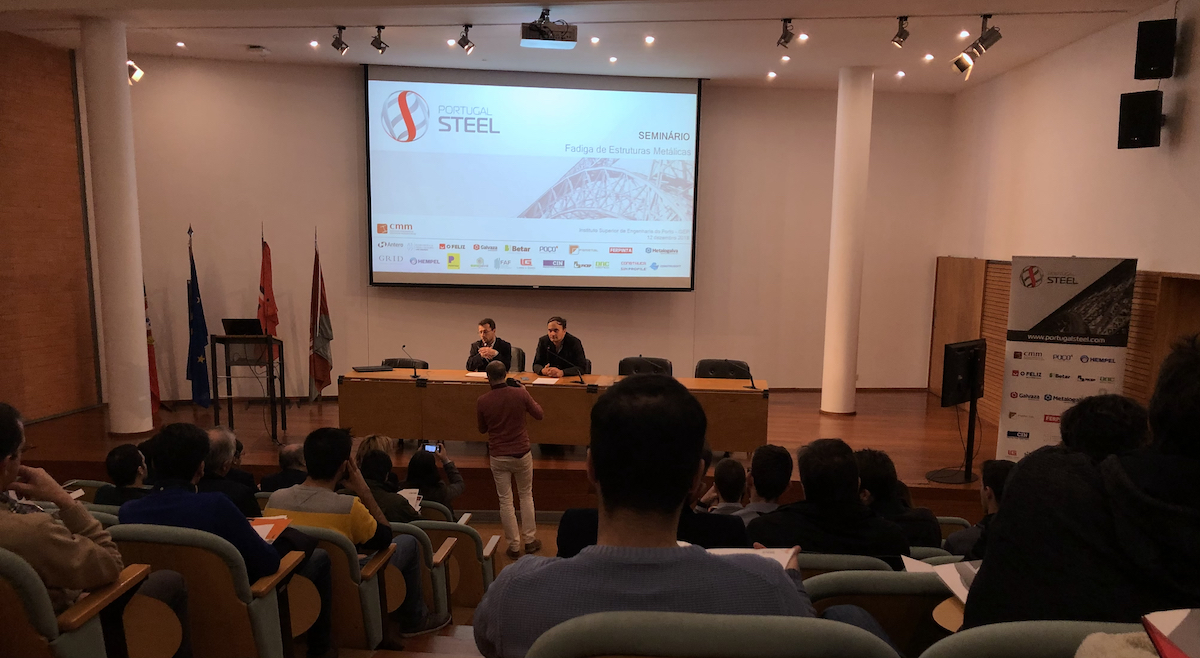
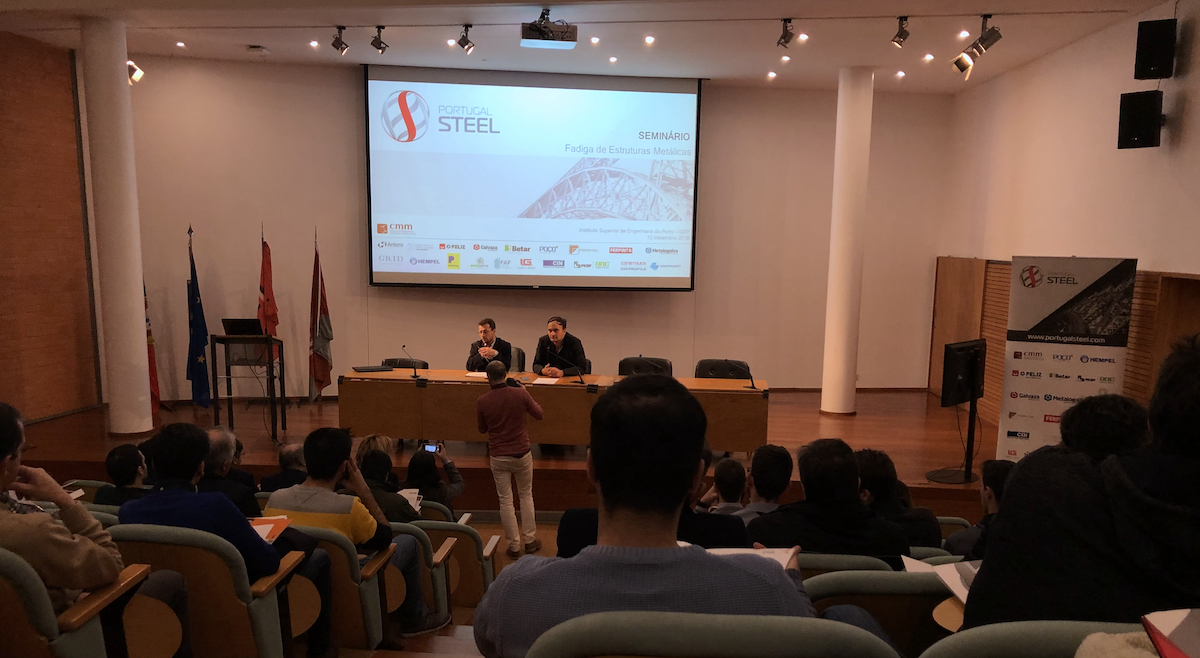
PORTUGAL Steel organised a seminar on fatigue

Russia continues to ramp up steel exports
Russia exported 38.4 million tonnes of ferrous products under the HS code heading 72 in January-October, 11.4% up on-year and 29.8% up in monetary value at $119.5 billion, Kallanish understands.
October exports of 3.8mt were -2.4% down on September, having fallen in value -2.3% to $1.9 billion, Russian federal customs data shows.
January-October exports of semi-finished steel products have risen by 12.1% on-year to 13.15mt, gaining 39% in value, which reached $6.7 billion. October saw 1.9% increase in semis export volumes to 1.25mt, but their value has slipped -1.5% on-month $614.9m.
Exports of flat products in the first ten months of 2018 fell -4.9% on-year to 6.9mt, but rose 11.8% in value to $4.2 billion, while in October they have risen 4% on-month to 729,000t having gained 2.5% in total sales value of $433.2m.
Ten-month pig iron exports increased most once again, by 28.9% on-year to 4.63mt, rising 42.3% in value to $1.73 billion. But October exports have more than halved, having fallen -50.6% on September volumes to 338,200t, also losing -50.8% in value, at $132.6m.
Exports of ferroalloys have increased, but iron ore and coke exports continued to fall in January-October. Exports of ferroalloys have increased by 7.9% on-year to 666,600t, rising 3.3% in value to $1.12 billion, having risen in October by 34.4% on-month to 76,100t and $131.9mn, 42.1% in value.
Meanwhile, iron ore exports have fallen in the 10-month period -13.3% on-year to 15.2mt, having lost -6% in value totalling $1.22 billion. October saw iron ore exports rising 2.8% on-month to 1.92mt, their value remaining broadly unchanged on-month at $146.8m. Coke exports have slipped -9.6% on-year to 2.27mt, but gained 12.6% in value at $568.2m with October exports rising 14.4% on-month to 250,600t gaining 6.5% in value that totalled $56.9m.
Imports of ferrous products into Russia in January-October have increased also by 10.1% on-year to 6.2mt, gaining 12.8% in value that totalled $4.55m. But October total imports have slipped -6.6% to 521,600t, but gained 2.9% in value at $415.6m.

Insight: EU quotas impacting longs; flats unfilled
There has been increasing speculation in recent weeks that a decision on the provisional safeguard measures for 23 steel product imports into the European Union was imminent. Market chatter has included suggestions that the new definitive safeguards would be quarterly, that they would not include flats at all, or that they would be country-specific.
European steel association Eurofer said recently that it is advocating for country-specific safeguards. “We are promoting the idea to consider including a national quota with the EU Commission,” said Karl Tachelet, director of international affairs at Eurofer.
Currently, the provisional EU measures come in the form of a “global” quota, which is allocated on a first-come, first-serve basis — irrespective of the imported steel’s origin.
Exports from Russia and Turkey into the EU increased by 59% year on year after the US imposed tariffs and Turkey’s domestic steel market slumped, deflecting steel sales into the European open market.
The official decision on the fate of the quota system by the European Commission is now expected to come after the Christmas holidays, sources told S&P Global Platts this week.
In the meantime some quotas are running at critical levels. The situation in Wire Rod is the most extreme, with just 0.043 million mt remaining of the initial quota amount of 1.058 million mt as of December 12. This reduces further to 0.039 million mt when material pending allocation is included.
For the other main long steel product, rebar, just 0.091 million mt can still be imported into the European Union from the initial quota amount of 0.715 million mt. The current rate of importation, 4,900 mt/day in November on average, plus material pending allocation of 19,224 mt suggests that the safeguard quota could potentially be oversubscribed already by approximately 105,000 tons.
As of December 12, including material pending allocation, the wire rod quota allowance is at a critical 3.8% and rebar is about to achieve critical status with a balance of just 10% remaining.
After quota balances drop below 10%, it is deemed to be critical and steel importers are then obliged to deposit with customs authorities a 25% bank guarantee while their material is cleared and allocated.
For flat products, however, it is looking increasingly likely that most of the safeguard quotas will not be filled. The quota for hot-dip galvanized coil is running the closest to critical in the flat product category, but only if imports continue at their current rate.
As of December 12, for HDG, 0.742 million mt can still be imported into the EU from the initial quota amount of 2.11 million mt.
The current rate of importation, 11,300 mt/day in the last month on average, plus material pending allocation of 3,200 mt, suggests that the safeguard quota might come within 140,000 tons of being filled by the February 3, 2019 deadline of the current safeguard system.
Substantial increases in the rate of import for both hot-rolled coil and cold-rolled coil would be needed to fill the quotas on these products, which is now looking unlikely.
For HRC, 1.843 million mt remains available for import out of an initial quota of 4.269 million mt with imports clearing customs at a rate of 24,150 mt per day on average. This would need to increase by 44% or 10,600 tons per day on average to meet the remaining balance.
For CRC, 0.716 million mt remains available for import out of an initial quota of 2.115 million mt with imports clearing customs at a rate of 6,650 mt per day on average, which would need to double to meet the remaining balance.
In reality, importers will become increasingly cautious as any critical available balances reduce over the coming 53 days with any potential breach of quota seeing the offending material placed into a bonded warehouse on an un-cleared basis pending either importation under a new definitive safeguard quota, or customs clearance outside quota and payment of a 25% levy.
The provisional safeguards were put in place on July 19 to avoid the re-direction of steel import flows as a result of the 25% US Section 232 tariff on steel imports.
— Len Griffin
Belgian shipping company expands in Antwerp and Colombia
Conti 7, an Antwerp-based shipping company with heavy involvement in steel, is considering the building of a second warehouse in Colombia, about which it will decide during January. It first revealed plans of establishing a foothold in Colombia to Kallanish two years ago, and completed the building of the first warehouse there in summer 2018.
In the meantime, it established a new warehousing company, Antwerp Railhouse, pegged to begin operations in 2019. Its partners in this are logistics companies Van Dyck and Zuednatie, which both also specialise in break bulk and materials, mainly steel. Antwerp Railhouse covers a water-connected site of 33,000m² with covered rail access. One of two warehouses is dedicated to handling steel plate for one major client.
Conti 7 is a family-owned enterprise founded in 1923, and operating out of three offices globally in Antwerp (headquarters), London and Hong Kong with a staff of over 50 employees. It has a focus on the dry bulk segment, servicing steel mills, raw material producers, agricultural and other commodity traders, or industrial end-users. It handles about 3 million tonnes/year of steel.
On average it operates a fleet of 25 to 35 ships chartered and owned at any time. For specific trades the company has teamed up with partners, and developed joint ventures with GMT Hong Kong, Mitsui OSK Lines, and others.