


Gestamp secures financing for new steel processing technology
Spain’s Gestamp has secured a €200 million ($226.9m) loan for its strategic plan to develop new steel processing technologies for the production of vehicle components such as chassis and bodywork, Kallanish learns from the company. Gestamp is a major supplier of components to the global automotive sector.
The funding is provided by the European Investment Bank (EIB) under the European Fund for Strategic Investments (EFSI).
“The project aims to facilitate the design of lighter and safer vehicles. The new components will also boost the development of electric vehicles, helping to cut emissions,” Gestamp says. The EIB funding will enable the company to invest in innovation, research and development in its factories in Spain, Germany, France and Sweden. The project will be implemented over a period of four years and will help to safeguard highly skilled jobs.
“Investing in innovation has to be one of the key components of fostering economic recovery in the wake of the coronavirus crisis. This agreement will boost the development of electric cars and lighter and less polluting vehicles. Financing clean technologies is one of the EIB’s priorities in facilitating the transition to a new low-carbon economic model,” EIB`s Vice-president Emma Navarro comments.
This loan represents a show of confidence in Gestamp’s project, and it will strengthen the Group’s financing means so that it can continue contributing to the development of the mobility of the future, she adds.

Turkish mills demand counter measure move on EU steel
Drawing attention to the European Commission’s latest notification to the World Trade Organization that it could begin to impose a country-specific quota on HRC imports as of July 1, instead of a global quota, which is expected to especially impact Turkey’s exports to the region, the Turkish Steel Producers’ Association (TCUD) has called upon the Turkish government to impose similar counter measures on steel imports from the EU.
“Our overall steel exports to the EU region fell by 44.4% year on year in the first four months of 2020, while our hot-rolled coil shipments declined more significantly by 47% on year,” TCUD said, adding that Turkey’s steel imports from the EU, however, rose by 6.5% on year in that period.
“Despite this trend, [the EC] is continuing its moves to block steel imports from Turkey,” TCUD noted, adding that counter measures should be taken by the government without delay.
The EC recently launched an anti-dumping investigation into imports of certain hot-rolled flat products from Turkey following a request by European steel association Eurofer. The association also filed a complaint at the end of May with the EC requesting a countervailing duty (CVD) investigation against allegedly subsidized hot-rolled coil imports from Turkey, as S&P Global Platts has reported.
As a reply to these moves Turkey informed the WTO on May 25 that customs duties ranging from 9% to 17% on some flat-rolled products, non-alloy bars and angles from the EU region could be imposed, in response to the EU’s move for additional measures against imports of Turkish steel.
Turkey has 30 days to suspend, change and impose the stated additional duties, according to article 8.2 of the Safeguard Measure agreement.
Platts, meanwhile learned that Turkish Trade Minister Ruhsar Pekcan held a meeting with EU Trade Commissioner Phil Hogan on June 5. However, details of the talks couldn’t be determined by press time that day.
According to the latest Turkish Steel Producers Association (TCUD) data published this past week, Turkish mills’ overall steel exports declined by 21.6% on year in April to 1.5 million mt, while imports slumped by 54.6% on year to 563,000 mt, amid the COVID-19 pandemic, which sharply decreased global demand that month.
Turkish mills produced 2.3 million mt of crude steel in April, down by 26.3% on year, due to the mills’ temporary stoppages and output cuts, the latest data showed.
— Cenk Can
Polish plate mill up for sale again at reduced starting price
The bankruptcy administrator of Polish steel plate producer Huta Czestochowa (HCz) has reduced the starting price for the mill sale by Zloty 30 million ($7.6 million) in a second attempt to find a buyer, Dominik Bogacz, a judge at a regional court in Czestochowa, said in an email to S&P Global Platts on June 5.
The new starting price has been set at Zloty 220 million ($56 million). Interested parties can submit their offers by July 27.
The first tender, closed on June 3, was inconclusive as no valid offers were submitted.
The mill remains under lease by investment company Sunningwell International Polska until September 19. Although the lease holder did not submit its offer in the first tender it expressed interest in buying HCz outright, outside the tender process, by exercising its pre-emptive right.
Other companies previously mentioned as being interested in HCz are Liberty Group and Metinvest, an industry source said.
The mill has an in-house meltshop and its heavy plate production capacity stands at 800,000 mt/year.
— Wojtek Laskowski
EU flat steel shipments fall 19% on year through April, stocks soar

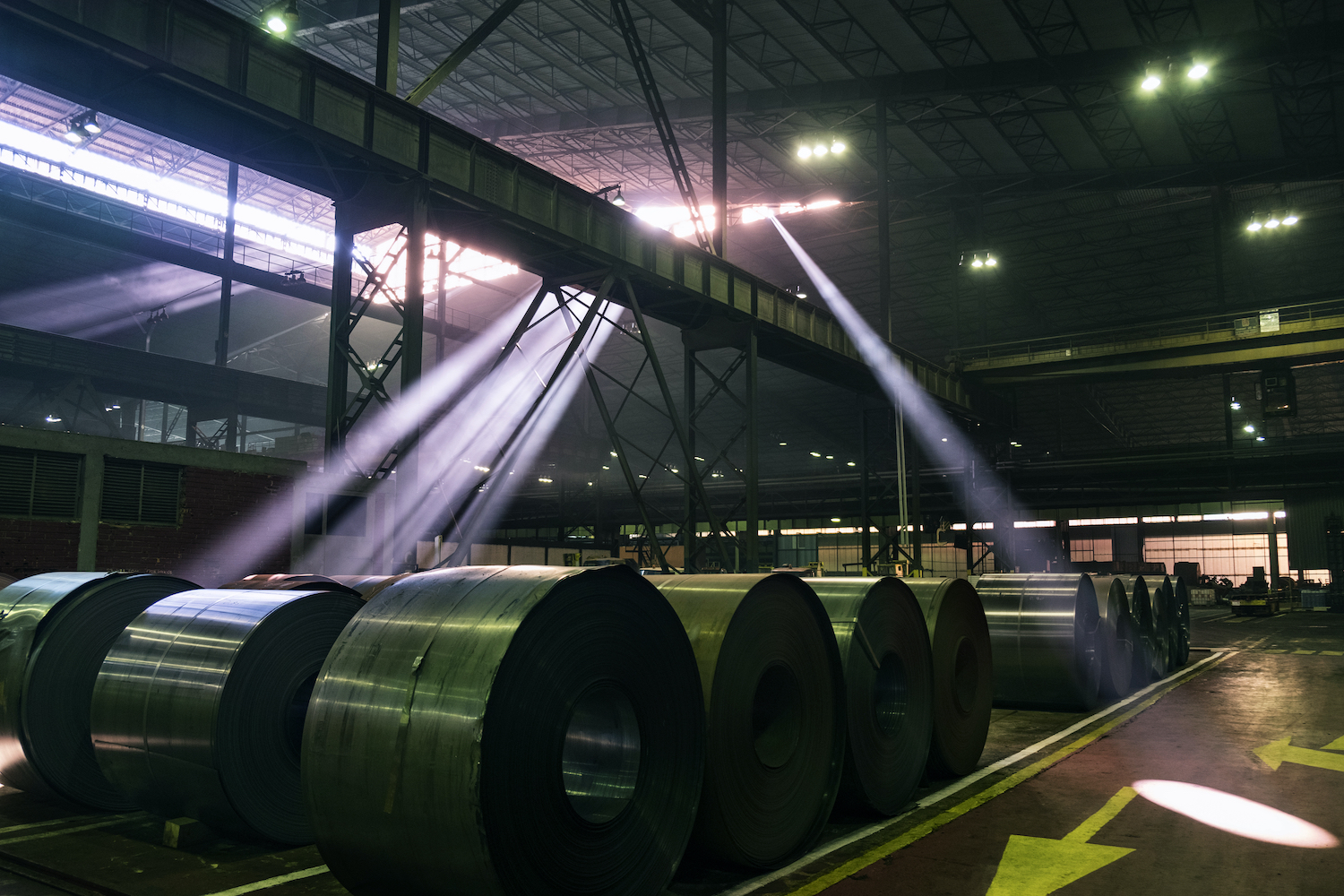
Flat steel product shipments from EU steel service centers fell by 18.5% in January-April from the same 2019 period, as lockdowns related to the COVID-19 pandemic took their toll on industrial activity, the European Federation of Steel, Tubes and Metals Distribution & Trade (EUROMETAL) stated June 5.
Shipments by stockholders and distributors of EU multi-product & proximity steel, including long steel construction products, fell 8.7% in January-April from the year-ago period, with only rebar shipments increasing, EUROMETAL said.
Steel distributors, service centers and traders supply around 80 million mt/year of steel, tubes and metals, accounting for more than 60% of supplies to end-users in EU manufacturing and construction industries, EUROMETAL said.
In April strip mill flat steel product shipments plunged 50.8% on year, compared with a 17.4% on-year decline for the month of March, the distributors’ group said.
Lower shipments led to higher stocks, with flat products inventories at EU steel service centers soaring in April to the equivalent of 139 days-worth of shipments, nearly double the 76 days-worth of April 2019.
Stock volumes in the multi-product & proximity steel distribution category were equivalent in April 2020 to 94 days of shipments, up from 80 days-worth in April 2019.
EUROMETAL members said in late May they were optimistic that steel distribution levels had started to show an upturn.
The World Steel Association forecast June 4 that global steel demand would decline 6.4% overall in 2020 from 2019 levels. Steel demand in the developed economies is however expected to decline this year by 17.1%.
“The manufacturing sector, which was forecast to enter a recovery phase in early 2020, was pushed back into a deeper recession as lockdown measures led to a massive fall in orders,” worldsteel said in its short-range forecast. The steel sector association said the EU’s automotive sector – which uses primarily flat steel products – is expected to be the worst hit of the region’s manufacturing sectors, while the construction sector – a significant user of long steel products – could remain relatively resilient.
— Diana Kinch