

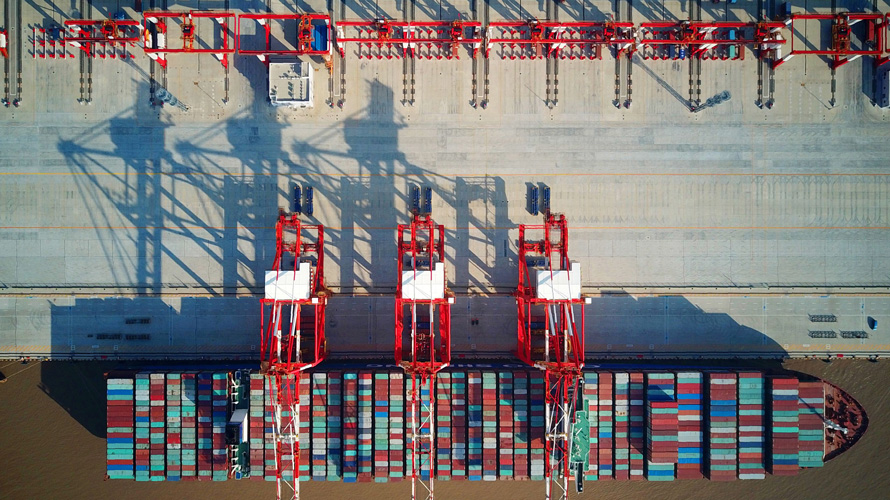
Shipyards face long lull, in Germany and elsewhere
The global shipbuilding industry will have to face very low demand for a considerable while, according to German maritime industry association VSM.
The suspension of orders due to the coronavirus pandemic is aggravating the global under-utilisation of shipyards that has existed for some time. VSM assesses that worldwide new orders in the past four years have been -40% below the volume which has been in production. Dumping prices and state subsidisation are common, it adds.
German shipyards, by comparison, have fared relatively well in recent years, due to specialisation in hi-tech segments, such as luxury yachts and cruise vessels. Before the advent of Covid-19, the order backlog of German yards translated to a capacity utilisation of four years, against only two years at Southeast Asian shipbuilders. But long production periods for such vessels make yards more vulnerable to a suspension of orders, VSM notes.
While overall plate demand in Germany has been low for some years, shipyards’ demand for plate has been healthy, Kallanish hears from a specialised stockholder. The plate typically used for ships is relatively thin, 10-15mm, and up to 40mm for ships travelling in frozen waters in Arctic zones.
With construction now suspended at some particularly big projects (see separate story), production volumes in Europe could drop by as much as -50-75%, VSM fears. The critical mass would not be sufficient to keep shipyards afloat, unless countermeasures are taken.
VSM has liaised with partner organisations in other countries to ask governments to launch programmes in support of public and military vessels. However, with most countries already supporting private enterprises during the crisis, they may, ironically, not have the money for such governmental programmes.

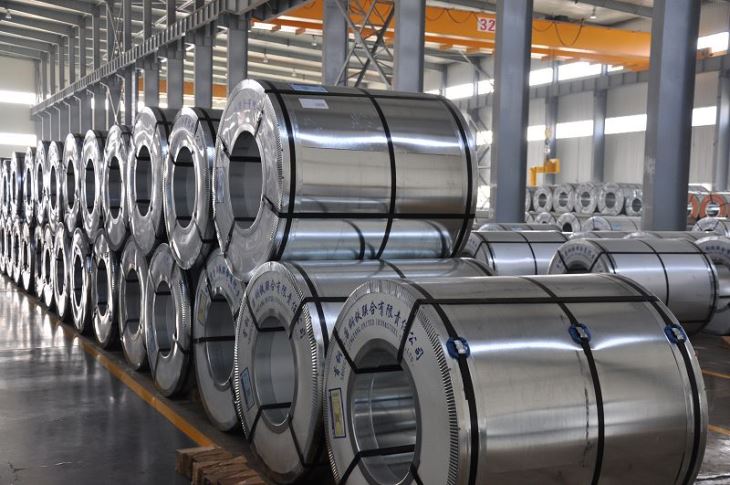
EU widens China galv duties following circumvention probe
The EU has extended anti-dumping duties on imports of certain corrosion resistant galvanized steels originating in China to cover certain new HS codes. This comes after the existing 17.2-27.9% AD duties were found to have been circumvented by imports of a slightly modified product originating in China.
The EU imposed AD duties on the initial set of products in 2017 (see Kallanish passim). Statistics at 10-digit TARIC level show that a significant change in the pattern of trade involving exports from China to the Union took place following the imposition. “Evidence pointed to the fact that the remedial effects of the measures in force were being undermined both in terms of quantities and prices, and that the slightly modified product was being dumped,” the European Commission says.
The duties have now therefore been extended to cover HS codes 7210 41 00 30, 7210 49 00 30, 7210 61 00 30, 7210 69 00 30, 7210 90 80 92, 7212 30 00 30, 7212 50 61 30, 7212 50 69 30, 7212 50 90 14, 7212 50 90 92, 7225 92 00 30, 7225 99 00 23, 7225 99 00 41, 7225 99 00 93, 7226 99 30 30, 7226 99 70 13, and 7226 99 70 93.
They exclude stainless steel, silicon-electrical steel, and high-speed steel, as well as steel not further worked than hot-rolled or cold-rolled.
The product under investigation is obtained by making small modifications to the initial set of products, for example, by slightly changing the chemical composition of the product or its coating. This can be done using the same production lines, the Commission says.
Imports of the products previously levied with AD duties almost zeroed in the reporting period of 1 October 2018 to 30 September 2019. However, imports of the products under investigation surged to 988,937 tonnes from around 30,000t in 2013.
The duty extension does not apply to Beijing Shougang Cold Rolling or Shougang Jingtang United Iron and Steel.
At the start of this year the Commission scrapped the rule requiring importers of hot-dip galvanized coil using the 4b safeguard quotas to prove the use of the material in the automotive sector. The products found to have circumvented AD duties fall under product category 4.
