

EU applies definitive stainless HRC anti-dumping duties
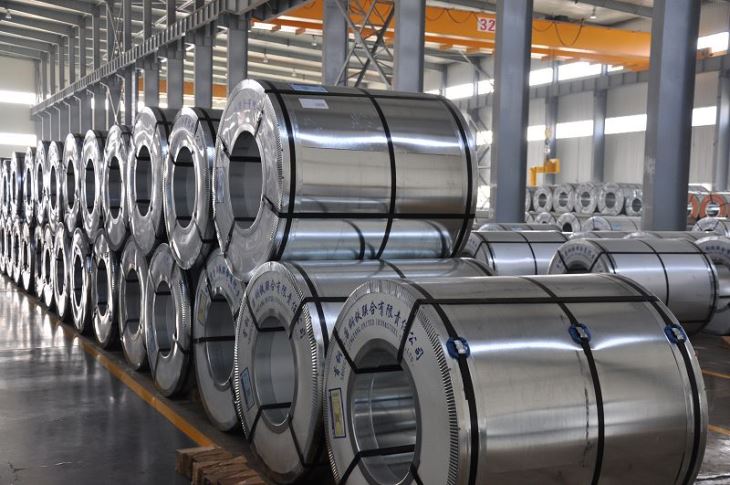
The European Commission has concluded its investigation into anti-dumping duties on stainless hot rolled coil imports from China, Indonesia and Taiwan. According to a note seen by Kallanish, authorities have confirmed with definitive measures the existing provisional measures announced in April.
The investigation started back in August 2019 on the back of complaints made by local steelmakers. During the investigation the EU confirmed the need for duties to be applied; it nevertheless decided that retroactive collection of duties for volumes imported before the provisional measures will not be needed.
Indonesian importers will face a duty of 17.3%, while Chinese suppliers will be hit by duties of between 9.2% and 19%, depending on the mill’s provenance. Taiwanese material will face a duty of 4.1-7.5%. Compared to the provisional measures, authorities somewhat lowered the duties on some Chinese and Taiwanese suppliers.


Northwest Europe fourth-quarter coil nears sell out
Northwest European mills still have coil availability for delivery in new contracts by year-end, though buyers remain reserved about predicting further price hikes.
According to a German service centre manager, “…hot-dip galvanized is the hardest to get, followed by cold rolled, and then hot rolled comes in third.” HRC is very close to the mark of €500/tonne ($588) ex-works, with some mills offering higher and others lower. “The question is will it be paid, and I don’t think this is the case for the majority, only for those who need material very badly,” the manager says.
Mills are reaching out for even higher prices for early 2021, with €530 the highest proposal heard so far. But “…I’m not all that convinced the $500 will be reached across the board,” the manager tells Kallanish, citing signs of slackening demand in Asia.
Another buyer concurs, saying “…the resistance among stockholders is growing,” as buyers do not quite share mills’ conviction of further surges. Yet another manager notes that it is unclear how demand will develop between now and year-end, not least because of rising Covid-19 measures in various countries.
Italy likely to take majority stake in ArcelorMittal Italia : sources
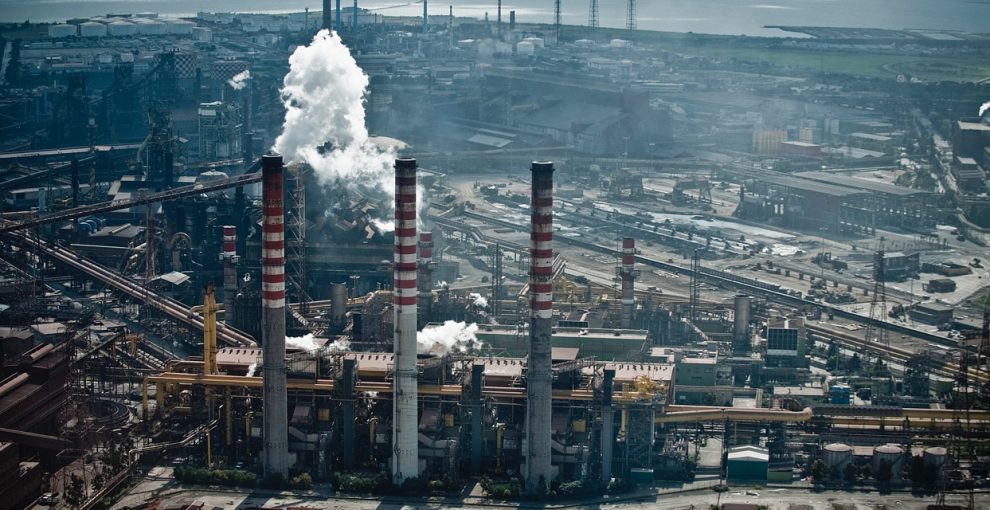
Invitalia, Italy’s agency for investment promotion and enterprise development, will likely take a majority stake in troubled steelmaker ArcelorMittal Italia, with Arvedi — the country’s second-largest flat steel producer — possibly taking a minority stake at some stage, sources said.
Ongoing talks between government representatives, unions and ArcelorMittal could end with the latter being left with no stake in the Italian business, whose assets would be injected into a new company, the sources also said.
ArcelorMittal declined to comment, as did Arvedi, while Invitalia was not available to comment.
“Everything will be clear in few weeks. AM is the one that is deciding the future,” a union source said.
ArcelorMittal agreed to buy the business — Europe’s biggest single-site steel company and then known as Ilva — in 2018 under a lease-and-purchase agreement for Eur1.8 billion ($2.1 billion) and to invest another Eur2.4 billion to clean up and modernize the plant, which has been dogged by environmental issues.
But a change in the law removed ArcelorMittal’s legal protection in implementing the environmental clean-up plan and last November it said it wanted to withdraw from the deal in November 2020, at a cost to it of Eur500 million. Final closing of the lease and purchase agreement is scheduled for May 2022.
“If it [ArcelorMittal] will leave who can replace them and enter with the government?” the union source said. “If the former Ilva, as very much wanted by the Italian government, converts some of its blast furnaces into greener electric arc furnaces, sustained by EU funds, that could then see Arvedi enter as a minority shareholder in the new company but…this is not sure [to happen].”
“Arvedi albeit being a large producer, is not as big as ArcelorMittal and Taranto is a very complex site”, the source said, echoing others.
Arvedi, whose annual crude steel output around 5 million mt through its two EAFs, has in the past bid for Ilva in a joint venture with Indian steel producer JSW.
In the meantime, ArcelorMittal Italia has slightly increased production of late, casting around 7,500 mt/day, up from 7,300 mt/day but still at a very low rate from just two out of its four blast furnaces, as it re-started some lines.
According to union sources, some lines the company halted in July — such as zinc-coating line number 2 and then number 1 — restarted this week, together with hot-rolling mill number 2. Plate rolling mill number 2 was expected to restart on Oct. 12.
— Annalisa Villa


ArcelorMittal Poland closes Krakow hot-end for good

ArcelorMittal Poland (AMP) will close its Krakow hot-end for good after demand failed to recover to satisfactory levels, the firm says. It also cites insufficient EU market protection from imports, high energy costs and the burden on EU mills of carbon emissions costs as being behind the move.
The shutdown of the Krakow plant’s remaining operational blast furnace will begin in October and last a few weeks.
The BF was initially idled in November 2019 on account of reduced demand and a large volume of imports into the EU (see Kallanish passim). In March AMP postponed indefinitely the restart of the Krakow hot-end on account of the coronavirus spread in Europe.
Europe’s steel industry has “…suffered greatly” as a result of the pandemic, with almost all end-use sectors limiting activity, AMP says. Moreover, macroeconomic data shows the likelihood of a quick rebound is very small, it adds.
“The Covid-19 pandemic has huge consequences for Europe’s steel industry,” says AMP chief executive and chairman Sanjay Samaddar. “Although we are seeing a slight increase in demand in the last few weeks, mainly on account of restocking, this demand for steel is still significantly lower than before the pandemic.”
Besides Covid-19, AMP says the closure is due to the lack of effective measures to protect the EU from imports and the European Commission’s decision to increase safeguard quotas at a time when demand fell drastically. On top of already high energy costs, moreover, Poland will introduce additional capacity market fees from January 2021. Finally, there is no Carbon Border Adjustment yet in place to equalise carbon costs with non-EU suppliers, thereby eroding EU steelmakers’ competitiveness.
The result of these factors is carbon leakage, meaning the shifting of steelmaking to countries outside the EU that are not part of the Emissions Trading System, AMP observes.
AMP will continue producing liquid steel at the two operational blast furnaces at its flagship Dabrowa Gornicza steelworks.
Krakow’s coking plant, hot and cold rolling mills, galvanizing line and organic coating line will continue to operate. Slab feedstock will be sourced mainly from Dabrowa Gornicza. AMP plans to invest PLN 180 million ($47.2m) into its flagship plant to increase capacity and enable production of grades used for grain-oriented steel.
AMP’s Krakow steelworks seems to have drawn the short straw, after ArcelorMittal announced the restart of blast furnace operation at its Fos-sur-Mer, Gijón, Tubarão, Bremen and Vanderbijlpark works in recent weeks.