

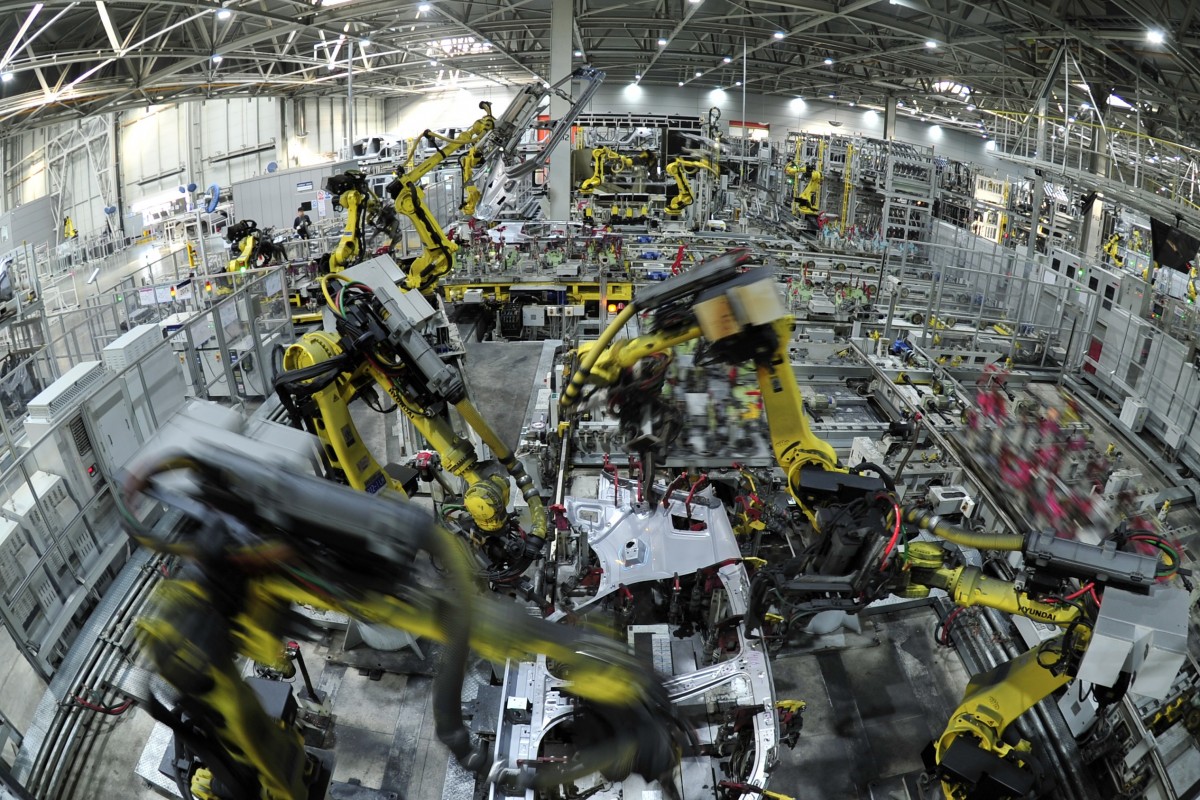
German steel industry cap utilization predicted at 75% 2021: report

German steel production is unlikely to reach pre-pandemic levels in 2021, with capacity utilization estimated at 75% next year, according to an analysis by German economic research institute RWI.
In the report published Oct. 12, Germany’s crude steel production in 2020 is predicted to be 15% lower than 2019 and will not be made up next year as demand from the automotive industry is expected to increase only moderately.
“We expect crude steel production of 37.5 million mt (+ 11%) for 2021. This means that around 75% of the capacity would be utilized,” the report said.
The decrease in steel production is, however, only partly to blame on economic downturn due to the pandemic. Figures show that steel use has already started to dwindle in the autumn of 2018. Automotive production rates have been falling since then as the car industry has been unable to return production to where it was before the emissions testing scandal.
Investment in the construction industry, which supported steel demand in 2020 is set to decrease next year too.
The German steel industry is also set to be a net steel exporter this year due to shrinking domestic demand and safeguard measures for finished steel imports.
The report highlighted that the drop in production during the first wave of the pandemic was more severe than during the financial crisis of 2008-09 and that it will take the industry longer to recover from the pandemic than the financial crisis, making job cuts of up to 4% inevitable next year.
The German steel industry is also at risk of structural overcapacity as the drive toward electric vehicle production is likely to shift car production outside of Germany and shake up the well-established automotive supply chain as EV producers are likely to source steel from producers closer to the production site.
— Laura Varriale


EUROMETAL registers first service centre rebound in August

European steel distributors association EUROMETAL registered in August a clear sign of improvement for flat steel service centres. They posted monthly figures more or less in line with the ones registered in August 2019, after many months of steep contraction.
According to the latest data seen by Kallanish, flat steel service centres saw their shipments decrease only -1.5% year-on-year August. During the first eight months of the year the reduction remained, though, at -18.7% y-o-y.
Shipments by multi-products steel distributors, in contrast, were down -13.2% y-o-y during January-August, with a steep fall of -12.7% being recorded in August alone.
According to sources, September was the first month in which the steel market across Europe operated at pre-pandemic levels; future figures by EUROMETAL are expected to confirm this trend.


German tube stockist opens site in Finland
German tube distributor Hoberg & Driesch Röhrenhandel is establishing a subsidiary in Finland, under the name H & D Finland, Kallanish learns from the parent group.
The Finnish unit will start trading on the Finish market this month with its own warehouse facilities in Vantaa, managed by minority partner Riku Hihnala. It will closely cooperate with the parent company’s central warehouse in Germany, and will offer its whole range of products, Hoberg & Driesch says.
Meanwhile in Germany, the group finalised this summer the centralisation of its warehouse capacities at its headquarters in the Rath district of Düsseldorf. The move means the closure of sites it formerly operated in the Heerdt and Reisholz districts, and in Voerde. The “Hydraulics” product line will remain at the site in Kornwestheim near Stuttgart in southwestern Germany.
The newly built central warehouse comprises approximately 45,000m2 of storage space for a capacity of around 45,000 tonnes of pipe. This includes two fully automated high-bay systems with 8,000 storage units and approximately 10,000m2 of open space storage capacity for welded pipe and tube. The warehouse can supply up to 1,300 picks per day and is operated in a three-shift system, the company notes.

Italian unions express concern over AST sale
Italian unions have expressed concern at the lack of information regarding thyssenkrupp’s divestment of its Italian asset, Acciai Speciali Terni (AST). This comes in the wake of the company’s announcement in a Reuters interview that JP Morgan has been appointed as an advisor for the sale.
ThyssenKrupp’s Italian unit is going through a difficult patch due to the collapse in demand related to the coronavirus pandemic, and has been extending layoffs and limiting output. In September AST produce 8,500 tonnes of black coil, 18,000t of hot rolled strip and 45,000t of cold rolled products. Slab casters no.3 and no.7 were idled last month and affected workers were temporarily laid off using the government’s Covid-19 layoff scheme (see Kallanish passim).
Thyssenkrupp is seeking a sale for its Italian subsidiary, in which Italian steelmaker Arvedi and re-roller Marcegaglia have shown interest. Also interested are several other foreign groups, the unions say.
Italian service centres register ‘unprecedented’ demand
Italian service centres are experiencing an unprecedented surge in demand from the automotive sector and the appliances industry. Demand has been steadily increasing since August but the issue remains availability.
Kallanish learns from service centres that, despite hiking prices for Italian coils, spot buyers and customers who purchase on yearly contracts, such as large appliances makers, are increasing their orders. They are “…desperate to find material,” sources say. Coil import prices remain too high and lead times too long.
At the same time, European coil producers cannot guarantee a steady stream of supply, particularly in Italy where ArcelorMittal Italia is producing at minimum capacity and having issues with deliveries. Deliveries from ArcelorMittal facilities in Fos-sur-Mer, southern France, which traditionally supply Italian companies, are also unreliable. Many workers there are still laid off and the restart of blast furnace no.1 has been delayed again due to technical issues, Kallanish understands.
A large appliances maker is said to have registered its best third quarter in history. “Appliances makers have a huge backlog,” a service centre comments. “Our customers’ activity is booming, and they are asking for double the material compared to their normal orders. The delays in coil deliveries is causing a crisis in the entire value chain and sometimes you miss a chance because you have no material to sell.”
Demand is erratic and the automotive industry is also ordering high tonnages, he adds.
Italian hot rolled coil is currently pegged at €480-500/tonne ($567-591) base ex-works while cold rolled coil and hot-dipped galvanized are between €550-590/t base ex-works on average, sources confirm.