

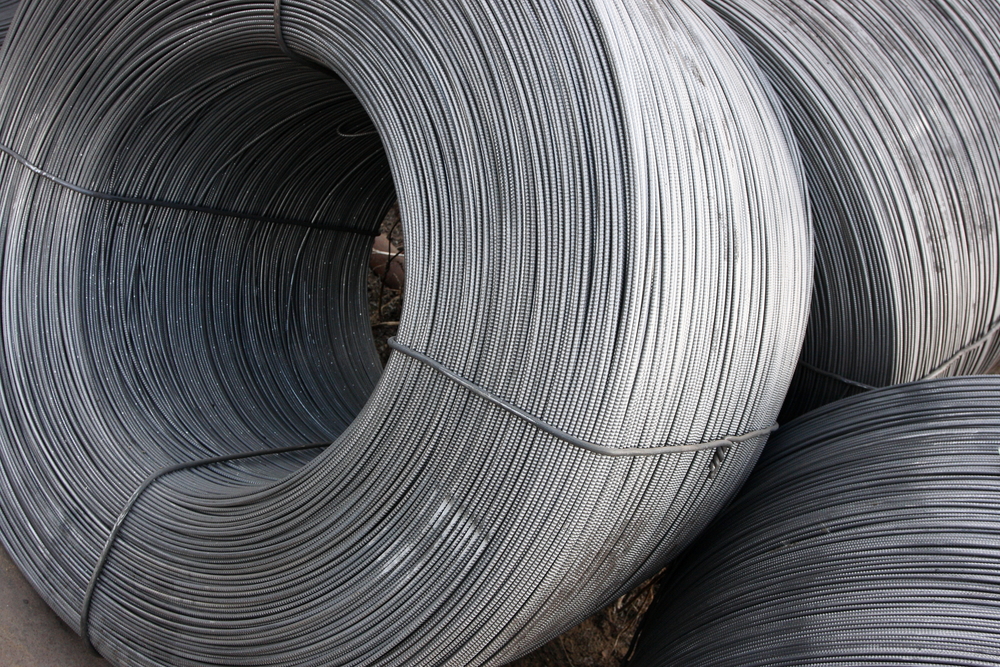
German and Polish wire technology firms join forces
German company EJP Wire Technology, based in Schwerte, and Italmec from Katowice, Poland, have signed a cooperation agreement for the production of wire processing equipment.
The two firms intend to supply the wire processing industry with complete plants to produce carbonaceous wires. With the drawing lines from Italmec and the cleaning systems from EJP Wire Technology, they can offer complete production lines for the entire process chain from wire rod to finished coil. Among other things, they are closing a gap that was created this year by the insolvencies of well-known German manufacturers of wire rod machines, Kallanish understands.
Founded in 2006 by Daniele Costantin in Katowice, Italmec is focused on the production of straight-line drawing machines in all common sizes. The product portfolio also includes process technology and machines to produce welding wires of all kinds.
EJP Wire Technology specialises in equipment for mechanical cleaning of wire surfaces. It is a spin-off of EJP Maschinen GmbH that was formed only this year, initially under the name EJP WITEC. Its parent will complement the partners’ portfolio with blasting systems and butt-welding machines.

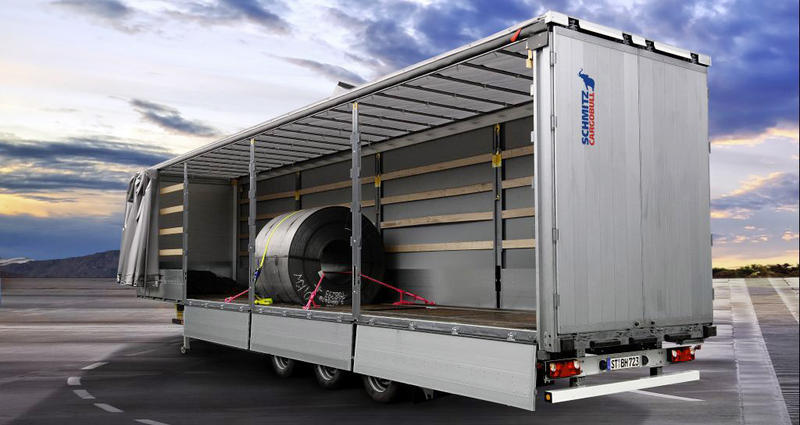
Germany truck transport bottleneck hits steel deliveries
Several German steel distribution companies, especially in the segment of rebar/bending and wire mesh, are complaining about a growing shortage of truck transport capacities. This may have repercussions on prices.
“It’s one of the main problematic issues we are facing these days,” a North Rhine-Westphalian cut-and-bender tells Kallanish. “Mills do not have enough trucks available. I am still waiting for 3,000 tonnes of wire mesh ordered in August.” He notes the shortage especially affects wire mesh deliveries. But transports of rebar are affected as well, “…especially for lengths above 12 metres,” a manager in southern Germany says.
According to the NRW manager, the shortage is one of the many problems that have sprung up due to the Covid-19 pandemic. Many drivers in Germany come from other countries, mostly Eastern European, and have stayed in their home countries during the pandemic, he says.
A spokesman of a large distribution group agrees in this respect. His companies did not have to cancel deliveries, but have had to cope with delays and invest more effort to organise the capacities they need. This may lead to increasing transportation costs, although this has not effectively happened yet.
The spokesman highlights a prevailing long-term problem “…that a truck driver is not an attractive job”. He points at one discouragement few have considered so far: “Young people at school hear of autonomous driving which could make drivers redundant in another few years, so why go for a job that has not much future.”

Federacciai supports AST takeover by Italian firm
Alessandro Banzato, head of Italian steelmakers association Federacciai, strongly supports the possible sale of Acciai Speciali Terni (AST) to one of the Italian companies interested.
Speaking during a press conference in Milan attended by Kallanish, the executive noted that two major Italian groups have expressed their interest in the Italian stainless and special steels assets of thyssenkrupp. He added that this clear interest shows that the outlook for the mill should be positive.
Over the summer a number of sources noted that four firms were interested in the assets, two of them Italian – Arvedi and Marcegaglia – and two foreign companies.
ThyssenKrupp’s Italian unit is going through a difficult patch due to the collapse in demand related to the coronavirus pandemic, and has been extending layoffs and limiting output. In September AST produced 8,500 tonnes of black coil, 18,000t of hot rolled strip and 45,000t of cold rolled products.

Federacciai confirms mildly positive outlook for Italian steel
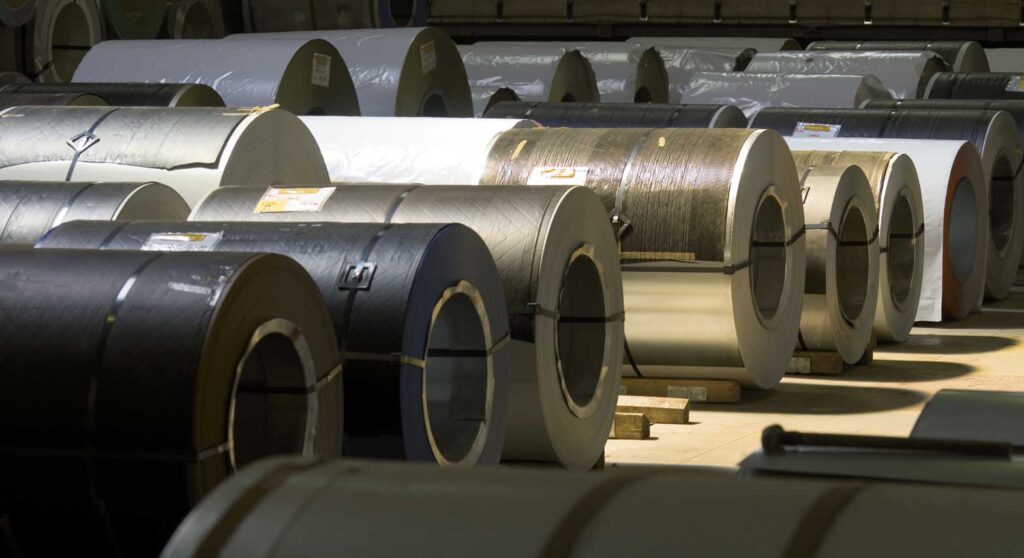
Alessandro Banzato, head of Italian steelmakers association Federacciai, has confirmed a mildly positive outlook for the Italian steel sector, after the strong declines registered during March and April.
During a press conference in Milan attended by Kallanish, the executive forecasted that 2020 steel production should fall by -17% on-year. This drop is considered positive, given that output in March and April each dropped -40% y-o-y. “The market is clearly improving and we remain mildly positive also for the first months of 2021,” Banzato said.
Looking at the situation in more detail, Banzato underlined the better performance of long products, whose output dropped -16.2% in January-August. This contrasts with the persistent difficulties faced by flat products, mainly due to the steep output reduction at ArcelorMittal Italia’s mill in Taranto. Their output fell -20.8% y-o-y in January-August.
Some uncertainties continue in the Italian market due to the ongoing negotiations between ArcelorMittal and Italian authorities over the future of the former Ilva. A new agreement is expected to be reached by the end of November, but Banzato underlined once again the fact that Italian manufacturing industries need a large steel complex like Ilva as a supplier. The Taranto plant significantly reduced its output during the last year, raising concerns among many market observers.
“If needed [in case of an exit by ArcelorMittal], I would of course welcome the intervention of the government to take over control of the company for a limited period of time, to prepare for a new future,” Banzato noted. “At the moment, nevertheless, negotiations between ArcelorMittal and Italian authorities are ongoing and we can only wait and see what the decisions will be.”
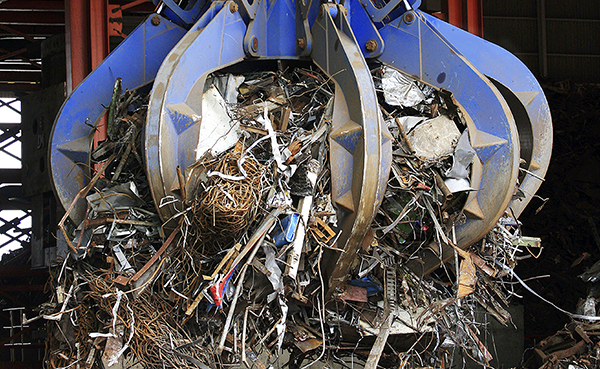
BIR: economic activity may not rebound till 2023
Most economies are unlikely to return to pre-Covid-19 levels before at least 2022, was the conclusion of this week’s Bureau of International Recycling (BIR)’s Convention Week Keynote Session.
According to Stefan Schilbe, Chief Economist at HSBC Germany, most countries will probably fail to return to pre-pandemic levels of activity until 2022. The forecast from Philippe Chalmin, Professor of Economic History at Paris-Dauphine University, was even starker: “It’s not before 2022 – or even 2023 – that we will be back hopefully at the levels we were last year,” he warned.
Chalmin described the events of recent months as “…the most severe economic crisis since the 1930s”. All major countries had been returning negative growth figures – with the notable exception of China.
The commodity “…stars of 2020” had proved to be gold and iron ore. The former climbed above $2,000 per ounce in August but has since dropped to nearer $1,900. The latter broke through $130/tonne as a result of rising Chinese steel production before heading back towards $120/t.
Iron ore prices are expected to dip below $100/t, resulting in a “…slight downward movement in ferrous scrap values,” Chalmin said at the event attended by Kallanish. For the metals markets, in general, including the leading non-ferrous metals, he pointed to surpluses and a belief that China’s recovery had already been factored into values. “I don’t see much scope for a rise in prices,” the professor confirmed.
Chalmin also anticipates a decline in oil prices from around $40/barrel to nearer $30.
Schilbe reported that some economies had been brought “…almost to a standstill” by Covid-related restrictions earlier this year but that a subsequent recovery had been driven by “…economic stabilisation” within China. Investment in this country is continuing to pick up and further fiscal stimuli are anticipated. Monetary policy could be expected to remain “…ultra-loose” in the USA, while a stronger euro could dampen an export recovery in Europe, he added.
Schilbe identified downside risks: a prolonged pandemic; protectionism dragging down world trade growth; high levels of indebtedness as a result of, for example, job support schemes; and bankruptcies and unemployment.
BIR Director General Arnaud Brunet opened the Keynote Session by describing 2020 as “…an exceptionally turbulent if not brutal year”. He warned the next 6-12 months were likely to be “…very uncertain”. Both the IMF and OECD were “…pessimistic about the short-term and medium-term future”, he noted.