

Outokumpu to cut 10% of workforce, mostly Europe
Outokumpu is starting the negotiation processes to cut its total global workforce by some 1,000 units (some -10%) by the end of 2021.
In a note seen by Kallanish, the company notes that negotiations will commence immediately. Most cuts will be in Finland (270), Germany (250) and Sweden (190). Further reductions are also planned across European and Americas operations.
“Due to the challenging market situation with continuing high import pressure in Europe and the Covid-19 pandemic impacting the global economy, it is crucial to ensure the company’s cost competitiveness by reducing fixed costs, of which personnel expenses are significant part,” Outokumpu observes.
The company posted recovering results in the third quarter compared with Q2, but they remained below Q3 2019. Q3 net loss was €63 million ($74.5m), against a loss of €27m in Q3 2019.
Looking ahead the company remains cautious for Q4. “As communicated previously, the Covid-19 pandemic is expected to have a significant impact on the stainless steel industry throughout 2020, and increases uncertainty. Outokumpu expects its stainless steel deliveries for the whole group to remain stable in the fourth quarter compared to the third quarter,” the company comments.
The firm’s American business is developing in the right direction, while in Europe persistent pressure from Asian imports is still seen by the company as a threat.


UK longs importers adapting to quota system, demand sufficient
UK-based longs buyers have been trying to adjust to the recently introduced quota system which now makes it harder for them to source products from non-EU destinations. “Generally demand is good. Most stockists have kept themselves well covered through the end of the year,” one source mentioned.
Local prices for UK rebar are at GBP 420-425/mt (€465-470/mt) CPT, local wire rod prices are at GBP 435-445/mt (€481-492/mt) CPT, while local merchant bar prices are standing at GBP 465-475/mt (€515-526/mt) CPT, for December and early January deliveries, SteelOrbis has learned.
In the import segment, ex-Spain rebar offers to the UK are currently at €440/mt CIF northern Irish port for December shipment. Sources report that Turkish mills are aiming for $465/mt (€395/mt) FOB, which seems to make it difficult to achieve any rebar sales to the UK for now. The average freight charge is around GBP 20/mt (€22/mt) from Turkey to UK ports without any additional charges, and the estimated time of arrival is approximately 15-20 days, SteelOrbis understands. As a result, the offers may be considered workable, but unfortunately Turkey is limited to only 16,297 mt of exports to the UK in the first quarter of 2021.


Final closing for Ilva purchase scheduled for 2022
The final closing by ArcelorMittal of the lease and purchase agreement for the steelmaker formerly known as Ilva is now scheduled by May 2022, subject to various conditions, ArcelorMittal says in a note seen by Kallanish.
On 4 March ArcelorMittal announced that AM InvestCo and the Ilva Commissioners had signed an amendment agreement to the original lease and purchase agreement for Ilva. The amendment outlines the terms for a significant equity investment by Italian state-sponsored entities into AM InvestCo. This forms the basis of a new partnership between ArcelorMittal and the Italian government.
This equity investment, to be captured in an investment agreement, is to be executed by 30 November. The amendment agreement is structured around a new industrial plan for Ilva, which involves investment in lower carbon steelmaking technologies. The Italian government has recently designated Invitalia to negotiate with AM InvestCo. In the event that the investment agreement is not executed by end-November, AM InvestCo has a withdrawal right, subject to an agreed payment, the company says.
Meanwhile, ArcelorMittal Italia is committing to settling all outstanding debts, which is improving negotiations with the government. Due to the current pandemic crisis and the fall in global steel demand the company is producing at minimum capacity. Some sources believe it will end the year with a production of approximately 3 million tonnes.
It is also extending temporary layoffs for a further 13 weeks starting from 16 November at its Taranto steelworks. The new furloughs affect 8,140 employees including production workers, office workers and managers at the company’s main steelworks in Taranto (see Kallanish 23 October).
EU demand remains below pre-crisis levels: ArcelorMittal
ArcelorMittal’s production, shipments and sales recovered in Europe during the third quarter, but did not return to pre-Covid-19 crisis levels.
In June-September crude steel production was up almost 12% on-quarter to 7.9 million tonnes, but it still remained some -25% below Q3 2019. Steel shipments also recovered strongly, but remained down -15% on-year, Kallanish notes.
“Demand and activity levels have gradually improved, as lockdowns eased through 2Q 2020 and into 3Q 2020, particularly with automotive and manufacturing restarts,” the steelmaker says. “As a result, the company resumed some steel-making capacity in France, Spain and Germany, with some of the restarts required to ensure continuity of supply to customers during the planned major reline of a blast furnace at Gent, Belgium that began late August 2020.”
“Nevertheless, demand has not yet recovered to pre-crisis levels,” the group points out.
Sales in Q3 in Europe surpassed $7 billion, -20% down on Q3 2019 but up 21% on-quarter. Thanks to the recovery of sales prices, in particular, spreads and average steel selling prices in Europe recovered, but the company still registered an operating loss of $342 million.
“Given that inventories in the system are relatively lean, recovering demand has seen steel spreads return to more normalized levels from the unstainable lows seen at the end of 2Q’20,” the company explains.
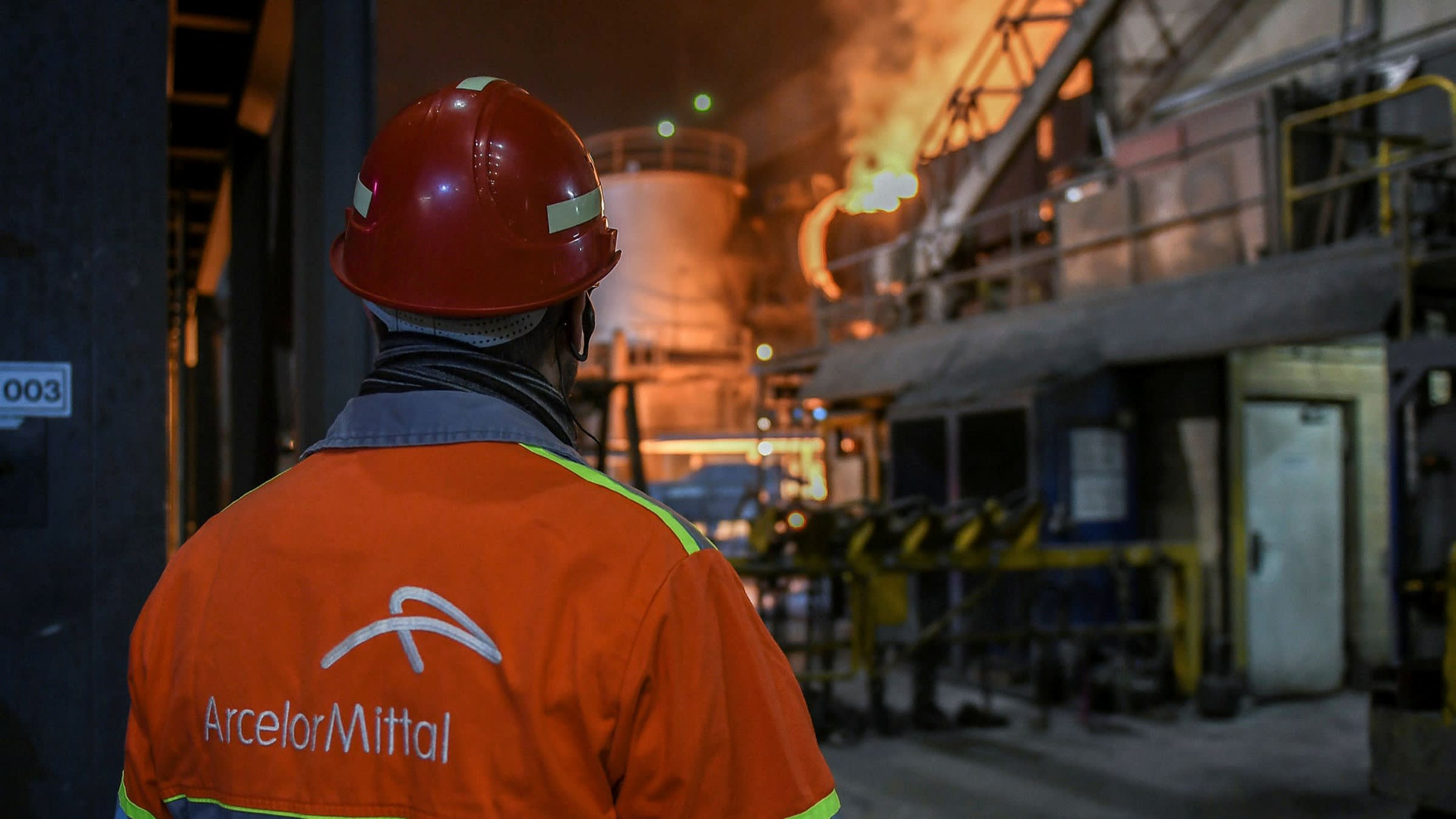
ArcelorMittal shipments remain depressed, eyes further structural adjustments
ArcelorMittal says it is developing options for further structural cost improvements to prepare for the post-Covid-19 operating environment. This follows the closure in October of the Krakow plant’s hot-end. Further details will be provided with the full-year 2020 results in February.
Steel shipments fell -13% on-year in the third quarter to 17.5 million tonnes, but this was up 18% from Q2 as economic activity recovered across all regions following the Covid-19 impact. Crude steel output fell -23% on-year to 17.2mt but own iron ore output rose 9% to 14.8mt.
Consolidated sales fell -20% on-year in Q3 to $13.27 billion, although these rebounded 21% from Q2. Ebitda fell -15% on-year to $901 million but attributable net loss narrowed 52% to $261m.
The on-quarter sales rebound was primarily due to higher steel shipments, with a better sales mix – higher automotive volumes share – largely offsetting lower selling prices. Moreover, mining sales increased on-year and on-quarter thanks to higher iron ore prices.
“The easing of lockdown measures has seen activity levels improving since 2Q 2020; nevertheless, demand remains below normal and the pace and profile of recovery is uncertain,” ArcelorMittal says in a report seen by Kallanish. The company has begun to restart hot idled capacity as market demand improves on a region by region basis; however, concerns around second wave impacts persist.
“The experience of the last 6-7 months has, through necessity, forced the business to operate differently in particular with a leaner cost structure,” the company continues.
In the nine months through September steel shipments dropped -20% on-year to 51.8mt and crude steel output fell -25% to 52.7mt. Sales declined -29% to $39.09 billion, Ebitda was down -40% to $2.58 billion and net loss more than trebled to $1.94 billion.

Deutsche Bank, steel plantmaker Primetals link ESG, currency hedging
Financial institution Deutsche Bank and steel equipment manufacturer Primetals Technologies have established a framework linking ESG and currency risk hedging, Germany-based Primetals said Nov. 5.
The framework agreement enables Primetals to hedge its currency risk with forex options over a period of four years, linking them to sustainability targets.
“Measuring the success of our sustainability targets by our financial products illustrates the high regard for sustainable value creation at Primetals Technologies,” said Yoshiharu Ikeda, Chief Financial Officer of Primetals.
According to Primetals, financial products that meet ESG criteria have seen increasing demand as investors want to combine a return of profit more closely with personal or institutional values.
“As steel production accounts for up to ten percent of global greenhouse gas emissions, providers of decarbonization and automation solutions such as Primetals Technologies are at the center of this development,” Primetals said.
The sustainability targets include the proportion of total sales of projects sold that aim to reduce greenhouse gas emissions for customers, revenues relative to research and development expenditure that result in improved resource efficiency and promotion of a safe and healthy work environment.
At the end of July 2020, Deutsche Bank devised criteria for the classification of ESG financing, aligned to the new EU Taxonomy Regulation.
Any currency hedges executed by Primetals will need to meet the agreed targets and the company will have to pay a predefined sum to a non-governmental organization if it fails to do so.
External independent consultancy Environmental Resources Management will appraise and certify whether the targets are adhered to for the entire life of the option.
— Laura Varriale

Liberty Steel to deliver its first ‘green’ rebar
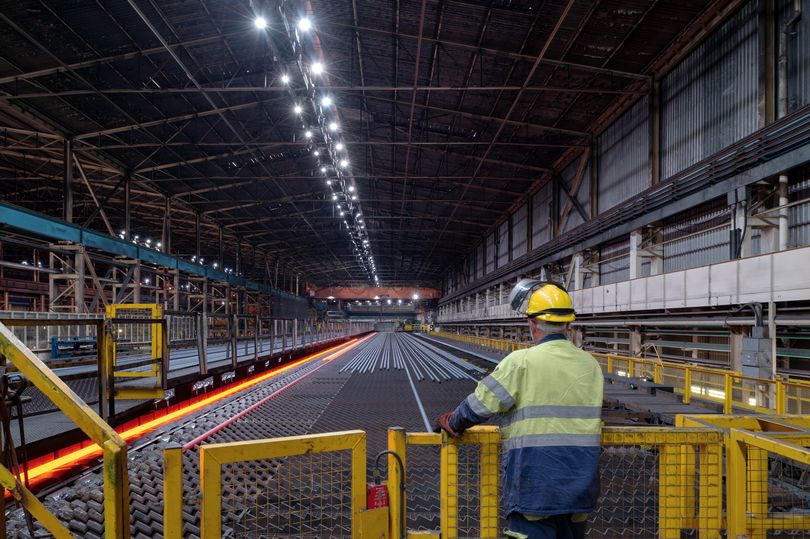
Liberty Steel UK is set to ship its first orders of sustainably produced steel reinforcing bar (rebar) after securing full Cares and sustainability approval this week, the company stated on Nov. 5.
Liberty started production of its “GreBar” in October, with the company set to deliver around 10,000 metric tonnes of it before the end of the year
Liberty is aiming to challenge the UK’s current reliance on imported rebar and target future infrastructure projects. Half of the 1.2 million mt of rebar used annually in the UK is sourced from abroad while the HS2 rail project will require nearly 1 million mt. Upgrades and replacement of existing residential and transport infrastructure will also fuel future demand, the company stated.
Liberty’s mill has the capability to produce rebar in sizes 25 mm, 32 mm, 40 mm and 50 mm in Grade B500C. The company is planning to also make 20 mm diameter product.
“The UK government has pledged to ‘build back better’ from the pandemic and our rebar offering made through Liberty’s GREENSTEEL process offers customers the chance to use high-quality steel produced sustainably by a UK business,” Peter Gate, commercial director of rebar for Liberty Steel UK said.
“..We have placed particular emphasis on developing the capability to provide 50 mm rebar, which will give customers a broader UK market offering in this size and help drive design and cost efficiencies in construction,” he added.
Liberty’s Rotherham mill will ramp up production of GreBar over the coming months, with ultimate capacity to reach 300,000 mt/year.
— Annalisa Villa

German company launches price indices for ferroalloys

Metalshub, the digital trading platform for metals and ferroalloys based in Düsseldorf, Germany, has launched its first price indices, it tells Kallanish.
The platform has started publishing price indices on 5 November for ferrosilicon, ferrochrome, ferromolybdenum, ferrovanadium, ferromanganese and manganese metal. The six indices will be the company’s first move into the price data arena, with others expected to be added later. They are based exclusively on real negotiation and transaction data, Metalshub notes.
It highlights a strong trading liquidity that the platform has generated since going live in 2017. According to its managers, the marketplace features a list of around 1,000 member companies and generates more than 900 bid/offer data points per month. The value of legally binding contracts concluded over the platform was around €100 million ($118m) in 2019, and is expected to reach €200m this year, despite the market disruptions caused by the Covid-19 pandemic.