

NLMK foresees 7%-9% drop in Russia’s 2020 steel demand
Russian mining and steel company NLMK believes Russian steel demand may contract by 7%-9% or by 3 million to 4 million metric tons this year to a range of 39-40 million mt versus 2019, Ilya Gushin, the company’s VP of sales, told journalists Nov. 9.
Despite current normalcy thanks to solid demand for both iron ore and steel products, a few sectors, such as tourism, commercial aviation, and cruise ship building, remain inactive and with such big chunks of businesses off, economies are still experiencing macroeconomic shock comparable to that of some of the history’s great depressions, said Gushin.
Cumulatively, the 2020-21 period is likely to see a zero change in the world’s GDP as it is forecast to fall by 4%-5% this year and recover by the same 4%-5% in the next, he noted.
World steel consumption and GDP correlate by about 80% with each 1% GDP growth generating a 2%-3% rise in steel demand. However, in the post-crisis year of 2021, due to time needed for the injured and paused industries to spring back to life, steel demand is likely to only respond with a 1% increase for each 1% gain in GDP, or 4%-5% in total, in line with GDP movement, according to Gushin.
This year, the 4% fall in the world GDP may reduce steel demand by 2% as a steeper fall will be offset by a strong performance in China, which in Q1 registered its first GDP decline (-7%) since 1992, but has since recovered quickly thanks to the government’s significant stimulus measures and is likely to become the only country with a positive GDP change this year.
Construction and infrastructure have buoyed economies this year, because even with tough virus containment measures, most countries continued to operate in these sectors.
NLMK expects Russian steel consumption to fall by 7%-9% from 2019. It could have fallen more if not for the mortgage interest rates cuts, which stimulated residential property demand. These fell to 7.9%, down from 9.9% in 2019.
Russia’s rebar and hot-rolled coil consumption are expected to decline the least this year – by 0.5%-0.6% each, while the steepest drops are to be seen in steel pipe and pre-painted coil uses, which are forecast to shrink by 16% and 7%, respectively, according to NLMK.
Steel imports have fallen to about 12% of the Russian market, down from 14% in 2019. Although incremental, this does help major local steelmakers keep their market shares unchanged during the significant demand contraction. In Russia, NLMK now covers 16% of demand versus 12% in 2009.
It owns blast furnace- and electric arc furnace-based steelworks in Russia; rerolling mills in the US and Denmark, and part-ownership in rerolling and coating facilities in Belgium, France and Italy. NLMK makes a wide range of flat and long steel products.
— Ekaterina Bouckley


Steel players see no early end to protectionism with new US president

European and Middle Eastern steel players see no early end to protectionism in steel markets with Democrat Joe Biden’s confirmation as the next US president, market sources said after and immediately before Biden’s victory in the presidential race was called over the weekend. Many however expect trade tensions with certain countries and regions will be eased.
The Section 232 import tariffs on steel, instituted in March 2018 by President Donald Trump, are widely expected to remain with the new president, the sources believe. These led to the EU’s introduction later the same year of an import safeguards scheme, which regional steelmakers are seeking to extend after its scheduled expiry in June 2021, particularly as no immediate change is expected in the Section 232 tariffs.
“We at ArcelorMittal believe that EU safeguards should continue due to global overcapacity that continues in the market, I don’t expect a significant impact on the 232, considering Biden has suggested in his campaign that he will maintain 232,” said Aditya Mittal, President and CFO of ArcelorMittal and CEO of ArcelorMittal Europe, in the company Q3 results call late last week.
“For the steel industry Donald Trump will be memorable for his basket of measures aimed at restricting international trade, which is quite an unusual move for the US,” said Ilya Gushin, vice president sales for Russian steelmaker NLMK. “From what we know about Biden, we believe as a president he may well be bound for measures that will ease the existing tensions [in world trade].”
“If Biden wins, we might see some slack in the trade war with China, but that’s it,” a Turkish mill source said. “I don’t see much impact on the steel market otherwise.”
European steel market assessments remained largely stable Nov. 9, confirming perceptions last week that the market was already “pricing in” a Biden win after recent price gains.
S&P Global Platts assessed North European hot-rolled coil domestic prices steady at EUR519/mt Nov. 9 while Northwest European domestic rebar prices were up EUR2.50/mt to EUR462.50/mt.
Deepsea Turkish import scrap prices were unchanged as market participants held back amid sharp lira/dollar exchange rate volatility, sources said.
Platts assessed Turkish imports of premium heavy melting scrap 1/2 (80:20) at $298/mt CFR on Nov. 9, unchanged on day.
Stimulus package
Biden’s program provides for a huge short-term economic stimulus package of $2 trillion dollars, which includes infrastructure projects as well as the expansion of digitalization and renewable energies, noted Karl Haeusgen, president of the German mechanical engineering association VDMA. “The European capital goods industry should also benefit from this. However, government contracts are expected to be awarded to American companies whenever possible.”
“A lot depends on the US dollar exchange rate as we understand Biden wants to start a lot of governmental projects, such as in infrastructure,” an EU steel recycler said. “This means the US national debt may go up, which is not good for the exchange rate.”
Relations with Turkey
Eyes will be focused on steel relations between the US and Turkey.
President Trump raised tariffs on imports of Turkish steel from 25% to 50% in August 2018 under Section 232, amid increased political tension between the countries over Turkey’s detention of a US religious leader. Turkey’s tariff rate on steel was dropped back to 25% in May 2019, on improved relations between the countries. Turkey’s rebar exports to the US slumped to 108,300 mt in 2019, from pre-232 levels of more than 1 million mt/year, although a recovery to 363,950 mt has been reported for January-September 2020.
In turn, Turkey imposes a tariff on coal imports from the US. For coking coal, the current tariff is 5% based on a delivered basis, which was reduced from a 10% rate in 2019. The US exported 1.76 million mt of coking coal to Turkey in January-July, up by 172% on the comparative period in 2019.
Murat Cebecioglu, chairman of the International Rebar Producers’ Association (Irepas), said in September he believed Turkey would not be easily able to regain pre-Section 232 steel export levels to the US as its market share has been replaced by domestic producers and by exporters from other countries including Italy, Spain and Portugal, which jumped into the gap when Turkey’s tariff rose to 50%.
“Biden is likely to toughen the US stance on Turkey,” a Turkey-based steel trader said. “In terms of trade policies, I don’t expect any additional Section 232 measures as they would be unconstitutional. However, the US political establishment might try to put pressure on Turkey with the long-running issues of the purchases of Russian missile defense systems and the Halkbank money laundering and Iranian sanctions evading case. In doing so, however, I still believe they will still first try to win Turkey over to their side, as Turkey was and will be a strategically important ally to the US.”
Turkey’s vice president, Fuat Oktay, stated Nov. 8 that: “The outcome of the US elections does not have an impact on ties with Turkey, as Ankara will continue to activate diplomacy channels with the NATO ally as it always did.”
Iran sanctions: Chinese winners
Some steel sector sources in Tehran believe the biggest losers of President Trump’s latest rounds of sanctions against Iranian steel have been European engineering companies which have been prevented from completing or embarking on new works contracts in Iran.
“Iranian companies have worked closely with European companies such as Danieli and SMS for many years, but they were forced to turn toward China and some other countries to meet their requirements due to the US sanctions,” a Tehran-based analyst said, noting that the sanctions have not stopped Iran pursuing its ambitious steel expansion program.
According to the World Steel Association, Iranian companies produced around 18 million mt of crude steel in 2016, when Trump was elected. Four years later, at the end of his term, Iran’s steelmaking capacity has reached more than 32 million mt/year, official sources report.
— Diana Kinch with Annalisa Villa, Viral Shah, Cenk Can, Rabia Arif, Laura Varriale, Katya Bouckley and Hector Forster
EU service centers see steel flats shipments drop 16% in January-September
Shipments of flat steel products from EU service centers dropped 16% in the first nine months of 2020 on the year, service center and distributor association EUROMETAL reported Nov. 9.
During the same period, EU multi-product and proximity steel stockholding distribution registered lower shipments for almost all products in its portfolio, with total volumes down 12% year on year.
In September, strip mill products shipments were up by 3.7% on the year, compared with a drop of 1.5% in August.
When expressed in terms of days of shipments, stocks at EU steel service centers (SSCs) reached 59 days in September 2020, compared with 73 days in September 2019.
While EUROMETAL does not specify volumes, the association releases an index for stock levels with the average of 2015 equivalent to 100. On this basis, stocks for September 2020 were at 94, compared with 114 in September 2019 (average 2015 = index 100).
Multi-products
Total steel product shipments decreased 2.1% year on year.
Only merchant bars, hot rolled flats and cold rolled flats had a positive trend.
The stock volumes index of EU multi-product and proximity steel stockholding distribution was at 83 in September 2020, compared with a significantly higher index of 92 a year before (average 2015 =Index 100).
When expressed in terms of days of shipments, stock volumes leveled in September 2020 at 68 days of shipments, compared with 74 days in September 2019, the association said.
— Annalisa Villa

AI solution to reduce ArcelorMittal Duisburg costs
ArcelorMittal Duisburg has commissioned AI company Smart Steel Technologies to introduce its “SST Temperature Optimization AI” software, Kallanish hears from the companies.
At the Duisburg long products mill, the software is integrated live in the production process to ensure precise temperature control from BOF to continuous casting. The mill will thus minimise temperature buffers and lower the temperature in production, leading to permanent energy cost savings and reduced CO2 emissions costs, ArcelorMittal claims.
Integration of the software will take three months. The project goal will be achieved after a test phase of another three months.
Berlin-based Smart Steel Technologies already secured contracts earlier this year with ArcelorMittal Germany’s strip mills. At Eisenhüttenstadt, it introduced its “SST Casting Optimization AI” and “SST Surface Inspection AI” software products, which were also later adopted in Bremen.

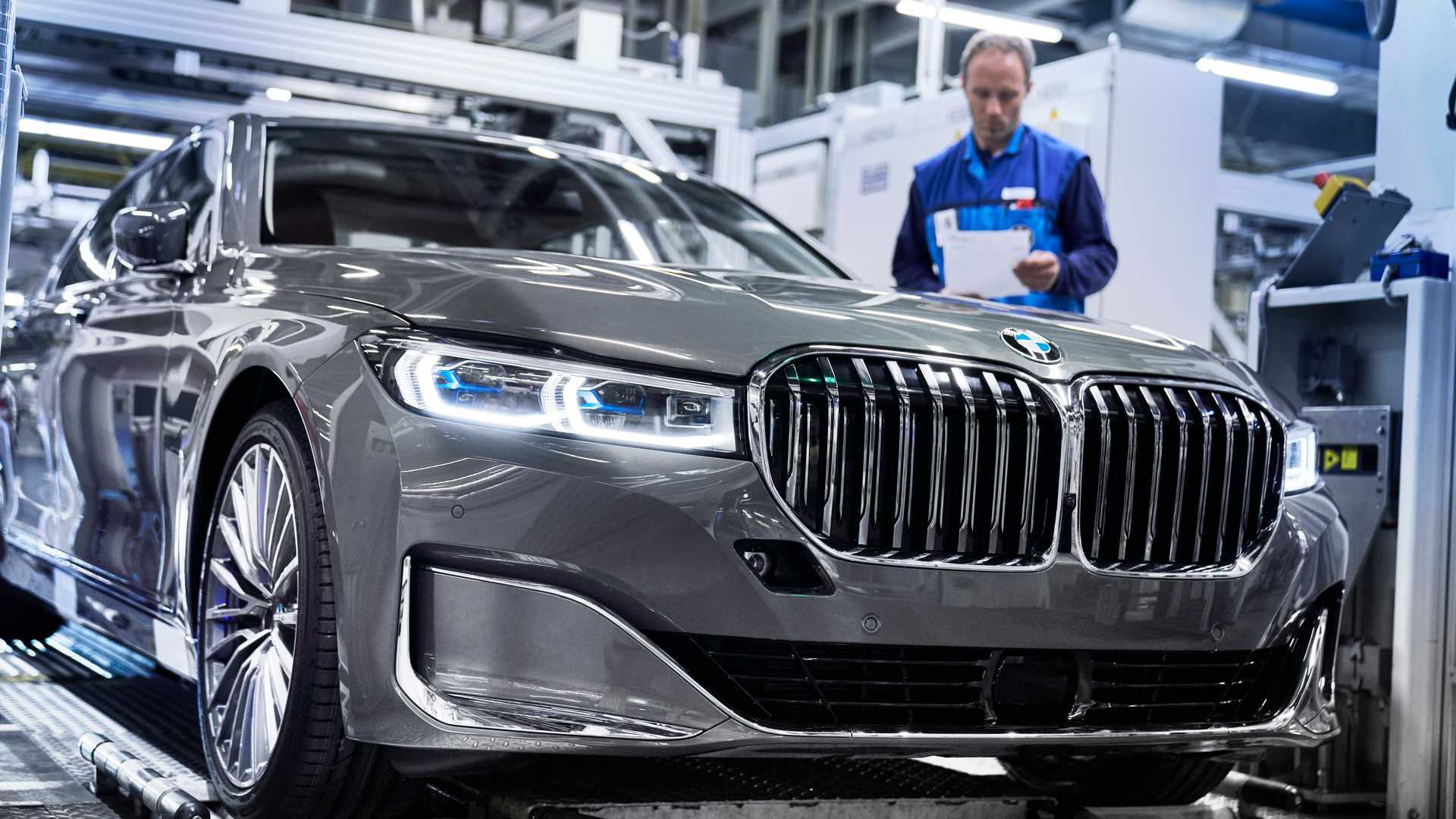
Eurofer improves EU automotive forecast, foresees delayed recovery
European steelmakers’ association Eurofer has revised up its EU automotive sector output forecast for 2020 to a -20.6% on-year decline, compared to -26% in the previous forecast. This, however, remains the most severe drop on record. Output should rebound 18.1% in 2021.
EU automotive output fell on-year for the seventh consecutive quarter in Q2, by -44%, after falling -14.5% in Q1. It was hit by a combination of already weakening demand for new passenger cars in Europe and in key export markets such as the US, China and Turkey, uncertainty around WLTP and model changes, and the outbreak of the Covid-19 pandemic.
Some production sites re-opened already in late April, and gradually the sector returned to almost normal activity around mid-June all over the EU, leading to new orders and a restart in output, albeit at low levels. Disruption in the supply chain due to lockdowns and blockages in transport across EU countries have made it very difficult to ensure the supply of materials and components to the industry, Eurofer says in a report monitored by Kallanish.
“Assuming that from the third quarter onwards normal business conditions return, it will take time before new orders translate into new deliveries due to persistent transport and supply chain issues, which will remain in place for some time,” Eurofer comments. “In addition, demand for new cars from consumers is expected to remain very weak at least until the macroeconomic picture and consumer disposable income improve. This is another source of uncertainty.”
“In 2021, provided that the industry has been able to restore its production to normal levels, and with WLTP distortions having faded out by then, the launch of new models – many of them electric vehicles – could be a supportive factor, combined with some improvement in real wages and labour market dynamics on the demand side,” the association continues. “However, subdued car demand from major markets such as the US, China and Turkey will remain a challenge for EU car exporters.”
EU Service Centres surpass pre-pandemic activity in September
European flat steel service centres (SSC) registered in September a level of sales above the one registered in September 2019. They thus reached pre-coronavirus levels for the first time since the pandemic begun to spread through Europe in late February.
Strip mill product shipments from SSC rose 3.7% year-on-year in September; in August, volumes were still some -1.5% down y-o-y. Despite the recovery in September, aggregated January-September shipments remained down -16.1% y-o-y, according to the latest Eurometal numbers.
The boost for SSC was mainly fuelled by the recovery in the automotive sector. Multi product and proximity steel distributors continued to face some challenges, however.
September shipments for all steel products from general distributors decreased -2.1% y-o-y. “Only merchant bars, hot-rolled flats and cold-rolled flats had positive trends in September,” Eurometal says in a note sent to Kallanish.
Despite the slower performance in September, nine-month shipments for multi-products distributors were down only -11.9% y-o-y, confirming that the pandemic impact was less severe for this sector.