


Thyssenkrupp chief extols steel division, ponders German alliance
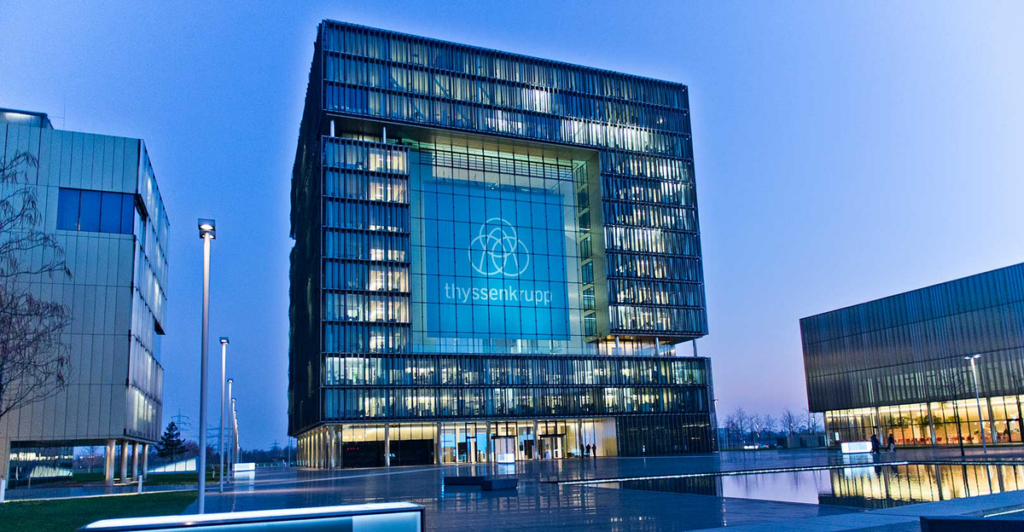
Thyssenkrupp chief executive Martina Merz has emphasised the high quality of the group’s steelmaking capability and has high hopes for the future of its distribution division, Materials Services.
“We believe in our steelmaking activities, in which we are the technology leader,” Merz says in an interview with daily Frankfurter Allgemeine Zeitung. Thyssenkrupp is currently in talks with Liberty Steel over a potential takeover of, or partnership for, its tk Steel Europe division. Merz considers the offer one possible option to enable a future for the division, which has been particularly hard hit by the coronavirus lockdown on carmakers in the spring.
She is also open to reviving the concept of a grouping of German steelmakers, which was considered in recent years under the name “Deutsche Stahl AG”. Salzgitter has however signalled its disapproval. Merz notes that she and Salzgitter chief Heinz Jörg Fuhrmann “…are not dancing together” in this respect, and that the government would also be a player in the game. “It will be more of a square dance,” she quips.
In contrast to its steelmaking division, which could be potentially divested, the group will cling on to Materials Services, Kallanish understands. For its distribution unit, Merz highlights the scalability of digital business models, and potential of expanding activities in America.


German recyclers want to keep scrap within EU
Germany’s steel scrap recyclers have expressed their desire to keep accrued scrap within the borders of the EU, and are seeking solutions for a circular economy at the European Commission level.
The EU produces more steel scrap than it recycles, with some 20 million tonnes/year exported. This essentially goes against the idea of avoiding transport in the interest of climate protection, says German steel recyclers federation BDSV.
In the first half of 2020, Germany’s exports of steel scrap totalled 3.84 million tonnes, which was -14.5% less on-year. The main target countries were the Netherlands, Italy, Belgium, Luxembourg and Turkey. It is likely that much of the volume sent to Belgium and the Netherlands eventually ended up in deep-sea markets like Turkey. Shipments to Italy and Luxembourg dropped significantly, Kallanish learns from BDSV statistics.
Imports of scrap into Germany totalled 1.54mt, down -17.1% on-year, and came mainly from Czech Republic, Poland, the Netherlands and France. Notable deviations from the first half of 2019 occurred with the Netherlands (-41.5%) and Poland (+10.7%).
In terms of prices, BDSV notes that fluctuations this year were comparably minor, with notations for new arisings sort 2/8 at between €196/tonne ($233) and €230/t. Meanwhile, 2019 had seen a range of between €170 and €256.
A BDSV sentiment poll shows that members this year have been more optimistic about business and more willing to invest and to hire staff than in 2019. Although more than half of the companies have operated on reduced hours, at least temporarily, after the outbreak of Covid-19, none had to close, and only 15% laid off personnel.
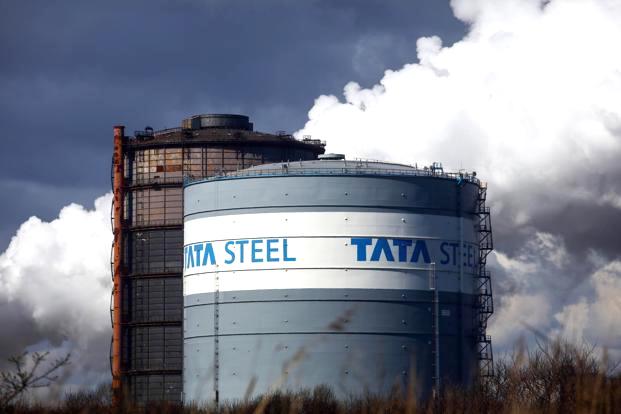
Tata eyes improved UK support, Netherlands due diligence
Tata Steel has asked the UK government for more “…substantive and permanent” options to secure the long-term future of Port Talbot’s operations, a spokesman for the steelmaking group confirms to Kallanish.
“The support we are looking for is a little more substantive and something more permanent, that will help us bring down cost of production and add value to the product mix,” Tata Steel chief executive TV Narendran told Moneycontrol on Tuesday. “Or, help us over a period of time in making a transition to a greener facility.”
A major point of the discussions is reported to be the possible replacement of the blast furnaces at Port Talbot with electric arc furnaces. However, there are questions over whether the cost of electricity in the UK will allow for competitive production.
The financial assistance Tata Steel UK already received from the government was to support the company’s working capital in order to ensure it continues operating in the immediate future, Narendran added.
“Post Brexit, we see that UK government will be keen to revive economic activity,” Narendran is quoted as saying by Livemint. “The UK has some high-end manufacturing locally and steel is an important part of the value chain. Over 50-60% of the steel used in the auto and construction industry in the UK is supplied by Port Talbot and we believe the government will support this business to keep the integrity of the value chain.”
Tata Steel chief financial officer Koushik Chatterjee, meanwhile, said the due diligence for the sale of Tata’s Netherlands unit to SSAB is expected to completed by end-December. Thereafter, the company will begin negotiations on the terms and commercial value of the transaction.
Concerns are mounting over the future of Tata Steel’s Port Talbot plant, given the Indian group has already decided to divest the more profitable, lower-cost Dutch half of its European operations.

Italian government ArcelorMittal both set to be part of the new Ilva: sources
Talks on the future of ArcelorMittal Italia, the largest Italian steelmaker, have intensified between the government and company representatives as the Nov. 30 deadline to define its future structure approaches.
Sources said the parties involved are close to finalizing the company’s future. It is considered possible that the Italian government will take a stake in ArcelorMittal Italia via Invitalia, Italy’s agency for investment promotion and enterprise development, and that ArcelorMittal will stay in the company, unless a “coup de theater” occurs at Ilva, as has sometimes been the case in the past.
Reinforcing this market talk, Invitalia CEO Domenico Arcuri a few days ago told unions that Invitalia could take ownership of the former Ilva with “not a minority” stake and this would included modernizing both Blast Furnace 5, the largest in Europe, with a production capacity of around 3.5 million/mt/year, and idled in 2015, and Blast Furnace 1, still in operation. In addition, two electric-arc furnaces should be “introduced” to the steel plant, to “maintain a production capacity of 8 million mt per year,” a move probably capable of maintaining current employment levels, said Arucri, as confirmed by an Invitalia spokesman Nov. 17.
At stake are the jobs of around 10,700 workers at the plant, which is why it is so important for the Italian government to keep the company operational.
Industry sources said that as steel demand has slumped throughout Europe due to the pandemic and steel overcapacity is likely to continue to be a problem, it is unlikely that the Taranto works will be able to maintain a very high crude steel output for the foreseeable future. However, some sources with knowledge of the plant underscored the necessity for Taranto to operate at a rate of at least around 6 million mt /year to stay in the black.
Sources said that as ArcelorMittal has worked very hard to achieve its $7 billion net debt target and is now prioritizing cash returns to shareholders, it is possible that the company wishes to keep Ilva out of its consolidated earnings in the newCo.
So If is likely that both Invitalia and ArcelorMittal will be in the newCo, Arvedi — the country’s second-largest flat steel producer – is expected by informed sources not to be interested in any minority stake, as had previously been suggested.
Arvedi and ArcelorMittal declined to comment when reached by Platts.
ArcelorMittal Italia CEO Lucia Morselli had been expected to update unions about the ongoing negotiation on Nov. 17, but the meeting has been postponed to next week.
Currently, ArcelorMittal Italia is working at one of its lowest-ever rates, casting around 7,300-7,500 mt/d, from just two of its four blast furnaces.
ArcelorMittal agreed to buy Ilva in 2018 under a lease-and-purchase agreement for Eur1.8 billion and to invest another Eur2.4 billion to clean up and modernize the plant, which has been dogged by environmental issues. Following legal issues with the Italian state, ArcelorMittal in early March reached an accord with Italian authorities over the future of the former Ilva group, amending the existing lease and purchase agreement. The agreement left ArcelorMittal with the right to withdraw from its Ilva purchase by the end of November 2020, subject to the payment of a fine of Eur500 million. The lease-and-purchase agreement may extend until May 2022.
— Annalisa Villa
