


ArcelorMittal: EU remains under threat from rising imports
EU steel imports from Turkey have dropped -20% on-year in 2020, but Turkey’s swift post-Covid-19 steel output recovery threatens the bloc with higher imports from this origin in the coming months, says Laurent Plasman, Head of Operational Marketing, ArcelorMittal Europe Flat Products.
This is because Turkey’s economy remains vulnerable to currency exchange fluctuations and inflation.
Despite the recovery starting in the third quarter, the eurozone’s GDP is expected to fall -7.4% in 2020, rising by 4.2% in 2021, according to the European Commission. The recovery will be “…bumpy and patchy,” Plasman said at the Kallanish Europe Steel Markets 2020 virtual conference on Wednesday.
The eurozone suffered unprecedented demand output disruptions this year, with the automotive industry being worst hit among end users. Real steel demand plunged -58%, with automotive losing -67% in both southern and northern Europe.
As major steel producers idled their blast furnaces to mitigate losses, they were unprepared for a swift rebound in demand elsewhere, thus creating a vacuum of supply. This continues to drive prices as demand surges on to pre-pandemic levels.
Although the negative impact of the Covid-19 pandemic on global steel demand is significant, the demand reduction will amount to only -2.4% globally in 2020 to 1.73 billion tonnes. The pandemic impact has been mitigated chiefly by China’s strong recovery. China’s steel demand is projected to grow 8% on-year in 2020 to 0.95 billion tonnes, and remain at this level in 2021. Global demand may rise up to 4.1% on-year in 2021, Plasman noted.
China has been recovering strongly since February, having overcome the Covid-19 effects first, and despite a strong contraction in Q1 should reach 1.9% GDP growth in 2020, and 8.2% in 2021, according to the most recent IMF forecast. But Chinese overcapacity remains an issue, with 200 million tonnes estimated by the government, which is likely to be 300mt in reality.


EU prices to rise, imports fall further: Assofermet

European steel prices are likely to rise further in the coming months due to various factors restricting material availability coupled with a recovery in demand, according to Assofermet Acciai president Tommaso Sandrini.
The European steel market is in a state of panic, with participants perceiving there is insufficient material to satisfy demand. Many are questioning, “are we back in 2008?” Sandrini said at the Kallanish Europe Steel Markets 2020 virtual conference on Wednesday. European mills are fully booked for the first quarter, with some offering only limited April material.
This is the result of trade defence measures blocking imports and production being concentrated at a limited number of mills. Moreover, the Covid-19 pandemic has led to drastically reduced production, while consumption in recent months has recovered to pre-pandemic levels.
Almost all major hot rolled coil exporters into the EU are blocked, the safeguard revision earlier this year halved the available HRC quota, and the anti-dumping probe is preventing any negotiations with Turkish suppliers. “So, the main message is imports will go down,” even further in the coming months, Sandrini observed.
Ten blast furnaces meanwhile remain idled in the EU, meaning around 17% of installed capacity is unavailable. Regional production in 2020 will decline to even below 2009 levels.
The EU market has meanwhile been de-stocking since 2019 when it reduced inventory by 8 million tonnes, followed by a further 11mt expected in 2020. These two years together surpass the destocking of 16mt recorded in 2009. “So, the system is short of steel at the moment,” Sandrini explained.
Going forward, mills are likely to increase production significantly in the coming months, but the effects will not be felt before the second quarter. The expiry of safeguard duties or their extension in a “…lighter” format should allow for some import opportunities. The slowdown in automotive and white goods demand will be offset by higher construction demand, driven by EU stimulus measures.
In the longer term, the EU system of protection will have to be rethought completely, as it will be impossible for a carbon border adjustment to co-exist with existing trade defence measures, Sandrini concluded.

Prices to remain high for now: Antonio Marcegaglia

Italian re-roller chief Antonio Marcegaglia expects some downward price adjustment in the coming months, but levels will remain elevated.
“When and how much is not yet clear; I believe it may happen, but not overnight – it will take a few more months,” he said at the Kallanish Europe Steel Markets 2020 virtual conference on Wednesday. Even if prices soften, they will not go back to pre-Covid-19 levels, particularly as raw materials are forecast to remain high.
After a sudden and unsustainable price drop in the second quarter, prices of steel products, particularly hot rolled coil, have grown significantly since Q3. They have spiked in Q4 as a result of a material shortage and long lead times, both in Europe and internationally. This has been caused by a demand recovery and simultaneous production cut by many players, who aim to keep output low for some time, Marcegaglia continued.
Protectionist measures will continue to play an important role in the future, and steel prices will settle to sustainable levels in the coming years. A partial recovery in global trade is possible under the incoming Biden administration. However, imports are falling substantially as markets will remain more regionalised, with prices differing significantly from country to country.
Raw material costs remain high, with iron ore spiking again. China will meanwhile continue to grow and demand huge quantities of raw materials and semi-finished products, Marcegaglia concluded.
British Steel launches new sections grade
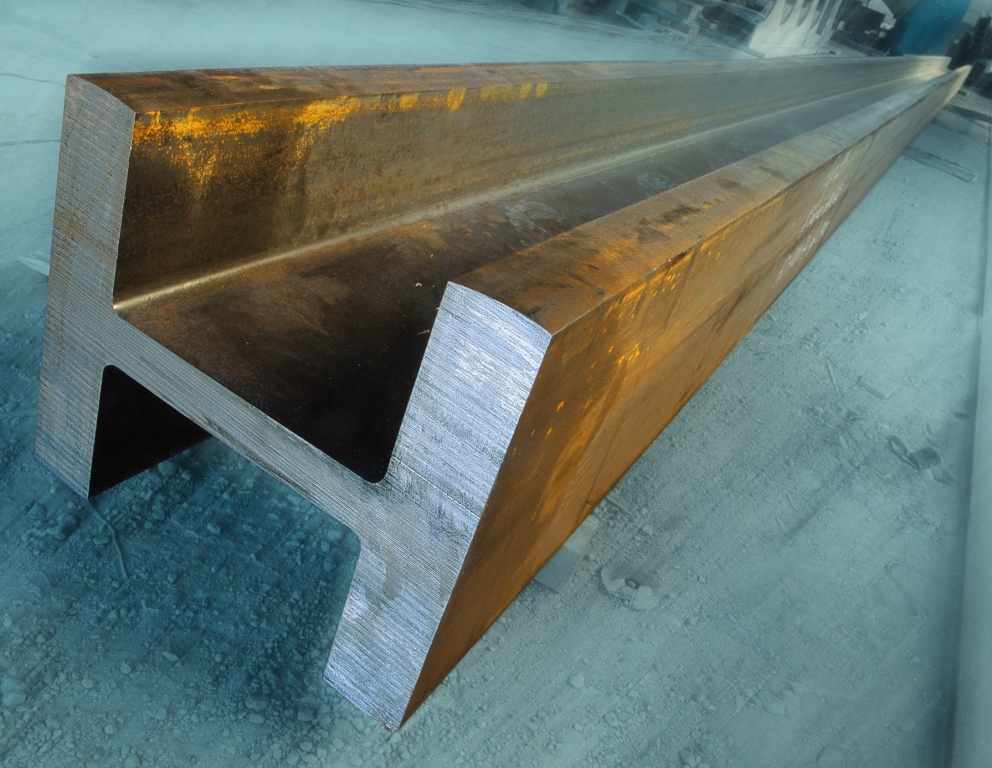
British Steel has started offering a new high-strength structural steel grade for the construction industry. Sections made from the new S460M grade are designed for use in multi-storey and high-rise buildings, the steelmaker says.
This is the first product launched by British Steel since the steelmaker was acquired by Jingye Group in March. It has higher tensile and yield strength than existing grades, the firm points out. Its benefits include less weight and lighter foundations, which reduce overall building costs; increased space within the building as the sections are lighter; and less carbon in direct proportion to the weight saving.
“As the UK’s only manufacturer of structural steel sections, we’re delighted to deliver a new high-quality steel grade at such an important time for the construction market,” British Steel chief executive Ron Deelen says in a note sent to Kallanish. “S460M provides the optimum balance between cost and weight, along with improved environmental performance – British manufacturing at its best.”
Steel for the S460M grade is manufactured at the company’s Scunthorpe steelworks before being rolled into structural sections at its Teesside Beam Mill where an extra shift, creating 40 jobs, was introduced earlier this year. The sections are produced according to EN 10025-4.
Last month British Steel said it plans to increase production at its Skinningrove special profiles mill next spring (see Kallanish passim). To support this move, it is hiring 66 new workers, of which 41 will be based at Skinningrove. It also secured a £50 million ($66m) working capital facility to support plans to expand production and sales over the coming months.
EU service centres report October sales growth: EUROMETAL
European flat steel service centres (SSC) saw strip mill product shipments rise 3.3% on-year in October, slowing from 4.7% on-year growth in September, says EU distributors’ association EUROMETAL.
When expressed in days of shipments, stocks at EU SSC reached 57 days in October versus 71 days in October 2019.
January-October shipments nevertheless still fell -14% on-year, Kallanish notes.
Multi product and proximity steel distributors however reported a -2.3% drop in total shipments in October. Only strip mill products showed positive growth.
Stock volumes in October were at 66 days of shipments versus 71 days in October 2019.
Ten-month total shipments fell -11%.

Goldman Sachs’ Currie predicts ‘long-lasting bull market’ for virtually all commodities

The world is entering a “long-lasting bull market” for commodities, with even oil set to benefit as recent underinvestment, dollar weakness, government spending and the energy transition boost demand across the board, Goldman Sachs’ global head of commodities research, Jeffrey Currie, said Dec. 8.
Speaking at an FT Live event, Currie said “every single commodity market with the exception of wheat is in a deficit today” and highlighted the example of oil, saying capital expenditure in the oil sector had fallen an unprecedented 40% in the first half of the year. He argued that even oil demand would be boosted by spending on the energy transition, due to the volume of oil consumed in the course of green energy infrastructure projects.
Goldman Sachs has a “target” price for oil of $65/b for the end of 2021 and is forecasting rapid demand recovery, with global demand set to reach 102.5 million b/d in 2022, he said, up from the International Energy Agency’s estimate that oil demand in 2019 was at 100.1 million b/d.
“It’s important to separate the vaccine, which is a tactical upside catalyst, from the pandemic itself, which is a structural catalyst to a longer-lasting bull market. As we look out to 2021 the vaccine creates that V-shaped recovery… but looking beyond that we believe it’s the beginning of a structural bull market not only in oil, but across the entire commodity complex,” Currie said.
Despite a reduction in oil demand for business travel, “we think the market’s going to be in substantial deficit throughout the end of next year and beyond into 2022… You have structural under-investment in supply — we call it the revenge of the old economy. It’s not just oil, it’s metals, mining, the entire old economy has shortages in investment,” he said.
Redistribution
“The second theme, policy, sits at the center of the demand story. The big catalyst that the pandemic shifted is that policy after 2008-9 was directed at market stability: whether it was OPEC, the [US Federal Reserve,] the Chinese five-year plan, everything was around financial stability. Now, all the policy is around social need, and social need creates a redistribution of wealth towards lower-income, income-constrained households that consume a lot more… Demand is relatively strong across the board,” Currie said.
“We call it revving commodity demand — redistributional policies, environmental policies … and then there’s the versatility in supply chains” in the form of stockpiling of commodities by countries such as China, he said.
“Policy-driven demand is going to create a capex cycle that is bigger than the BRICS in the 2000s, not quite as big as the ’70s, but we’re talking about that kind of a bull market in commodities,” Currie said.
“It’s the same three legs everywhere — redistribution, Green, and then something to deal with the resilience of supply chains — all [governments] are focused on that, whether it’s the US, Europe or China,” he said, arguing the policy side of the new cycle would be kick-started by a potential $500 million stimulus likely to be approved by the US Congress in the coming days.
Currie went on to argue that a weakening US dollar was also providing “tailwinds” for the commodity sector, with the effect already evident in price rises in oil and commodities such as copper and iron ore, with iron ore prices hitting seven-year highs on Dec. 7. “This is not something we’re forecasting for the future — we’re inside it right now,” he said.
On the topic of energy transition, Currie played down some of the more optimistic forecasts by his fellow panelists on the pace of progress in battery technology, and the rise of electric vehicles, highlighting among other factors limitations in lithium availability.
“Right now Tesla and Apple consume 50% of the world’s lithium market. These metals markets cannot accommodate scaling up these battery technologies at the rates that are potentially anticipated here,” Currie said, going on to voice skepticism about the pace of improvement in battery technology.
— Nick Coleman
Tata Steel unveils Eur300 mil environmental plan for Dutch IJmuiden plant
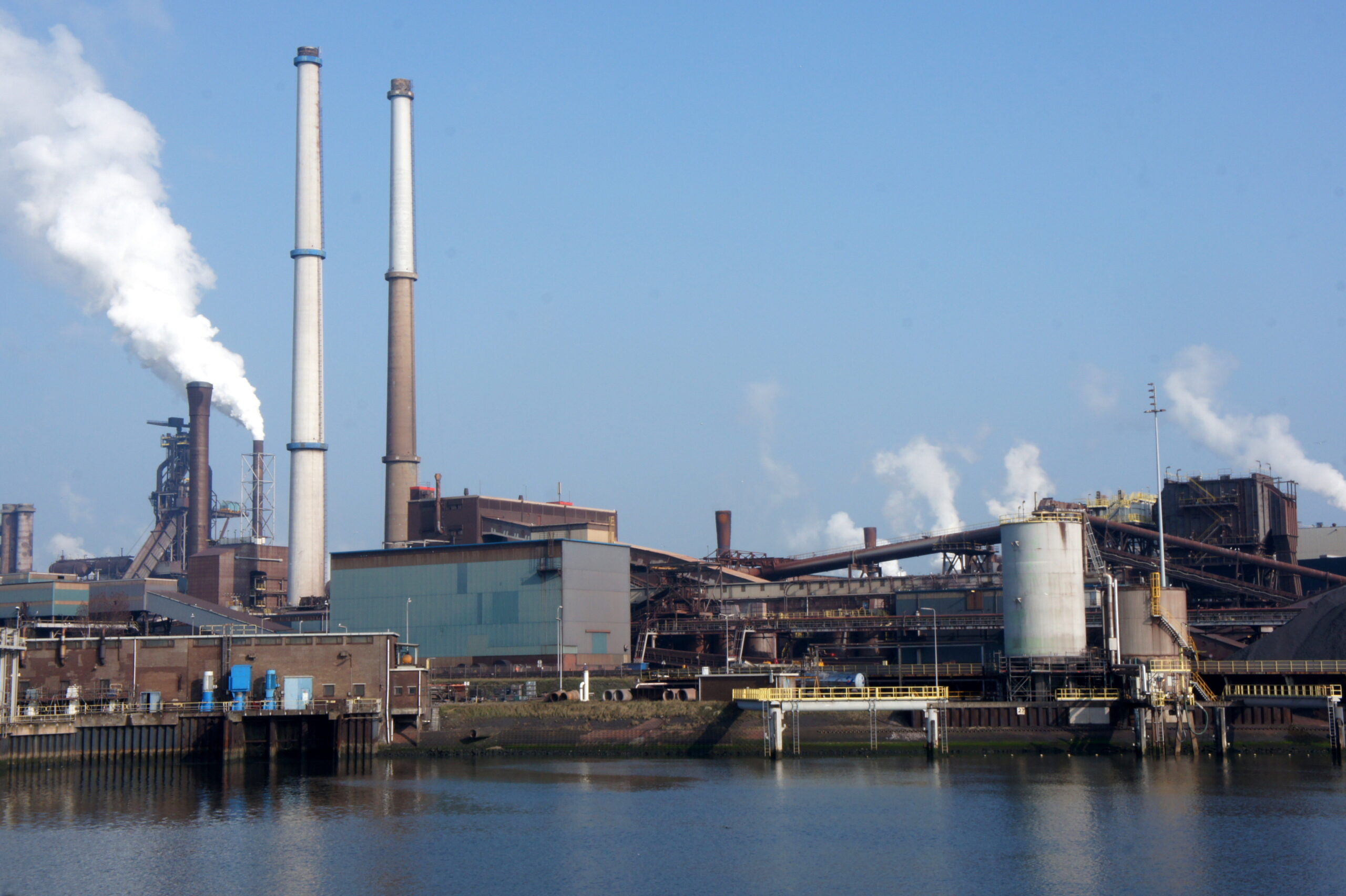
Tata Steel has launched a Eur300 million ($363 million) environmental-improvement plan, dubbed “Roadmap+”, to reduce emissions at its IJmuiden plant in the Netherlands, the steelmaker said on Dec. 8.
The measures include the planned Eur150 million construction of a facility at IJmuiden’s pellet plant, which will reduce emissions significantly by cutting output of nitrogen oxides and heavy metal particulates by more than 90%. The project will also include an investment of Eur50 million in improvements to the coke unit and Gas Plant 2 (CGP2) at the site, helping to cut odors and emissions of particulates.
As part of the Roadmap+ program, Tata Steel Netherlands will work closely with local authority and government leaders in the province of Noord Holland to ensure the measures exceed environmental laws.
“Tata Steel is taking additional action to build on its Roadmap 2030 plan with the announcement today of Roadmap+, which will enhance the environment in and around the IJmuiden plant. We are absolutely committed to sustainability as a strategic priority across the company, of which these measures are the latest example.” Tata Steel Europe CEO Henrik Adam said.
The company has also published a progress report on Tata Steel’s Roadmap 2030 sustainability program involving 25 projects to enhance its environmental performance. According to the statement, the latest environmental measures at IJmuiden follow Tata Steel’s wider commitment to becoming carbon neutral by 2050 and to maintain its position as a global leader in low-emission steel production per tonne.
Tata IJmuiden has a design capacity of 7.5 million mt/year of crude steel, with two blast furnaces.
They company said Nov. 13 it is to separate its UK and Dutch units after having entered into talks to sell the IJmuiden mill and downstream assets to Swedish steelmaker SSAB.
S&P Global Ratings on Nov 13 revised its Tata Steel outlook to “stable” from “negative” on a solid earnings rebound.
Tata Steel’s earnings outlook is more positive than previously expected following a rebound in the second quarter of fiscal year 2021 — ending March 31, 2021 — helped by steel price increases and lower raw materials costs.
— Annalisa Villa

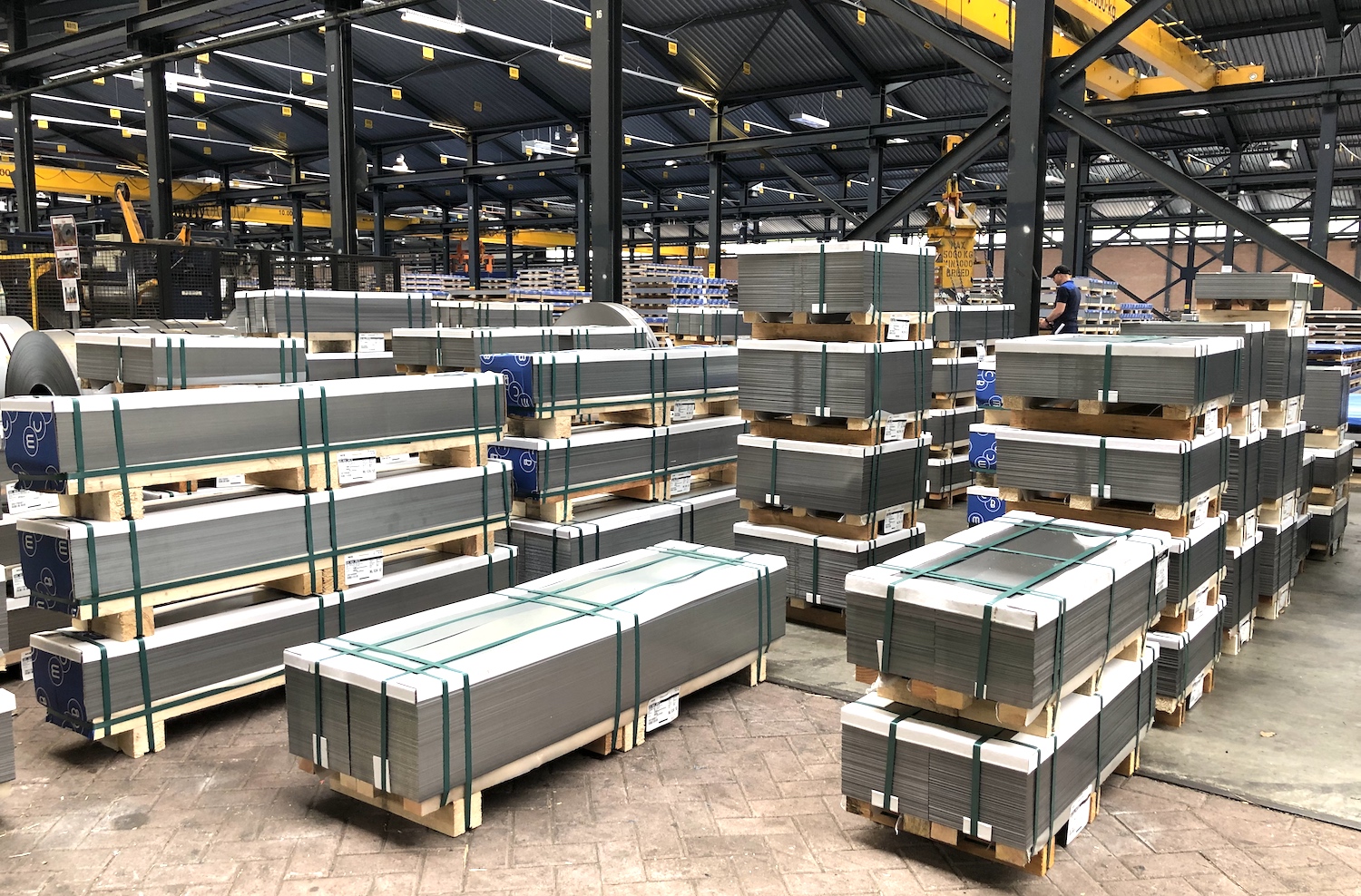
EU steel service center shipments rise 3.3% on year in Oct
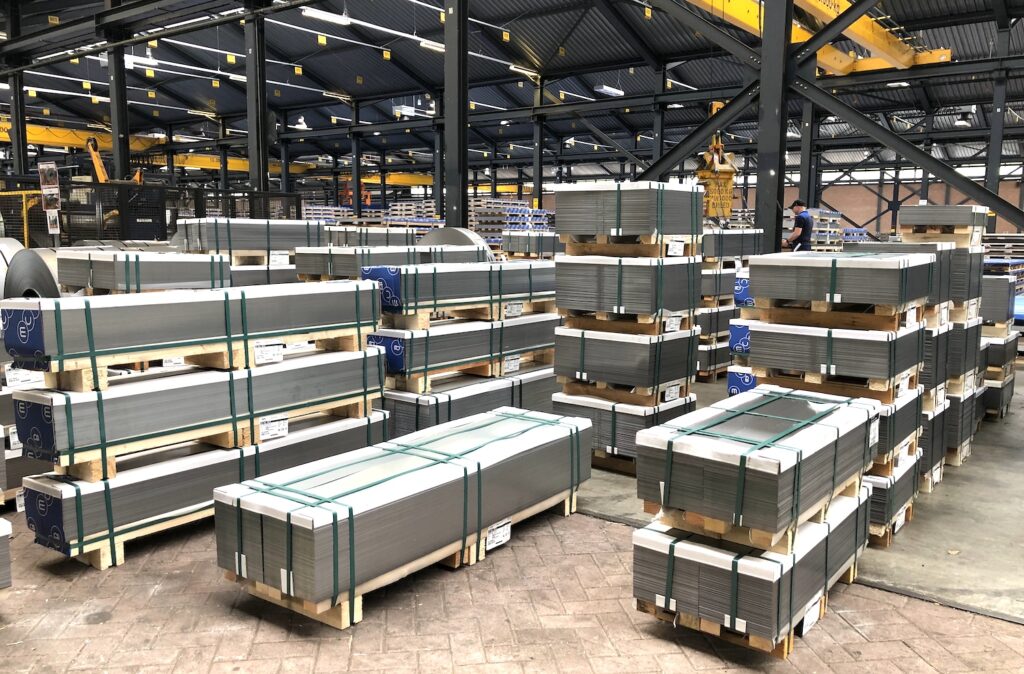
Flat steel shipments from EU service centers rose 3.3% year on year in October, indicating a buoyant market, while stocks fell, service center and distributors’ association EUROMETAL reported Dec. 8.
The October index of stock volumes of flat steel dropped to 88 from 110 in October 2019.
Expressed in days of shipments, stocks at steel service centers reached 57 days in October 2020, down from 71 in October 2019.
Although shipments rose compared with October last year, shipments by steel service centers dropped 14% on the year in January-October.
Stockholders’ distribution of multi-product and proximity steel — including long steel products — was 11% lower in January-October, and fell 2.3% year on year in October. Only strip products experienced an upward trend, according to EUROMETAL.
Expressed in days of shipments, stock volumes of multi and proximity steel dropped to 66 days of shipments in October from 71 in October 2019. Stock volumes were at 83, down from 91 October 2019.
— Laura Varriale