

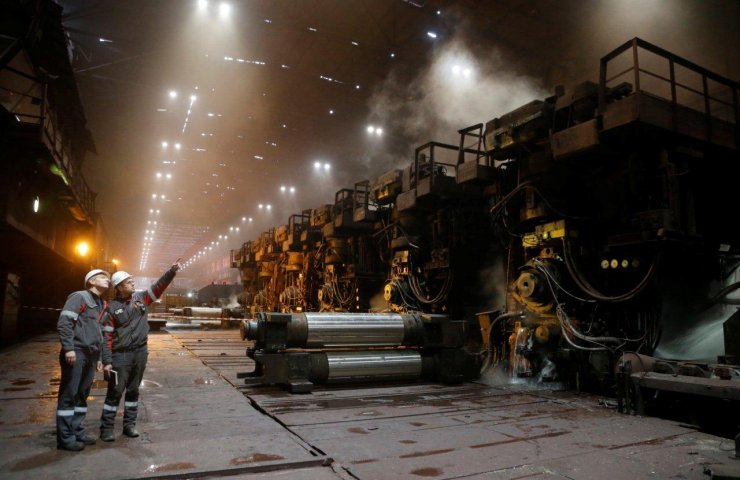
European coils prices increase, capacity expected to return in Q2
The European hot-rolled coil market continued its upward rise as tight supply woes, extended lead times and sold out mills elevated prices further, with any relief in cost not expected by buy-side sources until at least the second quarter, market participants told S&P Global Platts Dec. 16.
Even those in seemingly more secure positions due to contracts are finding mills late with deliveries, or unable to fulfil them at all, with material increasingly hard to come by in the first quarter.
“I hope they stop [increasing prices] before Christmas,” an Italian service center source said. “Everyone is trying to put material back in their stocks. They are conscious prices could push up again.”
The Platts TSI index for North Europe increased by Eur7/mt on the day to Eur639.50/mt EXW Ruhr and the Platts TSI index for Italy went up Eur7/mt to Eur629/mt EXW Italy Dec. 16.
An Italian distributor source said the market was “booming” due to the supply issue, and warned it was not reflective of real demand.
“We received a call from the appliance sector, and they are looking for huge amounts of coils, they are begging for material. We are having difficulty delivering on time, the lead times are as far out as March-April,” the distributor said.
The source added that the assurance of long-term contracts was not enough to guarantee the timely delivery of material, and that most of the supply tightness was concentrated in those seeking galvanized material.
On Dec. 16, the remaining balance for HRC imports to the EU stood at 1.9 million mt (116%), the European Commission’s monitoring tool showed. Nearly 180% of the remaining balance was non-country specific.
Of the five countries with assigned quota, Russia’s allocation, the highest of all at 421,690 mt, had a remaining balance of 325,089 mt, India at 16,494 mt, Korea — 27,507 mt, and Serbia with 60,943 mt left.
Turkey’s allocation is nearing exhaustion, with just 934 mt remaining of an initial 344,891 mt, and 117,310 mt currently awaiting allocation at EU ports.
— Amanda Flint

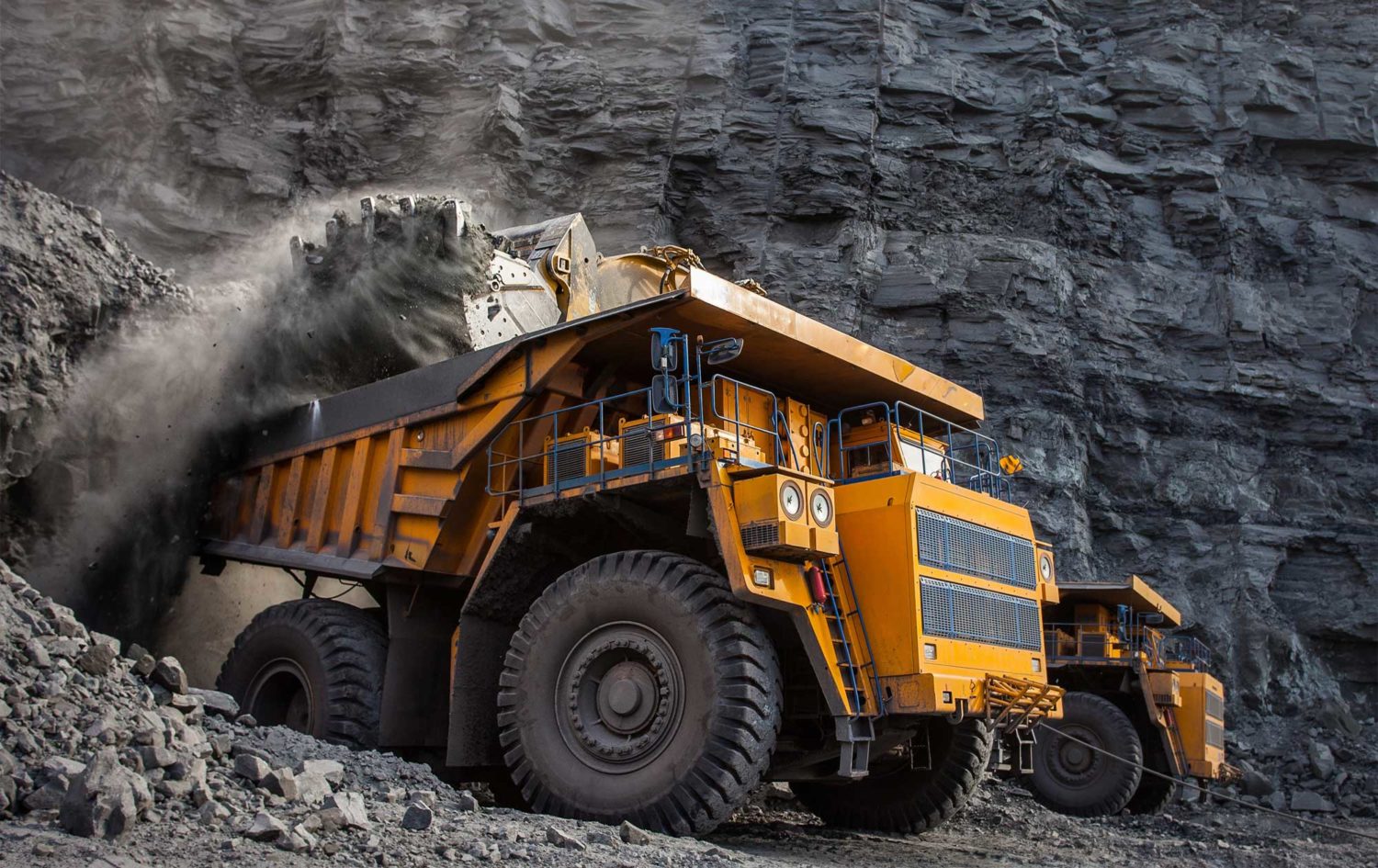
Nippon Steel, Rio Tinto to develop low-carbon steel technologies
Japan’s Nippon Steel and Australia’s Rio Tinto signed a memorandum of understanding to research and develop technologies for low-carbon emission steel, both companies said Dec. 16, creating a tie-up between a major steelmaker and an iron ore producer.
“With this MoU, Nippon Steel and Rio Tinto are looking to enhance their long-standing relationship by extending it into new areas in support of the shared goal of significantly reducing carbon emissions across the entire steel value chain,” they said.
Citing the objectives of the MoU, Nippon Steel noted the technologies will cover “decarbonization of the entire steel value chain from iron ore mining to steelmaking, including integrating Nippon Steel’s steelmaking technology and Rio Tinto’s iron ore processing technology to establish an innovative steel manufacturing process with low carbon emissions.”
The MoU comes after the Japanese steelmaker joined a group in July to develop technology to produce paraxylene from carbon dioxide.
Nippon Steel owns a total crude steel production capacity of about 52 million mt/year through 15 blast furnaces located across Japan, while Rio Tito produced and shipped about 326.7 million mt and 327.4 million mt of iron ore, respectively, from its Pilbara operations in 2019.
— Clement Choo

Laminoir des Landes invests in Tarnos steelworks

French plate producer Laminoirs des Landes is operating a new, hydraulic hot shear in Tarnos provided by Italian equipment maker Danieli.
After a brief and smooth commissioning, the Danieli shear performed all the cuts in time and to the necessary quality, exceeding the design capability in terms of thickness and temperature. The new hot sheer cuts hot plates between 600-900 °C to thicknesses up to 50 mm and widths up to 3,500 mm, Danieli says in a note sent to Kallanish. The new shear is powered by two in-house designed hydraulic cylinders fed individually by servo-valves and controlled for position and force. Thanks to the hydraulic knife-angle and knife-gap adjustment systems, the machine is able to perform an optimal cut with excellent edge quality for thick and thin products. This new shear design reduces requirements for maintenance time and number of spares parts.
Danieli hydraulic shears are a solution to reduce CapEx compared to common, electromechanical rocking-type shears, the note comments.
The rolling plant in Tarnos started operations in 2018 with the production of heavy plates. It has a capacity of 500,000 tonnes/year, which it had planned to achieve within 3 years. According to local press reports the company has reached a level of output of over 120,000 t/y. Spanish steel company Hierros Añón SA has a 60% stake in Laminoirs des Landes. The Swiss Sipro Stahl Holding AG holds the remaining 40%, Kallanish notes. The re-roller produces S235, S275 and S355 plate grades with thickness between 8-150mm together with unalloyed, low-alloyed and special steels for pressure vessels and boilers, normal strength and high-strength shipbuilding steels. Lamonoir des Landes also produces tempering steel, heavy plates for large-diameters pipes, plates resistant to atmospheric effects and hot-rolled slabs, or semi-finished products with higher thicknesses than those of heavy plates.
