


EUROMETAL welcomes post-Brexit trade deal between EU and UK

The UK and EU reached a post-Brexit trade agreement on Christmas Eve after four-and-a-half years of bitter negotiations and only a week to spare until the end of the transition period on Dec. 31.
“EUROMETAL welcomes the vital deal reached in the negotiations on the future of post-Brexit relations between the United Kingdom and the European Union. We believe that this tariff-free deal is a great relief for global steel distribution that avoided the catastrophic effect of a no-deal Brexit” said Daniel Guinabert, EUROMETAL’s Director General in a statement.
The UK left the EU this Jan. 31 but then entered a transition period which is due to expire at the end of December.
UK voters decided to leave the bloc after more than 40 years of membership in a 2016 referendum.
Boris Johnson described the agreement as a “comprehensive Canada-style free trade deal”, and said it will “allow UK goods and components to be sold without tariffs and without quotas in the EU market.”
European Commission president Ursula von der Leyen said: “It was a long and winding road, but we have got a good deal to show for it. It is fair, it is a balanced deal, and it is the right and responsible thing to do for both sides.”
Severstal ramps up output with new blast furnace
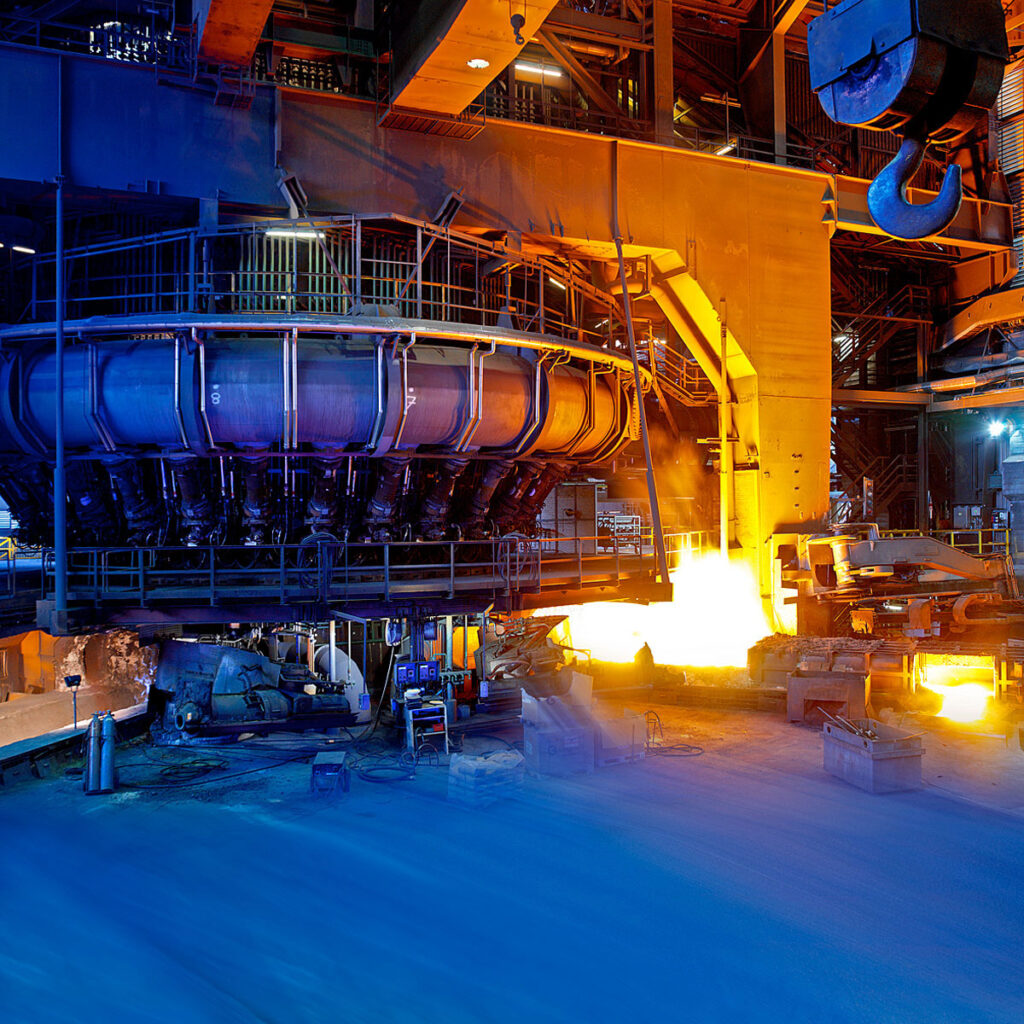
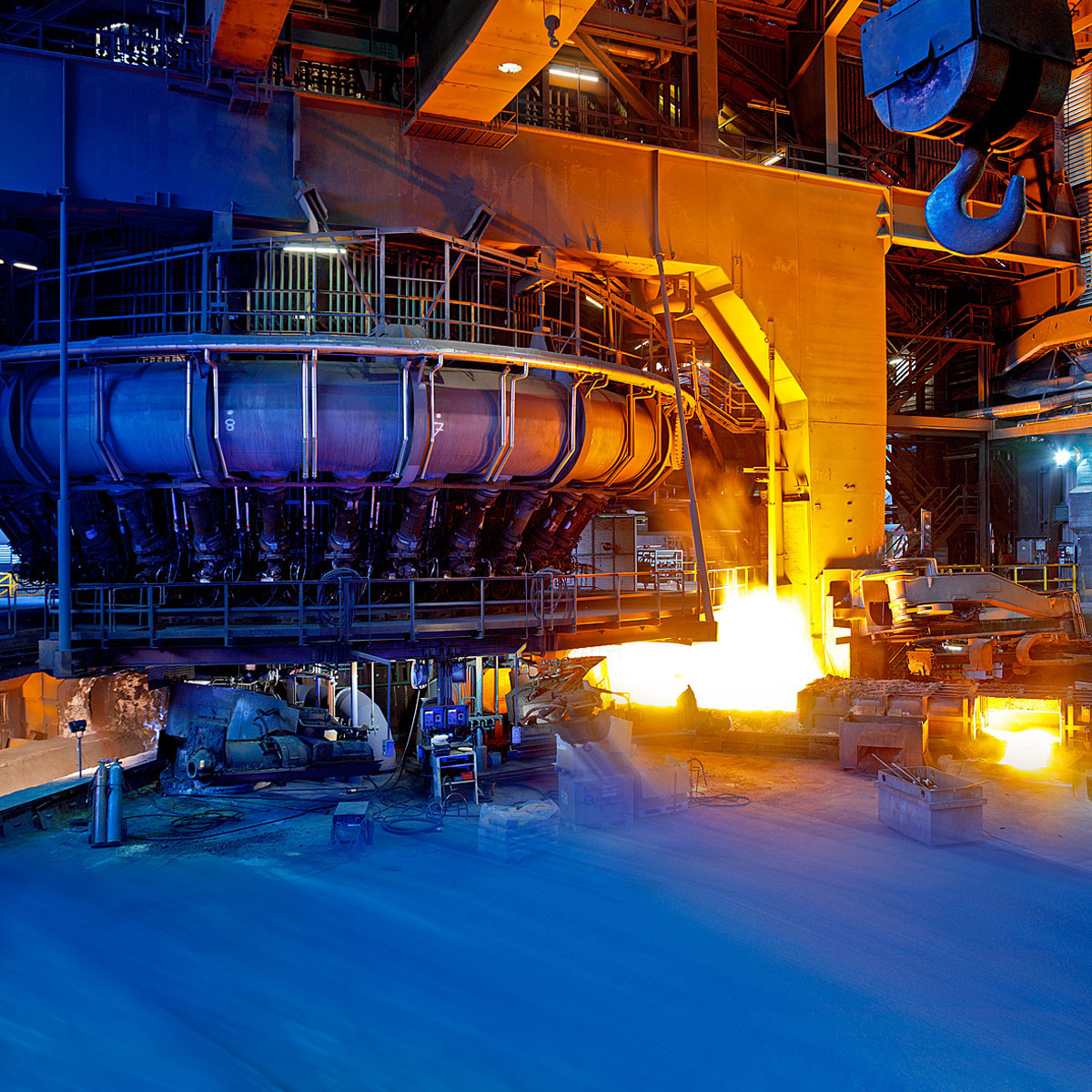
Russian steelmaker and miner Severstal has put into hot test mode the “Cherepovchanka” blast furnace No.3 at its Cherepovets steelworks, the company says.
It has the capacity to produce more than 3 million tonnes/year of pig iron, Kallanish notes. Total investment is over RUB 24 billion ($326 million).
The unit is the second-largest at the Cherepovets steel mill after “Severyanka” in terms of pig iron production volumes. The latter is the largest blast furnace in Europe, the enterprise claims.
BF3’s stoves are built using “Kalugin” technology, enabling temperatures of up to 1,300C, and refractory works have already started.
Furnace construction started in September 2018. The unit’s strong metal casing, combined with refractory materials and new generation cooling systems, have increased the facility’s working life before the need for capital repairs from 10-20 to 25 years, the company says.
The design features shaftless air heaters, which allow for lower coke consumption, increasing the blast temperature. A modern coneless charging device, equipped with monitoring and control systems, will increase productivity while reducing fuel consumption and lowering emissions, Severstal observes.
“Building a new blast furnace at the Cherepovets steel mill has been our greatest investment project of the decade,” says Severstal chief executive Alexander Shevelev. “Blast furnace No. 3 will increase our cast iron and steel output and guarantee stable operations of the Cherepovets Steelworks during the first stage of further modernisation works.”
Severstal’s third-quarter crude steel output increased by 3% on-quarter to 2.9mt (see Kallanish passim). Revenue increased 17.9% to $2.26 billion, driven by the steel price recovery and steel sales volume growth. Ebitda totalled $656m, up by 30.9%.


Liberty subsidiary takes over Polish plate mill lease

Liberty Steel has, through subsidiary Corween Investments, taken over the lease of Huta Czestochowa (HCz) and plans to participate in next month’s tender to buy the Polish plate mill.
The subsidiary will soon be renamed to Liberty Czestochowa.
“Corween Investments (to be renamed LIBERTY Częstochowa) can confirm that it has taken over the current lease for Huta Czestochowa, which is due to run until mid-2021, from the plant’s Administrator. LIBERTY can also confirm it will continue to take an active part in the sales process, as determined by the Court,” a Liberty Steel Group spokesperson tells Kallanish.
HCz had previously been leased by Sunningwell Steel Polska since September 2019, after it was declared insolvent under former owner Industrial Union of Donbas (see Kallanish passim).
The latest tender for the sale of HCz will take place on 22 January. The starting price has been set at PLN 190 million ($51m) and bids from those wishing to partake must be submitted by 21 January.
Earlier this year the first tender, which ended without any bidders, had a minimum price of PLN 250m, while in the second tender it was PLN 220m.
Sunningwell Steel Polska won the second tender with a PLN 220m bid. However, in October the court ordered a third sale tender to be held after Sunningwell was adjudged to have failed to come to an agreement to buy the steelworks in the stipulated time. According to Polish law, this rules Sunningwell out from participating in the next tender.
Sunningwell did not respond before deadline to a request for comment on its plans for the upcoming tender. In October it told Kallanish it aimed to find a way to participate in the tender.
Electric arc furnace-based HCz has a 1.2 million tonnes/year capacity of heavy plate.
Supply of thin plate gauges thinning in EU

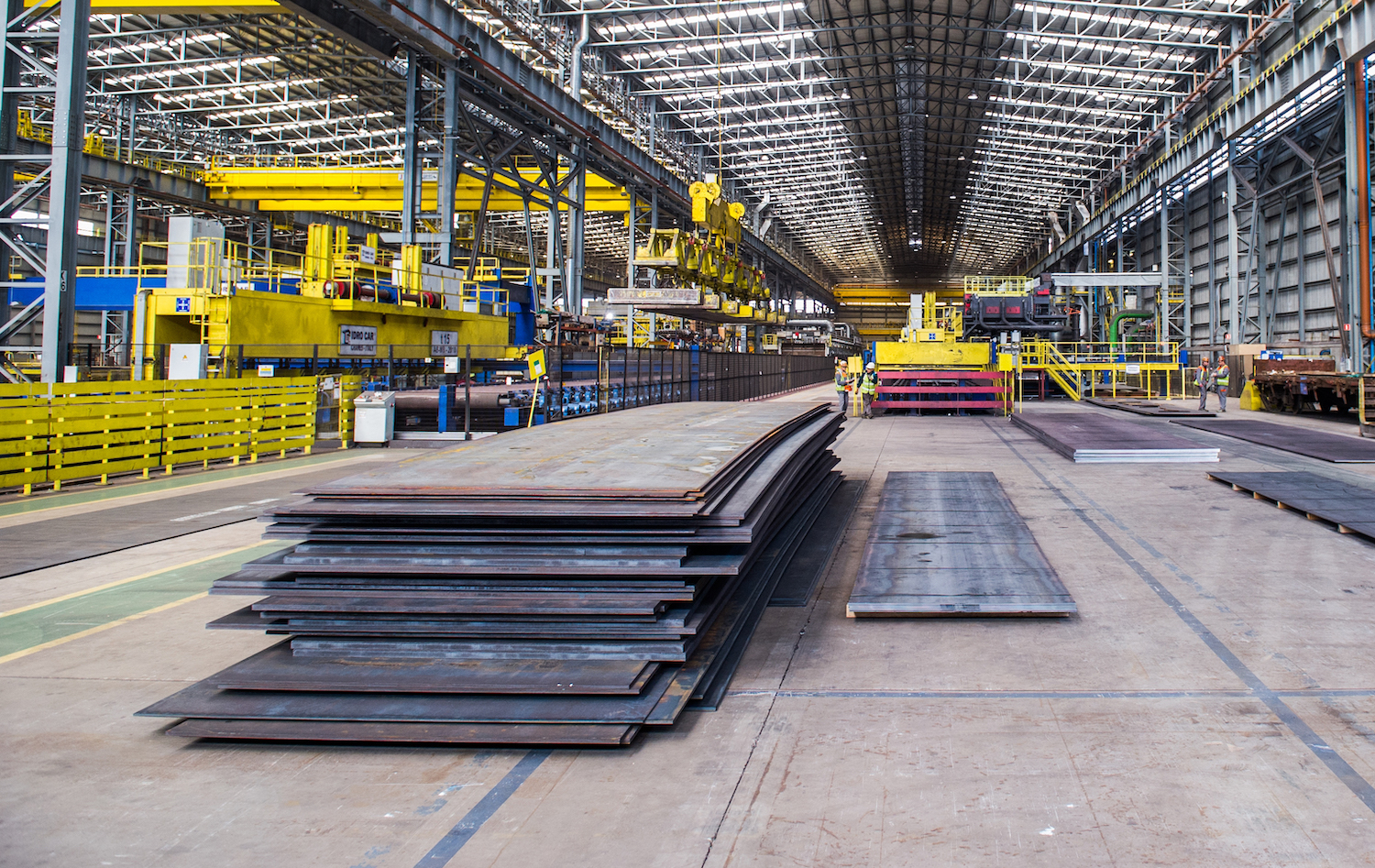
The surge in plate prices, which gained momentum only a few weeks ago, is more pronounced in thinner-gauged plate, Kallanish hears from market players. Given the shortage of slab and coil products, any product that could work as a substitute will be absorbed by the hungry market.
Normally, thing-gauge plate is not a popular segment for reversing mills because it takes more rolling steps to bring plate to 12mm or less. “Plate mills normally prefer to stay away from thin gauges, and offer them only in small lots, or not at all,” one manager explains. But now that strip from coil is hard to find, sheet buyers are increasingly going for thin plate as an alternative.
Plate players polled by Kallanish see the current price targeted by mills for standard grade S355 in standard thicknesses at around €650/tonne ($794) ex-works, “…and the mills will get it,” the manager believes.
With respect to thinner gauges, he says: “I just saw prices from Italy where thin gauges are between €50 and €100 higher than gauges of 20mm.” He cites further offers of 8mm fetching €40 more than 12mm, “…and the spread is even wider when you go for 6mm,” he adds.
He notes that sheet from coil is generally preferred, for economic and quality reasons. Not only is its production process cheaper, but its tolerances are also better. However, plate allows for forming in both directions, while strip processing works only lengthwise, the manager points out.
Russia to levy export duty on steel, scrap
Russian federal anti-monopoly service FAS suggests all exports of steel products should be liable for duties, not just ferrous scrap, as implemented by the economic development ministry earlier in December.
FAS is responding to the request by deputy prime minister for construction and development Marat Husnullin in connection with rising domestic steel product prices. This follows a petition from construction industry representatives.
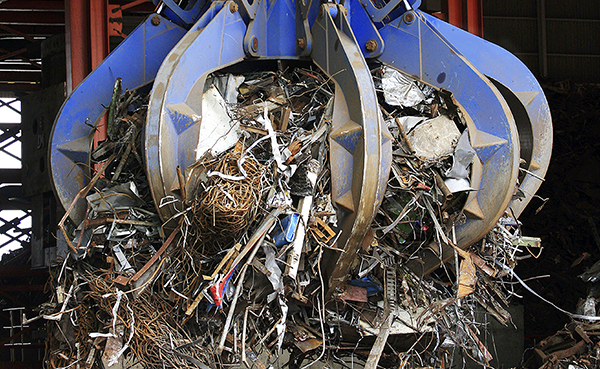
The ministry agreed to raise the existing 5% ferrous scrap export duty to 15% and the minimal fiscal value to €45/tonne ($55) from €15/t, for six months. This followed a request from the country’s Pipe Industry Development Foundation (FRTP), representing major Russian steelmakers. The hike is aimed at securing sufficient and appropriately priced feedstock supply for Russian mills (see Kallanish 21 December).
FAS argues Russia’s domestic steel industry is deeply enshrined in the global steel market, and is influenced by its trends directly. It describes Russian domestic steel prices gaining up to 30% in November and early December, with rebar prices rising 16% from end-October to early December, and flat products by 20%.
Despite this, local values do not exceed export prices, which grew even stronger in the same period, while domestic scrap prices have also gained 35% from the start of 2020, according to FRTP.
As a result, and a temporary differentiated regressive measure for the six-month duration of the scrap export duty, FAS proposes export duties for steel billet at 13% but not less than $73/t and 12% but not less than $78/t for rebar.
This is necessary in order to prevent possible reallocation of income from scrap procurement companies to steelmakers. This would be the case if the scrap export duty hike leads to a lowering of domestic scrap prices while steel export prices continue to rise or stay at current levels, its explains.
Market participants tell Kallanish the decision on scrap and rebar duty implementation has been made, and will apply from February. “Billet matters will be discussed in January,” a major producer’s representative says. All steelmakers and traders pointed out that the scrap and rebar export duty may indeed constrain exports and bring domestic prices down, leading to higher billet export availability. This could possibly result in countervailing measures from billet importing regions, as such action may be interpreted as a subsidy.
“Ultimately this long-fought-for scrap export restriction designed to support Russian steelmakers may act against them,” an industry insider says.
US HRC LME December, February contracts move higher

The London Metal Exchange’s US hot-rolled coil forward curve showed gains for the front-month and February contracts the week ended Dec. 24, while the remaining contracts moved lower over the week.
The December-January forward curve remained in contango with a spread of $65.50, down from $76.50 the week prior. While the remainder of the forward curve stayed in steep backwardation, the backwardation between the two- and three-month contracts softened to a spread of $8.50 as market sources expected HRC prices would plateau rather than drop precipitously in the first quarter.
Still, the spread between the three- and twelve-month contracts remained wide at $262.50, up from $244 the previous week.
The December contract moved $11 higher to $923/st, while the January contract decreased by $6.50 to $988.50/st. The February contract rose by $11 to $980/st, while the May contract fell by $18.50 to $857.50/st.
Both contracts on the further end of the curve moved lower, with the twelve-month contract decreasing by $2.50 to $717.50/st and the fifteen-month contract falling by $2.50 to $695/st.
The contract’s weekly trading volume saw a slight uptick the week ended Dec. 24, with the US hot-rolled coil contract trading 1,710 st on the LME that week. The weekly trading volume was up from 1,510 st in the week prior. Since its launch over 21 months ago, the contract has traded a total of 549,810 st.
The daily Platts TSI US HRC index moved $44.50 higher over the week and was assessed at $999.50/st on Dec. 24. Amid expectations of firm scrap pricing in January and persisting supply tightness, market sources anticipated mills would continue pushing HRC prices higher in the near term.
— Ingrid Lexova

Turkey’s HRC dumping probe to include imports from S Korea as well as EU: CEO
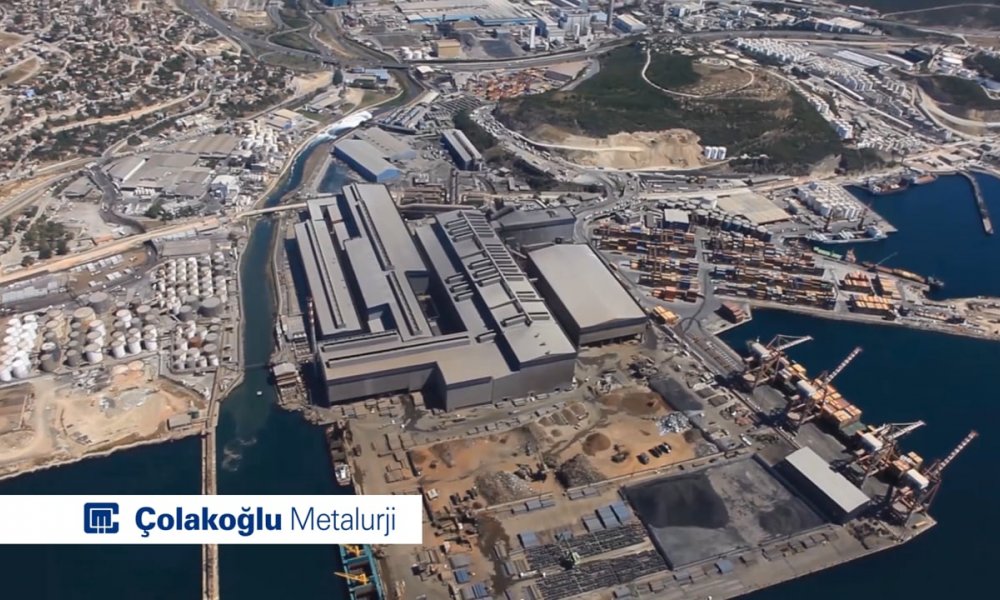
A dumping investigation by Turkey into imports of hot-rolled coil from the EU will also extend to South Korea, which increased its deliveries to Turkey significantly throughout 2020, according to Ugur Dalbeler, CEO of key Turkish steel producer Colakoglu.
Although no official announcement on the investigation has been made, two top Turkish steel industry executives told S&P Global Platts that the Trade Ministry had already informed the relevant parties, including the European Commission.
A decree relating to the investigation is expected to published in Turkey’s official gazette in the next few days following presidential approval.
“Following the review, our Trade Ministry has decided to open a dumping investigation and has made the necessary declaration to the EU,” Dalbeler, who is also vice chairman of the Turkish Steel Exporters’ Union (CIB) told Platts. “This investigation will also involve HRC imports from South Korea.”
The EC had no official comment.
The EC said Dec. 17 that it has decided to impose an antidumping duty of 4.8%-7.6% on imports of Turkish HRC. The duties will be imposed on a provisional basis on Jan. 14 and will be valid for six months, which is expected to limit exports to the region by Turkish mills. Definitive duties are scheduled to be set by July 13.
The Turkish Steel Producers Association (TCUD) has previously called upon the Turkish government to impose similar counter-measures on steel imports from the EU, arguing that quotas and trade investigations had already notably reduced exports of HRC by Turkish mills to the EU, their main export market, while imports from the EU remained strong.
Turkey imported around 1.3 million mt of HRC from the EU in the first 10 months of 2020, relatively unchanged year on year, while HRC imports from South Korea reached 262,000 mt over the same period, well above the 64,000 mt imported in the same period of 2019, according to Platts calculations based on the most recent data from the Turkish Statistical Institute.
— Cenk Can

European coils market quiet amid holiday slowdown
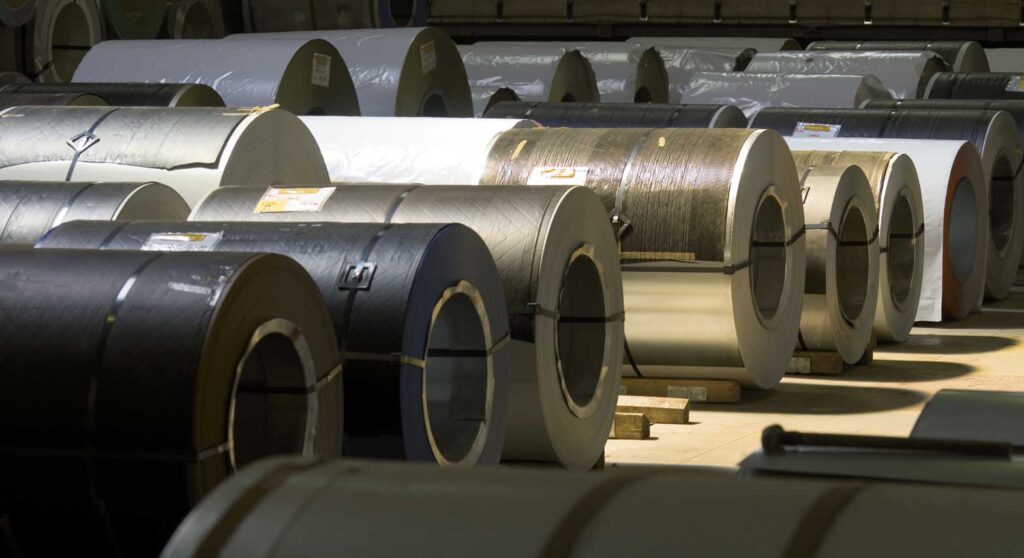
The European hot-rolled coil market was quiet Dec. 29 as many market participants paused trading between the Christmas holidays and the New Year, sources told S&P Global Platts.
A Benelux mill source said that the market would be “closed” and that activity is expected to restart Jan. 4, 2021. Another Benelux buyer confirmed that they had closed their business over the holiday season.
Sources said after the seasonal slowdown, activity is expected to come back strong in January as material tightness is expected to intensify the recent price hikes which led buyers scrambling for material. According to Platts data, European HRC prices are at a 9-year high.
— Laura Varriale
UK, Turkey sign preferential accord, seek ‘more ambitious’ trade deal
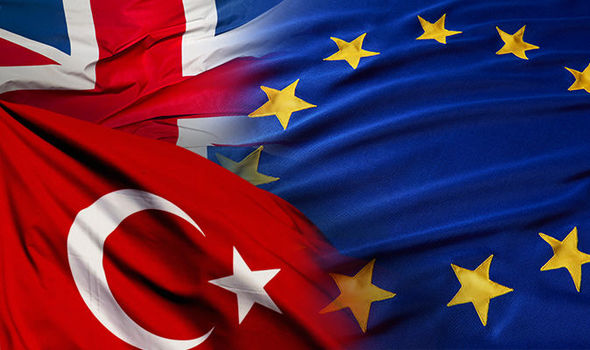
The formal signing Dec. 29 of a trade deal between Turkey and the UK was welcomed by representatives of Turkish industry and the UK steel and automotive sectors as ensuring the continuation of business between the two nations without additional tariffs from its introduction on Jan 1, 2021.
The deal is viewed as a stopgap to prevent negative consequences in the current GBP 18.6 billion ($25.1billion) annual trading relationship between the two nations from the UK’s exit from the EU. “Both countries have also committed to working towards a more ambitious free trade agreement in the future, which will go further than the existing deal and will be tailored to the UK economy,” the UK Department for International Trade (DIT) stated.
The deal secures existing preferential trade terms and tariffs for UK businesses that exported more than GBP 1 billion worth of machinery, and iron and steel exports worth GBP 575 million, to Turkey in 2019, ensuring the continued tariff-free flow of goods and protecting UK-Turkey supply chains in the automotive, manufacturing and steel sectors, according to the DIT.
The UK’s imports of textiles and white goods from Turkey are also covered by the accord.
Turkey and the EU have operated a customs union since 1995. This week’s end of the UK’s transition period for leaving the EU would have subjected about 75% of Turkish exports to UK to tariffs, causing losses of some $2.4 billion, had the new deal not been signed, Turkish trade minister Ruhsar Pekcan told official news agency AA following the signing in a ceremony with UK international trade secretary Liz Truss who was present on a videocall.
The UK automotive and steel sectors were highlighted as two areas most likely to benefit from uninterrupted trade flows between the nations. “The finalization of today’s trade deal with Turkey is welcome news for industry and manufacturing in particular,” said Stephen Phipson, CEO of Make UK, a manufacturers’ association whose members include steelmakers and automakers. “Securing preferential tariffs for UK businesses exporting to Turkey and ensuring the continued tariff free flow of goods is vital to protect UK-Turkey supply chains, supply chains which are critical to our automotive industry in particular.”
“It is also extremely helpful that both sides have also committed to work towards a more ambitious free trade agreement in the coming months which will deliver a welcome boost to the UK economy as it comes out of the current COVID crisis,” Phipson said in a statement.
Turkish steel sources said they hoped the accord would help correct an existing steel trade imbalance between the two nations. The UK is one of Turkey’s largest steel scrap suppliers and has recently seen its scrap exports to Turkey grow, while Turkey’s steel exports to the UK have dwindled.
Vehicle assembly in Turkey
Stuart Rowley, president, Ford of Europe, noted that car parts are exported from the UK to Turkey to assemble the Ford Transit range of vehicles, a third of which are then exported back to the UK. In 2019, UK car exports to Turkey were worth GBP 174 million.
“Given that Ford and Ford Otosan business constitutes more than 10% of the total trade volume between the UK and Turkey, this trade agreement is extremely significant for us and will help to secure jobs in both countries,” Rowley said in a statement.
Turkey eyes bilateral investments
Turkish minister Pekcan said the arrangement leaves no uncertainty in the trade structure between the two countries. “We are taking the first step towards further deepening our ties, while maintaining 25-year gains from the Customs Union,” she said.
“We reached a tariff-free agreement, as planned, which includes all industrial and agricultural goods,” the minister said.
Trade volume between the two countries was $15.1 billion in January-November, Pekcan said. In 2019, Turkey’s exports to the UK – its second-largest export market – stood at $11.3 billion, while imports totaled $5.6 billion. UK investments in Turkey amount to around $11.6 billion.
“I hope the deal will be reflected positively in bilateral investments,” Pekcan underlined.
— Diana Kinch and Cenk Can

UK-EU steel trade can proceed with preferential tariff treatment
Steel trade between the EU and UK can proceed on preferential duty rates from Jan. 1, 2021, avoiding customs duty if preference is claimed, according to a UK government update on its website Dec. 28.
To claim preferential duty, the product must originate in the EU or UK and be a classified good.
“To benefit from preferential tariffs when importing into the UK from the EU (or importing into the EU from the UK), the importer will be required to declare they hold proof that the goods comply with the rules of origin,” the UK government said.
The claim for preferential tariff treatment needs to be included in the customs import declaration for goods into the UK or exporter’s statement for goods sold into the EU traded on and after Jan. 1, 2021.
The UK and EU agreed a post-Brexit trade deal Dec. 24.
“It is important that with a deal in place the UK can start to build for the future with our European partners but there are many months of further hard work yet to come,” said Stephen Phipson, chief executive of the UK’s manufacturer’s organization Make UK.
“Even without the pandemic it would be stretching credibility to believe the companies that export hundreds of billions of pounds worth of goods each year could adapt to a fundamentally different trading model in just one working week,” he added.
The UK exported 2.5 million mt of steel to the EU in 2019, earning nearly GBP 1 billion, and 677,000 mt to the rest of the world, which earned GBP 300 million. UK crude steel production in 2019 amounted to 7.2 million mt, while UK steel consumption was 10.13 million mt.
— Laura Varriale