French construction sector outlook improves significantly

French construction industry business managers’ opinion about the sector improved significantly in December, according to a l’Institut National de la Statistique et des Études Économiques (Insee) report monitored by Kallanish.
The outlook for expected activity in the next three months is considerably more optimistic compared to November. Slightly more business managers in the building industry than in the previous month reported that their recent activity increased over the past three months, the report says.
In December, the balance of opinion of business leaders on employment prospects for the next three months continued its recovery which began in June, and therefore remains above its average.
Also last month, slightly more construction companies than in November considered that their order books were higher than normal. Given their present staff size, companies consider that their order books provide 8.2 months of work, slightly more than in November and much more than the long-term average, Insee explains.
Last month, however, the capacity utilisation rate fell despite remaining above its long-term average. At the same time, production bottlenecks have loosened and concern 36% of the construction companies surveyed, a much lower share than the November figure of 41%.
The share of construction companies reporting to be hampered from increasing their production due to workforce shortage fell again slightly in December, while remaining above its long-term average, the report concludes.


UK safeguard measures remain despite EU, Turkey deals
Most imports of steel products from the EU and Turkey into the UK will continue to be subject to the safeguard measures announced last autumn by British authorities. This is despite the recent trade deals signed days before Brexit became effective.
In the autumn the UK announced it would maintain the safeguard system created by the EU until the end of June 2021. Authorities published the list of products included and the volumes of tariff free quotas allocated for all importers, including the EU and Turkey (see Kallanish passim).
Shortly before the turn of the year the UK signed new trade deals with the EU and Turkey in which it specifically mentioned the decision to avoid any additional tariffs on the trade of steel goods.
These deals will help the continuation of steel trade between the UK and EU, as well as Turkey, but safeguard measures will remain in place as non-preferential measures. Preferential trade agreements, such as the ones signed with the EU and Turkey, have no direct impact on non-preferential rules for trade, Kallanishnotes.
In the release related to the new agreement signed with Turkey, for example, the UK authorities said the deal “…will ensure preferential trading terms for UK businesses that exported more than £1 billion worth of machinery, and iron and steel exports worth £575 million, to Turkey in 2019”.
It is still not certain if the UK will decide to start a fresh anti-dumping investigation on hot rolled coil imports from Turkey. The EU is soon to officially announce provisional AD measures on such imports, but these will not be applying to the UK as they will become effective after Brexit. Existing AD measures in place before Brexit can be implemented by the UK directly without the need of a new investigation under WTO rules.

EU quotas apply to Britain-Northern Ireland trade
UK authorities continue talks with the European Commission to increase steel quotas for direct movements of steel from Great Britain to Northern Ireland. In the meantime, any steel moving in this direction will be subject to EU steel quotas.
Steel moving from Great Britain to Northern Ireland does not incur any tariffs if it meets certain conditions. These are that it is produced in the UK and meets the relevant rules of origin, it is subject to one of the EU’s product specific quotas, and the EU’s quota for the specific good has not been filled.
In a letter to steel industry representatives, the UK Customs authority has advised businesses to check there is an EU quota still available on the goods they wish to move before moving them.
“If you wish to utilise this interim solution you should notify BEIS [the Department for Business, Energy and Industrial Strategy] within 24 hours of each movement of goods that you want to claim the quota on,” says HM Revenue & Customs says.
“This is an interim solution, and we will provide further information in early 2021,” the authority concludes.
The European Commission recalculated the volume of Tariff Rate Quotas (TRQs) as part of its steel safeguard measures effective 1 January 2021 to consider the UK a third country following Brexit (see Kallanish passim). As an example, Russia and Turkey have tariff quotas for hot rolled sheets in the first quarter of 395,909 tonnes and 313,792t respectively. The UK has a 114,460t quota.
Weekly US steel mill utilization increases to 74.6%
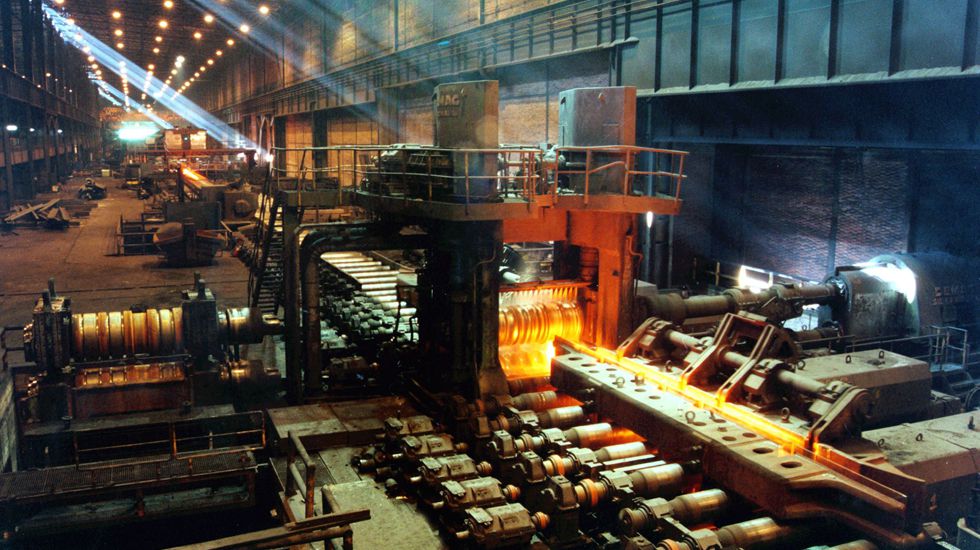
US raw steel capability utilization moved higher last week, rising to 74.6% from 72.3% the previous week, the American Iron and Steel Institute reported on Jan. 4.
The raw steel capability utilization rate has not surpassed 74% since the week ended Mar. 21, 2020, when the utilization rate stood at 79.4%.
Production increased by 3.1% to 1.65 million st during the week ending Jan. 2, up from 1.6 million st the previous week, according to the data.
Last week’s production was still down 10.4% compared to the same week a year earlier, when capability utilization was at 80.1% and production totaled 1.841 million st.
Last week’s production totaled 159,000 st in the Northeast; 591,000 st in the Great Lakes region; 182,000 st in the Midwest; 643,000 st in the Southern district and 75,000 st in the Western region.
The tonnage data is estimated, compiled from weekly production data provided by 50% of domestic producers combined with monthly production data for the remainder.
— Ingrid Lexova

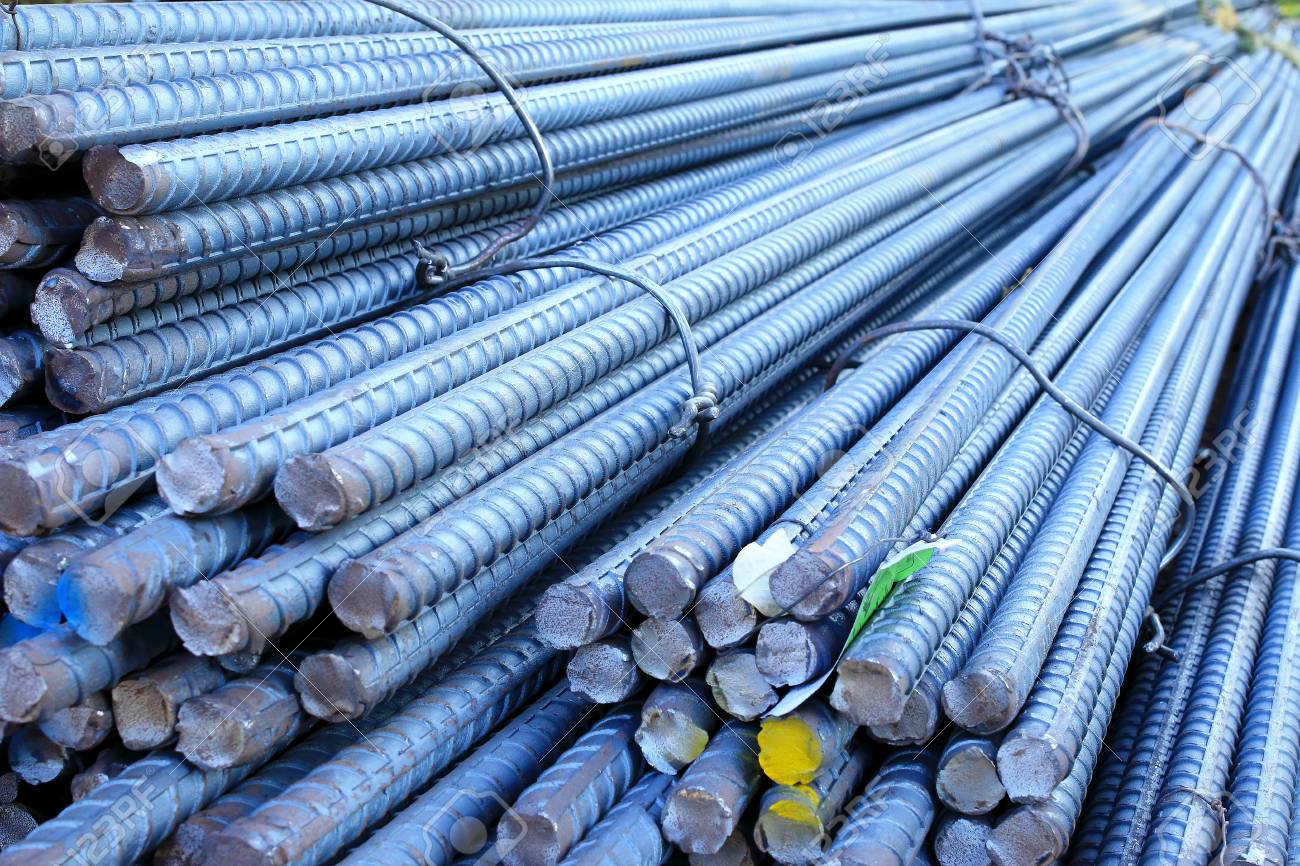
Hong Kong becomes Turkey’s 3rd largest rebar market
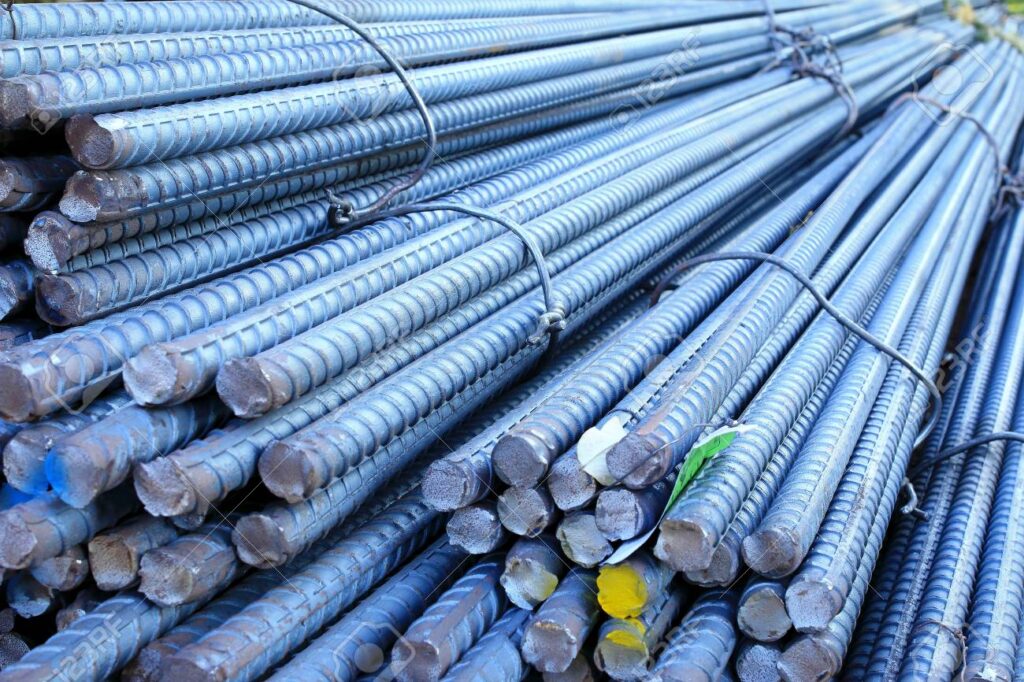
Turkish rebar producers have focused more on shipments to East and South East Asia in recent years to overcome declines in some of their main export markets.
As Chinese mills focused more on domestic demand rather than exports, Turkish mills managed to raise their market shares notably in East Asia in 2020.
Hong Kong became Turkey’s third largest rebar export destination in this sentiment, as shipments to that country reached 532,900 mt in the first eleven months of 2020, sharply higher than 214,800 mt exported in the same period the previous year.
Although Turkish mills’ rebar exports to the Middle East region, previously one of Turkey’s top rebar export destinations, have fallen significantly due to increased steel production there, Yemen and Israel remained large importers of Turkish rebar in the region.
Yemen imported 855,000 mt of in January-November, relatively flat on year, while rebar exports to Israel totaled 849,900 mt, 5% higher on year.
The US, which was one of Turkey’s top rebar export destinations before the Trump administration imposed Section 232 tariffs in June 2018, regained that status in 2020, as prices in the US market rose notably due to the tariff, making exports to that country profitable again for Turkish mills.
Turkish mills’ rebar exports to the US reached 386,400 mt in the first eleven months of 2020, more than four-fold the 85,700 mt shipped in the same period the previous year.
Turkish mills’ rebar exports to the US are expected to reach around 400,000 mt this year. However, this export figure is still notably low taking into account that the US was Turkey’s main rebar export market in 2016, buying 1.38 million mt that year.
Turkey’s rebar exports to the EU region declined notably in the first eleven months of 2020, amid quotas and the negative effects of the pandemic.
Turkish mills’ overall rebar export volumes in the first eleven months of the year remained below last year, declining to 5.29 million mt from 5.45 million mt exported in the same period the previous year, S&P Global Platts observed from the latest Turkish Statistical Institute (TUIK) data published Dec. 31, 2020.
— Cenk Can

Traders concerned over UK steel quotas

UK steel traders and importers face increasing uncertainty over the state of January-March safeguard quotas, now in force following Brexit, as the system failed to update yesterday.
The UK system did not update because of “technical issues”, so quota claims will be accepted even though certain product quotas could already be exhausted. Once a quota claim has been made, the goods are in “free circulation” and cannot be put into storage or a bonded warehouse to avoid duties becoming payable.
Participants will be paying particular attention to rebar, hollow sections and hot-dip galvanised coil, which typically have been the quickest to exhaust under the European steel safeguard. Trading firms suggest hollow sections could exhaust quickly, although not to the extent that they have in Europe. The European quota system did update yesterday, showing more than 106,000t of Turkish hollow sections were awaiting allocation, already surpassing the duty-free quota of 66,577t for the January-March period.
Russian rebar was also close to its limit, with more than 48,000t awaiting allocation out of a total quota of 56,951t.
By Colin Richardson