


The Brexit transition period has now ended

Changes have now come into effect for businesses that trade goods with Europe or represent businesses who do. Register on our webinars to find out what you need to do now to keep trading with the EU.
The free trade agreement announced on 24 December is the first that the EU has ever reached based on zero tariffs and zero quotas. We have always been clear that this means there will be new customs processes on goods moving between GB and the EU.
By registering for our webinars below, or watching our videos on HMRC’s YouTube channel you can familiarise yourself with the new customs processes and what you need to do before you trade goods with the EU.
The trader checklist is also still available on GOV.UK to help you ensure you’re familiar with the new rules that affect you.
Webinars to register for now:Exporting: Actions you need to take now:
An overview of the actions you need to take now before you export goods from Great Britain to the EU and move goods between Great Britain and Northern Ireland.Key processes include – staged border controls, zero-rated VAT, customs declaration, using an intermediary as well as licences, certificates, and authorisations.
Please register to take part if you’re planning to export.
Trader responsibilities when using an intermediary:
You now need to complete import or export declarations to trade goods with the EU. These are complex and a lot of businesses choose to use an intermediary to do these for them.This webinar explains your responsibilities as a trader if you choose to use an intermediary.
Please register to take part if you’re planning to import or export.
What are customs import declarations?:
If you import goods, you now need to make customs import declarations on controlled goods and all goods by the end of June. This webinar will help you understand what they are in more detail. This includes what is needed for simplified declarations, supplementary declarations, how to make them, and delayed import declarations.
Please register to take part if you’re planning to import.
Importing: Staged controls and how to prepare to use them:
This webinar will walk you through the three stages of the new border controls introduced on 1 January 2021, and what actions you need to take for each stage.
Please register to take part if you’re planning to import.
Protect yourself from scams
Stay vigilant about scams, which may mimic government messages as a way of appearing authentic. Search ‘scams’ on GOV.UK for information on how to recognise genuine HMRC contact. You can also forward suspicious emails claiming to be from HMRC to phishing@hmrc.gov.uk and texts to 60599.
Access the National Cyber Security Centre’s new guide on how to stay secure online and protect yourself or your business against cyber crime by searching ‘Cyber Aware’ on GOV.UK.
Yours sincerely,
Katherine Green and Sophie Dean – Directors General, Borders and Trade, HMRC

Argus White Paper: Daily pricing key as case for steel indexation strengthens
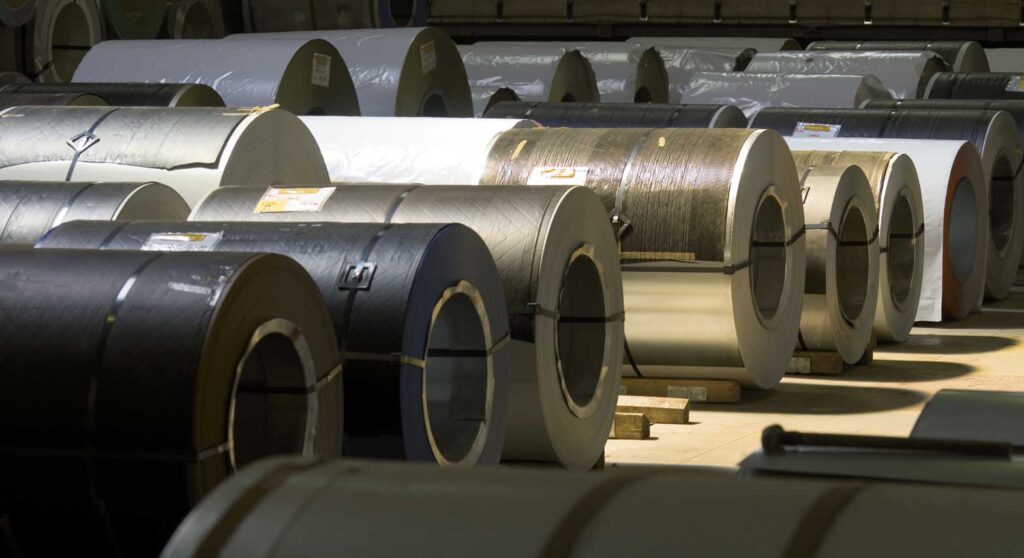
Indexation is surprisingly uncommon in the European hot-rolled coil market, given the price risk endemic throughout the supply chain. Where it does occur, it is usually against a price set monthly. In this white paper, Argus explains why a daily index is the best tool for risk management — even for monthly pricing.
About Argus Media
As a leading authority on energy and commodity markets across the globe, Argus is uniquely positioned to provide in-depth analysis and expert thought leadership. Our white papers are carefully written by Argus specialists from across our company. Each white paper focuses on a topical theme, exploring areas such supply and demand dynamics, price trends, trading activity and changing regulations. We always aim to provide a balanced view, underpinned by data and insight gathered first hand from the market.
Visit argusmedia.com for more information

Knauf Interfer completes consolidation, sells plate unit

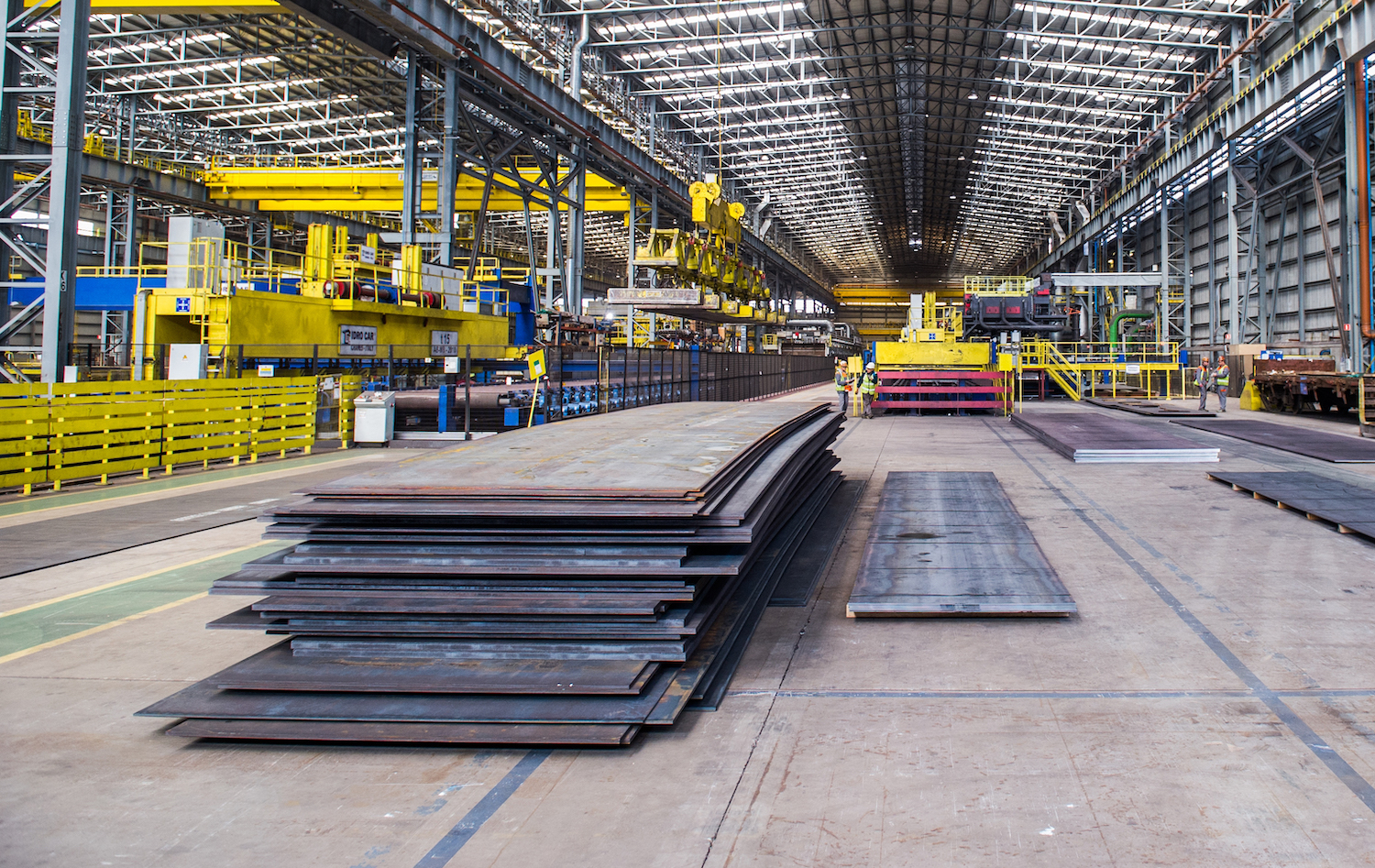
German steel distribution group Knauf Interfer has spun off its subsidiary in Magdeburg to Otto Stahl GmbH, which belongs to Union Stahl, a chain specialising in plate processing and distribution.
With this sale, Knauf Interfer has completed its concentration process in favour of service centres focusing on cold-rolled strip and automotive blanks. In a matter of five years, it has divested its activites in long products and as a full-range supplier of tubes, which it says used to be the original core business of the group.
Furthermore, Kallanish learns that Dutch unit Interfer Staal Eindhoven has been renamed to Knauf Interfer Benelux. The unit earlier last year became the hub of all the group’s activities in Benelux, the United Kingdom, and Ireland.
Along with the new name, it has introduced new product groups like cold-rolled strip and slit strip. The group has also relocated ist German headquarters from Essen to Duisburg. Knauf Interfer in 2019 achieved a revenue of €690 million ($846m) with 1,400 employees in Europe.

AD duties on Turkish HRC take effect
This week provisional anti-dumping duties on imports of Turkish hot rolled coil become effective in the European Union, Kallanish learns from official documents.
As anticipated before the Christmas break, the Commission decided in favour of provisional measures. The investigation officially started in May 2020.
As a result duties of 4.8-7.6% will now be imposed to all HRC imports from Turkey, depending on the supplier. The lowest level of duties has been set for Habas material, while Colakoglu should have the highest duty. Erdemir faces a provisional duty of 5.4%.
As a result of provisional duties being applied, the registration process initiated in the fall of 2020 will be discontinued. A decision on whether to apply retroactive duties on the registered imported volumes in 2020 will be taken when the definitive measures will be announced by July 2021.
EU remains Turkey’s main HRC export market despite barriers
Although Turkish steel mills’ overall hot-rolled coil exports in January-November 2020 were 14.5% below last year at 2.71 million mt, due to the EU’s import quotas and anti-dumping and countervailing duty investigations, the EU region remained Turkish mills’ main HRC export destination last year.
Despite quotas and safeguard investigations, Italy remained Turkey’s largest HRC export market in January-November 2020 taking 826,800 mt. But this export figure was notably lower than the 973,300 mt exported to that country in the same period of 2019.
Spain remained Turkey’s second largest export destination in the first eleven months of 2020 at 318,300 mt, sharply lower than 530,000 mt exported in the same period the previous year.
Turkish mills’ HRC exports to Bulgaria rose by 15.5% year on year to 152,800 mt in January-November, while shipments to other European countries and the US remained notably low on year in that period, amid trade barriers and the pandemic.
Turkish mills managed to increase their HRC shipments to Egypt significantly in the 11-month period to 368,600 mt, up 62% on year, while Turkish mills’ HRC shipments to Iraq reached 120,200 mt, up 56% on year, the latest data showed.
As availability issues have impacted the market amid a significant demand surge in the last quarter of 2020, Turkish mills’ domestic and export HRC offer prices reached as high as $800/mt and above for April rollings in the last weeks of 2020, up more than $250/mt within two months.
Rising imported scrap costs, and higher steel pricing globally have also also supported mills’ higher HRC pricing.
Demand domestic and export markets and raw materials pricing are expected to determine Turkish mills HRC pricing strategy in the coming weeks.
A service center manager told Platts on Jan. 6 he heard a major Turkish HRC producer has begun to offer $15/mt lower than its previous list prices at $810-$815/mt ex-works.
A sales manager of the mill in question, however, didn’t confirm this information with Platts, saying prices remained stable but the market was quiet.
An executive of a Turkish pipe producer said they didn’t take any price offer from domestic mills this week, but the latest offer they recently received from a Russian mill was at $790/mt FOB.
— Cenk Can
EU imposes provisional anti-dumping duty on Turkish HRC
The European Commission (EC) announced on Jan. 7 it has imposed a provisional anti-dumping duty of 4.8%-7.6% on imports of hot-rolled coil from Turkey.
According to the EC document published at the Official Journal of the European Union on Jan. 7 seen by S&P Global Platts, major Turkish HRC producer Colakoglu is subject to the highest provisional duty of 7.6%, while Turkey’s largest integrated steel producer, Oyak Maden Metalurji Group (Erdemir and Isdemir), has a duty rate of 5.4%.
Habas has the lowest duty at 4.8%, while Borcelik and Agir Haddecilik will face a duty of 5.9%. All other Turkish companies will have a provisional duty of 7.6%.
According to the document, the products currently fall under CN codes: 7208 10 00, 7208 25 00, 7208 26 00, 7208 27 00, 7208 36 00, 7208 37 00, 7208 38 00, 7208 39 00, 7208 40 00, 7208 52 10, 7208 52 99, 7208 53 00, 7208 54 00, 7211 13 00, 7211 14 00, 7211 19 00, ex 7225 19 10 (TARIC code 7225 19 10 90), 7225 30 90, ex 7225 40 60 (TARIC code 7225 40 60 90), 7225 40 90, ex 7226 19 10 (TARIC code 7226 19 10 90), 7226 91 91 and 7226 91 99.
The provisional duties will enter into force on the day following that of its publication in the Official Journal of the European Union Jan. 7 and will be valid for a period of six months.
The EC launched an anti-dumping investigation into imports of certain hot-rolled flat products from Turkey in mid-May following a request by European steelmakers group Eurofer, and the EC informed Turkish mills on Dec. 17, 2020 about its intention to impose provisional anti-dumping duties on imports of certain Turkish hot-rolled flat products, as Platts has reported.
The EC said in November that imports of hot-rolled flat steel from Turkey would be subject to registration from Nov. 13 as part of its anti-dumping investigation, meaning retroactive duties also can be applied from this date.
The EU is Turkey’s main HRC export market and the duty decision could limit Turkish mills’ exports further, which were already negatively effected by the EU quotas.
Turkey is expected to answer the EU’s latest anti-dumping duty move by a countermeasure soon. The Turkish Trade Ministry informed involved parties the last week of 2020 that it has decided to start a dumping investigation of HRC imports from the EU region and South Korea, top Turkish industry executives told S&P Global Platts, as reported.
A Turkish industry executive told Platts on Jan. 6 that he recently confirmed with the Turkish Trade Ministry that a presidential decree about the HRC investigation in question will be published probably within the coming week following the completion of the legal procedures.
— Cenk Can
