


ISTA petitions UK over Northern Irish steel tariffs

The International Steel Trade Association (ISTA) has written to UK cabinet member Michael Gove suggesting the 25pc import duty on non-European/UK steel into Northern Ireland is “grossly unfair” and puts its members at a disadvantage to European producers and traders.
The association also said it goes against the idea of a “level playing field” laid out in the European-UK free trade agreement. ISTA also said the Northern Ireland Protocol gives the government powers to introduce arrangements to negate the tariffs and it could use article 16 of the protocol to “introduce measures unilaterally to safeguard the market”.
Addressing an urgent question from Parliamentary Leader of the Democratic Unionist Party Jeffrey Donaldson in Parliament yesterday, Gove said the government was looking at ways for business to avoid paying the tariffs, “through either the quotas or appropriate rebates”. Industry participants have been told this could take six months or more.
Initially participants were told European steel sold into Northern Ireland would carry a 25pc duty. But this guidance has now been reversed, with European material having unfettered access with no quota or duty. Steel from Great Britain sold into Northern Ireland will be drawn down from the UK’s country quota under the European safeguard.
There has been a distinct lack of clarity over the situation for Northern Ireland’s steel imports, and customs arrangements, since the end of the Brexit transition period.
By Colin Richardson


EU steel can access Northern Ireland without duty
European steel can be imported into Northern Ireland without paying a 25pc duty, the UK government has said.
There will be no quota or duty for European steel, meaning it will have unfettered access to the country, contrary to previous advice from UK government agencies.
Material from the rest of the world will still have to pay the duty, while UK-origin material needs to use an “interim solution” to avoid duties — this involves additional paperwork and informing the Department for Business, Energy and Industrial Strategy of Great Britain-origin sales into Northern Ireland. There is no process to allow for Great Britain-origin steel to be imported into Northern Ireland and be registered against the UK’s quotas within the EU steel safeguard scheme, so the interim solution is required.
Some market participants suggested the EU had said late in December that shipments into Northern Ireland could not be drawn down against its import quota for the UK, leading to the imposition of the duty. After lobbying by industry, this has changed, meaning the UK can access the European quota for its shipments into Northern Ireland — Northern Ireland is, essentially, part of the EU, for customs arrangements. UK producers hope the EU quota for UK material will be extended to allow for this volume into Northern Ireland.
The UK would like to negotiate a different approach to the rest of the world duties going forward. These limit accessibility to third-country imports and give European producers an advantage into Northern Ireland.
The status of imports into Northern Ireland has been very unclear since the end of the transition period — some producers have pulled offers as a result awaiting further clarity.
By Colin Richardson
ArcelorMittal reveals Ilva’s new industrial plan
The new industrial plan for the relaunch of former Italian steelmaker Ilva involves an investment of €310 million ($377m) in 2021. It includes the remaking of blast furnace no.5, which has been idled since 2015, and a production ramp-up from the current 3.3 million tonnes/year to 5m t/y in 2021, Kallanish learns from unions.
In a meeting with unions at national trade association Confindustria’s offices in Rome, the new Ilva shareholders, Invitalia and ArcelorMittal Italia, presented a draft of the industrial plan.
The new plan that covers the period 2021-2025 includes the construction of an electric arc furnace. Production will be increased gradually from 5mt this year to 8mt in 2025. Each year from 2022 will see an investment of slightly over €400m, apart from the €300m that will be invested in 2025, sources confirm.
This year, blast furnace no.1 will work at 100% capacity, BF no.2 will be restarted next month and will run at 90% capacity, and BF no.4 will run at 85% capacity. Meltshop no.1 will be restarted on 15 January. However, meltshop no.1 and BF no.4 will be idled in March and April for maintenance works.
In December 2020 ArcelorMittal signed a binding agreement with Invitalia, the Italian state-owned company investing in Ilva. The parties have formed a public-private partnership (see Kallanish passim).

China ends 2020 with stronger steel exports
Chinese finished steel exports continued to tick higher in December, while imports dwindled further, preliminary Customs data show. 2020 saw China’s steel trade surplus shrink sharply, but 2021 could see another reversal, Kallanish notes.
In December, China exported 4.85 million tonnes of finished steel, up 3.5% year-on-year and 10.2% month-on-month. That brought China’s exports over full-year 2020 to 53.671mt, down -16.5% y-o-y.
China’s exports in 2020 shrank sharply from a peak over March-April as it became apparent that markets inside China were much stronger than those outside. 2021, however, is expected to see a slight reversal. The rest of the world is expected to see demand recover while Chinese demand has topped out. As a result, in the latest China Steel Intelligence report, Kallanish expects Chinese steel exports to recover to around 70mt this year.
China’s finished steel imports in December totalled 1.375mt, down from 1.854mt in November and 1.483mt a year earlier. The figure does not include semi-finished products. Over the full year China imported 20.233mt of finished steel, 64.4% higher y-o-y. Including semi-finished steel, however, the number is expected to be far higher. Over January-November 2020, China imported a total of 36.4mt of semi-finished and finished steel products, up 178.8% y-o-y.
Imports spiked over the summer as China’s stimulus measure drove demand to record highs and international prices fell below Chinese domestic prices. In 2021, however, Kallanish expects China to import around 20mt of steel in total, down -48.7% y-o-y. This is in part because of the increased relative strength of overseas markets. It will also be impacted by the import of ferrous scrap, which has been allowed since 1 January and will replace the need to import some semis.
Duferco eyes major Italy beam production centre
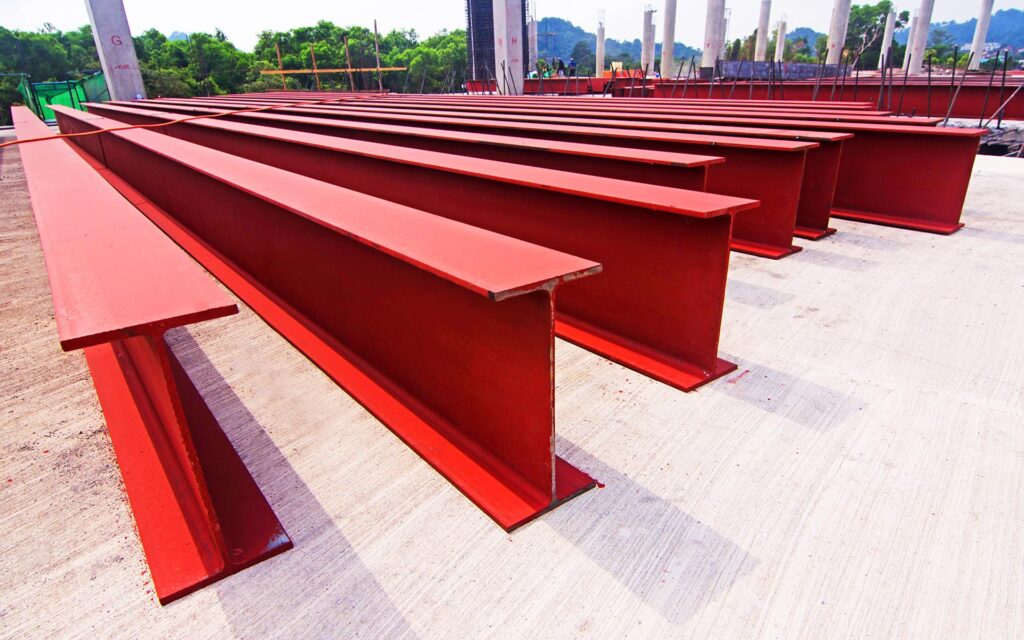
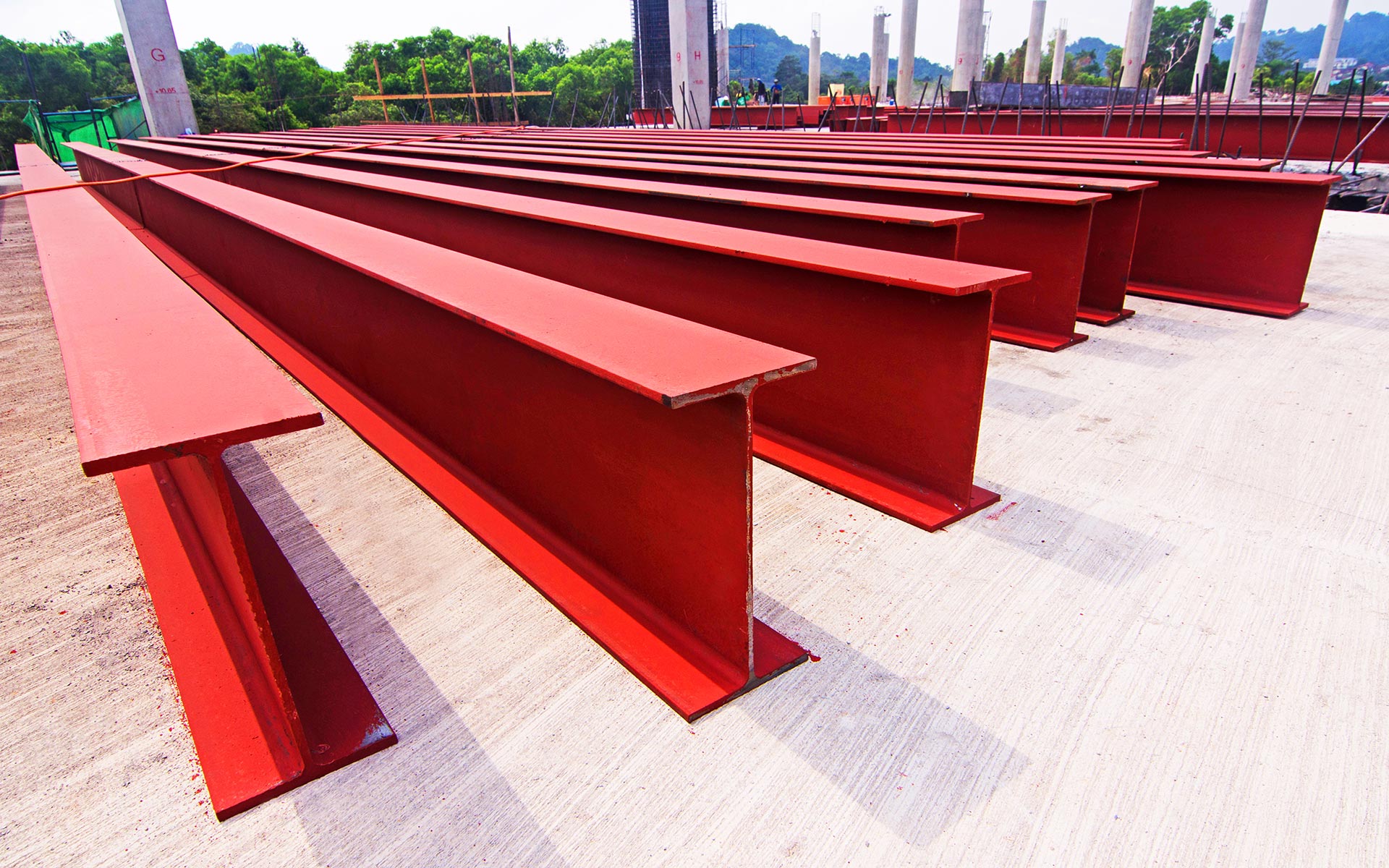
Duferco aims for its San Zeno Naviglio mill to become the most important centre of steel beam production in Europe.
The firm previously ordered from SMS Group a new medium sections rolling mill for the steelworks in northern Italy. Following commissioning, the works will reach a yearly output of 1.5 million tonnes of long products (see Kallanish passim).
“Our main goals are to set new standards in customer service, maximise the overall process efficiency and become the best-cost producer in Europe,” Duferco Italia Holding president Antonio Gozzi says in a note sent to Kallanish. “We are committed to making beam production more sustainable, meeting the highest standards in environmental protection and safety.”
Commissioning is planned for the end of 2022.
Thanks to the first green Power Purchase Agreement (PPA) that Duferco signed recently, the whole power supply for the new rolling mill will be covered by renewable energy.
An SMS “DataFactory” will also be built, combining the information from the product tracking system with all available data in the plant, from the sensor level up to the higher-level automation systems. In this way, a product genealogy will be created, which is the basis for digitalising the complete production process.
The mill will be equipped with the latest generation of Compact Cartridge Stand (CCS) tandem mill stands “Duferco will have additional productivity reserves and will be able to minimise the hydraulic power consumption. Moreover, the new tandem mill will be supplied fully prepared for low-temperature rolling, which will allow savings on valuable resources such as alloying elements. This is our contribution to cost effectiveness and a smaller carbon footprint,” says SMS executive vice president long products Thomas Massmann.
In December Duferco and former American partner Nucor signed the financial closing that ended their partnership in the joint venture for Duferco’s Italian operations. The Covid-19 pandemic and consequent cut in Nucor’s overall investment budget was at odds with Duferco’s intention to proceed with the €180 million ($218m) investment in San Zeno (see Kallanish passim). The plant currently has a 1m t/year production capacity.
German engineering industry sees some relief
For companies in the German mechanical engineering sector, November was the first month with a year-on-year growth trend in 2020.
Overall, order intake in November was up 5%, Kallanish hears from their federation, VDMA. A slight increase in domestic orders of 1% was supplemented by a stronger rise in foreign orders of 7%. Customers from eurozone countries ordered 4% more machinery and equipment, while orders from outside the European Union were up even 9%.
“The result is pleasing, even if partly attributable to a weak prior-year base. In the entire fourth quarter of 2019, the order level was quite low,” says VDMA chief economist Ralph Wiechers. “What matters now is whether the visible positive trend of recent months can continue. After all, the machinery and plant engineering sector is not immune to setbacks in this fragile environment.”
In the less volatile September-November 2020 period, order intake fell by -2% on-year. Although domestic orders were up 2%, foreign orders were -3% below their prior-year level, with little difference between EU and non-EU countries.
Italian beam prices skyrocket
Italian heavy sections producers are back following the Christmas holiday break, quoting at over €100/tonne ($121) more than last month, market participants tell Kallanish.
Sections prices increased more slowly in December compared to the price rally of other long products such as rebar and merchant bar.
The first category of beams has gone up in transactions to €200-250/t base e-works. Including €385/t size extras, end-of-December contracts were at €585-635/t ex-works or delivered, depending on point of delivery and tonnage purchased. Prices increase by €20/t for each subsequent category, sources say.
Starting this week, producers are asking for €340/t base ex-works for the first category of beams. Distributors are selling at €360/t base ex-works. Contracts this week are also at €340-450/t base ex-works, or €725-735/t ex-works including size extras, but for small quantities, sources say.
Scrap prices in Italy have increased this month by €100/t on-month, in line with French and German hikes (see Kallanish 13 January). However, scrap price increases are losing momentum and values are forecast to soon decrease significantly, Kallanish hears.
Northern Ireland sees post-Brexit supply disruption, confusion
Steel originating in the EU can enter Northern Ireland tariff- and quota-free, senior UK steel sources confirm. However, all origins outside the EU and Great Britain are automatically levied with a 25% tariff.
There had in recent days been speculation that all steel that does not originate in Great Britain would incur a 25% tariff when entering Northern Ireland. However, this is the case only for non-EU steel.
The UK Customs authority recently announced that any steel moving from Great Britain to Northern Ireland would be subject to EU steel quotas until UK authorities negotiate a permanent solution with the European Commission (see Kallanish passim). For now, Great British-origin steel can enter Northern Ireland tariff-free only if it has not filled the EU’s quota for the specific good. The Department for Business, Energy and Industrial Strategy must also be informed of any movement of goods.
This effectively seems to mean that buyers in Northern Ireland can import tariff- and quota-free steel only from the EU, severely limiting their supply options. It remains to be seen whether this restricted supply situation has an impact on steel availability and prices in Northern Ireland.
“Ultimately, all the Great Britain to Northern Ireland steel movements will be registered against UK TRQs [tariff rate quotas], but we don’t know when or what impact it will have on the overall use of the UK’s TRQs within the EU steel safeguards,” a UK steel source says. “We’re obviously asking for the government to develop a longer-term solution.”
The situation is causing confusion among suppliers. One Turkish supplier said this week: “Everything that we bring into Northern Ireland falls under a 25% tax. The system has collapsed. And they changed the rules last Friday without telling anyone.” The seller has suspended sales to Northern Ireland until the issue is resolved, or asked customers there to pay the 25% tariff upfront.
UK Customs authority HMRC, the Department for International Trade, and Cabinet Office each did not provide comment before deadline.
European distributors remain concerned over steel supply
European distributors and service centres for steel continue being concerned over the availability of steel supplies from mills and the impact of the jump in prices.
In recent weeks a number of market participants have voiced their concerns. Most believe the tight availability of steel supply will continue at least until the end of the second quarter.
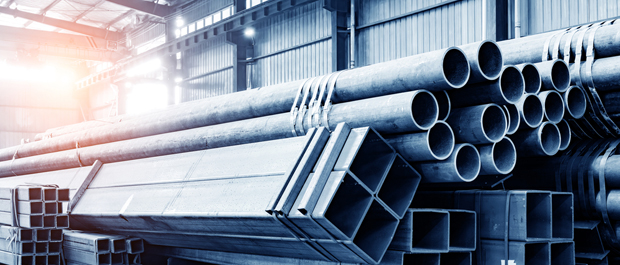
Clisson Groupe, a large French steel distributor, issued a letter to its clients in December to explain the problems faced due to difficulties in finding material from its suppliers and the rapid steel price growth. The company noted that the situation should not normalise at least until Q2. It added that while the tight supply was mainly for coil products originally, it then spread into all other categories, including sheet, tube and longs.
A service centre in the Benelux confirms this view. “Supply and demand became completely out of balance,” it notes. “Previously, there was more supply than demand, but the situation has now been drastically reversed.”
The Benelux source adds that there are rumours some European service centres could be forced to introduce reduced working hours due to the shortage of supply in the market.
Various sources say the tight supply is due to drastic production cuts applied last year by European mills in response to the pandemic. These, together with new trade barriers and a faster-than-expected demand recovery, have created the current problems.
According to the World Steel Association, monthly EU28 crude steel production returned to above pre-coronavirus levels for the first time in November 2020.
The situation is complicated further by the rapid jump in steel prices, which has given the upper hand to domestic mills that can renegotiate existing long-term contracts if needed to secure higher levels. According to the Kallanish price series, HRC transaction prices in northern Europe have jumped by over 68% since July 2020.

US HRC prices continue climbing; record new all-time highs
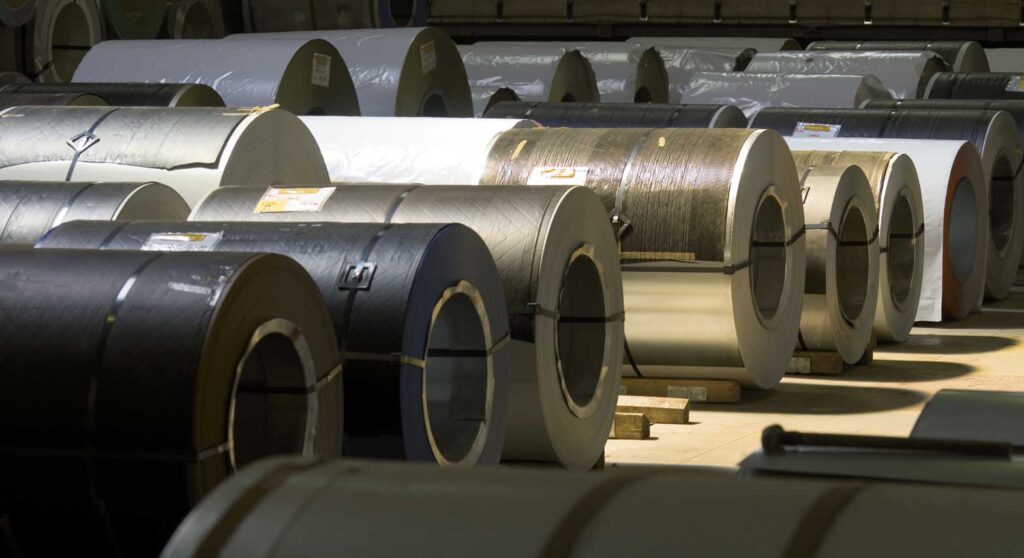
US hot-rolled coil prices marched higher on Jan. 14 as more spot transactions at the $1,100/st band were reported at a tightly supplied market.
The daily Platts TSI US HRC index rose by $4.75 to $1,094.50/st. After hitting an all-time high on Jan. 13, the index continued to move higher as mills were still able to sell their spot availability for higher prices and saw little resistance by some buyers who were trying to cover their short positions.
The majority of the market expected prices to test new highs but they were unsure about the timing or level of peak pricing and the slope of correction from there.
There were still various supply and demand factors that were making it more difficult for buyers to make predictions about the market outlook.
A Midwest service center source cited strong business activity in his processing facility that has been keeping them busy even in the weekends. “The demand is not showing much weakness, remaining steady,” he said, a little surprised by that activity level despite record-high prices.
Without any major changes in the supply side, prices would maintain current levels or above, according to the service center source. He, however, shared concerns about potential pressure related to credit line restrictions in trade volumes with current price levels.
Another Midwest service center source thought the current supply tightness was unlike any other that he has experienced before. Having experienced the supply issues in 2003 and 2004, he said he was not only concerned about finding steel during the current cycle.
Multiple suppliers were running behind by at least a couple of months which was pressuring their stocks further and a Midwest mini-mill, meanwhile, quoted a 200 st inquiry at $1,200/st, remaining firm at that price, according to the second source.
“I don’t see how – it would take something that crazy – for this thing to stop in the first half,” he added.
The second source thought there will be a point where service centers cannot take any more risk and “put a top to this, not that this is going down.”
A third service center source reported a transaction at $1,100/st from mini-mill in the South with a mid-March lead time.
The combined Platts TSI price index uses a volume-weighted-average calculation – according to TSI’s standard – to determine value on an ex-works Indiana basis.
— Ali Oktay
