


Rules of origin: information for businesses looking to use the UK-EU Trade and Cooperation Agreement

Following up on the rules of origin guidance we have previously shared (enclosed below, beneath my email signature), I am writing to provide some clarification on the impact of the UK leaving the EU customs union on the tariff treatment of different goods. We have received reports of the following issues impacting distribution business models in particular and wanted to ensure that the rules are clear, and that the options that are available can be shared with companies looking to navigate these changes. I have also attached some additional resources that you can share with members to help them understand the basics.
RoW-origin goods that are released into free circulation (i.e. customs cleared) in the EU or UK, if they are then sent to the other party without further processing that would meet the product-specific rules of origin in the UK-EU Trade and Cooperation Agreement (TCA), will have tariffs applied to them no matter what length of time they spend in one territory, unless they are kept under customs supervision while there. To avoid paying duties on the initial import, the first option that would be available if a company is holding on to the goods in the UK or EU for any significant length of time ahead of re-exporting them, would be to apply to either run yourself or store the goods in another customs warehouse and use the Transit procedure on shipping goods to it, so the goods would effectively never clear customs in the first place.
Where there is a preferential trading arrangement in place between the EU or the UK and the third country where the RoW good originates from (e.g. Japan), businesses could check the ‘Direct Transport’ or ‘Non-Alteration’ clause of the relevant agreement to determine the conditions under which RoW-origin goods could transit through the UK or the EU and still be imported tariff-free into the final destination. However, these clauses often stipulate that the goods must remain under customs supervision in the middle country in the chain.
EU-origin goods that are released into free circulation (i.e. customs cleared) in the UK, if they are then sent back to the EU without any significant processing (see below for definitions of what is not enough), will have tariffs applied to them as well. This is also the case for EU-origin goods which are being moved from Great Britain to Northern Ireland and are considered ‘at risk’ of entering the EU.
To be eligible for zero tariff trade using the UK-EU TCA, there would need to have been some processing in the UK before exporting to the EU, or vice versa. The processing that must take place must be more significant than the following operations (which are taken from Article ORIG-7 of the UK-EU TCA [on page 30], with the agricultural and textiles-specific examples stripped out):
- preserving operations such as drying, freezing, keeping in brine and other similar operations where their sole purpose is to ensure that the products remain in good condition during transport and storage;
- breaking-up or assembly of packages;
- washing, cleaning; removal of dust, oxide, oil, paint or other coverings;
- simple painting and polishing operations;
- sharpening, simple grinding or simple cutting;
- sifting, screening, sorting, classifying, grading, matching including the making-up of sets of articles;
- simple placing in bottles, cans, flasks, bags, cases, boxes, fixing on cards or boards and all other simple packaging operations;
- affixing or printing marks, labels, logos and other like distinguishing signs on products or their packaging;
- simple mixing of products, whether or not of different kinds; mixing of sugar with any material;
- simple addition of water or dilution with water or another substance that does not materially alter the characteristics of the product, or dehydration or denaturation of products;
- simple assembly of parts of articles to constitute a complete article or disassembly of products into parts;
(Operations shall be considered simple if neither special skills nor machines, apparatus or equipment especially produced or installed are needed for carrying out those operations.)
If you are distributing EU-origin goods back to the EU and you have not carried out significant processing on them in the UK, the thing to check is whether the person importing the goods back into the EU could use Returned Goods Relief to avoid paying a tariff. Procedures for using this Relief differ across EU Member States (though the underlying rules are the same) but I have included the Irish guidance here as an example. The goods must be re-imported in an unaltered state, apart from any work that may have been carried out to maintain the goods in working order, and the goods cannot have been upgraded to increase their value.
It will be for your companies to decide themselves whether or not they qualify- not BEIS.
Stuart Young ACIPR
Head of Stakeholder Engagement & Management/
EU Exit & Covid19 Construction Sector Relationship Manager
Construction Unit,
Department for Business, Energy and Industrial Strategy
T: 0207 215 6895
E: Stuart.Young@beis.gov.uk
1 Victoria Street, London SW1H 0ET
www.gov.uk/beis | https://twitter.com/beisgovuk

Italian merchant bar, sections increase but downturn looms
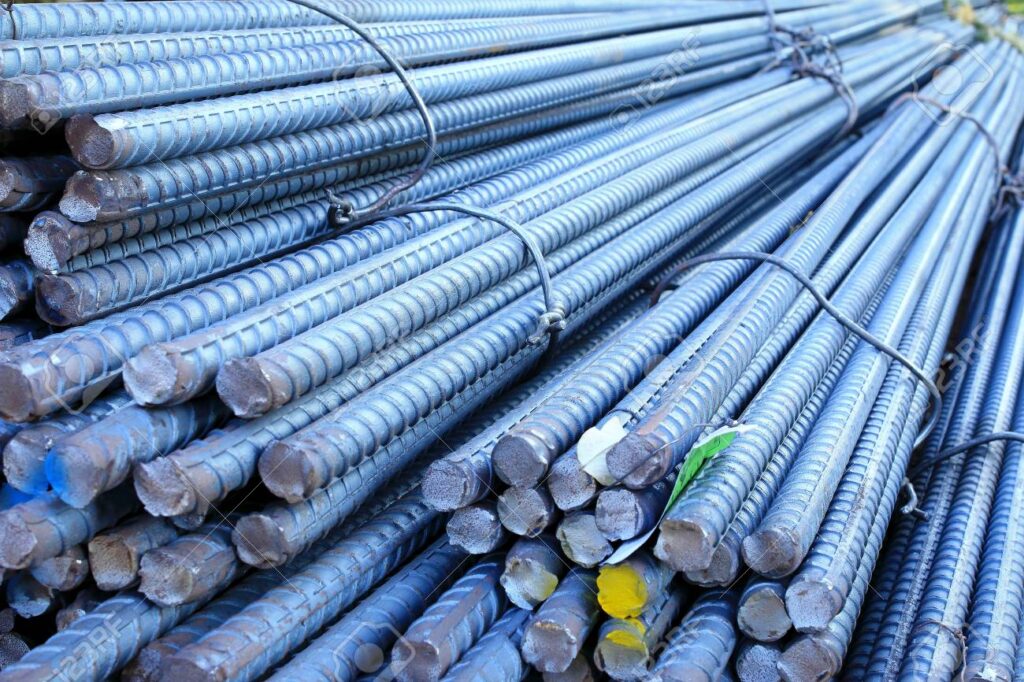
Italian merchant bar prices have been pushed up again this week to the level of €280/tonne ($338) base ex-works, market participants tell Kallanish.
Demand however seems to be reaching a dead-end as the prospect of falling scrap prices seems to be increasing. As a consequence, large distributors and purchasing groups have now decided to adopt a wait-and-see attitude.
Transaction values for merchant bar have gained €100/t ($120) since the beginning of January, in line with skyrocketing scrap values. Producers’ quotes went up in December to €180/t base ex-works and gradually reached this week’s level of €280/t base. Current merchant bar transactions in Italy are at €250/t base ex-works on average, or €670/t ex-works including €420/t size extras.
Meanwhile, Italian heavy sections producers are also pushing up their prices sharply. Transactions have reached €340-350/t base ex-works for the first category of beams, in line with increased asking values. Including €385/t size extras, contracts are now at €730/t ex-works on average. Prices increase by €20/t for each subsequent category, sources say. December contracts were at €200-250/t base ex-works, or €585-635/t effective ex-works, Kallanish notes.
Scrap prices in Italy have increased this month by €100/t on-month, in line with French and German hikes (see Kallanish 13 January). However, a trend reversal is beginning to happen and mills are now discussing decreasing values for new scrap contracts.


Italian car output recovers
Italian passenger car output increased again in November 2020 after growing significantly in September and October, Kallanish notes from preliminary data released by local carmakers’ association Associazione Nazionale Filiera Industria Automobilistica (Anfia).
Passenger car output registered a sharp increase of 42% on-year in November to 65,877 units, up from the November 2019 figure of 46,392 units. In the first 11 months of 2020 national car output was 407,375 units, down -20.4% y-o-y.
After 27 months of negative figures, the Italian automotive industry as a whole including heavy transport also grew by 10.7% year-on-year in November 2020, Anfia says.
In 2019 the country’s total output of vehicles including heavy transport was 914,826 units, of which 542,007 were passenger cars. This was down from 1.06 million units produced in 2018.
Italy has 23 production plants. By comparison, Spain has 17 plants, France 31 and Germany 42, Kallanish notes.

EU distributor activity recovery accelerates in November: EUROMETAL
The latest data published by European stockholders and traders association EUROMETAL confirms the recovery of activity for European distributors accelerated further in November last year.
European flat steel service centres saw their shipments increase 8.9% year-on-year in November, more than double the recovery pace of 3.3% y-o-y registered in October. Despite the pick-up, overall activity during January-November 2020 was down -12% y-o-y, Kallanish notes.
Multi-products and proximity distributors saw their shipments increase only 3.4% y-o-y in November, but the slump in their January-November deliveries remained below -10% y-o-y.
Stock levels at both SSC and multi-products distributors were down in November compared with the same period of 2019, indicating that overstocking is still not taking place.

Liberty restarts Czestochowa EAF

Liberty Steel has recommissioned Huta Czestochowa (HCz)’s electric arc furnace following its takeover at end-December of the Polish plate mill’s lease.
The international steel group commenced plate production last week using slab feedstock from its Ostrava works in neighbouring Czech Republic (see Kallanish passim).
Liberty Steel’s Chief Executive Officer, Primary Steel and Integrated Mining, Paramjit Kahlon, says: “I am very pleased that we have worked effectively to restart the Huta’s EAF so quickly, using a mix of LIBERTY resources and knowhow and the local team’s commitment to revitalise their business. We look forward to further positive developments over the next few months.”
Liberty says HCz’s 700,000 tonnes/year EAF and 1.2 million t/y heavy plate capacity will give it the opportunity to strengthen its position in the European “…GREENSTEEL” sector.
The latest tender for the sale of HCz will take place on 22 January. The starting price has been set at PLN 190 million ($51m) and bids from those wishing to partake must be submitted by 21 January.

Severstal denies dumping to EU, supports global trade
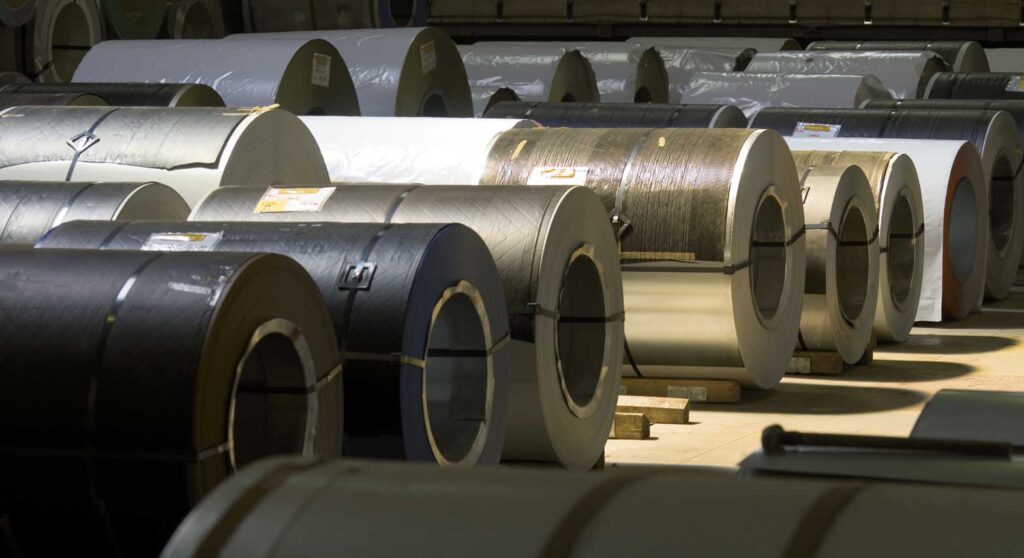
The European Commission’s intention to review upwards the anti-dumping duty levied on Severstal’s hot rolled coil will most affect European product consumers, the steelmaker tells Kallanish.
The Commission announced the review on Monday (see separate article).
The Russian steelmaker “…has been supplying to the EU in accordance with international trade law and within the established quota,” it observes. “We will participate in the review and prove that Severstal does not enable dumping in its exports to the EU.” Tightening import restrictions will hurt European steel consumers, considering the current price rally and material shortage in the EU, it adds.
The existing 5.3% duty on Severstal is by far the lowest among the EU’s tariffs on CIS steelmakers. This enabled it to export to Europe 740,000 tonnes of steel products in the first half of 2020, 13% up on-year.
European steel association Eurofer petitioned the review on behalf of its members, stating that the measures in place are no longer sufficient to counteract Russian dumping. The Commission will take into consideration the whole of 2020 to establish the facts, it says.
Somewhat ironically, the move comes on the heels of Russian authorities mulling over the imposition of export duties. The country applied a higher minimal value barrier to the existing ferrous scrap duty, effectively trebling it to €45/tonne, in order to reduce scrap export volumes. The country’s anti-monopoly service then advised to apply similar duties on steel exports and create fair trading conditions within the WTO agreement. Scrap duties at higher levels will be valid for six months from 29 January.
Severstal chief executive Alexey Mordashov, a long-time propagandist of global free trade, told a Russia held Gaidar Forum, that autarchy – trade self-sufficiency – would be completely catastrophic for Russia’s economy. This draws around 50% of its budget from international trade. “Oil and gas, engineering and metallurgical industries will simply halt if we do not export,” he is quoted as saying.