

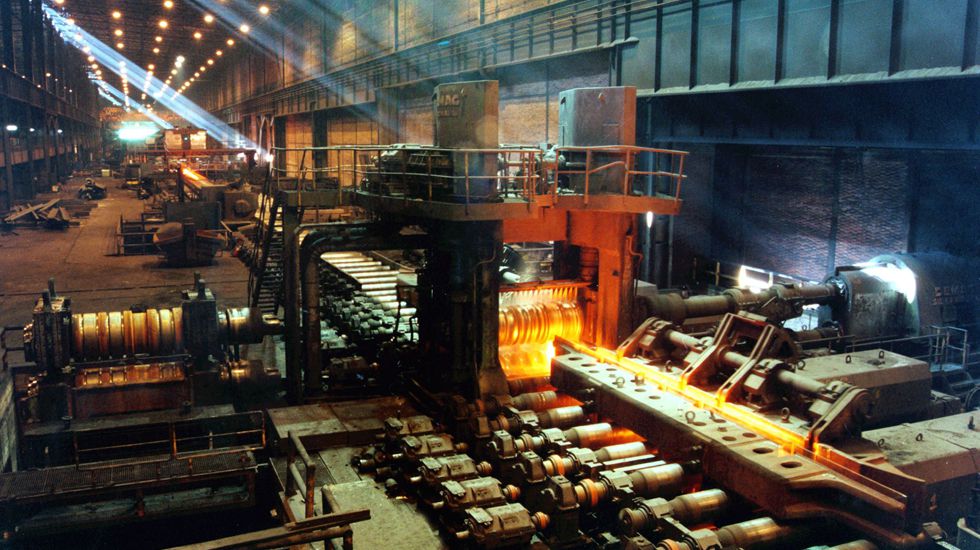
EU steel sections prices hold at 12-year high, mills target further hikes
European steel mills are expected to push for further medium sections increases in the near-term, amid strong order books, market participants told S&P Global Platts the week ended Jan. 20.
Platts European medium sections price (category 1, S235 JR) was assessed at Eur735/mt delivered Jan. 20, stable on week, holding at its highest level since September 2008 when the assessment was at Eur835/mt delivered.
One distributor source reported a deal for 2,000 mt at Eur730/mt delivered Benelux in the week ended Jan. 15, with near-term prices expected to rise as high as Eur760/mt delivered Benelux.
“Mills are moving end-user price up in steps,” the source said. “Our current sales price is just above the new purchase price and demand is ok but it’s creating a [price] gap for February end-user sales which will have been bought in January – so we’ll see.”
A second distributor in the Benelux region said there is higher resistance from buyers at these elevated levels, which makes it difficult to pass these prices on to end-users. The source cited existing offers already at Eur800/mt delivered Benelux.
“These are the prices we saw in 2008 but the situation is different now,” the second distributor said. “Major cities are on lockdown. And with winter and Chinese New Year in mid-February, capacity and consumption both will be reduced.”
The source also expected softening international scrap prices to put pressure on prices.
Market sources cited shredded scrap prices for Southern European mills at around Eur350-Eur355/mt delivered in January, as remaining mills settled their monthly contracts. Platts’ assessment for southern European shredded scrap was at Eur345-350/mt delivered for January contracts on Jan. 11, up from Eur280/mt delivered in December.
However, Platts assessed the benchmark Turkish import premium heavy melting scrap 1/2 (80:20) index at $440/mt CFR Jan. 20, down $5/mt on day, and down sharply from a near 10-year peak of $482.50/mt CFR on Jan. 4.
One European mill source put tradable levels for medium sections at Eur730-Eur740/mt delivered, citing an overall bullish sentiment in the market.
“Today there is more room for customers, room they didn’t have in November and December,” the mill source said. “Now they can wait before placing orders but still order books for mills are pretty good.”
— Rabia Arif, Staff, Viral Shah


Spain’s Sidenor expands capacity as activity picks up

Spanish-headquartered steelmaker and special steels supplier Sidenor is expanding capacity and range at one of its mills. The company has confirmed its current order book secures an 85-90% capacity utilisation rate across its mills.
The Basauri rolling mill will be revamped for €90 million ($109m). This will include a new storage area for semi-finished products, a new bar straightening, control and wrapping line, and two new thermal treatment furnaces. Capacity will thus grow to 500,000 tonnes/year, while range will also be expanded.
“Thanks to this technological renovation, Sidenor’s Basauri plant is at the forefront of the special steel sector in Europe,” the company says in a note seen by Kallanish. “The new premises enable Sidenor to take a decisive step, integrating the best technological equipment available and thus meeting the highest market quality requirements.”
Sidenor will also apply for EU funding for this investment.
The company supplies mostly the automotive sector and remains positive regarding the recovery of demand from this sector this year.

Italy’s December output recovers but falls in 2020
Crude steel output in Italy recovered by 15% year-on-year in December, according to data issued by local steelmakers association Federacciai. December output amounted to 1.6 million tonnes, Kallanish notes.
In full-year 2020, however, Italian crude steel production was 20.3mt, down -12.2% compared to 2019.
Meanwhile, Italian flat products output skyrocketed in December by 36.5% to 827,000 tonnes. 2020 flats output fell by -16.2% to 9.4mt.
Italian longs production also rose, by 12.3% in December to 861,000t. It fell in 2020 by -9.5% to 11.1mt, Federacciai says.
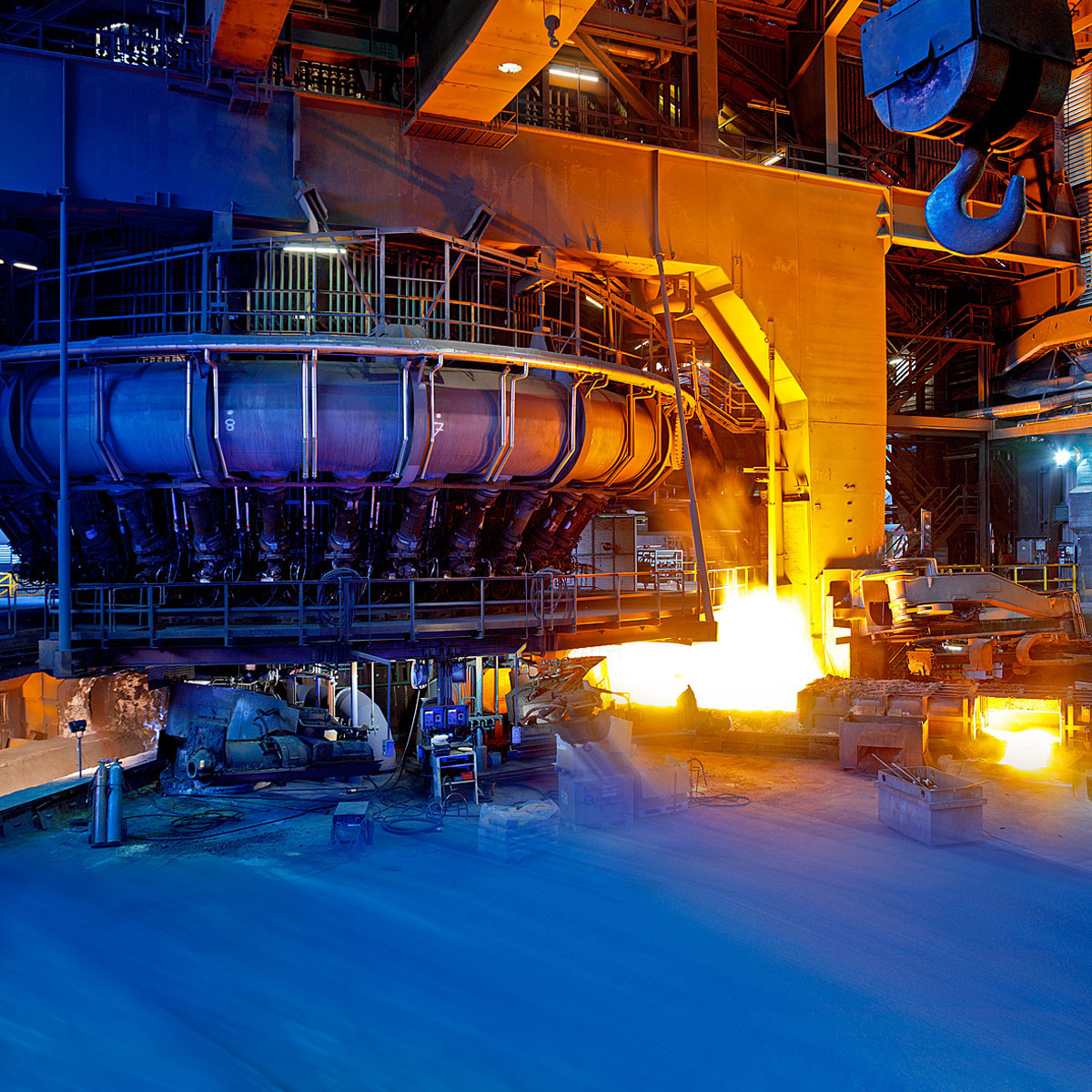
Voestalpine restarts second blast furnace at Donawitz
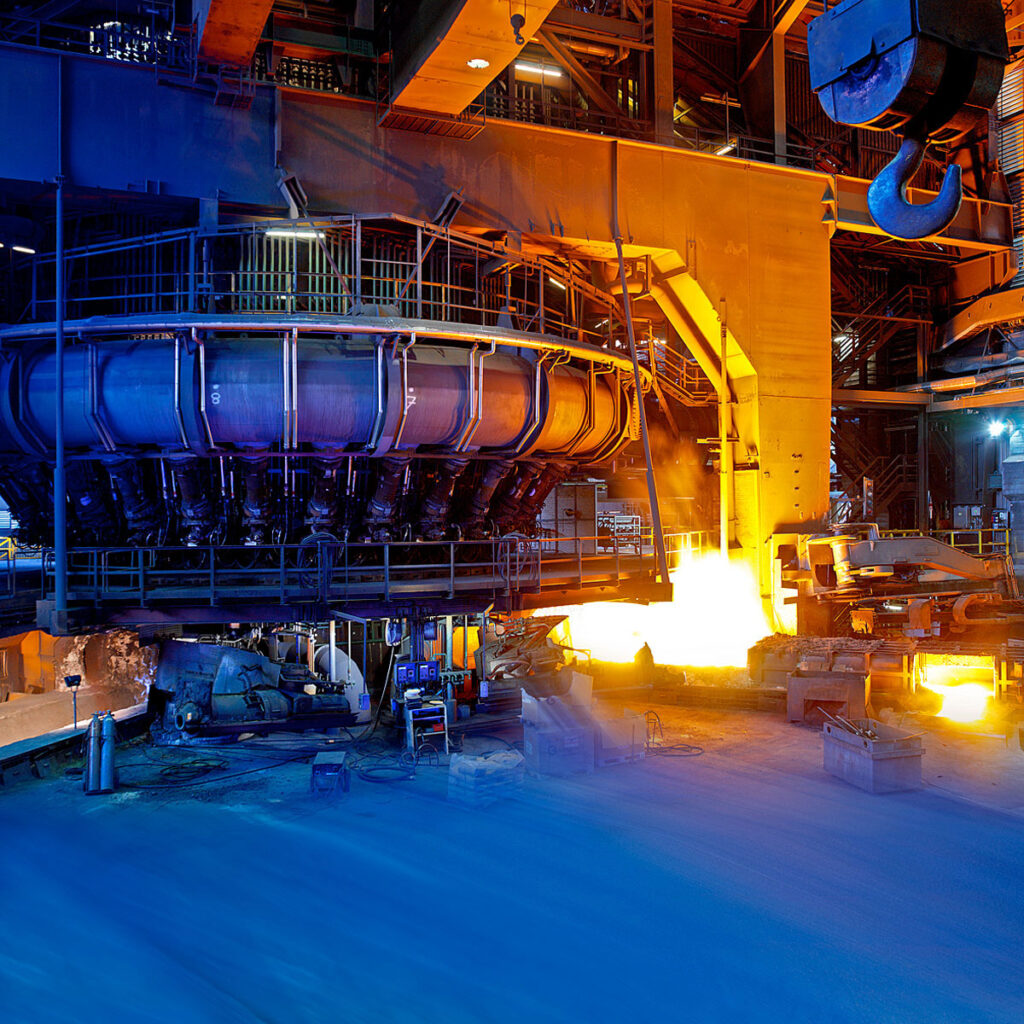
In response to the current level of orders in the long steel segment, voestalpine has decided to again operate two blast furnaces at its site in Donawitz, Austria.
One of the two furnaces, which has an annual pig iron production capacity of around 750,000 tonnes and underwent scheduled interim repairs last summer, has now been restarted, Kallanish learns from the company.
Donawitz belongs to voestalpine’s Metal Engineering Division and is among the small number of European mills that make long products through the oxygen converter route. Its portfolio covers special rails, high-quality wire rod, and extremely high load-bearing OCTG.
The performance of the company’s Railway Systems business unit has remained stable even during the economic crisis caused by the coronavirus, voestalpine notes. Now, the wire and seamless tube segments, both hit last year by the Covid-19-related slump in demand from the automotive, and oil and gas industries, are also showing slight improvement in capacity utilisation.
The current market situation is stimulating demand for feedstock in the division’s business segments, making it necessary to restart the second blast furnace in Donawitz, voestalpine says.
The two furnaces at the site have a joint annual capacity of around 1.5 million tonnes of pig iron. Following the restart, all five of voestalpine’s blast furnaces are now in operation, including those in Linz which have a total combined annual production capacity of around 5mt of pig iron.
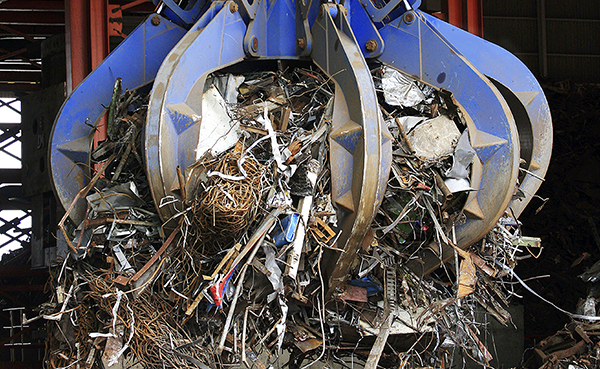
Chinese buyers begin active scrap search in EU
Chinese buyers are becoming active in looking for scrap in various European countries, EU sources tell Kallanish. Traders are now actively contacting scrap merchants to purchase 5,000-7,000 tonnes of scrap.
This follows China’s first scrap import purchase after these imports were allowed from 1 January 2021 (see Kallanish 20 January). No contracts have yet been agreed in Europe, with buyers enquiring about material quality and availability. After understanding the grades and tonnages available they will move on the negotiation process, a source says.
Vessels from Italy, France and Spain are likely to be small in size, up to 7,000 tonnes. But Germany and Holland will be able to provide large vessels, gathering tonnages in northern Europe at no extra shipping cost, Kallanish is told.
Large Chinese companies are enquiring through traders to buy different types of scrap. They are willing to agree longer-term supply contracts if the first shipments go smoothly and if the seller is able to guarantee a constant flow of material, sources observe. Chinese buyers are looking to create long-term relationships with good suppliers but are said to be very choosy on grades, only asking for very high-quality material.

Turkey to become net flat steel exporter as HRC capacity rises
Turkey’s major steel producers and end users met with Riza Tuna Turagay, vice minister of the Turkish Trade Ministry, to discuss supply chain problems at a panel discussion held by the Istanbul Chamber of Industry on Jan. 20.
Ugur Dalbeler, CEO of steelmaker Colakoglu, who spoke at the conference, told S&P Global Platts Jan. 21 that Turkish steel producers have submitted their opinions to the panel about market shortages and a short-term rapid rise in prices.
“Due to the decline in Chinese HRC exports last year and the downfall in large steel producing countries output figures, the rapid rise in demand in the fourth quarter of the year couldn’t be met. For that reason steel prices rose globally. But this artificial rise is gradually stabilizing,” the CEO said.
Highlighting that Turkish hot-rolled coil capacity will rise to 23 million mt with new investments in 2022 from the current 18 million mt with new investments Dalbeler said: “Turkey will reach a net flat steel exporter position,” noting that Turkey has nine cold-rolled and coated coil mills with an installed capacity of 11 million mt.
Colakoglu is aiming to raise its hot-rolling mill capacity by around 50% to 4.5 million mt with a new annealing furnace, while an environmental impact assessment (EIA) process has also recently started for Tosyali Demir Celik’s, new 3.5 million mt HRC mill project, as Platts has reported.
“Turkey which was producing only one third of its total steel consumption 10 years ago, will start to produce more than its total steel consumption as of next year,” Dalbeler noted.
Drawing attention that although steel production in Turkey increased last year, steel imports into Turkey rose notably year on year, Dalbeler said: “Around 95% of steel imports into Turkey were made without a duty. For that reason we couldn’t say that there is an obstacle ahead of imports into Turkey,”
Dalbeler noted that Turkish mills are working hard to ease the provisional supply problems in the market in cooperation with the Turkish Ministry.
Some Turkish contractors demanded in mid-December that the country’s competition authority start an investigation of recent sharp increases in domestic rebar and cement prices, as reported.
— Cenk Can