

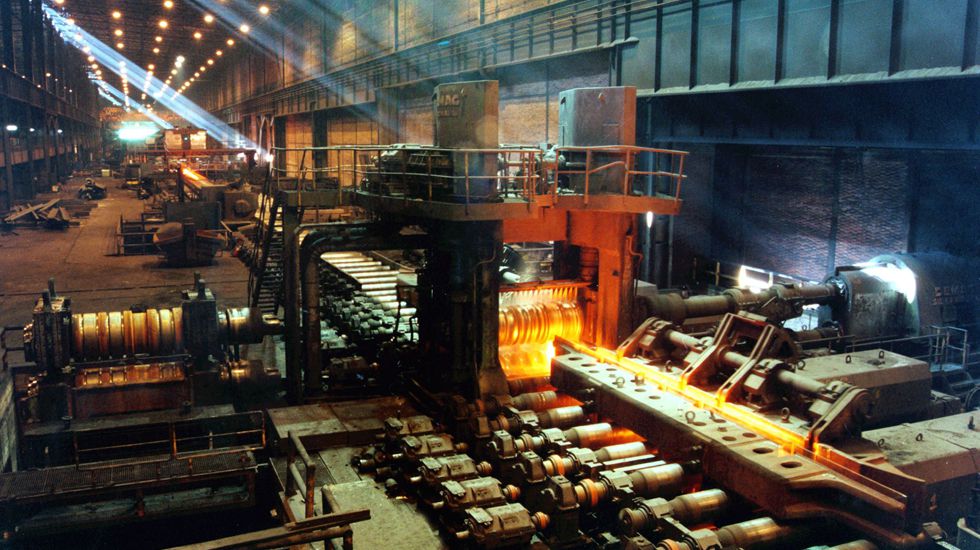
Germany’s 2020 crude steel production down 10%
German crude steel production in 2020 was 10% lower year on year at 35.7 million mt, the lowest since 2009, according to data from steel federation WV Stahl, which also said it was the third consecutive year to see a fall.
Some 24.1 million mt of crude steel was produced via blast oxygen furnace in 2020, down 13%, while 11.5 million mt were produced via electric arc furnaces, down 3%.
Pig iron production in 2020 decreased 12% to 22.5 million mt, while hot-rolled steel production fell 9.8% to 30.95 million mt.
Production in the fourth quarter was up 9% year on year, mainly due to a weak Q4 in 2019.
Production has been increasing on a month-on-month basis since August when mills started to ramp up again following coronavirus pandemic-related production curbs.
December crude steel production was up 11% year on year to 3.1 million mt, some 2.39 million of which was produced via the BOF route, and 750,000 mt via EAFs, up 12%. Pig iron production increased 9.8% year on year in December to 2.2 million mt, while hot-rolled steel production saw a 15% increase to 2.6 million mt.
Market sources said further production increases were expected as more mills have been putting lines and furnaces back into operation.
— Laura Varriale

China’s 2020 net exports of steel plunge 69% on year
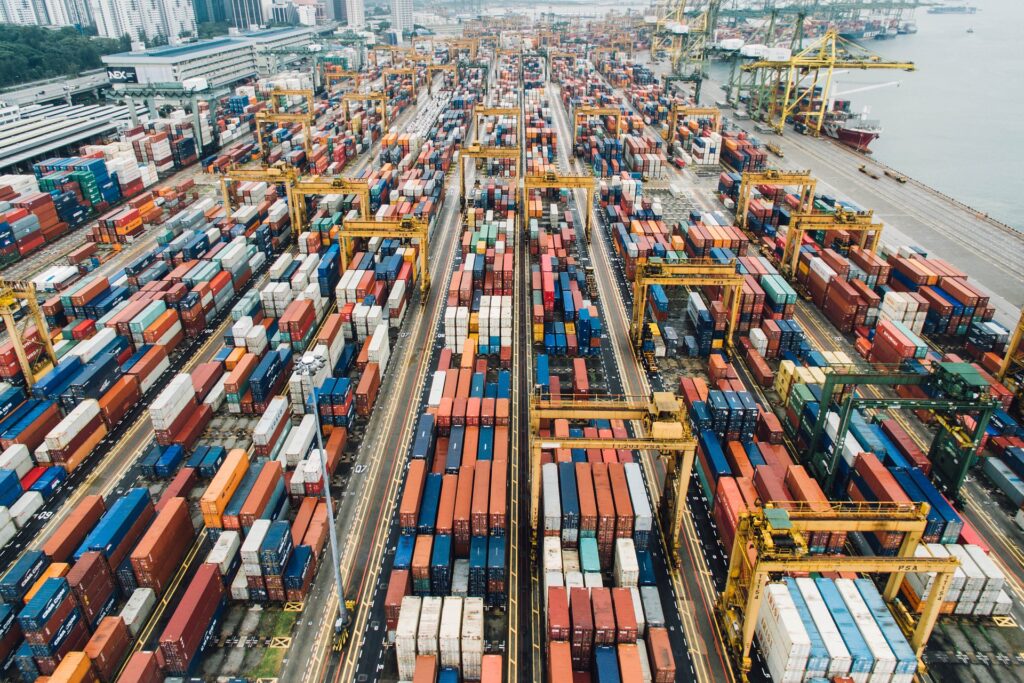
China’s net exports of semi-finished and finished steel in 2020 dropped 69% on the year to 15.24 million mt, S&P Global Platts’ calculations showed based on China customs data.
However, due to recovering demand for China’s exports and a likely slowdown in domestic home starts in 2021, the net steel exports are likely to rebound in 2021, after trending downward for five years in a row starting from 2015, according to market sources.
The country’s semi-finished steel imports, comprising mainly billet and slab, increased to 18.22 million mt in 2020, up six-fold from 2019, according to the data. When added to the finished steel imports, it took China’s total steel imports in 2020 to 38.45 million mt, more than twice that from 2019.
China exported a gross 53.69 million mt of semi-finished and finished steel in 2020, down 17% year on year.
The strong semi-finished steel imports in 2020 were mainly due to a surge in imports from June to November, when domestic steel demand largely recovered, but other markets were still in lockdowns or just beginning to recover from the impact of the coronavirus pandemic.
But overseas demand recovery has accelerated since late 2020, which reduced the need to sell into the Chinese market, while boosting China’s steel exports.
China’s semi-finished steel imports in December dropped 48% on the month to 0.86 million mt, already to the same level from a year earlier. The combined imports of semi-finished and finished steel in December dropped 36% on the month and 5% on the year to 2.23 million mt.
In the meantime, exports of semi-finished and finished steel in December increased 10% on the month and 4% on the year to 4.85 million mt.
Several market sources expected China’s semi-finished and finished steel imports to continue declining in the first quarter of 2021, while exports to climb, as overseas demand has improved substantially and the domestic market will be in a traditionally weak season amid the Lunar New Year holidays.
— Jing Zhang
French stainless scrap seen rising again
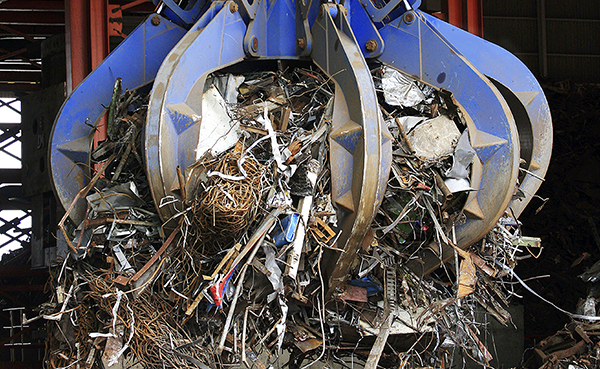
Stainless steel scrap prices in France are seen increasing further in February due to raw materials increases. Prices have increased by €60/tonne ($72/t) on average this month compared to December.
Market participants tell Kallanish demand and sales have been high this month. They expect February demand to also be at high levels considering the strong performance and long lead times of finished flat products.
This month, offers for grade 316 are hovering at €1,600-1,640/t ($1,939-1,988) ex-works on average. This grade is being sold fast and is in short supply. Mills are paying €1,180-1,190/t ex-works for grade 304. Buyers add between €20-30/t for transport, sources say.
Meanwhile, nickel prices for cash buyers were at $17,796/t on 6 January and reached $17,906/t on 22 January.

Piombino posts loss, unions expect new JSW plan
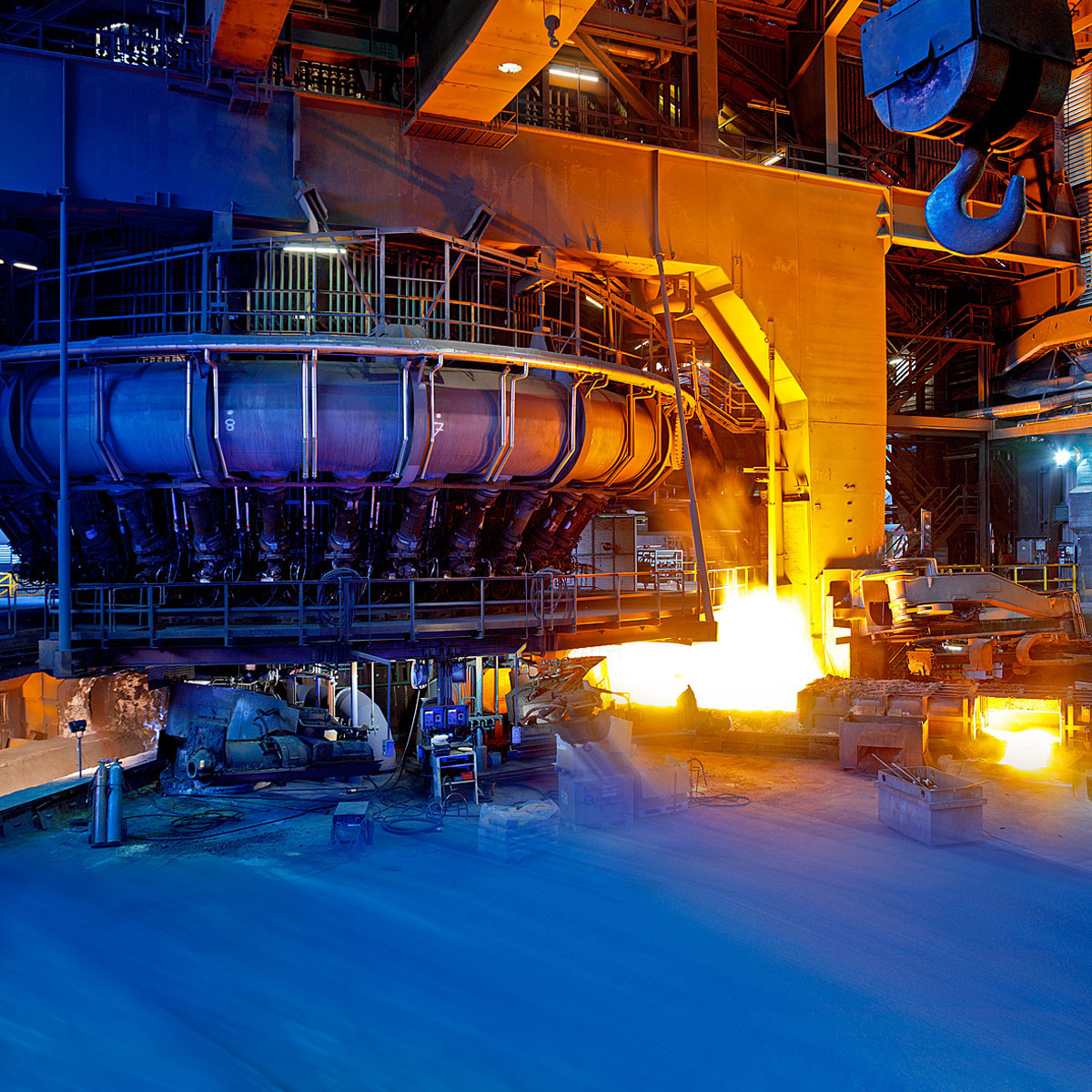
JSW Steel’s Italian facility in Piomino produced 84,063 tonnes and sold 83,994t of steel products in the third fiscal quarter through December 2020, Kallanish learns from the Indian steelmaker’s latest earnings report. The unit also posted an Ebitda loss of €0.52 million ($0.63m).
JSW Italy is facing a liquidity crisis. The company is asking for a grant backed by the Italian government of €50m to upgrade the plants and dismantle outdated equipment. It is also seeking a grant of €32m for environmental and energy efficiency improvement works, the release of government guarantees for €75-100m to tackle the current liquidity crisis and a soft loan of €75-100m.
The Italian government previously announced its plan to become a financial partner and stakeholder in JSW Italy through its financial body Invitalia, to support the relaunch of the Piombino steelworks (see Kallanish 16 September). However, the parties have not yet reached an agreement.
The company is now expected to submit a revised industrial plan before the end of January that should include the construction of an electric arc furnace, a Uilm union representative confirms. The presentation of a revised industrial plan was already previously postponed, with unions losing hope over the relaunch of the troubled steelmaker, Kallanish is told.
JSW has reported a swift demand recovery in its domestic Indian market.
Liberty submits firm bid for thyssenkrupp Steel Europe
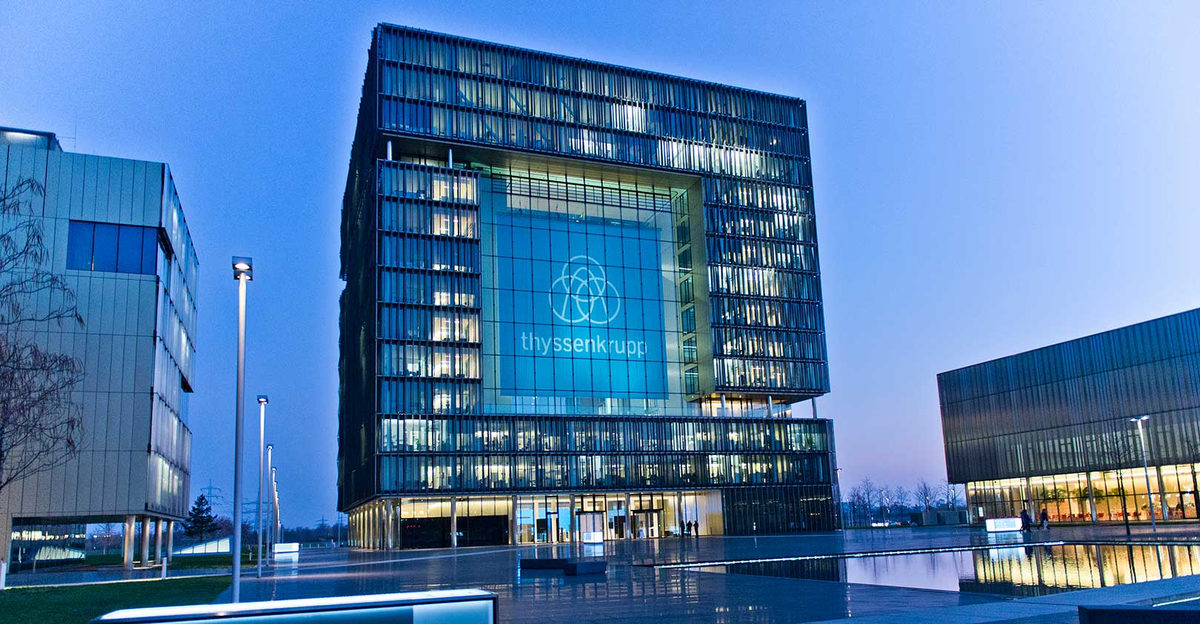
Liberty Steel has submitted a firmed-up bid for thyssenkrupp Steel Europe based on the results of the due diligence it carried out on the German steelmaker.
Liberty initially made a non-binding indicative offer to acquire the steel unit of thyssenkrupp in October (see Kallanish passim).
“This is an important step for LIBERTY demonstrating our binding commitment to the combination of the two businesses,” a spokesperson for the UK-based steel group tells Kallanish. “Due diligence and our discussions with thyssenkrupp have so far confirmed that a potential combination of thyssenkrupp Steel Europe and LIBERTY Steel is the right answer from an economic, social, and environmental perspective. We look forward to continuing to engage with thyssenkrupp, its employee representatives and its shareholders to conclude this process.”
The spokesperson gave no further details of the bid.
German steel production falls in 2020
Crude steel output at German mills in 2020 dipped by -10% year-on-year to 35.7 million tonnes, according to steel association Wirtschaftsvereinigung (WV) Stahl data. Finished products output dipped by the same rate to 30.9mt.
Given that blast furnace-based flat steelmakers were most pressured to cut production, output of pig iron dipped by slightly more, -12%, to 22.6mt, Kallanish notes. Correspondingly, crude steel production at oxygen-route mills dropped by -13% to 24.1mt. Against that, production at electric arc furnace-route mills dropped by only -3.1% to 11.5mt.
In the already weak 2019, crude steel production had undercut the 40mt mark for the first time since the financial crisis in 2009. WV notes that a recovery is seemingly in progress, with production in the last three months 9% above that in the last quarter of 2019. However, this comes from a low base.
December’s crude steel production totalled 3.1mt, with both oxygen-route and EAF route steel up 10% on December 2019. The biggest surge occurred for finished products, which went up by 16%.
EU safeguard extension debate heats up
The debate over the possible extension of safeguard measures beyond June 2021 is starting to heat up in Europe. This comes after 12 governments sent a letter to the European Commission formally requesting an investigation for a possible extension.
The letter, seen by Kallanish, was signed by the economy ministers of a number of European countries, including Germany, Italy, France, Spain and Belgium.
“While we are aware that steel safeguards might not solve the structural problems of the steel industry, they remain nonetheless a necessity for its survival, as the threats targeted by the safeguard measures have not disappeared,” the letter reads. “We therefore ask you to investigate extending the steel safeguards for the time and to the extent necessary.”
A source at a major steel importer expresses opposition to the letter’s content. “The biggest issue at the moment is that the European Commission will now have to decide quickly if they want to launch an investigation. If this happens, we will be again facing a lot of uncertainties because we will not be able to plan the supply of steel from June onwards,” the source observes.
“Planning imports is important for our activity and we need to do that in advance, which is impossible if a decision on the extension of safeguard is taken last minute,” the source adds.
Kallanish understands that, due to the investigation’s length, a decision on the safeguards could come only in May, weeks before the natural termination of the existing measures.
The next six months are set to be key for importers, processors and distributors of steel.