

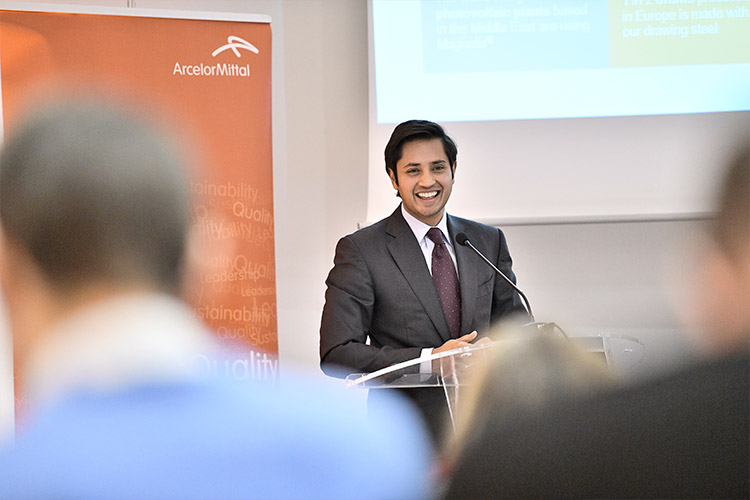
ArcelorMittal appoints Aditya Mittal new ceo
Aditya Mittal has been appointed ArcelorMittal chief executive, with Lakshmi Mittal to become executive chairman and continue to lead the board of directors and work with the new ceo, Kallanish notes.
“Having achieved some key strategic targets, this seems like the right moment to transition to Executive Chairman and the Board unanimously agree that Aditya Mittal is the natural and right choice to be the company’s Chief Executive,” Lakshmi Mittal says. “We have worked closely together since he joined the company in 1997, indeed in recent years we have effectively been managing the company together… He will be taking on the effective day to day running of the company, but we will continue to work very closely together.”
“The biggest challenge, but also the biggest opportunity, will be to demonstrate that steel can decarbonise and indeed is the perfect material for a circular economy,” Aditya Mittal observes. “This will undoubtedly be a critical driver of our strategy in the coming years and decades.”
Aditya Mittal is currently ArcelorMittal chief financial officer and president, as well as ArcelorMittal Europe ceo. Genuino Christino will replace him as group cfo. Christino has been ArcelorMittal head of finance since 2016 and has been working closely with Aditya Mittal on developing financial strategy.

EU steel consumption to rise 13% in 2021 after weak 2020: Eurofer
Apparent EU steel consumption was expected to rebound by 13.3% in 2021 and then grow by a more moderate 3.4% in 2022, after one of the worst years years ever for the industry, European steel association Eurofer said in its Economic and Market Outlook report Feb. 10.
Eurofer adjusted its forecast 2020 decline in apparent steel consumption to 13%, from a previous 14.6% fall.
Economic growth and global trade would remain subdued and fragile until the second quarter of 2021, Eurofer said, with repercussions for export-oriented sectors, particularly the automotive industry. This would also affect EU investment via severely weakened business confidence levels.
The steel body said that a better performance in the construction sector could cushion negative trends in other steel-using sectors.
Total output for steel-using sectors will have fallen by 11% in 2020, Eurofer said, leaving its previous forecast of a 10.4% decline largely unchanged, and will recover by 7.4% in 2021 and then grow 4.1% in 2022.
After an unprecedented 25% year-on-year drop in Q2 2020, EU28 apparent steel consumption fell by 11.6% in Q3 — the eighth consecutive quarter of decline. Q2 last year was the quarter with the lowest steel demand on record, Alessandro Sciamarelli, Director of Market Analysis and Economic Studies at the European Steel Association told S&P Global Platts.
The “unprecedented deterioration” in steel demand due to disruption brought by the coronavirus pandemic continued in Q3, though at a lower rate of decline, the Eurofer report said.
The downturn in steel demand led to the eighth consecutive fall year-on-year in domestic deliveries in the EU in Q3 2020. Data for Q3 also showed the continued downturn in imports from third countries. After the severe 16.8% year-on-year drop in Q2 2020, imports from third countries dropped even more sharply in Q3, down 25.4% and the fourth consecutive quarterly drop of more than 10%.
“The third quarter of 2020 was a period between two waves of the pandemic. Some measures had been relaxed and a partial economic recovery occurred in the third quarter, but the fourth quarter was marred by the re-imposition of measures. 2020 is likely to be one of the worst years on record, even if we will see positive figures in the fourth quarter,” Axel Eggert, Director General of Eurofer, said.
“The EU should use this crisis as an opportunity to use the recovery fund to support industry in meeting its decarbonization ambitions starting with sectors, such as steel, that have already shown how they can help support the aim. Europe wants to come back from this crisis in a greener, more sustainable way,” Eggert added.
— Annalisa Villa

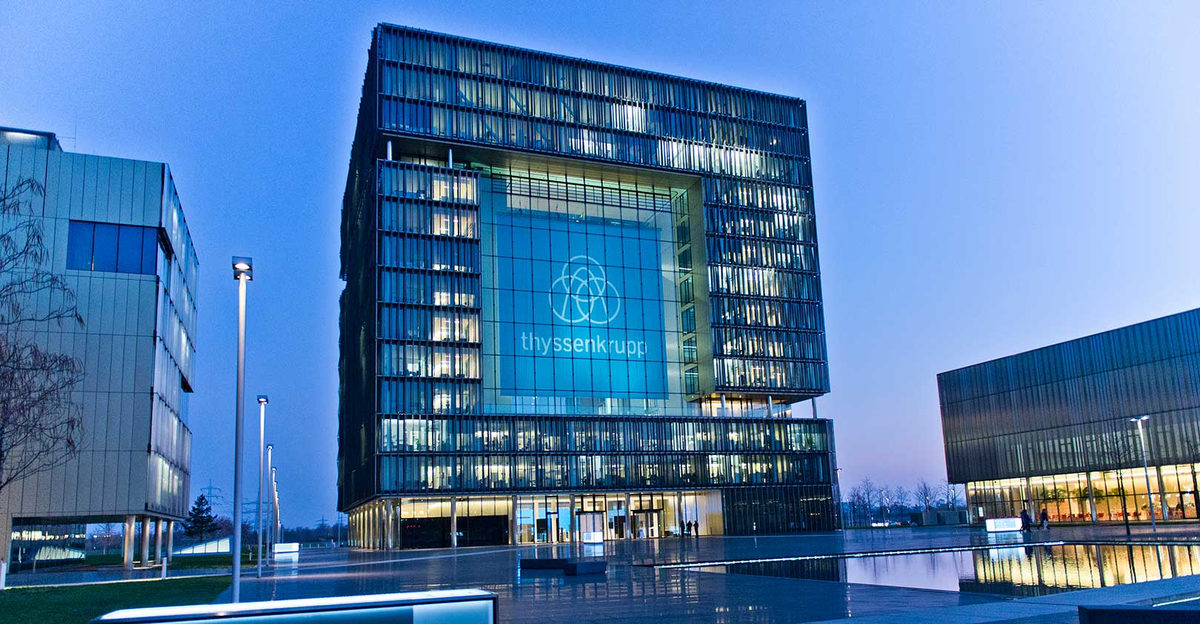
Thyssenkrupp Steel Europe focuses solely on Liberty bid as sale option
Germany’s Thyssenkrupp group is focusing solely on a bid placed by steelmaker Liberty as a sale option for Thyssenkrupp Steel Europe, Chief Financial Officer Klaus Keysberg said Feb. 10.
Liberty’s offer to take over all of Thyssenkrupp Steel Europe’s assets is now the only sale option being considered, Keysberg said during the group’s first-quarter (October-December 2020) earnings call.
The steel unit’s output in 2021 will be limited as a reline of blast furnace No. 1 will be carried out mid-year.
Other potential buyers such as Tata Steel, Salzgitter or SSAB have been ruled out. “Obviously we spoke to everyone but they are not on the table now,” Keysberg said, adding that Thyssenkrupp is also still looking at a “standalone” option. The company said it will provide further details in March.
Keysberg confirmed to S&P Global Platts that Thyssenkrupp will reline its blast furnace No. 1 starting mid-year and lasting for around six months, which will limit steel production. He said it was impossible to say whether the steel unit will reach pre-pandemic levels this year.
Crude steel production in the fiscal first quarter rose 1.5% year on year to 2.88 million mt, of which semis manufacturer HKM produced 743,000 mt (up 10.23% year on year) and the integrated Duisburg works 2.14 million mt (down 1.2%).
Cold-rolled steel shipments in the first quarter rose 11.14% year on year to 2.4 million mt, while hot-rolled shipments increased 13.8% to 783,000 mt.
Auto demand
Thyssenkrupp is also investing in the existing continuous casting line 3, which will be rebuilt to optimize slab production at Duisburg. There are also plans to build a new double reversing mill and an annealing and isolating line at Bochum. Completion of all projects is scheduled for the end of 2024.
Thyssenkrupp is seeing the effects of the semiconductor shortage in the automotive industry that has disrupted car manufacturing. “Automotive is supposed to catch up, but we have to see,” Keysberg said.
The auto industry has taken up fewer volumes from steel mills than planned, but by April they plan to request volumes not already taken, sources told Platts.
Thyssenkrupp expects the auto industry to return to pre-pandemic levels by 2023.
Keysberg drew a cautious outlook for 2021. While the end of 2020 was strong and driven by the automotive industry, there are still numerous unknown factors that could hamper demand, while early 2021 appears to have lost some of the dynamic from the end of last year.
Thyssenkrupp lifted its full-year guidance to breakeven on the back of market recovery.
— Laura Varriale
EU steel exports fall less than imports: Eurofer
EU imports of finished steel products during the first 11 months of 2020 dropped some -17% year-on-year, while exports of the same products were down -13% y-o-y.
European steelmakers’ association Eurofer says it remains concerned nonetheless as the bloc continued to have a total steel trade deficit of over 850,000 t/month in the period.
Imports of long products fell by some -20% during the 11 months, while flats imports decreased by some -16%.
“As far as the trade deficit with individual trade partners is concerned, the largest trade deficit in finished products was with Russia with 432,000t, followed by South Korea with a deficit of 212,000t. The trade position with Turkey has relatively improved in recent quarters as the trade deficit decreased from 428,000t in the fourth quarter of 2018 to 11,000t in the third quarter of 2020,” Eurofer notes.
Despite the relative improvement in trade balance, Eurofer remains concerned over future developments, especially as market demand is expected to improve. “It is worth noting that once normal business conditions are restored after the end of the Covid-19 pandemic and steel demand picks up again, the combination of still-volatile monthly steel imports and the increased capacity of major exporting third countries will continue to pose a serious risk for EU steel producers,” the association says.
Kallanish understands that a review into possibly extending EU safeguard measures beyond June 2021 is set to be initiated soon, though the outcome of it remains very much uncertain.
Weather delays ArcelorMittal Gent blast furnace restart
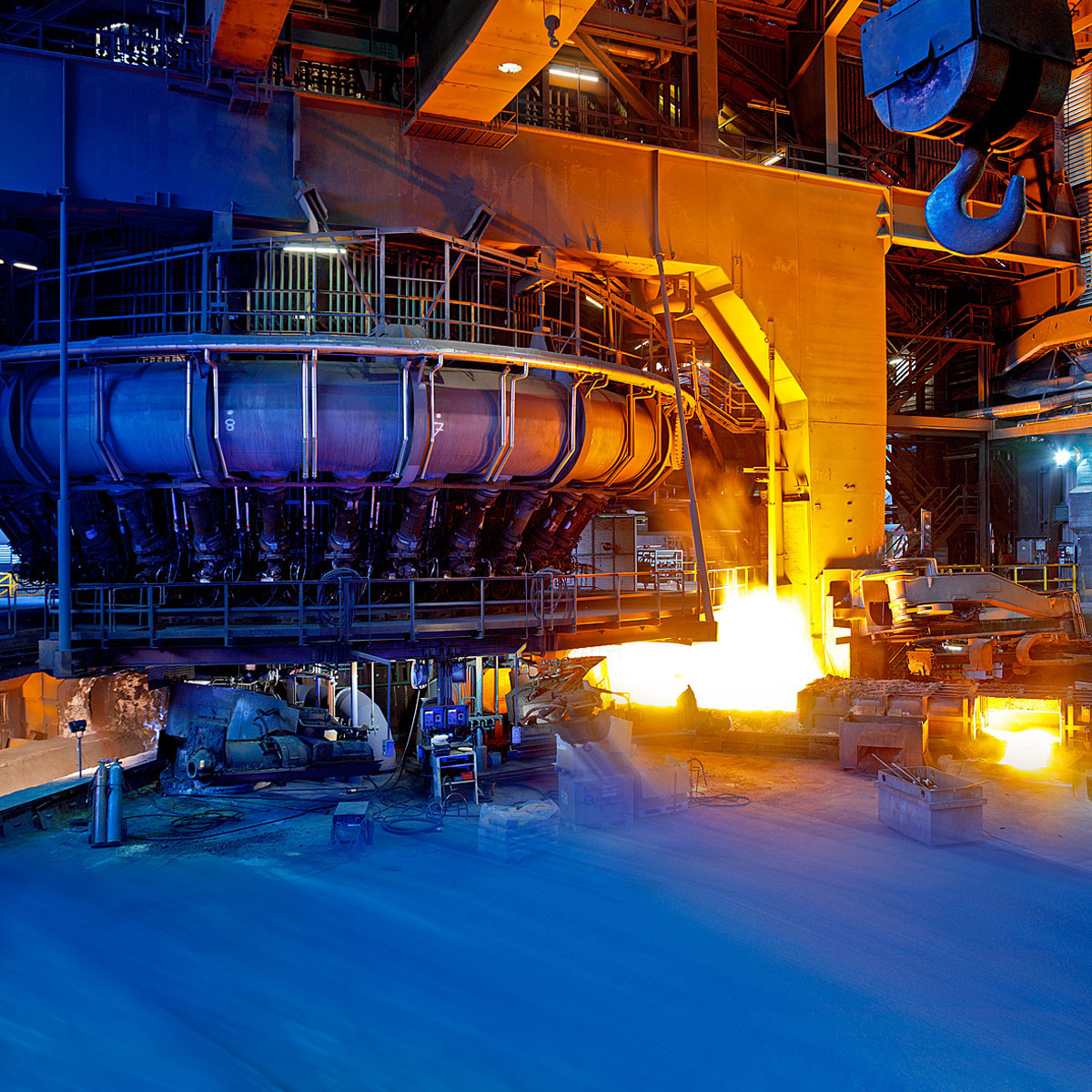
The restart of blast furnace B at ArcelorMittal Gent, Belgium, is expected to suffer a delay due to heavy snow in the area, Kallanish learns from sources close to the matter.
The 2.3 million tonnes/year of hot metal capacity furnace was idled last September for relining and was due to be restarted by mid-February.
The company did not issue a statement on the new timeline of the restart.
In 2020 Belgium produced some 6.1 million tonnes of crude steel, down -21.1% on-year. In December alone output in the country reached a record-low of below 360,000t, according to worldsteel data.
Thyssenkrupp to reline blast furnace this year
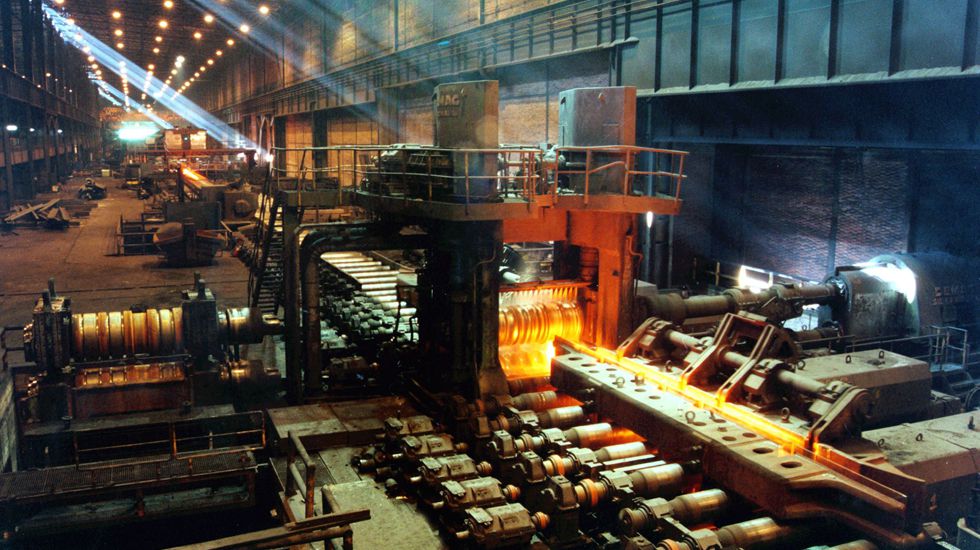
Thyssenkrupp Steel will this summer reline one of its blast furnaces, the company says, officially confirming rumours that had been circulating among strip buyers.
“As part of regular maintenance measures, we will be relining blast furnace No.1 between July and September,” a spokesman tells Kallanish upon inquiry. The costs for the measure will be in the mid-two-digit million-euro range, he specifies. The furnace has been in operation with the same refractory lining since 2008.
The news comes at a time when most European steelmakers are restarting blast furnaces that had been temporarily idled, mainly as a consequence of the coronavirus crisis, but also earlier. Thyssenkrupp maintains that it kept all four blast furnaces at its Duisburg mill going all through 2020. However, nearby Hüttenwerke Krupp-Mannesmann (HKM), in which thyssenkrupp owns 50%, had stopped one of its two furnaces for around six months.
According to the spokesman, tk Steel has considered the production loss resulting from the reline in the planning of its annual output volume.
Recent blast furnace restarts in Europe have occurred at ArcelorMittal’s mills in Ghent, Belgium, and Taranto, Italy, although the former has been delayed by bad weather (see separate story). In addition, voestalpine has just restarted the second BF at Donawitz, Austria.
Of tk Steel’s four blast furnaces, two – Nos. 8 and 9 – are part of the Duisburg-Hamborn section. These two units together produce around 3.7 million tonnes/year of hot metal. Blast furnaces Nos. 1 and 2 at Duisburg-Schwelgern are roughly twice as big and together have an output of 7.7m t/y.
Thyssenkrupp goes for major investments in core units
As part of its “Steel Strategy 20-30” campaign, thyssenkrupp Steel has announced the construction of new core units at the Duisburg and Bochum sites, aimed at expanding the range of premium steels, it says.
According to a statement made on Wednesday, the plan is to convert the casting rolling line in Duisburg into a new continuous casting line with a downstream hot strip mill. Moreover, the existing continuous casting line 3, also in Duisburg, will be rebuilt to optimise slab production, Kallanish learns.
Investments are also envisaged at the Bochum site, where a new double reversing mill and an annealing and isolating line will be built. According to the company, the measures will strengthen the Bochum site’s position as a competence centre for steels for e-mobility. For this application, thinner and stronger sheet is needed to increase the performance of electric motors, thyssenkrupp explains. It notes that supplies to customers will be guaranteed during the conversion and construction work.
The projects involve an overall investment volume in the high three-digit million-euro range. Completion of all projects is scheduled for the end of 2024. This package is a clear statement by tk group for the steel business, as it marks the biggest investment since the construction of the Schwelgern coking plant in 2003. “This is a strong signal for the steel business and a strong mark of confidence in difficult times,” says tk Steel chief executive Bernhard Osburg.