

ASEAN 2020 vehicle output sinks 32% on year on COVID-19, chip shortage
Vehicle production for 2020 in the Association of Southeast Asian Nations, or ASEAN, fell 31.6% year on year to 2.85 million units due to the COVID-19 pandemic and a semiconductor chip shortage, which could continue into 2021, dampening demand for flat steel.
The region saw output in December 2020 dip 0.2% from the year before, better than a 4.6% annual fall posted for November 2020.
Thailand, ASEAN’s leading vehicle producer, was able to post gains in November and December, but Indonesia saw its December production fall 30.6% year on year, marking yearly falls for 10 months running.
While the coronavirus lingers, the Federation of Thai Industries expects vehicle sales to fall to 750,000 units in 2021, down from 792,146 units in 2020.
But the FTI expects production to firm to 1.50 million units in 2021 as global demand recovers, up from 1.43 million units the previous year. However, production could be affected by the global semiconductor shortage.
Amid the shortage, the Indonesian government will suspend a luxury tax on sales of sedans and two-wheel drive cars with engine capacities of less than 1,500 cubic centimeters from March 2021 to May 2021 to support its automotive industry. The current tax ranges between 10% and 30%.
After May, the government will give a 50% discount on the tax lasting for three months, and thereafter, also for three months, the discount will be halved, as the situation is reviewed every three months.
The chip shortage resulted when the coronavirus caused vehicle manufacturers to shut down their plants in March-April 2020, which encouraged chip makers to shift their production of auto chips to chips for other sectors such as consumer electronics and smartphones.
But an earlier-than-expected recovery in the global vehicle market late 2020 renewed demand for auto chips when production was allocated to manufacturing other types of chips.
ASEAN’s plans to restore production in 2021 could be hindered by the chip shortage as S&P Global Ratings expects the shortage could take two to three quarters to resolve for most global automakers and up to a year for select models.
ASEAN Vehicle Production/Sales Data
| Production | Nov-20 | Dec-20 | Change | Dec-19 | Change | Jan-Dec 2019 | Jan-Dec 2020 | Change |
| Indonesia | 72,386 | 68,173 | -5.8 | 98,295 | -30.6 | 1,286,848 | 690,150 | -46.4 |
| Thailand | 172,455 | 143,073 | -17.0 | 134,208 | 6.6 | 2,013,710 | 1,427,074 | -29.1 |
| ASEAN | 325,302 | 299,670 | -7.9 | 300,388 | -0.2 | 4,158,983 | 2,846,028 | -31.6 |
| Sales | Nov-20 | Dec-20 | Change | Dec-19 | Change | Jan-Dec 2019 | Jan-Dec 2020 | Change |
| Indonesia | 53,834 | 57,129 | 6.1 | 87,664 | -34.8 | 1,030,126 | 532,027 | -48.4 |
| Thailand | 79,177 | 104,089 | 31.5 | 89,285 | 16.6 | 1,007,552 | 792,146 | -21.4 |
| ASEAN | 256,148 | 311,713 | 21.7 | 308,491 | 1.0 | 3,458,476 | 2,453,808 | -29.0 |
Source: ASEAN Automotive Federation
— Clement Choo, Samuel Chin


Vallourec sees oil, gas activity remaining weak in 2021
Oil and gas drilling activity is expected to stay subdued in 2021, Vallourec, one of the leading seamless steel pipe producers said Feb. 17, however the company expects to see an increased contribution from iron ore mining this year.
“Although Vallourec’s revenue in 2020 was strongly impacted by the considerable drop of its activity due to Covid pandemic impact on oil demand and E&P activity worldwide, the group has demonstrated its capacity to adapt, achieving an almost stable EBITDA margin year-on-year..,” Edouard Guinotte, chairman of the management board, said in the company’s fourth quarter and full year of 2020 earnings release.
“Looking ahead, we expect oil and gas activity to globally remain subdued in 2021. While drilling should gradually restart in North America, and continue growing off-shore Brazil, EA-MEA should face difficult market conditions with no recovery visible before 2022. Our Industry markets are expected to slowly restart in 2021, and Vallourec’s iron ore mine activity should bring an increased contribution. In this context, we will continue deploying our cost savings and cash management initiatives along the year.”
For the full year 2020, Vallourec’s EBITDA reached Eur258 million versus Eur347 million in 2019.
In North America, the oil country tubular goods market has started a gradual recovery which is expected to continue during the year and be accompanied by a positive price trend, although the start of the year will be impacted by the strong increase of raw material cost, the company said. .
In EA-MEA, in addition to overall activity still significantly impacted and prices remaining under pressure, the sharp decline in deliveries of high-alloy products is expected to negatively impact revenue and margin, Vallourec said.
However, in Brazil, oil and gas deliveries are expected to increase compared with 2020, with domestic iron ore production targeted to be stable compared to the prior year. Prices of iron ore delivered to Vallourec customers are expected to surpass 2020 levels, although gradually decreasing along the year, it said.
Vallourec’s 2020 full-year revenue declined by 22% to Eur3.24 billion compared with 2019, with a 30% decline in volumes as a result of lower oil and gas activity, the company said. Q4 2020 revenue amounted to Eur830 million, down 17% compared with Q4 2019. The volume effect was -22%, price/mix effect +17% and currency conversion effect -13%.
Oil & Gas, Petrochemicals revenue, which count for 68% of the annual consolidated revenue of the company, reached Eur2 billion in 2020, a (Eur745) million decrease, or down 27% year on year (-22% at constant exchange rates), reflecting lower revenue in North America and in EA-MEA.
Vallourec said Feb. 3 it reached a major step in its financial restructuring, with an agreement in principle with its main creditors to help the company rebalance its capital structure by reducing its debt.
— Annalisa Villa
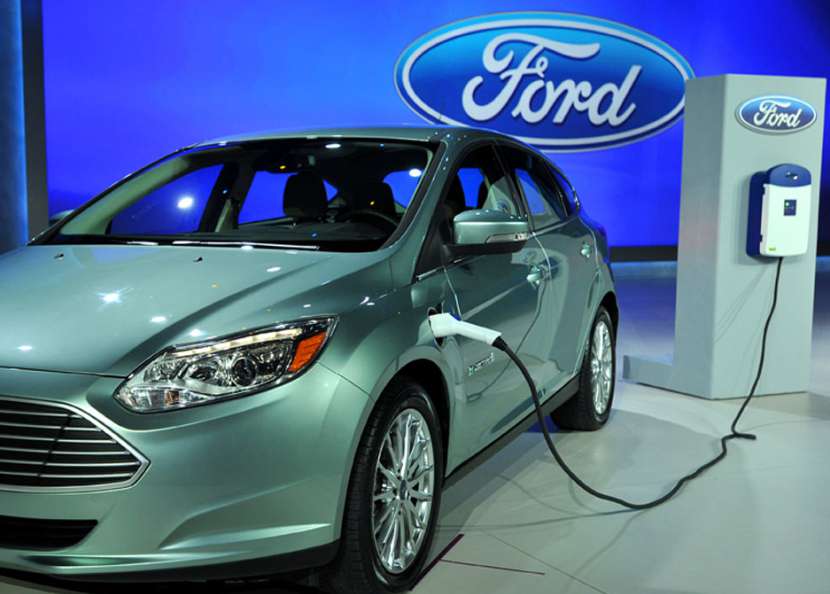
Ford invests $1 billion in Cologne EV centre
US Big Three auto producer Ford is speeding up its electrification schedule in Europe, driven by a $1 billion electric vehicle manufacturing centre investment in Cologne, Germany.
Ford’s new goals include 100% of its passenger vehicles in Europe being zero-emissions capable by mid-2026, with that shifting to 100% all-electric by 2030.
Its European commercial fleet will reach 100% zero-emissions capable by 2024, Kallanish understands.
“We successfully restructured Ford of Europe and returned to profitability in the fourth quarter of 2020. Now we are charging into an all-electric future in Europe with expressive new vehicles and a world-class connected customer experience,” says Ford of Europe president Stuart Rowley.
A linchpin of the new European strategy will be the upgraded Cologne facility, which will begin operation in 2023 and may lead to a second, adjacent facility.
“Our announcement today to transform our Cologne facility, the home of our operations in Germany for 90 years, is one of the most significant Ford has made in over a generation. It underlines our commitment to Europe and a modern future with electric vehicles at the heart of our strategy for growth,” Rowley says.
Ford notes that additional details concerning Cologne will be “…shared over the coming months.”

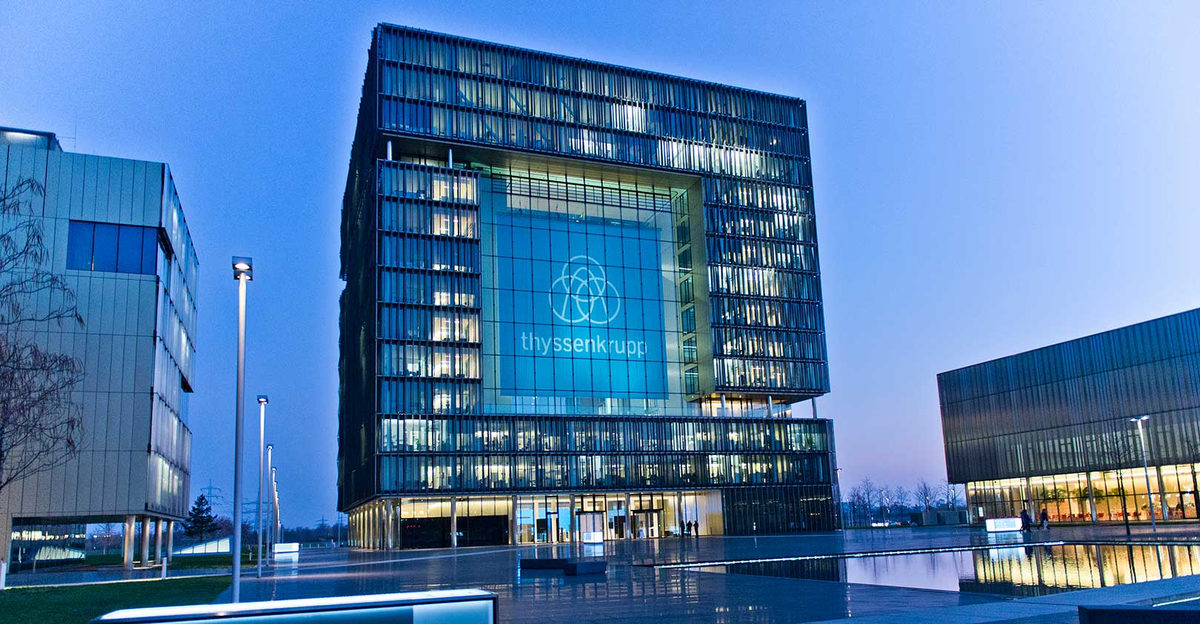
thyssenkrupp ends talks with Liberty Steel
thyssenkrupp AG late on Wednesday announced that it had ended talks on a possible acquisition of the group’s steel division by Liberty Steel. A sale of the division to Liberty Steel will therefore not take place.
“We opened the door for negotiations, but in the end our ideas about the corporate value and the structure of the transaction were far apart. We have therefore decided to end the talks,” says thyssenkrupp ceo Klaus Keysberg, who is also in charge of the conglomerate’s steel activities. “We regret this step because we perceived Liberty Steel as a serious partner in the process,” Keysberg adds
Liberty Steel had submitted an updated, non-binding offer to thyssenkrupp AG to acquire thyssenkrupp Steel Europe. There was a close exchange between the two groups on a number of complex topics. As a result, however, no common solution could be found for key requirements addressed by thyssenkrupp, it states.
During recent thyssenkrupp conference calls attended by Kallanish, executives reiterated that they sought the most sustainable solution for the group’s steel division. They emphasised that this could mean any option – either a sale, a stock market flotation – or by keeping it within the group.
thyssenkrupp will now continue to drive forward a sustainable position for steel on its own, it says in yesterday’s statement.
“Now it is important for us to ensure the future viability of our steel business on our own,” Keysberg says. “We are working flat out on this, as we have always underlined in the past few weeks and months.”
As Kallanish went to press, neither Liberty Steel nor its parent holding, GFG Alliance, had issued a statement on the matter.
Thyssenkrupp warns customers of continued bottlenecks
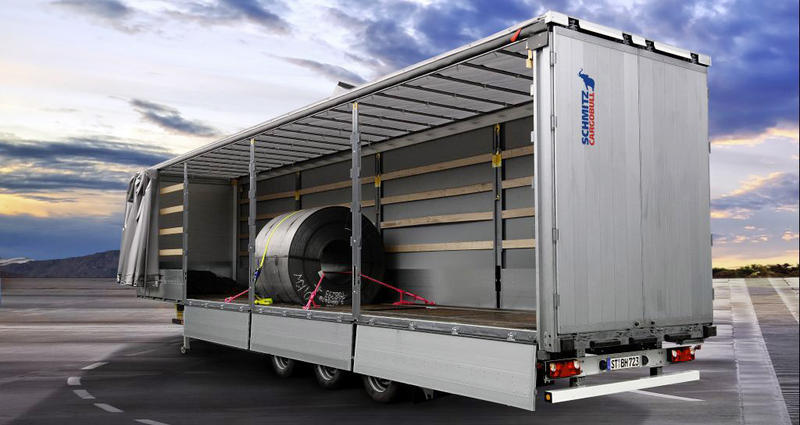
Thyssenkrupp Steel Europe has prepared its business partners for a further delay in normalisation of supplies, which have been impaired for months by various factors stemming from the Covid-19 pandemic.
The company warned customers last week, when the situation was exacerbated by a sudden temperature drop and snowfall that caused disruptions in traffic and transport (see Kallanish 16 February).
In a letter dated 11 February, worded in English and sent to partners internationally, the company states that the “persisting instability… goes against our self-conception,” and expresses regret about the situation.
Executives Bernhard Osburg and Arnd Köfler declare that they had aimed at restoring supply levels and rebuilding inventories by February. To this purpose, tk Steel meant to increase production by purchasing additional input materials, despite the financial disadvantages this would entail, Kallanish reads in the company’s communique.
However, due to the “unforeseeable winter weather conditions”, tk Steel will not be able to stick to that timetable, the authors say. Given the complete stoppage of public railroad lines, the weather conditions have caused additional production loss, they say. Consequences for deliveries will be addressed with customers individually, they add.
Meanwhile, one week after the dispatch of that official circular, temperatures in Germany have seen a complete turnaround, with spring-like weather appearing in most regions. Temperatures of below 20C effectively lasted little longer than one week.
A tk Steel spokesman reports a normalisation in operations inside the steelworks, but notes that long-distance railway shipping is still subject to disruptions. The company has therefore refrained from giving the all-clear.