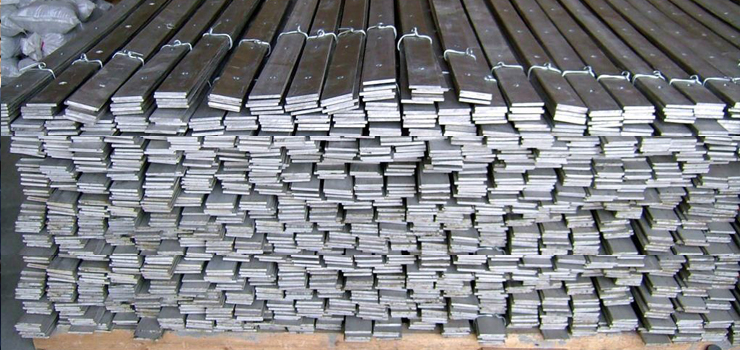
Turkish merchant bar remains stable despite costlier billet
Due to demand slowing on-week, Turkish merchant bar producers kept their prices unchanged last week despite the increase in billet prices.
On Friday, Turkish producers’ quotes stood at $660-680/tonne fob Turkey for angles, $670-690/t for IPN-UPN sections, $680-700/t for flat bars, and $670-690/t for IPE sections.
Although they concluded sales to Latin America, Africa, the Middle East and EU, Turkish merchant bar producers failed to reach the sales volumes of the previous week.
A Turkish merchant bar producer told Kallanishon Friday: “Buyers were cautious this week. Even though we have seen an increase in scrap and billet prices, they initially wanted to wait for China’s return. I am expecting to see stronger demand next week.”
Turkish merchant bar producers expect better market conditions in the coming week and are preparing for higher price offers.
Billet prices, meanwhile, have increased to $585-590/t ex-works in the Turkish domestic market, while CIS offers stand at $575/t fob Black Sea.


Stainless recovery to drive 2021 nickel demand: Eramet
Stainless steel production will grow significantly in 2021, says French miner Eramet in its 2020 financial report. The company’s nickel producer subsidiary in New Caledonia, Societe le Nickel (SLN), aims to increase its exports to more than 3.5 million wet metric tonnes (wmt) in 2021. SLN currently has authorisation to export 4m wmt of nickel ore per year.
Ferronickel production for the Doniambo plant is also expected to increase, while at Weda Bay mine production is expected to reach more than 6m wmt in 2021, Kallanish learns from the report.
Global stainless steel production was down by 3.8% in 2020 versus 2019. Global demand for primary nickel also declined by 3.6% last year. However, SLN mining production reported strong growth last year, increasing by 16% versus 2019. A notable increase of 45% was registered in the second half-year versus H1. This rise reflects both favourable seasonality in H2 as well as the effects of the company’s rescue plan.
Following its start at end-2019, the Weda Bay mine produced nearly 3.4m wmt of nickel ore in 2020, and is now producing at an annualised rate of 6m wmt per year. The first tapping of nickel ferroalloy took place at end-April. The plant reached nominal capacity from August, ahead of the forecast schedule.
Meanwhile, the unprecedented collapse of the aerospace sector, coupled with a steep downturn in the automotive sector strongly affected the performances of the High-Performance Alloys division from the second quarter. Turnover for the division was down 20% to €680m ($825m), with a negative Ebitda of €119m. French parent company Aubert & Duval’s turnover decreased by 16% y-o-y, with negative Ebitda of €87m.
The group’s turnover amounted to €3,553m in 2020, down by 3% year-on-year. Ebitda totalled €398m versus €630m in 2019 owing to the impact of the pandemic (see separate story).

Intra-EU border closures hamper steel workforce availability
Tightened border controls between some EU countries are preventing staff based in other countries from returning to their workplaces at German steel distributors and processors.
Germany has severely restricted border-crossing traffic coming from, among others, the Czech Republic, due to the country’s high coronavirus infection rate. According to a manager at a Bavarian distributor of coil products, the number of Czech workers across metals-working Bavarian industries amounts to some 30,000.
Only last week, his company succeeded with getting permissions for a number of its workers to come back to Germany. “It was a snapshot decision [from the authorities]. Such issues are often decided at very short notice at the political level,” he tells Kallanish. In this case, it helped that his company supplies steel to medical equipment makers, and therefore was certified as system-relevant.
Things work well on the local level, he notes. For example, hotels which otherwise are currently empty for lack of tourism, can be rented to accommodate foreign staff. However, the problems with crossing the border have Eastern European workers rethinking their employment patterns. They may now prefer to look for jobs at home because it is safer.
The same has been heard from distributors in the long products sector. A manager at a rebar bending shop on Germany’s western border says he is often concerned that Polish workers may be held back in their home country for longer than planned, or decide not to return at all. “It’s mostly Eastern Europeans working in bending shops all over the country,” he observes.
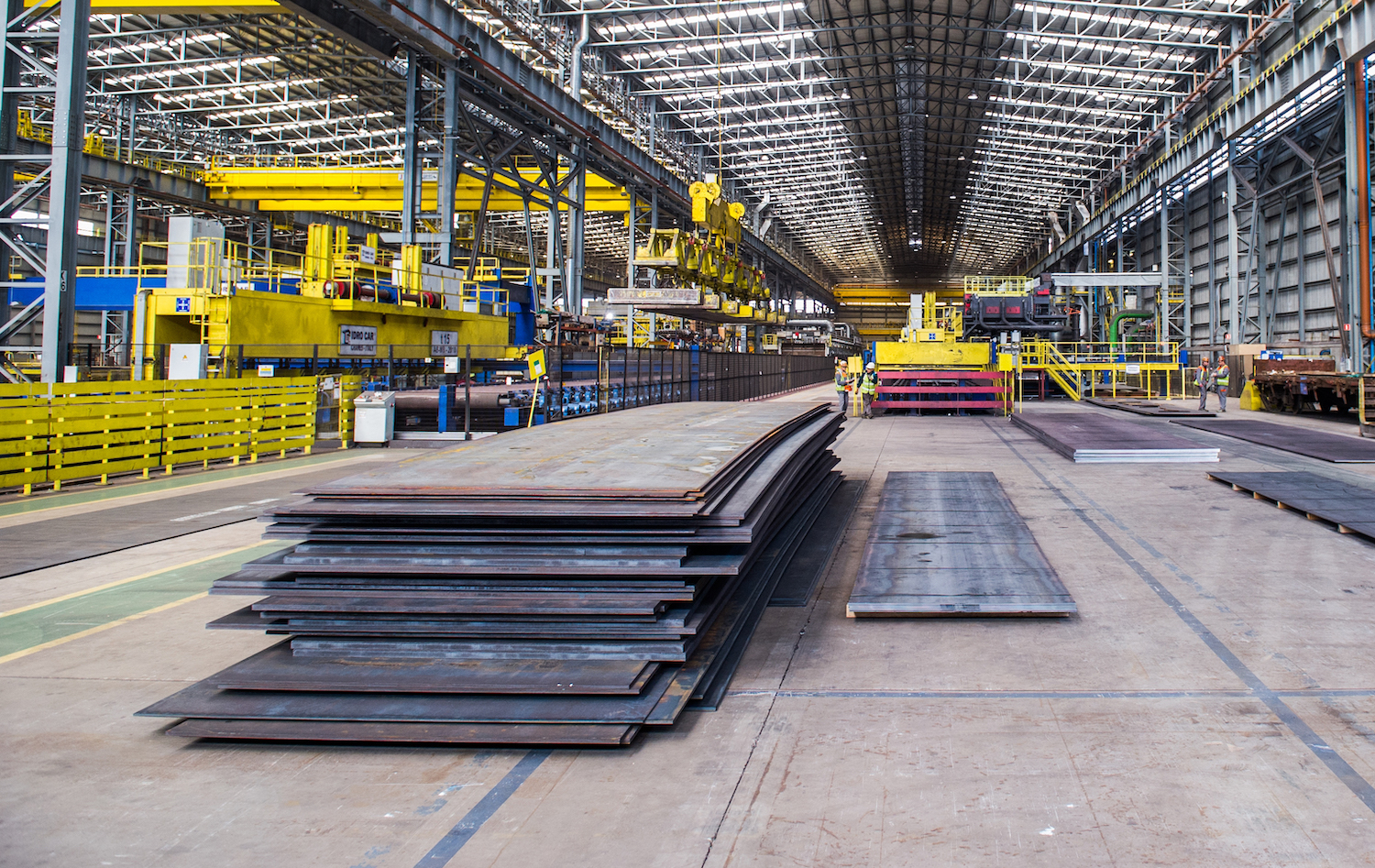
Germany’s Dillinger supplies 70,000 mt of heavy plate to Dutch offshore project
German steel plate-maker Dillinger said Feb. 19 it had supplied 70,000 mt of heavy plate to the Dutch offshore wind farm project Borssele.
Dillinger supplied thermomechanically rolled heavy plate for the monopile foundation structures, with plate thicknesses ranging from 12.7 mm to 88 mm. Some of the slabs reached weights of more than 42 mt, according to Dillinger.
Shell and Eneco said Feb. 18 that the Netherlands’ 732 MW Borssele 3, 4 offshore wind farm was fully operational. The project’s 77 turbines are expected to generate 3 TWh/year and are more than doubling Dutch offshore wind capacity. The Netherlands targets some 11 GW installed offshore capacity by 2030.
The German plate market has been struggling with low demand from the oil & gas sector due to investment backlog, exacerbated by the pandemic with wind energy getting increasingly more importance as part of the energy transition.
In November, the CEO of Dillinger’s parent company Stah Holding Saar, Karl-Ulrich Köhler, said the company wanted to further strengthen its portfolio in the automotive business, offshore wind and rail sectors.
— Laura Varriale

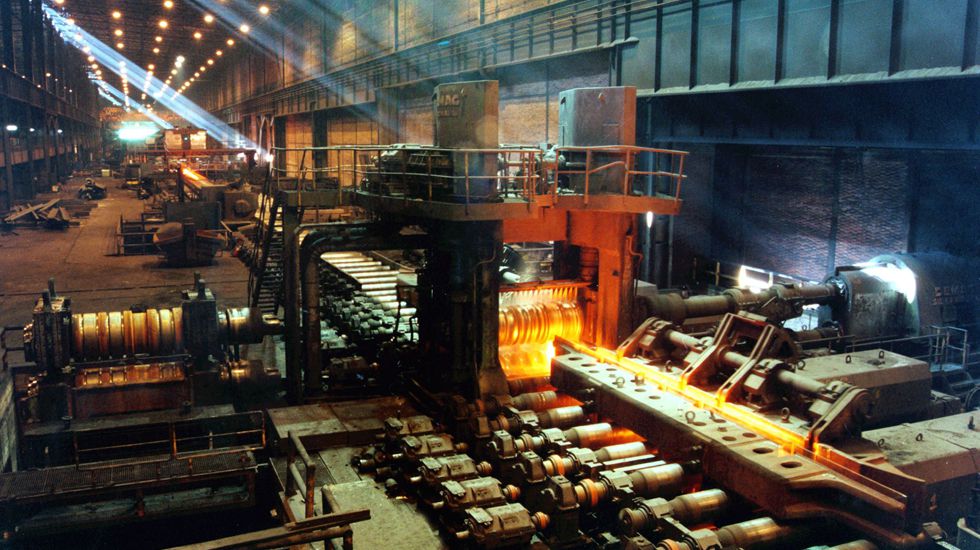
German steel production up 6% on year in January as mills ramp up
German crude steel production rose again in January as mills ramp up further, outpacing January 2020 levels by 6%, German steel federation WV Stahl said Feb. 19.
German crude steel production increased to 3.3 million mt in January, but although production figures are back to 2019 levels, the output would still be on a “relatively low level”, the steel federation said.
However, demand comeback since summer last year has resulted in widespread ramp up by mills with production increasing on year-on-year level since August.
Crude steel production via the blast furnace route increased 7.1% on the year to 2.35 million mt in January, while output via electric arc furnace rose 3.3% to 956,000 mt.
Pig iron production saw an increase of 7.9% year on year to 2.2 million mt. Hot-rolled steel production saw a 10% increase to 3 million mt.
The German steel market is currently suffering from material shortage with more volumes from further increases in capacity utilization expected by late Q2.
Steel prices have seen sharp rises since Q3 2020 but plateaued on a 13-year high during the Lunar New Year period at Eur730/mt EXW Ruhr for hot-rolled coil, according to the daily Platts HRC assessment for Northern Europe on Feb. 18.
According to the monthly Platts German steel sentiment survey for February, market participants expect a slight increase in production in the short term, but sources said any additional output will be used to decrease the current order backlog at mills as lead times continue to be unusually long from Western European mills, stretching into early summer.
Mills have been further hampered in deliveries in February by the cold snap with Salzgitter declaring force majeure Feb. 10 and Thyssenkrupp confirming increasing delays in shipments.
— Laura Varriale

SAEY reconnu Best Managed Company
Le distributeur d’aciers SAEY est une des 8 nouvelles entreprises privées Belges reconnues en 2020 comme “Best Managed Company” par Deloitte Private, Econopolis et l’université KU Leuven.
EXCELLENT ENTREPRENARIAT
Le label Best Managed Company reconnaît les entreprises qui ont démontré qu’elles disposaient des capacités stratégiques nécessaires pour innover de manière systématique, pour mettre en œuvre des processus extrêmement performants. Grâce à leur agilité, elles sont capables de gérer les opportunités et de surmonter les risques. Elles font une priorité du développement de talent et de leadership. Elles affichent, en outre, une croissance durable avérée.
Le jury est présidé par Françoise Chombar (PDG et cofondatrice de Melexis), et est constitué de captains of industry, ainsi que de Geert Noels (CEO et Chief Economist d’Econopolis) et professeur Koen Debacker (université KU Leuven). Les membres du jury ont sélectionné les lauréats sur base de critères rigoureux et indépendants.
LA VOLONTE DE SERVIR LE CLIENT TOUJOURS MIEUX
Ce label de qualité indique que SAEY ne cesse d’oeuvrer pour soutenir ses clients en offrant des produits innovants, des parachèvements uniques, un service fiable et qui va au-delà des attentes, ainsi que des formes de collaboration qui augmentent l’efficacité.
C’est une reconnaissance pour l’engagement de toute l’équipe SAEY qui chaque jour donne forme à sa devise “Solid partner, Competitive solutions” en étant à l’écoute du client pour construire ensemble un avenir durable.
DES ATOUTS POUR LE SECTEUR DE LA TRANSFORMATION METALLIQUE
La société SAEY dispose d’un stock large et profond de produits métallurgiques, qui permet aux clients de commander en Juste à temps. Elle a développé une gamme de tôles unique sous la marque Laserform®, qui permet aux tôleries de travailler de façon plus efficace. Laserform ® est devenu lá référence pour la découpe laser et le pliage de tôles.
De plus, SAEY offre des possibilités inégalées pour le sciage et la découpe laser de tubes et profils ouverts. Ceci permet de développer avec le client des produits innovants, de soulager le client de la pré-production en lui livrant des pièces prêtes à l’assemblage.
SAEY est neutre en CO2 depuis 2017 et est ainsi précurseur dans le secteur et résolument tourné vers l’avenir.


BREXIT implies new premises for trading steel in and out of the UK
In connection with the Brexit negotiations regarding a new trade deal between the European Union and the United Kingdom, the UK government, back in September 2020, announced that it would provisionally maintain, until end June 2021, the EU steel safeguards system initiated by the EU Commission.
EU safeguards measures and UK safeguards measures are diverging in content and scope.
Despite this announcement and when comparing presently valid EU safeguards quotas with presently valid UK safeguards quotas, it appears that in fact both systems are diverging in some significant points regarding product groups and regarding quotas by country of origin of steel imports.
In view of the exit by the UK of the EU single market & customs union, the EU Commission did recalculate the volumes of Tariff Rate Quotas (TRQs) and did publish in October 2020, for the first time, specific country quotas for steel imports originating in the UK.
These EU Tariff Rate Quotas, specific for the UK, apply to imports in 28 steel product categories, at the exception of Stainless Hot Rolled Flats, of Stainless Cold Rolled Flats, of Rebars, of Non-Alloy Wire and of Large Welded Tubes from product category 25A. For these product categories there will be no application of a specific UK country quota but only TRQs for all country origins.
On UK side, starting 1. January 2021 the Department for International Trade did introduce Tariff Rate Quotas by countries of origin on only 21 steel product categories.
TRQs will not be applied by the UK on the following product categories: Electrical Sheets(Other than Grain Oriented Electrical Sheets), Stainless Hot Rolled Flats, Stainless Cold Rolled Flats, Stainless Quarto Plates, Sheet Piling, Seamless Stainless Tubes, Other Seamless Tubes.
For the 21 considered product groups the UK government has published specific quotas for imports with origin in EU-27, except for imports of Large Welded Tubes falling under category 25A, where an all country origins quota will be applied.
Non preferential rules of origin apply to safeguards measures.
The EU-UK Trade and Cooperation deal has no impact on steel safeguards measures as they are considered to be trade legislation relating to non-preferential rules of origin despite an EU-UK trade deal focussing on “no tariffs, no quotas”.
Rules of origin regarding ‘EU content’ or ‘UK content’ of steel products, may also constitute a trigger for the application of customs tariffs. This might be an eventuality for steel products which may be manufactured along the blast furnace route implying inputs of third country iron ore and coking coal.
Northern Ireland Protocol and steel safeguards.
Following the Northern Ireland Protocol, Northern Ireland is considered as being part of the single EU market & customs union. Consequently, any steel moving from Great Britain to Northern Ireland will be subject to EU steel safeguard quotas. Any steel moving from Northern Ireland to Great Britain is considered to be subject to UK quotas on steel imports originating in EU-27.
In this respect it may be noted that the future status of the British Overseas Territory of Gibraltar regarding steel safeguards is still pending, Gibraltar joining the Schengen area is an option in discussion. In such an eventuality Gibraltar would also be considered as being part of the single EU market and the customs union.
EU imports are systemic for UK steel supply.
Reciprocal EU and UK steel safeguards quotas for 1. and 2. Quarter 2021 summarize as follows:

UK imports under EU quotas have an only marginal impact on EU steel market supply as they represent less than 2 % of apparent steel consumption in EU-27.
On the contrary, EU-27 imports under UK quotas are systemic for UK steel market supply as they represent more than 40 % of apparent steel consumption in the UK.
Reconduction of steel safeguards on 1 July 2021?
Being valid for three years, EU steel safeguards will be coming to their term on 30 June 2021.
The big question is: Will they be reconducted by EU Commission, what lobbying group EUROFER is already requesting for?
A reconduction would mean that, following WTO rules, the EU Commission would be exposed to compensation requests or to retaliation measures by trade partners if safeguards measures would be applied for more than three years.
Another consideration is US trade measures according to Section 232 which were the trigger to install EU steel safeguards measures. How will the new US administration handle Section 232 measures? Will they be abandoned, will they be softened or will they be continued?
Finally, a very detailed investigation of the EU interest will be more than probably initiated by EU Commission regarding a reconduction of steel safeguards. Latest market data confirm that EU steel producers have not been in a position to comply with higher steel demand in EU in a way to compensate for much lower steel imports in the wake of EU steel safeguards and EU anti-dumping steel trade measures. Low stocks and extended delivery lead times have resulted not only in significantly higher price levels but also in significant disruptions in steel supply chains to European industry and construction sectors, all facts which have not escaped to the eyes and ears of the EU Commission.
On their side, the UK government did announce in September 2020, that it would maintain the steel safeguards measures on a provisional basis until 30 June 2021.
In the meantime, the UK government has launched a transition review among steel market stakeholders about deciding, or not, definitive UK steel safeguards measures to be applied from July 2021 on.
As a conclusion, the questions of whether to reconduct EU and/or UK steel safeguards on 1 July 2021, will activate very controversial opinions and debates during coming months.
Author: Georges Kirps
The guest commentary reflects the opinion of the author, not necessarily that of the marketSTEEL editorial team.