

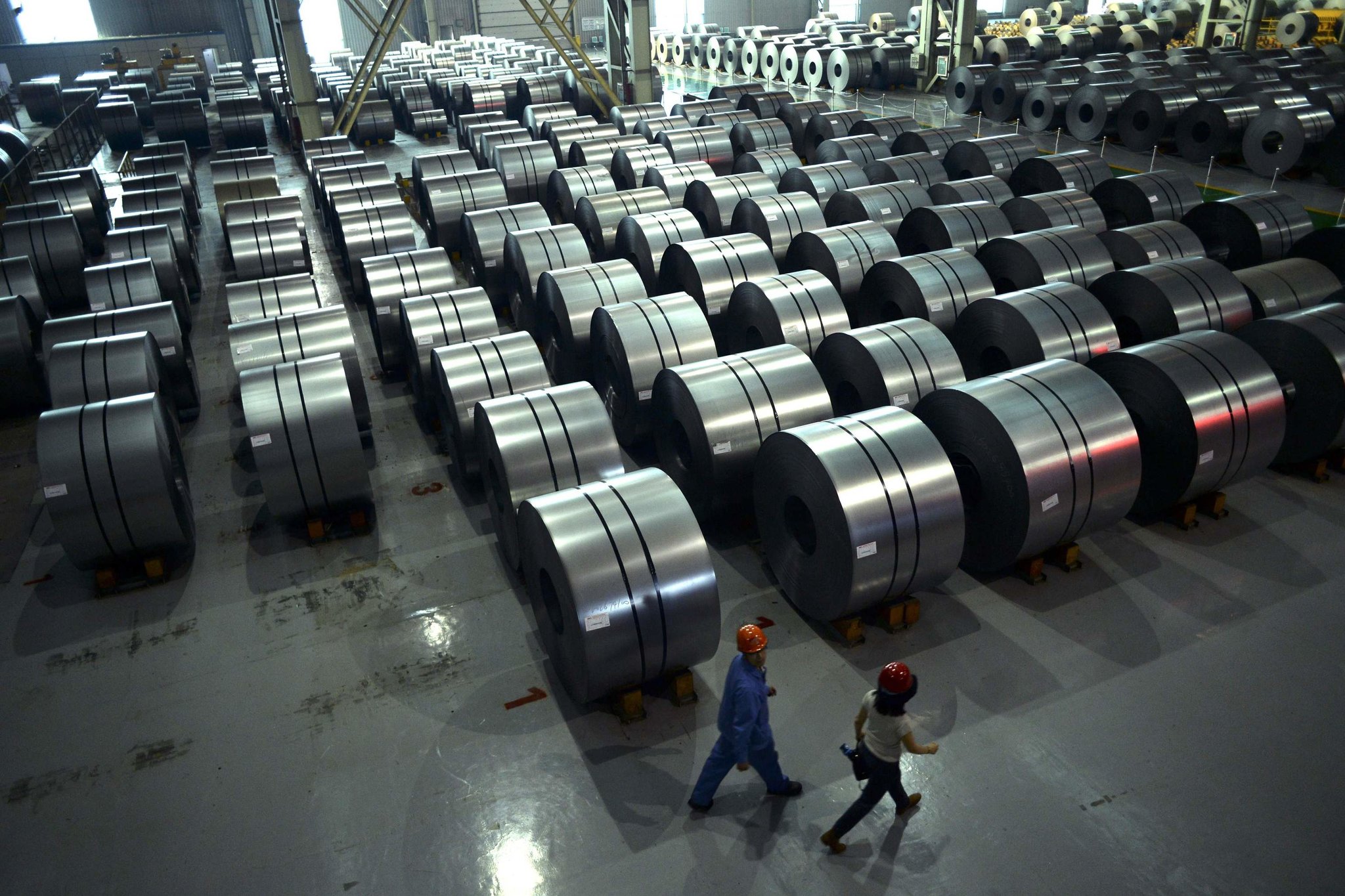
World crude steel production up 4.8% in January: worldsteel
World crude steel production in January grew 4.8% year on year to 162.9 million mt for the 64 countries reporting to the World Steel Association, the group said Feb. 25.
Asian and Oceanic countries registered a production increase of 6.3% to 119 million mt, worldsteel said in a statement. China saw an increase of 6.7% to 90.2 million mt, while Indian production rose 7.2% to 10 million mt.
The 27 European Union member countries saw less production in January, slipping 0.4% to 11.2 million mt, although Germany, the largest European steel producer, bucked that trend and increased production 6% to 3.3 million mt.
In European countries outside the EU, including Bosnia-Herzegovina, Macedonia, Norway, Serbia, Turkey and the UK, production increased 11.2% to 4.4 million mt. Turkey triggered the increase with a jump of 12.7% year on year to 3.4 million mt.
North American production dropped 7% to 9.6 million mt.
African production moved down 7.9% to 1.2 million mt. Worldsteel includes output from Egypt, Libya and South Africa in its production tally, but not major producer Algeria.
South American production went up by 11.4% to 3.8 million mt, led by Brazil, the ninth-largest steel producer in the world, which saw production increase 10.8% to 3 million mt.
CIS production grew 4.5% to 9.2 million mt of crude steel.
— Annalisa Villa

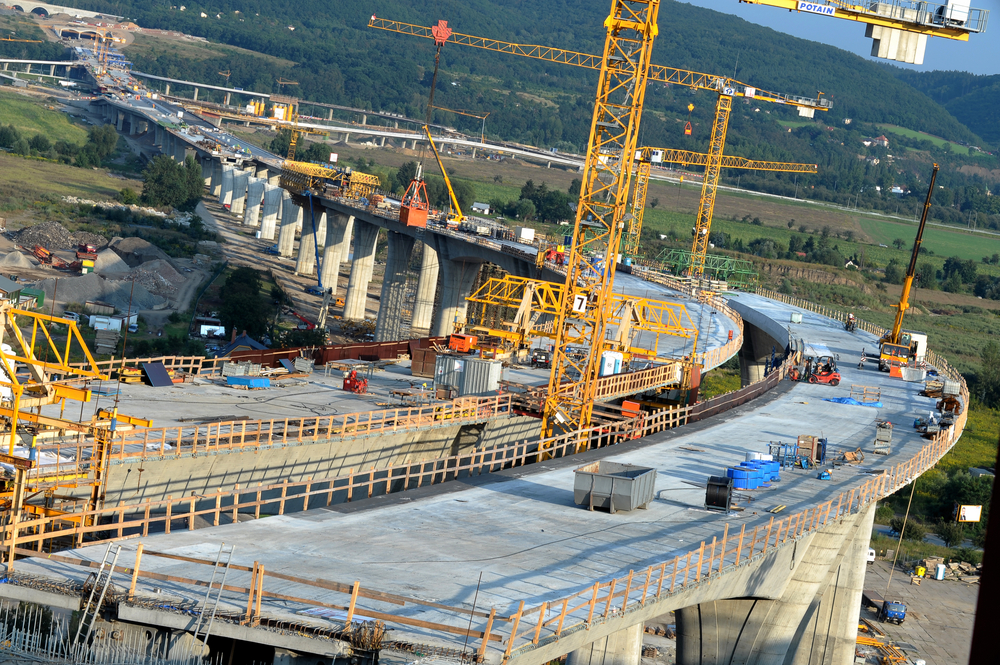
Europe steel demand recovery outpaces production growth, upholds prices
After a rocky 2020 as COVID-19 hit both supply and demand, European steel mills see prospects for only a moderate increase in crude steel production in H1 2021, to be outpaced by a demand recovery backed by government economic stimulus.
Four major blast furnaces are currently being brought back on stream, while another three will go offline for maintenance later this year. Product tightness in some areas — driving some steel product prices to up to 13-year highs — may therefore be expected to continue, maintaining upwards price pressure as lead times stretch until Q3.
According to the World Steel Association, the EU produced 138.8 million mt of crude steel in 2020, down 11.8% on the year, and a third consecutive year of decline from the recent peak of 169 million mt in 2017. Industry sources do not foresee a return to pre-pandemic levels until at least 2023 in the case of production and 2022 in the case of demand.
European steelmakers’ association Eurofer forecasts that only 7.4% of the regional production volumes lost in 2020 will be made up in 2021 with further volume growth of 4.1% in 2022. Consumption will recover faster, Eurofer says: gaining 13.3% in 2021 and a further 3.4% in 2022, after last year’s 13% decline.
“2020 is likely to be one of the worst years on record, even if we will see positive figures in the fourth quarter,” said Axel Eggert, Eurofer director general, in a report this month. A Q3 rebound failed to compensate for exceptionally poor H1 performance, Eggert said.
Infrastructure
** Crude steel production in the broader European area, including Russia, CIS and Turkey, finished 2020 at 268.58 million mt, 6% below levels at the start of 2019, according to worldsteel data.
** Demand in 2020 was substantially hit by shutdowns in the automotive sector, which accounts for 19% of steel consumption, but which had largely recovered by Q4, partly on government stimulus encouraging electric vehicles production.
** In the EU, the pre-pandemic steel production decline is blamed partly on high import levels and changes in the automotive industry due to tightening emissions legislation.
** Government stimulus flowing into regional economies from Q3 2020 kickstarted both steel demand and prices after the pandemic’s first wave, prompting the restart of some blast furnaces (BFs) and electric arc furnaces (EAFs).
** EU steel production and demand are set to benefit from the European Commission’s EUR1.8 trillion ($2.19 trillion) recovery plan for a post-COVID-19 Europe, to support regional economies and steel industry decarbonization.
** Jefferies International analyst Alan Spence estimated mid-February that up to 5 million mt of EU capacity was still offline, although as much as 80% of the nearly 25 million mt of crude steel capacity idled by COVID-19 at the height of the pandemic in early 2020 is back online.
** Russia continues Europe’s largest crude steel producer by far, with 73.401 million mt produced in 2020, up 2.6% on 2019, with rising exports from some companies favored by a weak ruble. Russia’s MMK Magnitogorsk is set to idle its BF No. 9 in December for 134 days’ maintenance.
** Turkey marginally overtook Germany as Europe’s biggest steelmaker outside Russia in 2020. Turkey’s 2020 output increased 6% on the year to 35.764 million mt, compared to Germany’s 35.658 mt, which was 10% below 2019 output.
** Turkey’s steelmakers produce mainly from EAFs which are easier to switch on and off according to demand fluctuations than blast furnaces, where ramping up and cooling down many take weeks of careful monitoring to prevent damage.
** Isdemir, Turkey’s biggest integrated steelmaker, restarted its BF No. 2 in January after maintenance: it now has three of its four blast furnaces running.
Trade flows
** After a 2017-18 surge, steel imports into the EU have been restricted since mid-2018 by a three-year import safeguards system to expire June 30. Carbon steel imports fell 15.4% on the year in 2020 to 20 million mt, almost a third lower than the 2018 peak of 29.3 million mt, Eurofer reported.
** Lower EU imports are partly due to China attracting greater import tonnages of third-country steel in recent months to feed strong domestic demand. Rising international steel prices have also made imports less attractive in the EU market.
** China emerged in 2020 as a major importer of semi-finished steel. Russian mill NLMK said in October 2020 that despite freight rates to China being $20-$30/mt higher than to Europe, it foresaw relatively high levels of steel slabs to China until April.
** Mills in Turkey expect their exports to increase 10% on the year to 23 million mt in 2021, following a 2.8% decline to 20.6 million mt in 2020.
** Turkish mills continue to diversify their export business in the face of continuing trade barriers in major export destinations including the EU and US, shipping to 197 countries in 2020, according to Turkish Steel Exporters’ Union CIB.
** Adnan Aslan, CIB chairman, expects 2021 to be a “very positive” year, even if exports to the EU and the US remain limited. “Turkey has started to dominate Africa, Far East and South America markets in the last three years, with the removal of China from these markets,” he said.
** Russian imports were the second highest source of hot rolled coil, or HRC, imports into the EU in January-November 2020 at 1.27 million mt, after Turkish-origin imports at 1.64 million mt. The European Commission announced a provisional anti-dumping duty of 4.8-7.6% on imports of HRC from Turkey early in 2021.
** Ferrous scrap usage fell 10.5% on the year in H1 2020 to 209.83 million mt due to lower demand and collection and shipping restrictions during COVID-19 lockdowns, reported International Recycling Bureau BIR. This led to market distortions, with Russia raising its scrap export tariff and South Africa temporarily banning exports. China opened up to ferrous scrap imports on Jan. 1 following years of tariff barriers.
Prices
** A marked price uptrend in steel prices generally since late 2020 has been driven by a tightness of materials as demand rebounds, particularly of coil products in some parts of the EU, aggravated by logistic bottlenecks and extreme weather in Germany.
** S& P Global Platts’ North European domestic EXW Ruhr HRC pricing has averaged EUR710/mt since the start of January, having gained more than 70% over the last six months, amid lagging production and soaring costs of raw materials including iron ore, hovering around nine-year highs. Platts’ North Europe HRC assessment reached EUR730/mt Feb. 24, continuing at a 13-year high.
** In long products, Platts’ Turkey FOB export rebar assessment stood at $640/mt this week, 45% higher than a year ago. While US dollar values have weakened over the past year, accounting for some dollar-denominated price gain, the strong rebar prices also reflect a construction industry demand upturn in many nations, and a recent surge in scrap prices.
** Platts’ assessment for Turkish Heavy Melting Scrap 1&2 (80:20) import scrap – the main raw material for steel long products – hit $482.50/mt on Jan. 4 – its highest since the commodities price spike of early 2011 – squeezing mills’ margins despite the higher finished product prices.
— Diana Kinch, Laura Varriale

German flat steel stocks fall again in January, still at 33-year low: BDS
German flat steel stocks dropped further in January, continuing a 33-year low, while long steel stocks picked up slightly, figures by German steel stock association BDS have shown.
Although the pace of the month-on-month drop slowed in comparison with the change from November to December 2020, German steel stocks are alarmingly empty and a result of the ongoing material shortage in the market.
Flat steel stocks decreased 0.8% on the month to 1.4 million mt in January, seeing a 7.2% year-on-year drop.
Long steel stocks increased by 4.7% on the month to 748,387 mt, recording nevertheless a 9.3% decrease on the year.
Typical for the time of year, sales volumes increased sharply as December is usually a slow sales month. Flat steel sales jumped 53% from December to January to 575.901 mt, still falling 3.5% behind last year’s January.
Long steel sales also increased significantly by 33% month on month to 244,949 mt, down almost 13% however in a year-on-year comparison.
German steel distributors have had a busy start of the year with buyers turning to distribution rather than mills as lead times from European producers remain — at 12 weeks or more — unusually long as the steel shortage continues. Ramp-ups by European mills with blast furnace production are expected to have an easing effect on material availability by end of Q2, according to sources.
In the case of flat steel, however, material in stock is also getting low, leaving buyers in desperate need, while import opportunities remain scarce.
The shortage has been reflected in steel prices as the daily Platts HRC assessment continues at a 13-year high of Eur730/mt EXW Ruhr Feb. 24.
— Laura Varriale

EU initiates procedure for extension of EU Steel Safeguards
The European Commission has today announced a review investigation of the EU Steel Safeguard Measures – ref. SAFE009R4 – to decide whether they should continue beyond 30th June 2021.
See Official Journal ref. 2021/C66/14 (page 50).
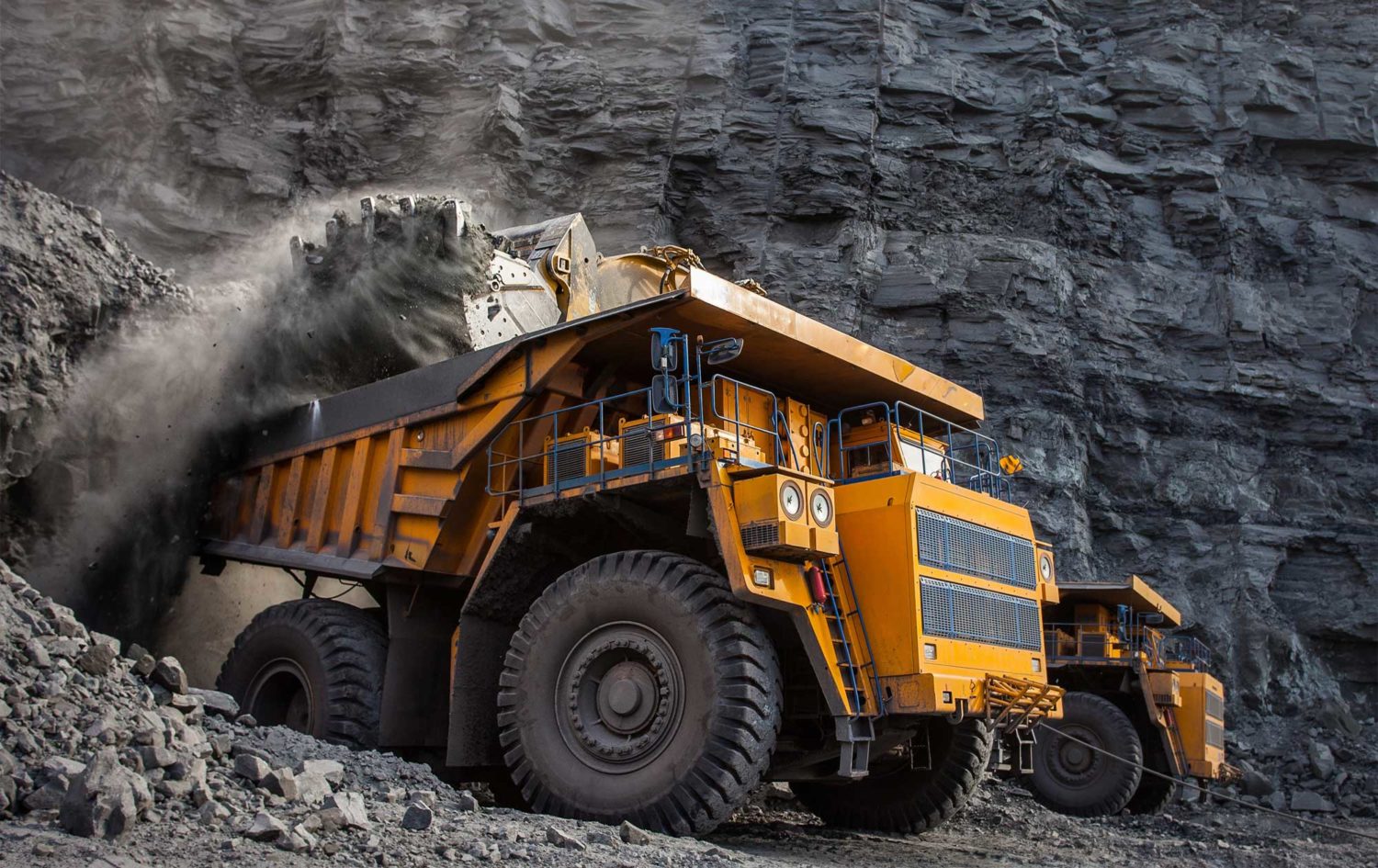
Iron ore rebounds as Vale touts China ties
Seaborne iron ore prices rebounded again on Thursday. Vale meanwhile has reaffirmed its commitment to expanding its presence in China.
The Kallanish KORE 62% Fe index rebounded $1.52/t to $172.63/dry metric tonne cfr Qingdao. The Kallanish KORE 65% Fe index gained $1.55/t to $96.47/dmt cfr, and the KORE 58% Fe index increased $1.94/t to $159.18/dmt cfr.
On the Dalian Commodity Exchange May iron ore settled up CNY 16/t at CNY 1,131.5/t ($175.16/t), while on the Singapore Exchange March 62% Fe futures settled up $1.49/t at $171.10/t. The same contract for 65% Fe and 58% Fe futures settled up $1.20/t at $194.51/t, and up $2.05/t at $157.77/t respectively. In Tangshan, billet prices gained CNY 40/t to CNY 4,270/t.
Expectations for iron ore prices remain positive, but trading has been a little quiet. Mills have material for the short term and are waiting to see how fast steel demand increases in March to assess the production rates they will be able to maintain.
Vale China president Tracy Xie told China Daily that the company sees China as its core customer and a core market. Sales to China accounted for 67% of Vale’s sales in 2020 at 192 million tonnes. The company has announced a number of investments over the last two years, including blending and processing operations and a new sales platform on WeChat which is due to be active early in 2021.
China is targeting greater self-sufficiency in iron ore, including by investing in new African sources of supply. This has largely been framed as increasing independence from Australian supply rather than Brazil, but all suppliers to China could be affected.

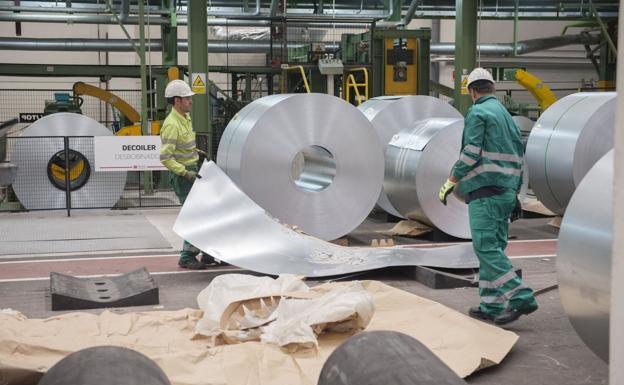
Aperam increases alloy surcharges for March
French stainless producer Aperam has increased the March alloy surcharges for its austenitic range of flat stainless steels for Europe by over €100/tonne ($122) compared to last month, Kallanish learns from the company.
The surcharge for grade 304 (1.4301) has gone from €1,713/t in February to €1,846/t effective 1 March. For grade 316 it has gone from €2,419/t this month to €2,629/t next month. Grade 309S, a heat-resistant stainless steel used in high-temperature applications, has increased from €2,311/t to €2,511/t in March. The surcharge for the most popular ferritic grade, 409, has risen from €604/t in February to €635/t next month, the company reveals.
Nickel prices for cash buyers have steadily increased in recent months. Offers for cash buyers were at $18,142/t on 26 January and reached $19,352/t as of 24 February, Kallanish notes.
Thyssenkrupp unit digitalises hot strip treatment
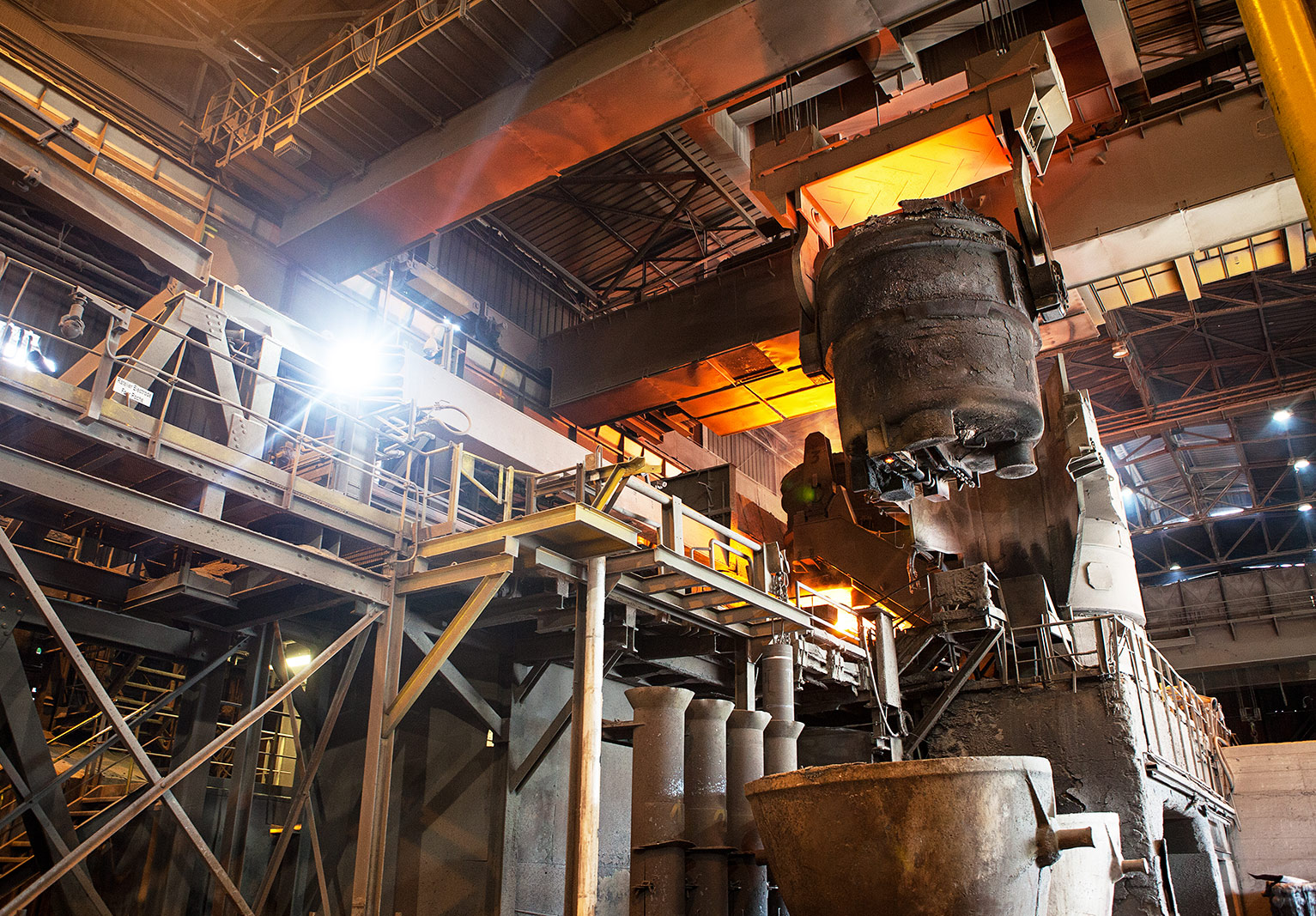
Thyssenkrupp Hohenlimburg has digitalised its shower warehouse for hot strip, which gives the mill faster throughput times, among other things, Kallanish learns from the company.
The Hohenlimburg unit makes medium-wide strip, mainly for further processing by dedicated cold-rollers in the Westphalian region. Now the shower store, in which the coils are specifically cooled before pickling, has been integrated into the existing digital structure. It now exists as a “digital twin”, a mathematical image of the real location, tk explains.
The digitalisation significantly shortens the throughput times, from an average of 72 to only 5-6 hours, the company claims. Quality defects, such as rust scars, can be avoided through controlled cooling. It is also crucial that the coils in the shower store and in the connected pickling pre-store are only cooled down as far as is optimal for the pickling process.
A mathematical model developed in-house is the basis by which each individual coil “knows” when it has reached the optimal temperature. This optimises storage logistics and increases productivity in the processing procedure, tk claims.

Lower demand curbs Spain’s January automotive output
The Spanish automotive industry has seen production fall at the beginning 2021, Kallanish notes. The slowdown in January mainly resulted from the drop in demand in the main European markets.
Meanwhile, the country’s vehicle exports remained almost flat on-year in January, according to Spainish industry body Asociación Nacional de Fabricantes de Automóviles y Camiones (Anfac).
Spain’s automotive production totalled 218,201 units in January, down 9.1% compared to the same month in 2020. Exports nevertheless amounted to 184,679 vehicles, up 0.5% on-year, Anfac confirms.
“The sharp on-year falls registered in key markets such as Germany (-31%), the UK (-39.5%) or Italy (-14%) have been decisive for the decline in Spanish vehicles production,” Anfac says. Domestic demand meanwhile plummeted 51% in January, the association adds.
Sheffield University develops alloy for automotive light-weighting
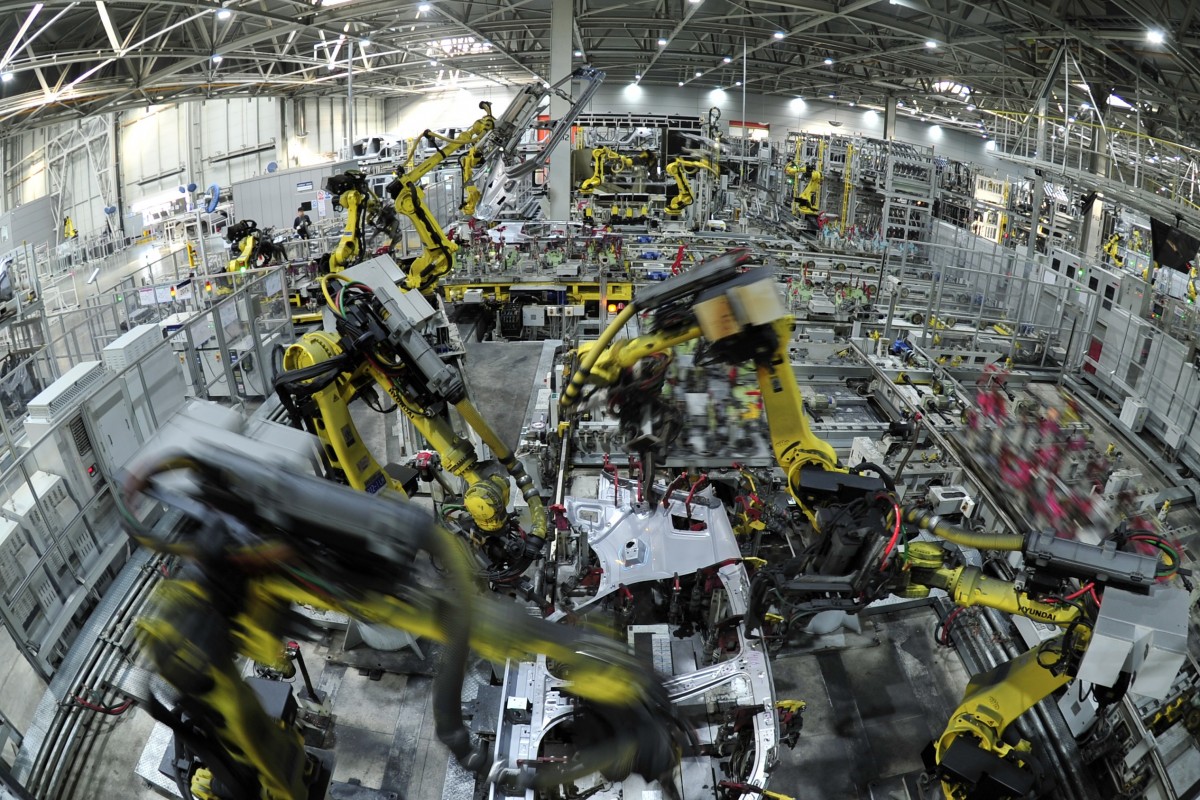
The University of Sheffield says it has developed a light-weight, high-strength steel alloyed with copper that can be used to reduce CO2 emissions in the automotive industry, Kallanish notes.
The ultra-fine-grained steel can be made to deliver “world-leading mechanical properties”, the university says, meaning a strength of nearly 2GPa with an elongation of 45%. For comparison, a similar unmodified steel alloy has a strength of 710MPa.
“Copper is normally considered a tramp element that must be removed from the steel making process,” the university says in a note. “But copper is increasingly present with recycled steel and unavoidable by steelmakers wanting to include more recycled materials in their production process. It is therefore important to turn this ‘evil’ into a positive, which is exactly what the research team in Sheffield, alongside international collaborators, have done, paving the way for further light weighting in transport, leading to reduced CO2 emissions.”
The presence of copper results in a rapid precipitation of a copper phase when the steel is heat treated during processing. This phase restricts the growth of grains in the material’s microstructure, leaving an ultrafine-grained microstructure which imparts the high strength and superior ductility, but also enhances the thermal stability of the steel, the university continues.
As one way to reduce vehicle emissions, automotive companies have in recent years been looking to source lighter steel components. This has driven the growth of the automotive advanced high strength steel (AHSS) market.
Italian stainless scrap seen increasing in March
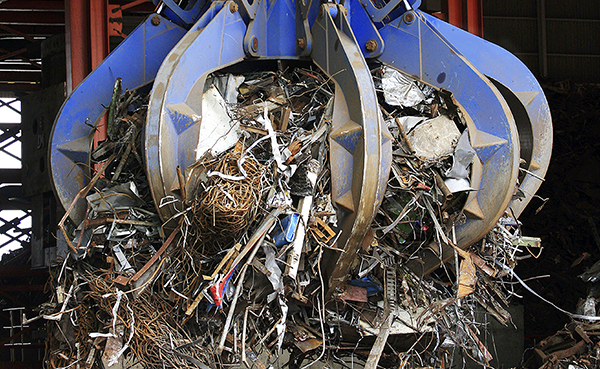
Italian stainless steel scrap prices are expected to increase again in new March contracts by over €100/tonne ($122) on average, sellers tell Kallanish.
Demand remains high from local mills as finished flat products are in short supply and prices are skyrocketing.
While, at present, 304 grade is sold at €1,400/t delivered on average, merchants will be asking for between €1,500-1,530/t delivered for March, as they are already paying increases to their suppliers. Grade 316, which has reached €1,700/t delivered this month, is likely to move up to €1,750-1,800/t delivered, sources say.
Meanwhile, offers for nickel cash buyers were at $18,142/t on 26 January. They reached $19,352/t as of 24 February.