


EUROMETAL met the National Federations online
EUROMETAL organized an online meeting between National Federations of steel distribution on Thursday, the 25th February, via Zoom.
This National Federations Meeting attended by 12 Federations and 13 Delegates was opened by Roberto Gonzalez, Chairman of EUROMETAL Coordination Work Group of National Federations.
Daniel Guinabert, Director General of EUROMETAL, summarized and presented the National Federations expectations according to an EUROMETAL survey sent early in January 2021.
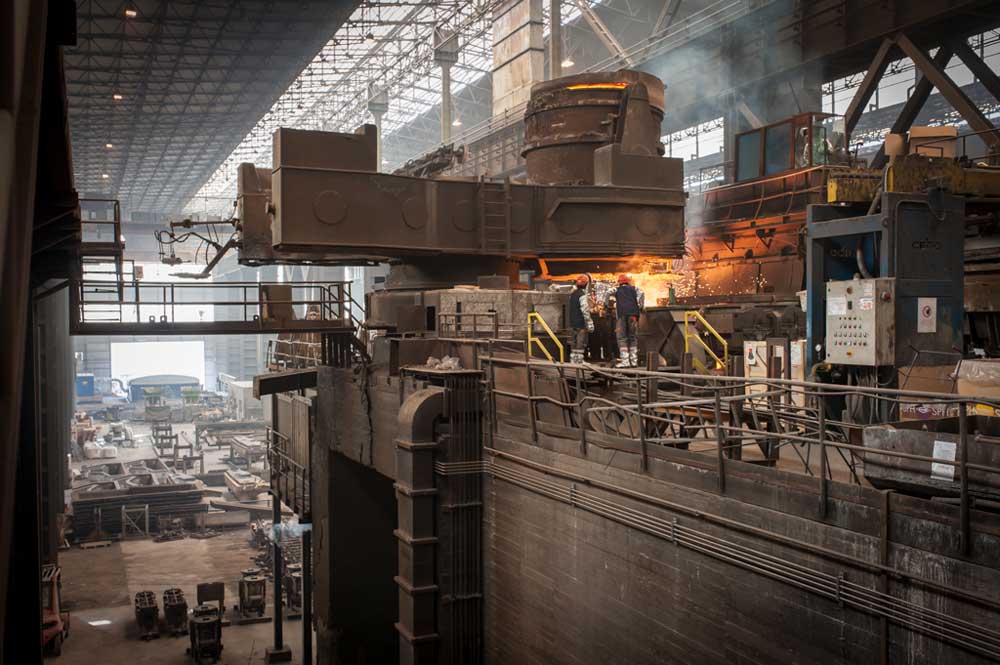
LatAm crude steel output grows in January
South American crude steel production rose in January, as did Mexico’s, according to the latest worldsteel data monitored by Kallanish.
South American crude steel output totalled 3.75 million tonnes in January, up by 11.4% year-on-year and 2.9% more over the 3.65mt in December 2020. From this total, Brazil’s production was 3mt, up 10.8% y-o-y and 4.1% on-month.
Argentina, the region’s second-largest producer, saw its crude steel output rise by 24.3% on-year in January to 371,000t. This volume, however, was 4.4% down on-month.
Third-largest producer Colombia saw an estimated output of 115,000t, up 10.2% y-o-y and 4.5% over December. The country also saw improved long steel output in 2020 (see separate article).
Peruvian and Chilean estimated production reached 110,000t and 95,000t, respectively. Peru increased output by 8.2%, while Chile registered a drop of 1.9%.
Further north, Mexico’s crude steel production was 9.8% higher in January versus the same period in 2020 at 1.65mt. This volume was also 9.6% more on-month, according to worldsteel data.

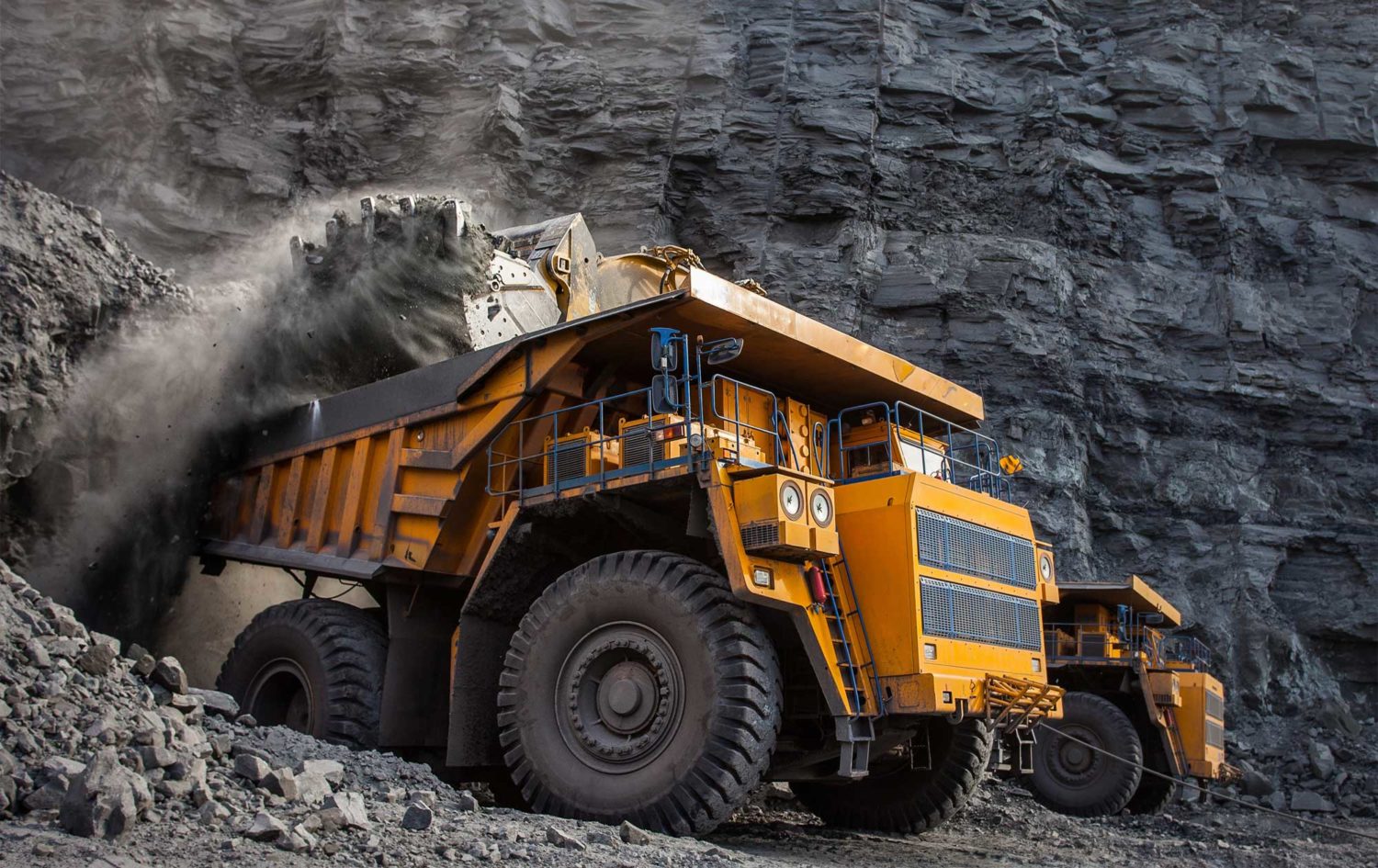
Coronado Resources foresees coking coal price rise
Coal producer Coronado Global Resources believes it has passed the most severe period of weak coking coal prices. The company expects metallurgical coal demand and prices will increase, Kallanish notes.
The producer acknowledges the Australia-China trade dispute caused international metallurgical coal prices to fall sharply. However, as demand resumes in other markets, such as India, Pakistan and the Middle East, the price of Australian coal will rise, it adds. Countries such as Mongolia, Russia, and Indonesia will focus more on supplying China, which leaves other markets for Australia, it adds.
In 2020, Coronado produced 17 million tonnes of coal and sold about 18.2mt, down on 20.2mt and 19.9mt respectively in 2019. This is due to lower production stemming from the temporary suspension of mining activities at the Curragh mine and the idling of US operations in April and May 2020. Metallurgical coal and thermal coal represented approximately 79.9% and 20.1% respectively of sales volumes.
The company’s 2020 revenue was $1.462 billion, down 34% on-year as a result of lower sales volumes and a reduction in the average realised metallurgical coal price. Coronado’s realised metallurgical coal pricing reached $90.5/tonne, down 29.7%, as a result of soft market conditions.
The mining cost per tonne sold reached $55.6/t, 7.3% higher than 2019 as a result of lower production volumes. It expects to see mining cost per tonne sold increase again in 2021 to $57-59/t.
Coronado expects demand for seaborne metallurgical coal will be underpinned by the growth of India’s blast furnace production over the next decade. Metallurgical coal supply will increase from 300mt in 2021 to 340mt 2030, and Australia will continue to be the dominant producer in the supply of seaborne metallurgical coal with 175mt in 2020 and 190mt by 2030.
Tight supply, demand rebound keep ore elevated: Fitch
Fitch Ratings has revised up its 2021 iron ore price assumption significantly due to tight market supply that is expected to continue in the next couple of years.
Iron ore in 2021 is now seen averaging at $125/tonne cfr China for 62% Fe fines, versus the previous assumption of $75/t and the actual 2020 value of $108/t.
The firmer outlook is also driven by the absence of material new projects over a long period that could offset depleting mines, Fitch says. “Vale has cut its production guidance for 2021, resulting in no supply response to growing demand, with all large-scale iron ore producers operating at almost full capacity,” Fitch tells Kallanish. “Inventories are running low, while we expect additional demand linked to US and European economic stimulus packages.”
The credit rating agency’s assumption for hard coking coal prices has been revised up $5/t to $135/t fob Australia in 2021. This is versus the actual 2020 price of $123/t. The improvement is due to robust demand from the steel sector, supported by recovering steel production in India, Japan, South Korea and Europe. Another factor are rebalanced flows of seaborne coal despite ongoing restrictions on Australian coal supply into China.
The assumption for the LME spot nickel price has been raised to $15,000/t in 2021 from the previous $13,250/t and versus the actual 2020 price of $13,789/t. This is due to strong spot prices and the expectation of increasing demand in 2021 for stainless steel. The long-term price assumption has also been hiked as Fitch expects the increased use of nickel in batteries to lead to a market deficit from 2025.

European stainless coil prices increase again
European stainless steel coil prices have increased again by €100/tonne ($121) compared to the beginning of February. They are likely to rise further in March due to strong demand and severe supply shortages, market participants tell Kallanish.
The main European mills are selling for July and August delivery. Stainless hot rolled coil is now at €2,500-2,600/tonne delivered on average. Cold rolled coil is at €2,700-2,800/t, sources say. The large gap between prices comes from differing delivery times. The shorter the lead time, the higher the price, sources say.
Stainless coil increased by as much as €500/t compared to December and the current material shortage is seen persisting. However, in May the EU will decide on the extension of stainless CRC duties from India and Indonesia. Buyers hope the market will be opened as procuring material is becoming so challenging that service centres and re-rollers are forced to purchase from their competitors’ stocks, Kallanish is told.
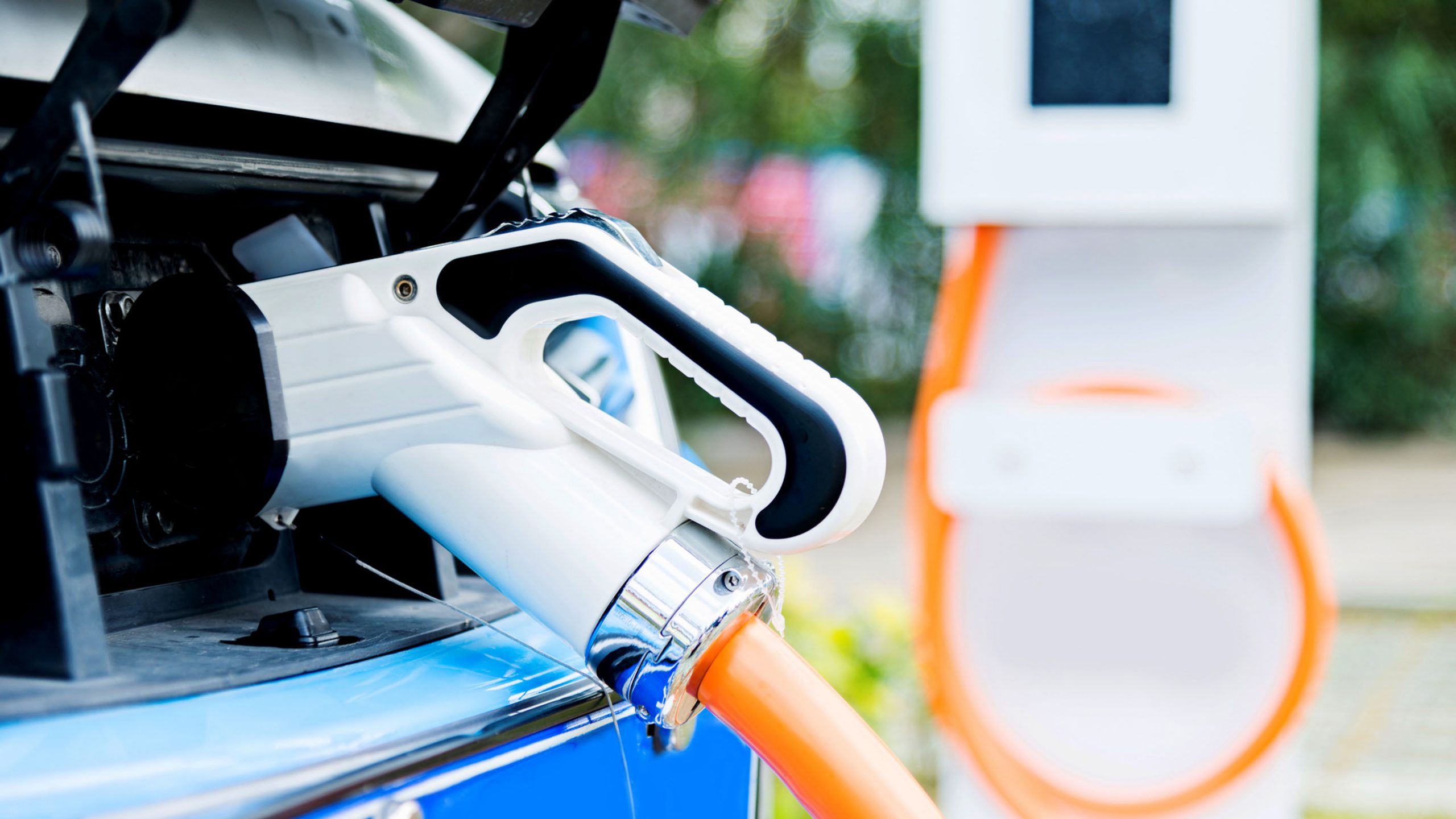
EU needs electric vehicle charging infrastructure regulation: carmakers
The European Commission (EC) must implement regulation to force EU member states to invest in the charging infrastructure required to accommodate the growth of electric vehicles, says European carmakers association ACEA.
ACEA, together with Transport and Environment (T&E) and the European Consumer Organisation (BEUC), recently made an appeal to Frans Timmermans. They petitioned the EC’s Green Deal executive vice president to set objectives that specify the exact number of public chargers and hydrogen stations that each member state is required to deploy, Kallanish notes.
ACEA director general Eric-Mark Huitema says the upcoming revision of the Alternative Fuels Infrastructure Directive (AFID) “must be used by the Commission to force member states to deploy 1 million public charging points across the EU by 2024, and to triple that number to three million by 2029”. Likewise, some 1,000 public hydrogen stations should be made available for cars and vans before 2030.
Failing this, EU climate change targets are at risk. In addition to public charging infrastructure, a stronger focus is also needed on workplace and home charging, he continues.
In 2020 hybrid electric vehicles made up 11.9% of total car sales across the EU, up from 5.7% in 2019. Electrically-chargeable cars accounted for 10.5% of all new registrations in the EU, while they only made up 3% of car sales the year before. For the first time ever, more than 1 million units of both hybrid electric (1,182,792) and electrically-chargeable (1,045,831) passenger cars were sold in the EU last year.
The AFID revision must be concluded before the EU’s review of CO2 targets for cars and vans, Huitema says. “There needs to be a direct link between the CO2 targets set for vehicle manufacturers and the actual level of deployment of charging and refuelling infrastructure on the ground,” he adds.
“I strongly believe that a Regulation would be the best way forward, as it allows for the swift implementation of binding national infrastructure targets,” Huitema concludes.
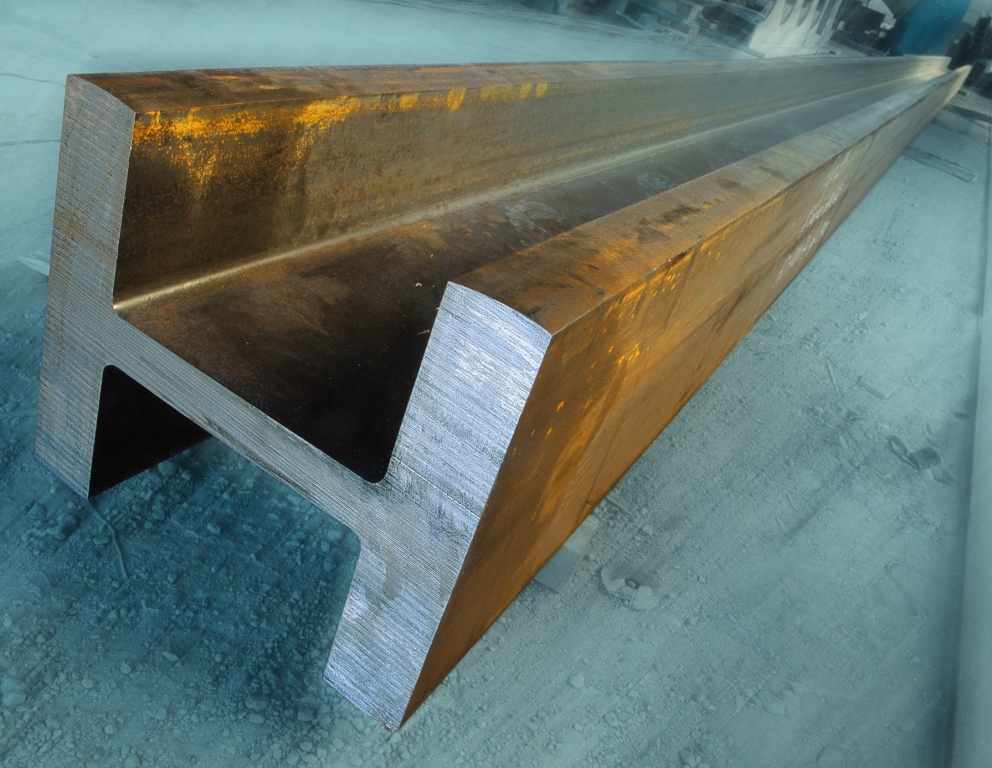
Southeast Asian H-Beam February prices rise to 8-year high
February’s wide-flanged H-beam import prices into Southeast Asia gained for the fourth straight month, as sellers hiked offers later in the month amid surging raw material prices, sources said.
S&P Global Platts assessed the February price of wide-flanged S275JR H-beams at $750/mt CFR Southeast Asia, up $10/mt from the month prior.
A cargo of South Korean-origin H-beam was sold at $750/mt CFR Singapore early-February, up $10/mt from buying ideas the month prior, however with offers held back at the end of February as mills witnessed a surge in raw material costs.
“South Korea sold beams to us about three weeks ago but withdrew offers after scrap prices surged,” a Singapore-based stockist said. “Some mentioned that selling in their own domestic market is better and are aiming $790/mt now.”
H2 scrap FOB prices assessed Feb. 24 have surged Yen 6,800/mt ($64/mt) or 19% from its previous low in January, according to Platts data.
Offers for Thailand-origin H-beams, however, were heard edging up slightly on the month at $750/mt CFR Singapore end-February, from a $745-$750/mt range the month prior, with buyers citing similar tradable levels.
Meanwhile, in Singapore, construction activities were heard picking up since the Lunar New Year holidays, boosting sites’ demand for upstream construction steel.
“We are getting better sales from the end-users as construction in Singapore picks up,” the stockist said. “Prices in March too may remain supported but it also depends on how China’s steel market moves.”
H-beam prices to Southeast Asia last witnessed similar highs of $755/mt CFR February 2013, Platts data showed.
— Marcus Ong, Samuel Chin

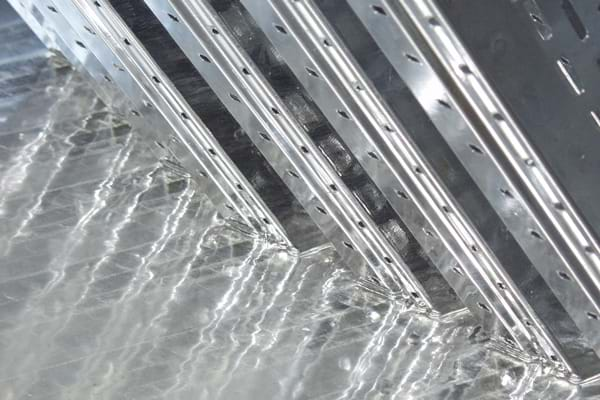
Salzgitter certified for low-emissions galvanized steel, slabs
German steel producer Salzgitter said Feb. 26 it had obtained certification for the production of lower carbon emissions galvanized steel and slab from verification agency TUV SUD based on cuts of up to 75% compared with the blast furnace route.
Salzgitter said it had obtained two conformity statements certified in line with TUV’s VERIsteel procedure for steel from its ferrous scrap-based Peine mini mill, in combination with the galvanizing plant in Salzgitter.
“We are the first European producer to obtain a conformity statement for green steel products,” said Ulrich Grethe, chairman of the management board of Salzgitter Flachstahl, in a statement. “Many of our customers consider it important to take delivery of a real, physical reduced-CO2 product now rather than being satisfied with more or less theoretical CO2 footprint projections.”
Germany’s TUV verified the carbon footprint procedures for producing strip steel from blast furnaces and EAFs, and found the new steel process achieved reductions of more than 75% in the CO2 footprint of slabs and more than 66% in that of galvanized coils, based on 2018 data, the statement said.
The VERIsteel process provides proof of product-specific CO2 emissions in steel production, and tracks decarbonization, it said.
“These steel grades have met with great interest from customers operating in range of different sectors,” it said.
The steel group planned to offer a range of low-emissions flat steel products before the end of 2020 after making changes to the Peine electric arc furnace (EAF) mill, owned by Salzgitter’s Peiner Trager, which produces beams and sections. One of the two continuous casting lines at Peine was fitted to cast slabs for the low-emissions flat steel initiative.
The company will increasingly pursue the path toward decarbonization with direct reduction iron (DRI) plants, through its SALCOS – Salzgitter Low CO2-Steelmaking project, Grethe said.
“This innovation project enables us to switch entirely from conventional steel production to hydrogen- and natural gas-based processes, which enables CO2 to be lowered by up to 95 %,” Grethe added. “The political and economic framework conditions for this to happen must be set in place as quickly as possible.”
— Hector Forster

EC opens investigation into possible continuation of steel safeguards
The European Commission has opened an investigation to determine whether the current system of EU steel import safeguards should continue after its expiry on June 30, following requests from EU steelmaking nations, according to a Feb. 26 publication in the Official Journal of the EU.
Interested parties are being invited to submit their views to the EC within 15 days. A decision on whether the safeguards, based on a tariff-rate-quota system, may or not be continued will be made by June 30, the commission said. A mill source close to the investigation said that the decision is expected mid-May.
“Initiation of this investigation follows a duly substantiated request received from twelve EU Member States,” the EC said in a statement. “The Commission will in its investigation determine, in accordance with the requirements of EU and WTO rules, whether the safeguard measure continues to be necessary to prevent or remedy serious injury to the EU steel industry and whether the industry is adjusting.”
The member states consider that prolongation is necessary due to the “existence of continuous significant import pressure from third countries…the fact that global overcapacity remains at a very high level, that a large number of trade restrictive measures and trade defence measures by third countries continue being adopted, and that there are no elements suggesting that the US will be removing the Section 232 measures on steel,” according to the Official Journal statement.
After surging in 2017-18, certain steel imports into the EU have been restricted since July 2018 by a three-year import safeguards system involving quotas, introduced provisionally for its first six months and formalized in January 2019. The measure followed the imposition in March 2018 of the US’ Section 232 taxes on steel imports, which caused trade deviation, and the EC said it “aimed to prevent economic damage for EU steel producers, given the risk of further import increases linked, inter alia, to the introduction of trade restrictions by the US on steel products.”
Following introduction of the curbs, finished steel imports into the EU fell to 25.378 million mt in 2019, from 2018’s 29.279 million mt. Further falls came in 2020, when carbon steel imports fell 15.4% on-year to 20 million mt, almost a third lower than the 2018 peak, according to the European Steelmakers’ Association Eurofer’s website.
Surging prices
While steelmakers may support the continued existence of import curbs, steel consumer groups are typically against them as prices tend to be higher in a protected market environment.
The COVID-19 pandemic has also altered market dynamics in recent months. Following shutdowns amid a market slump last year, European steel mills see prospects for only a moderate increase in crude steel production in H1 2021, which is being outpaced by a demand recovery backed by government economic stimulus. A resultant tightness of material, particularly coil products, in EU markets has pushed some product prices to 13-year highs.
Current lower imports into the EU are seen partly due to China attracting greater import tonnages of third-country steel in recent months to feed its strong domestic demand. In past years a major steel exporter, China emerged last year as a substantial importer of semi-finished steel products. Rising international steel prices have also made imports less attractive in the EU market.
Some industry lawyers have recently argued that an extension to the EU steel import curbs would be unlawful under World Trade Organization rules. However, the commission said Feb. 26 that an extension of the safeguards system is legally permissible so long as the current investigation takes place first.
“In accordance with Article 19 of Regulation (EU) 2015/478 and Article 16 of Regulation (EU) 2015/755, the initial period of duration of a safeguard measure may be extended,” the EC said in its statement. “In order to establish whether such an extension is warranted, the Commission should carry out an investigation pursuant to Article 5 of Regulation (EU) 2015/478 and Article 3 of Regulation (EU) 2015/755 respectively.”
Member states to vote
The EC has issued questionnaires to EU steel producers to assess their economic situation, and will subsequently make a proposal to member states for a vote, it said in the statement. The proceeding will also include consultations with third country governments, it said.
Steelmakers in Turkey, a traditional supplier to the EU and whose steel output overtook Germany’s last year, are firmly against any extension of the safeguards.
Ugur Dalbeler, vice chairman of Turkish Steel Exporters’ Union (CIB), and also the CEO of major Turkish steelmaker Colakoglu, told S&P Global Platts Feb. 26 that he is hopeful that, following the review, the EC will terminate the existing safeguard measures without any extension.
“We have two reasons for our hopefulness: first of all the chairman of the EU commission said he is not intending to extend the measures,” Dalbeler said. “We are also thinking that the EU Commission will take into consideration our and some other countries’ panel requests at the WTO against protection measures as these measures are against the WTO rules….we believe the WTO could regain its actual function again after Trump,” he noted.
A commission spokeswoman did not immediately respond to a request for comment on the Turkish executive’s statement.
— Diana Kinch, Cenk Can and Laura Varriale