

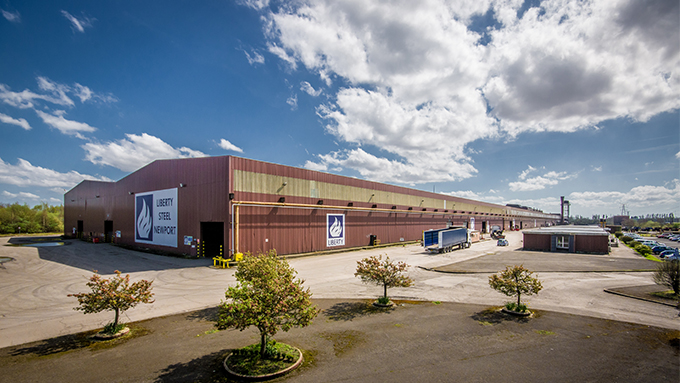
Faillite de Greensill, inquiétude pour Liberty Steel
La fintech londonienne spécialisée dans le financement à court terme des entreprises, Greensill, a déposé le bilan. Et cela pourrait poser des problèmes à Liberty Steel, le repreneur d’une partie des installations d’ArcelorMittal au Luxembourg, un de ses plus gros clients.
Le business model était simple: Greensill payait la facture d’une entreprise à sa place contre un léger rabais et se faisait rembourser par l’entreprise. La fintech, qui comptait dans ses investisseurs l’ancien Premier ministre britannique, David Cameron, ou Softbank, s’est retrouvée en difficulté après que son assureur a refusé de renouveler un contrat de 4,6 milliards de dollars et que Credit Suisse a gelé l’accès à 10 milliards de dollars dans des fonds domiciliés au Luxembourg et au Liechtenstein.
Lundi, dix ans après son lancement par l’Australien Lex Greensill, la start-up s’est mise en faillite à Londres, et trois conseillers de Grant Thornton ont commencé à évaluer ses avoirs et ses pistes de sortie de crise. Selon les médias britanniques, le fonds Apollo pourrait reprendre une partie des activités.
Mais pas celle qui concerne Liberty Steel. Le groupe sidérurgique de Sanjeev Gupta, qui a repris une partie des activités d’ArcelorMittal au Luxembourg, est un de ses principaux clients. Le groupe n’avait pas réagi aux informations de presse. Vendredi, un porte-parole avait indiqué à l’AFP que les liquidités du groupe étaient satisfaisantes et les perspectives industrielles bonnes grâce à la reprise économique attendue post-Covid.
Le Financial Times croit savoir que le ministre en charge des Entreprises, Kwasi Kwarteng, a tenu une réunion d’urgence dimanche avec le patron du sidérurgiste, Jon Ferriman. La Banque d’Angleterre avait écarté cette société des institutions à risque.
Selon plusieurs médias allemands, le superviseur financier allemand, la Bafin, a déposé une plainte pénale contre la banque, soupçonnée d’avoir falsifié son bilan.
Greensill a financé pour 143 milliards de dollars en 2019, auprès de 10 millions de clients dans 175 pays.
Écrit par Thierry Labro
Publié le 09.03.2021


Un nouveau CEO pour ArcelorMittal Europe
La nomination d’Aditya Mittal en tant que directeur général du groupe ArcelorMittal entraîne un certain nombre de remaniements de l’organigramme. Le Belge Geert Van Poelvoorde devient ainsi le nouveau CEO d’ArcelorMittal Europe.
Le Belge Geert Van Poelvoorde est le nouveau CEO d’ArcelorMittal Europe. Il sera responsable, comme le précise le communiqué, de toutes les activités sur le continent, et donc évidemment aussi de celles du Luxembourg. Il est également un des vice-présidents exécutifs du groupe et membre de son management committee.
Il succède à Aditya Mittal à la tête des activités européennes , nommé directeur général du groupe familial en février dernier.
Originaire de Gand
Âgé de 53 ans, Geert Van Poelvoorde est un ingénieur civil et électronicien diplômé de l’université de Gand. C’est dans cette même ville qu’il débute sa carrière, en 1989, au sein de Sidmar. En 2014, il devient CEO Flat Carbon Europe and Purchasing d’ArcelorMittal et est nommé président d’Eurofer en novembre 2015.
Yves Koeberle, membre également du management committee et vice-président du groupe, devient le nouveau CEO d’ArcelorMittal Europe – Flat Products, après avoir été head of ArcelorMittal Sourcing, et de l’European Procurement Organisation depuis 2013, et head of ArcelorMittal Shipping depuis 2018.
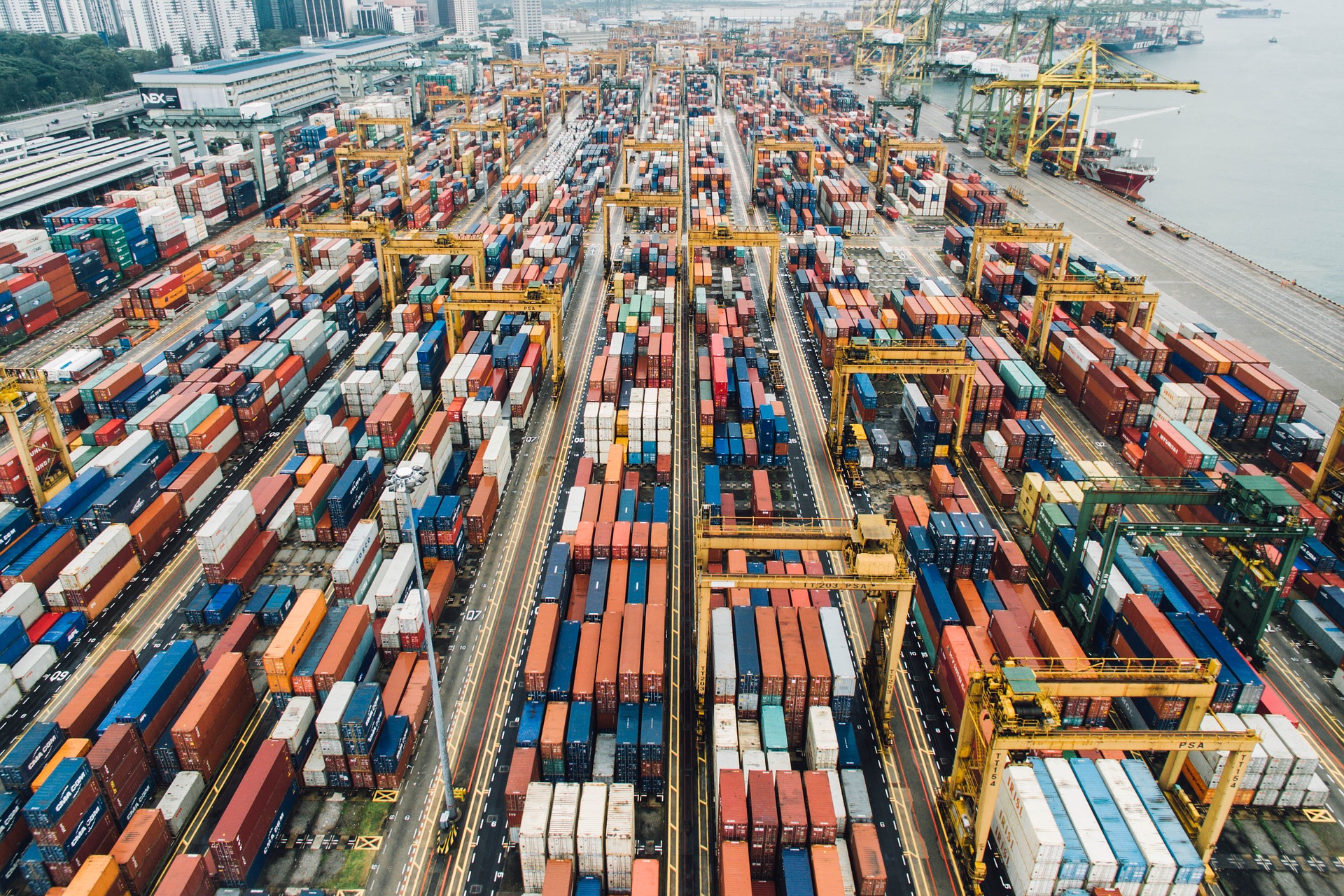
China’s lower-than-expected GDP growth could impact steel demand
China has set a GDP growth target for 2021 of “above 6%,” below the market consensus of 7%-9%, indicating that stable economic growth, deleveraging and decarbonizing of the economy will be priorities for the year, rather than maintaining high GDP growth, which is set to adversely impact infrastructure and property steel demand, as well as steel production, according to S&P Global Platts Analytics.
In line with the lower-than-expectation GDP growth target, the government work report given by Premier Li Keqiang on March 5 over the annual National People’s Congress (NPC) also released its fiscal deficit target at 3.2% of GDP and local government special bonds quota at RMB 3.65 trillion ($563.6 billion) in 2021, down from “above 3.6%” and RMB 3.75 trillion in 2020.
Meanwhile, Premier Li reiterated the commitment to align total social financing and broad money growth with nominal GDP growth, which is in line of China’s monetary normalization process, starting from May 2020.
The decreased fiscal stimulus, in terms of deficit and local government special bonds, means infrastructure construction is unlikely to surpass the level seen in 2020. Platts Analytics said it expects infrastructure steel demand to have zero or low single-digit growth in 2021.
Meanwhile, the stance taken on China’s monetary policy in 2021 indicates China is likely to stay hawkish to the property sector with tightened financing and home purchase restrictions.
Platts Analytics estimates an upper range scenario in the property sector would see the addition of just 6.07 million mt of steel compared with 2020, marking a 1.9% increase to 328.2 million mt. The lower range estimate sees a decrease of 8.68 million mt to 313.4 million mt, marking a 2.7% fall.
Carbon emissions reduction
Moreover, the government work report declared to cut energy consumption per GDP by around 3% by reducing pollution emissions in 2021, while there was no such target made for 2020.
As the iron and steel industry is a major carbon emitter, it will no doubt be targeted for carbon emissions reduction in 2021. China’s Ministry of Industry and Information Technology has cited the plan to cut steel output no less than three times already in 2021 as the most effective way to reduce emissions.
Platts Analytics expects steel output cuts to occur in the second half of 2021, as demand is likely be lower in H2 than in H1. Implementation of emissions quotas could be a way to enforce production cuts if emissions quotas allocated to mills are exceeded.
However, any steel production cuts need be gradual and moderate in order to avoid drastic market fluctuations, according to He Wenbo, executive chairman of the China Iron & Steel Association, speaking March 3.
According to Platts Analytics, steel production cuts too much and too fast will not only hurt downstream steel users, but could also erode the steel industry’s profitability, as 93 million mt/year of brand-new crude steel making capacity and 76 million mt/year of pig iron capacity were just commissioned in 2019-2020 through capacity swaps. Moreover, there are 151 million mt/year of crude steel and 121 million mt/year of pig iron capacity planning to be commissioned in 2021-2022, also through capacity swaps.
New facilities need to reach their full capacity as soon as possible to improve its profitability and pay back its loans, so any government measures that prevent new facilities from ramping up production on a large scale are likely to cause instability to steel mills performance.
Platts Analytics expects as soon as steel output cuts begin to hurt downstream users or the steel industry itself, they could be loosened or lifted.
— Clement Choo


German companies seek EC funding for cross-border hydrogen project
Six German companies have teamed up for European Commission funding to develop a green hydrogen economy in Germany’s Saarland region, France and Luxembourg.
Power generator STEAG, Siemens Energy, grid operator Creos Deutschland, the Saarbahn public transport company and the SHS steel companies (Stahl-Holding-Saar with its companies Dillinger and Saarstahl) have developed a joint project to create a cross-border, green hydrogen economy through the production, use and transport of hydrogen, the companies said in a joint statement on March 8.
The submission was in response to the German Federal Ministry for Economic Affairs and Energy for expressions of interest to identify Important Projects of Common European Interest, or IPCEI. With the funding, the companies hope to secure the necessary capital to implement their projects. The hydrogen projects “HydroHub Fenne” (STEAG), “H2SYNgas” (SHS – Stahl-HoldingSaar) and “TraficHdeux” in the Saarland region, and the Saarland-French hydrogen project “mosaHYc” form part of the alliance of projects applying jointly for funding, the companies said.
The “H2SYNgas” is a project in which technology is being developed at a blast furnace operated by ROGESA Roheisengesellschaft Saar, a joint subsidiary of Dillinger and Saarstahl, to enable the use of the company’s own process gases and, in addition, substantial quantities of hydrogen for the blast furnace process. The synthesis gas generated from the company’s own process gases will be enriched with hydrogen reducing. therefore the Co2 emissions, the companies said.
The mosaHYc project aims to create a 100-km-long infrastructure that will enable hydrogen producers and consumers in the “Grande Région” to develop business models in industry, the heat market and the transport sector, they said.
The HydroHub Fenne project pursued by STEAG and Siemens Energy, which has already been selected as a “Living lab for the energy transition,” is to be the first proton exchange membrane electrolysis plant of significant scale. The plant will use electricity from renewable sources for electrolysis, producing green oxygen and green hydrogen.
The “TraficHdeux” project aims to build up the infrastructure for public transport with hydrogen-powered fuel cell trains and buses. The core of this project is the reactivation of non-electrified or only partially electrified rail lines across national borders.
Saarland state government backs bid
The projects have received the support of the Saarland state government
“We need effective hydrogen lighthouse projects with a strong signal effect both for the economy and for the public at large,” says Anke Rehlinger, minister for economic affairs, labor, energy and transport and deputy minister-president of the Saarland. “To this end, the Saarland has proclaimed the hydrogen model region, in which we – together with highly dedicated companies – are breaking new ground.
— Annalisa Villa

Northwest European coil market stays tense
Coil buyers in northwest Europe tell Kallanish the current tightness of supply, and the high prices that go with it, will stay for quite some time before turning down. Last Friday’s ArcelorMittal price hike announcement nevertheless caught some off guard, who thought the peak had been reached.
Distributors and their customers are in a race to get volumes secured, and sometimes the price does not seem to matter. “I had cases of twisted digits in price quotes, and the customer did not even see it, or did not mind,” says a German buyer, while complaining about ongoing overtime work to secure volumes.
Under the given circumstances, he believes prices for hot rolled coil will rise close to the target of €800/tonne ($949) announced by ArcelorMittal only on Friday. This should also apply to hot-dip galvanized coil with a targeted €920, and cold rolled coil for likely not much less, he finds, in view of lead times now stretching to over half a year.
This is confirmed by an Austrian player, who gives CRC as an example, with the earliest delivery being September from the domestic mill, and October-November for galv. “CRC and galv are too tight to expect price relief, unless the car factories have a standstill or breakdown, and it does not look like it,” he observes. He was however previously more conservative when forecasting the hike, which he expected to be “10 euros, maybe 20,” and which turned out to be €50 for HRC.
Other observers agree about the domination of the automotive industry, which absorbs the volumes of other sectors. According to another Austrian source, “the situation will relax only once orders from carmakers decrease.”
Christian Koehl Germany


Further UK safeguard quotas reach exhaustion
UK tariff rate quotas for the first quarter for tinplate from China have been exhausted, while Turkey-origin merchant bars and light sections, and other welded tubes have each reached 99%.
Q1 quotas for stainless wire rod from Taiwan have risen to 94% filled, UK steel distributors’ association NASS informs Kallanish.
Quotas for rebar from other countries and organic coated sheets from South Korea are each at 90%, while category 4A metallic coated sheet from South Korea usage is at 87%. The quota usage for gas pipes from Turkey is now at 82%.
Organic coated sheets from the EU quota usage is at 70%, while the quota for rebar is 75% filled from Belarus and 76% from the EU.
The HMRC monitoring system is still experiencing delays in updating of around two working days.
Adam Smith Germany

French 316 stainless scrap prices rise, supply tight
Stainless steel scrap prices in France are increasing further in March, but only for certain categories. This is due to see-sawing nickel prices that have fallen significantly in recent days.
This month, prices for grade 316 are hovering at €1,820-1,830/tonne ($2,162-2,173/t) delivered on average. Like last month, this grade is in tight supply and is sold quickly, market participants tell Kallanish. However, mills are paying €1,260-1,270/t delivered for grade 304, including €20-30/t for transport, sources say, stable compared to last month.
French mills’ scrap buying prices are based on nickel values in a given month. Nickel prices for cash buyers were at $17,807/t on 1 February, before exceeding $19,000/t in mid- February and then falling back to $16,349/t on 5 March.
Natalia Capra France
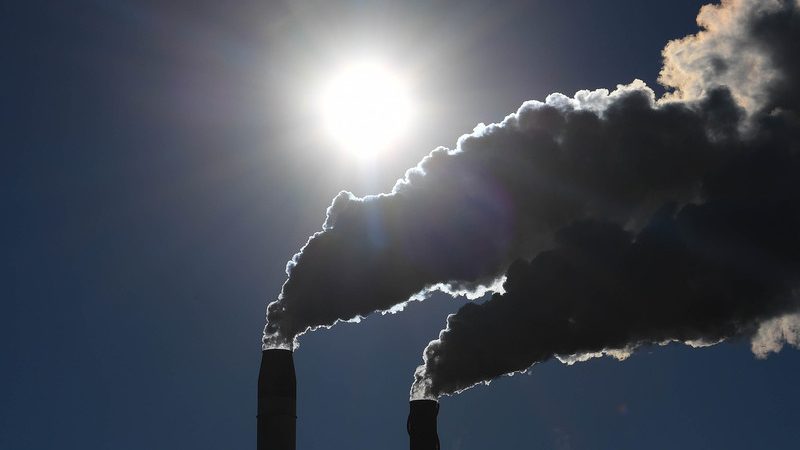
Vers une taxe carbone sur les produits importés dans l’UE
Le Parlement européen veut mettre en place une tarification carbone aux frontières de l’UE sur les produits importés. Une manière de lutter contre la délocalisation d’entreprises qui veulent éviter les normes environnementales européennes.
Pour éviter la «fuite de carbone» – ce qui consiste, pour des entreprises, à se délocaliser hors de l’UE pour éviter les exigences des politiques environnementales européennes –, l’Union européenne veut mettre en place un prix du carbone sur les produits importés.
Celui-ci concernerait les importations de certains biens en provenance de l’extérieur de l’UE, via un mécanisme européen d’ajustement des émissions de carbone aux frontières. Les députés européens devraient faire des propositions en ce sens dès la première session plénière de mars du Parlement européen.
Le fonctionnement serait le suivant: si les produits proviennent de pays dans lesquels les règles en matière d’émissions sont moins ambitieuses que celles de l’UE, un prix du carbone serait appliqué. Avec pour objectif de garantir que les importations ne soient pas moins chères que le même bien produit dans l’UE.
Contre le dumping climatique
«Nous devons protéger l’UE contre le dumping climatique, tout en nous assurant que nos entreprises font aussi les efforts nécessaires pour prendre leur part dans la lutte contre le dérèglement climatique», explique le rapporteur du projet, le député européen Yannick Jadot (groupe des Verts/Alliance libre européenne).
Pour inciter les entreprises européennes à diminuer leurs émissions de gaz à effet de serre (GES), un système d’échange de quotas d’émission de l’UE (SEQE) a été mis en place par l’UE. Les entreprises doivent ainsi acheter un permis pour chaque tonne de CO2 qu’elles produisent.
Mais si les émissions de GES sont à la baisse dans l’UE, celles issues des importations sont en augmentation, sapant ainsi les efforts de l’UE visant à réduire son empreinte mondiale en matière de GES. Ce nouveau mécanisme de tarification du carbone peut ainsi être considéré comme un complément au SEQE.
S’aligner sur les règles de l’OMC
Ce nouveau mécanisme «devrait s’aligner aux règles de l’Organisation mondiale du commerce (OMC) et encourager la décarbonisation des industries dans l’UE et hors de l’UE», précise le Parlement européen. Mais il ne devrait pas être utilisé «à mauvais escient», comme un outil visant à renforcer le protectionnisme.
Le Parlement dans son ensemble devrait se prononcer sur la résolution lors de la session des 8 au 11 mars. La Commission devrait présenter une proposition au second trimestre 2021. Et le nouveau mécanisme pourrait voir le jour en 2023.
Écrit par Pierre Pailler
Publié le 09.03.2021