

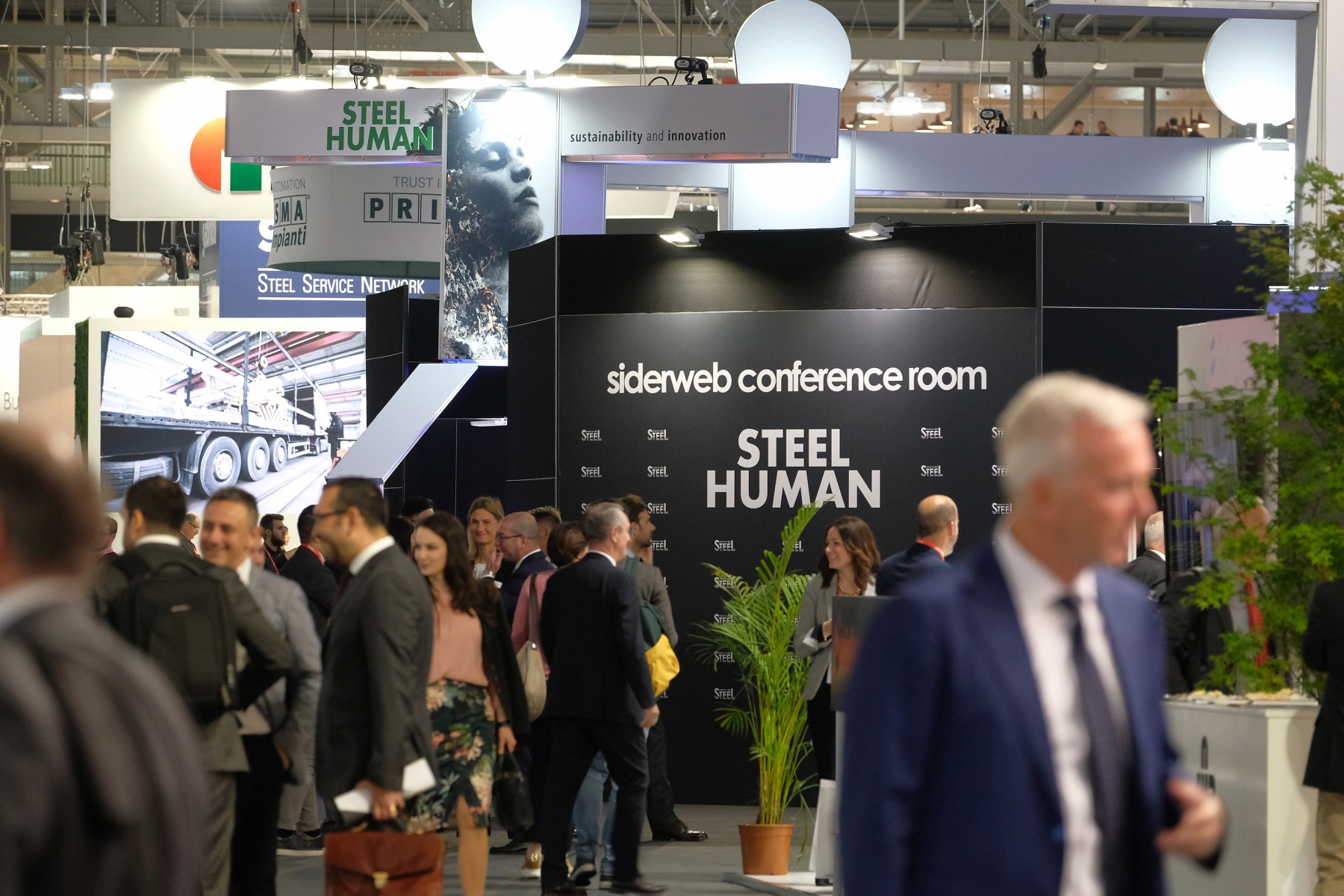
Made in Steel 2021 will be held in October
The ninth edition of Made in Steel will take place from 5 to 7 October 2021. The decision, shared with the steel community, has received full support by the stakeholders.
Due to the ongoing health emergency and in response to the solicitudes and requests received from numerous exhibitors, we announce that Made in Steel 2021 will be postponed to 5, 6, 7 October, still at fieramilano, Rho (Milan, Italy).
This decision has received the full support of the Italian and European steel players who will participate in the three-day event, or who have expressed the intention to do so. It is anticipated that in the third quarter of the year the Covid-19 pandemic will be under control, thanks to the vaccination campaign and the measures adopted to curb contagion.

XCarb™ towards carbon-neutral steel
We are launching a new brand, XCarb™ – to bring together all our initiatives which fall under our ongoing programme of steelmaking innovation targeting carbon-neutral steel by 2050 under a single global umbrella brand.
The XCarb™ brand is launched in response to customer interest in buying lower carbon steel. XCarb™ will allow us to send a clearer signal of our intent to our customers, inviting them to support us on our collective journey to zero carbon by buying our lower emissions products that enable them to reduce their own carbon impact. And it also highlights our direction of travel as we seek to move a higher portion of our production under the XCarb™ brand.
The XCarb™ brand is very much a global brand and has been discussed in depth with the CEOs of each segment. I appreciate that each segment is at a different stage of its decarbonisation journey but this brand will be available for you to use as and when you are ready. A technical team headed by Brad Davey will be responsible for ensuring products meet the XCarb™ criteria of truly being on the road to carbon neutral steel.
The launch today focuses on the first two XCarb™ ‘products’ ready for market – the XCarb™ green steel certificates and the XCarb™ recycled and renewably produced. The XCarb™ green steel certificates represent real savings in our CO2 emissions through targeted investment that can be attached to steel shipments. XCarb™ recycled and renewably produced describes steel made via the EAF route that plugs into renewable electricity, either directly or through verified certificates, with as low a carbon footprint as 300kg/tonne.
Furthermore, we are launching a XCarb™ innovation fund to invest in companies developing breakthrough technologies that will accelerate the transition to net zero steelmaking. This is a recognition on our part that we will be able to achieve our goals faster with further innovative breakthroughs. We are committing $100 million a year towards this fund.
Sustainable development is one of our four strategic priorities and decarbonising our footprint is arguably our biggest sustainable development challenge but also the biggest sustainable development opportunity. We know we have a big challenge to decarbonise but steel already has a lower carbon footprint than competing materials. Furthermore, no other material offers steel’s circular credentials.
That’s why we are confident steel will remain a vital material in the application of new industrial technologies and the transition of the energy, transport and packaging industries, and the future construction sector. Steel is central to the further development of the renewable energy sector, while our Steligence® initiative demonstrates the sustainable benefits of using steel in construction.
No other company is as well placed to play a leadership role in this transition as ArcelorMittal. No one else has the combination of industrial scale, geographic reach, technology prowess and innovative capability. We must make the most of this opportunity.
The focus is now moving from making commitments to taking concrete actions. The initiatives we have launched today are a progressive step in this direction.
Best regards, Aditya Mittal

US metals end users urge Commerce secretary to drop Section 232 tariffs
US metal manufacturers and users have sent a letter to newly appointed Commerce Secretary Gina Raimondo arguing that the Section 232 tariffs on steel and aluminum are continuing to cause damage to downstream manufacturing and should be eliminated, following public comments from Raimondo calling the tariffs effective.
Data has shown that the tariffs of 25% on steel and 10% on aluminum, first introduced by former President Donald Trump in March 2018, have been “effective,” Raimondo said in an interview with MSNBC March 4, a day after she was sworn in to lead the department. However, as President Joe Biden has stated in the past, the new administration will be doing a full review of the tariff program, she said.
The Coalition of American Metal Manufacturers and Users said it was surprised by Raimondo’s comments on the effectiveness of the tariffs, according to the group’s letter dated March 15.
“As we wrote to President Biden on February 10, 2021, there is, in fact, scant evidence that the Trump steel and aluminum tariffs have helped the domestic steel industry, as the sector continues to close plants and shed jobs, but numerous published studies provide evidence of the damage caused by these tariffs to our nation’s economy, its small manufacturing businesses, employment in the manufacturing sector, and to carefully constructed supply chains,” the group said.
Among the issues raised, CAMMU said many of the steel products targeted by the tariffs are not readily available in the US.
“Companies cannot manufacture products out of raw materials that they cannot procure,” CAMMU said. “US manufacturers increasingly report that the quality of the steel and the availability of specialty materials is a significant concern … our member companies report not only record steel prices, but also delivery times stretching 12-16 weeks, causing significant disruptions.”
CAMMU, which represents more than 30,000 companies in the manufacturing sector and downstream supply chains, was set up in the wake of the Section 232 metals tariffs to oppose the trade measure.
— Justine Coyne

Section 232 stays, EU safeguard outcome open: Irepas
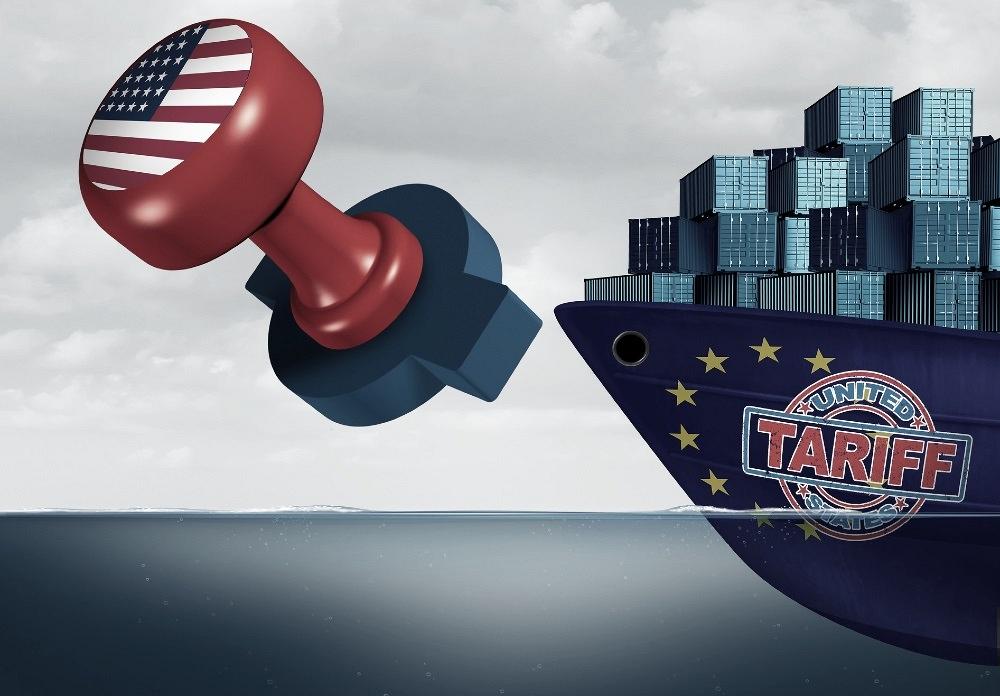
The outcome of the EU’s steel safeguard review remains very open, while in the US, Section 232 tariffs are here to stay, said International Rebar Exporters and Producers Association (Irepas) committee members at the association’s virtual meeting this week.
Safeguard measures have resulted in serious shortages of some products in the EU, putting pressure on end users. Even if the measures are revoked after June, the market will normalise only in the first quarter of 2022 as it will take this long for orders to be placed, and steel to be produced and shipped to buyers, traders committee member Wilhelm Alff said at the meeting attended by Kallanish. This means downstream players will in any case suffer for the rest of 2021, he added.
If safeguards are extended, this will be bad for the EU’s trade negotiation position going forward. “Brussels needs to satisfy diverse lobbying interests,” Alff said. “The outcome is very, very open.”
In the US, Section 232 measures will remain in place as they provide a tax windfall to the government, observed traders committee member F.D. Baysal. Moreover, “Biden has continued if not increased the ‘Buy America’ policy,” he continued. “If every country followed this doctrine, we’d return to the days before the WTO.”
On the other hand, the Biden administration is talking about supporting the WTO, in contrast to predecessor Donald Trump’s combative stance towards the organisation. This is a positive, Baysal commented.
Huge US infrastructure investment has meanwhile been spoken about since the Obama administration but was never implemented. Baysal is hopeful this will materialise but said only US mills are likely to benefit due to infrastructure projects coming with a “Buy America” clause. This could further inflate US domestic steel prices.
As for potential EU scrap export restrictions, these are unlikely, said Irepas raw materials suppliers committee chairman Jens Björkman. “The amount of excess scrap [in the EU] is substantial, so the possibility to restrict exports from Europe or the US is challenging because there is the need to move material out of these regions,” he commented. The EU will increase the bureaucracy and paperwork required to export scrap in future, but exports will continue. “The fair trade mandate is strong,” Björkman added.
A number of solutions are being discussed, meanwhile, to the container shortage that has seen freight prices skyrocket. These include switching from container to bulk freight, which is “the opposite of what we did in 2003”, Baysal observed. India is planning to manufacture more containers to ease the shortage, while cargoes could also be moved from congested ports like Los Angeles to other regional ports to relieve congestion, he added.
Adam Smith Germany

EU coil importers evaluate offers on domestic shortage
EU coil importers have upped their activity since the beginning of March due to persistent domestic supply shortages and rallying prices in the bloc, Kallanish learns from sources.
For hot rolled coil, the latest most competitive offers have been reported from India, at some €750/t ($892) cfr Italy and €765/t cfr northern Spain. Traders note this level is attracting orders from clients.
Some deliveries of these new Indian HRC orders could arrive before the end of June, meaning they will need to be calculated in the second-quarter safeguard quota allowance. India rapidly exhausted its HRC quota of some 170,000 tonnes in Q1. From Q2 it will be able to make use of its country specific quotas, plus a maximum of 30% of the residual other countries quotas, which have remained almost unused so far.
While Indian offers are attracting interest, Turkish mills are reported to be uncompetitive for HRC, with offers, including duties, reported at above €800/t cfr southern Europe.
Buyers in Europe are also looking for further opportunities, but these remain scarce. Algerian mill Sider El Hadjar has informed the market it is preparing a shipment of 15,000 tonnes of HRC to Italy, representing a new potential procurement option for tubemakers or low-grade HRC buyers.
Traders also note that CRC is the most difficult to find at competitive prices in Europe. Hot-dip galvanized coil offers are meanwhile still being considered from Turkey, though offer levels remain at some €40-50/t above domestic European prices.
Emanuele Norsa Italy

French construction sector recovers confidence
French construction industry managers’ confidence over future activity held up in February, according to a l’Institut National de la Statistique et des Études Économiques (Insee) report monitored by Kallanish.
More companies in the construction industry than in the previous month reported that their recent activity increased over the past three months.
While employment prospects were more favourable than in January, last month fewer construction companies than in January considered their order book to be below normal for this period of the year. Given their present staff size, current order books provide 8.3 months of work, a slight increase compared to January.
Capacity utilisation rate last month also increased after a sharp rebound in January, and stands above its long-term average. At the same time, 40% of business managers interviewed reported production bottlenecks, a share higher than January and significantly higher than its long-term average.
The balance of opinion of business manager on the future development in their prices has fallen back slightly but remains above its long-term average, the report concludes.
Domestic demand for rebar has been particularly weak in France over recent weeks. Demand from the local construction sector is said to be moody and unreliable, undermining the possibility of price increases in March, Kallanish notes.
Natalia Capra France