


LME scrap forward curve remains in near-term contango
Scrap futures contracts on the London Metal Exchange remained at largely stable levels over the week to March 18, as physical spot prices continued to fall on the week.
S&P Global Platts assessed the March scrap contract down $1/mt on the week to $439.50/mt on March 18, while the April contract increased $3/mt to $452/mt. The May contract also rose, up $2/mt to $458/mt, with June up $4.50/mt to $457.50/mt.
The forward curve remained in a contango structure for March-May contracts over the week. This suggests that futures traders still expect near-term strength in the physical market, despite losses in the physical spot market over the week.
Spot prices for physical imports of premium heavy melting scrap 1/2 (80:20) dropped $15/mt on the week to $425/mt CFR Turkey March 18, as mills largely held back from buying, attempting to pick off lower-priced cargoes amid news of multiple offers in the market.
“From what I see, no buyer is rushing at all,” an EU trading source said, citing an indicative tradable value for premium HMS 1/2 (80:20) at $425/mt CFR, with down to $420/mt CFR also considered possible.
Weekly scrap futures trading volumes over the week to March 18 totaled 55,740 mt, sharply down from 125,850 mt recorded last week.
Rebar futures saw minor losses on the week for March-April contracts, with the forward curve moving from a slight near-term backwardation into a soft contango over March to May contracts.
Platts assessed the March contract down $3/mt on the week to $629.50/mt March 18, while the April rebar contract decreased 50 cents/mt to $630/mt. The May contract rose $3/mt to $633.50/mt, while June was stable at $631/mt.
The Turkish physical rebar export prices also fell amid soft demand, although some Turkish mills tried to maintain elevated offer levels. Platts assessment of Turkish exported rebar fell $18/mt over the week to $619.50/mt FOB Turkey March 18.
Rebar futures weekly trading volumes this week on the London Metal Exchange totaled 19,400 mt, slightly down from the 22,020 mt last week.
The outright spread between Turkish exported rebar and import scrap was down $3/mt on the week to $194.50/mt March 18.
— Viral Shah


ISTA calls for “safeguard holiday” on short supply
ISTA, the International Steel Traders Association, has sent a letter to the European Commission to express its opposition to the potential extension of safeguard measures beyond June 2021.
In the letter seen by Kallanish the association stressed that for the moment only 12 European countries called for the measures to be extended, less than half of the overall member states of the EU.
A key point raised by the association is the shortage of supply from domestic mills within the EU. “ISTA points out that in the months from July 2020 to March 2021 there have been long waiting periods/delivery times for the supply of steel from EU mills. ISTA reports that due to technical problems, breakdown of furnaces and unpredicted repairs, some EU mills cannot supply their long-standing customers on time. A major EU mill has notified end-users that they cannot supply scheduled tonnages for Quarters 3 and 4 2021,” the letter said.
The shortage issue is being exacerbated by safeguard measures in key areas such as automotive coil products, ISTA said.
A special attention was drawn by ISTA to the issue of stainless steel and the shortage registered in that market. “Due to uncertainty caused by pending anti-dumping investigations against India and Indonesia together with safeguard quotas, members estimate that supply is some 800,000 tonnes short nowithstanding price increases of 30-35%,” the letter continues. Extreme price volatility is also set to be reduced without safeguard measures.
“ISTA believes a ‘safeguard holiday’ for perhaps 12 months should be contemplated to ensure that, post-Covid, EU steel consumers can have a greater degree of confidence regarding supply without the prospect of having to pay penal 25 per cent duties if quota levels are breached or experiencing unwelcome price hikes as a result of supply shortages,” the letter concludes.
Emanuele Norsa Italy

Red October’s stainless steel output increases
Production at Russia’s Red October (Krasny Oktyabr) increased in January, the company says. It amounted to 34,093 tonnes, up by 29.7% on-year.
In December stainless steel output was 24,400t, less 0.7% on-year (see Kallanish passim).
Red October managed not only to maintain its leading position in the first month of the year, but also to increase its share of stainless steel production in Russia to 38.9%, according to national special steel association USSA.
The Volgograd-based steelmaker produced 207,990t of stainless steel in 2020, up by 2% on-year.
Last year, the plant reduced consumption of gas by 30% with a complete overhaul of the reheating furnace at the large sections mill (see Kallanish passim).
Earlier, Red October upgraded the wet gas cleaning system at the arc steel-making furnace No.5 and the roller furnace in the thin-sheet rolling shop. Metso Lindemann shears were put into operation in the scrap shop after renovation, and a new Sennebogen material handler was purchased for more efficient unloading and loading of scrap.
Svetoslav Abrossimov Bulgaria

Thyssenkrupp closes Duisburg plate mill for good
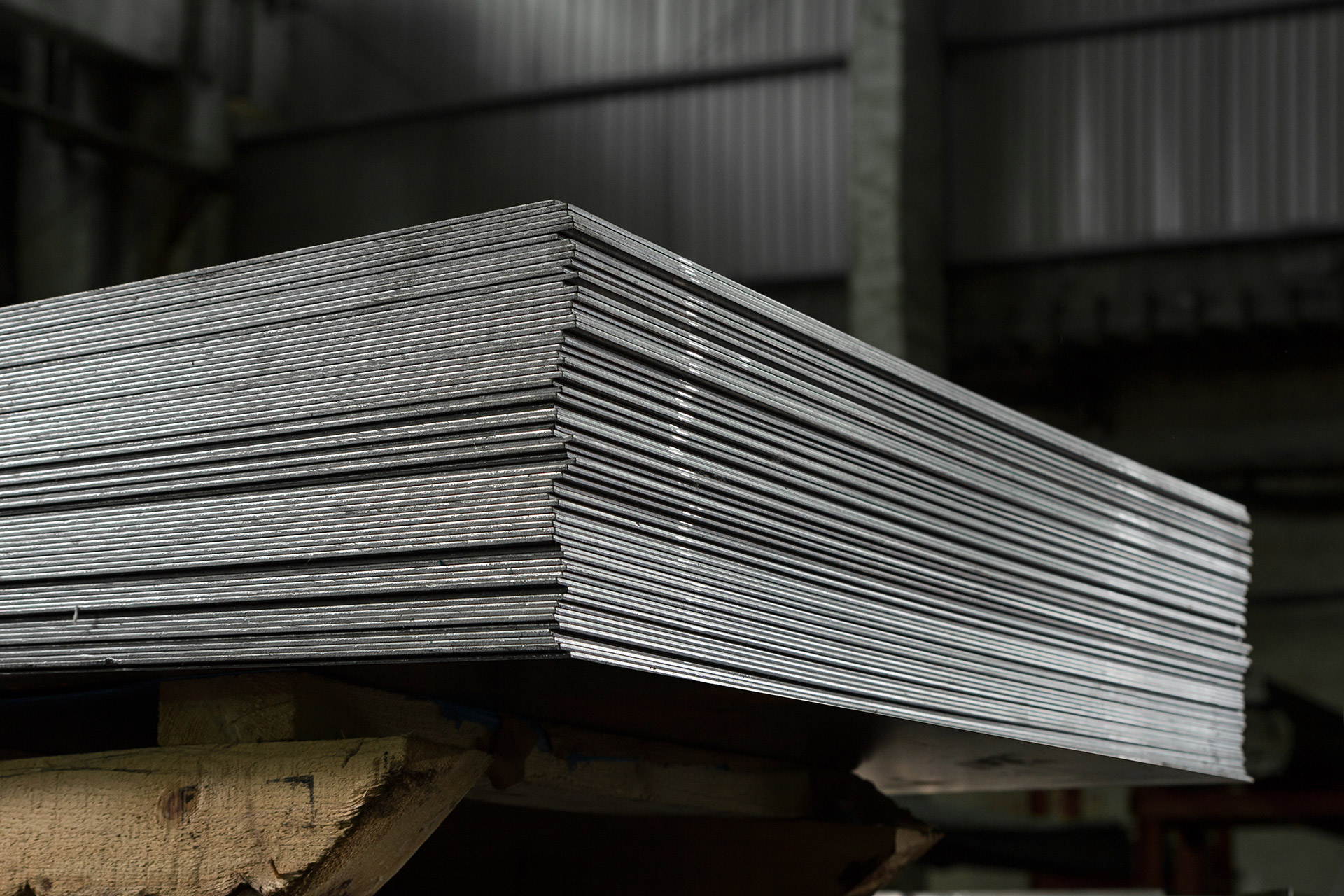
On Friday, the last rolling orders were fulfilled at thyssenkrupp Steel’s heavy plate mill in Duisburg-Hüttenheim. The rolling mill, the key unit of the plant, has been shut down, the company says in a press release.
The final closure of the entire business unit will be completed by September 30. Until that date, the remaining finished products will be delivered to customers.
thyssenkrupp Steel had decided to close down this business unit as part of its steel Strategy 20-30 since it did not see any economically viable future for it within the group. The hot strip cut-to-length line in Antwerp belonging to the heavy plate unit will not be affected by the closure. High-strength and wear-resistant cut-to-length plates for trucks, construction or agricultural machinery will therefore remain in the portfolio, the group notes
Despite its size and significance, thyssenkrupp’s plate unit over the years faced much criticism. Tk Steel’s works council, for example, repeatedly bemoaned that the group failed to provide enough funds for investment into renewal.
“It could have been turned into a cash cow,” a works council spokesman once told Kallanish. The lack of investment was denied by the press department, which pointed at upgrade measures that had indeed taken place in the past 10 years.
One former employee at the unit claims that the product planning system on the sales side was insufficient for a long time, dating back into the 1990s.
“People never received what they had ordered,” he says.
Christian Koehl Germany

Italian flats output falls again despite shortage
After ticking up in January, crude steel output in Italy increased again in February by 1.6% year-on-year to slightly over 2 million tonnes. Output also went up over the first two months of the year, by 1.2% y-o-y to 3.9 mt, according to data issued by local steelmakers association Federacciai.
However, flat production decreased again in February by 4.5% to 891,000t, and by 0.8% to 1.8mt over the period January-February, compared to the same period last year. Conversely, long production soared last month by 8.9% to 1.1 mt y-o-y and by 7.3% reaching 2.1mt in January-February, Federacciai says.
The significantly reduced output from the Taranto steelworks of ArcelorMittal Italia is contributing to the current Italian coils shortage situation, responsible for pushing coils prices up by €30/tonne ($35) on average every ten days over the past weeks (see Kallanish passim).
In full-year 2020, Italian crude steel production was 20.4mt, down 11.9% compared to 2019. Long output fell by 9.5% to 11.1mt. Flats production fell by 15.9% to 9.5mt, Federacciai says.
Natalia Capra France
French plate shortage continues, Italian prices hike
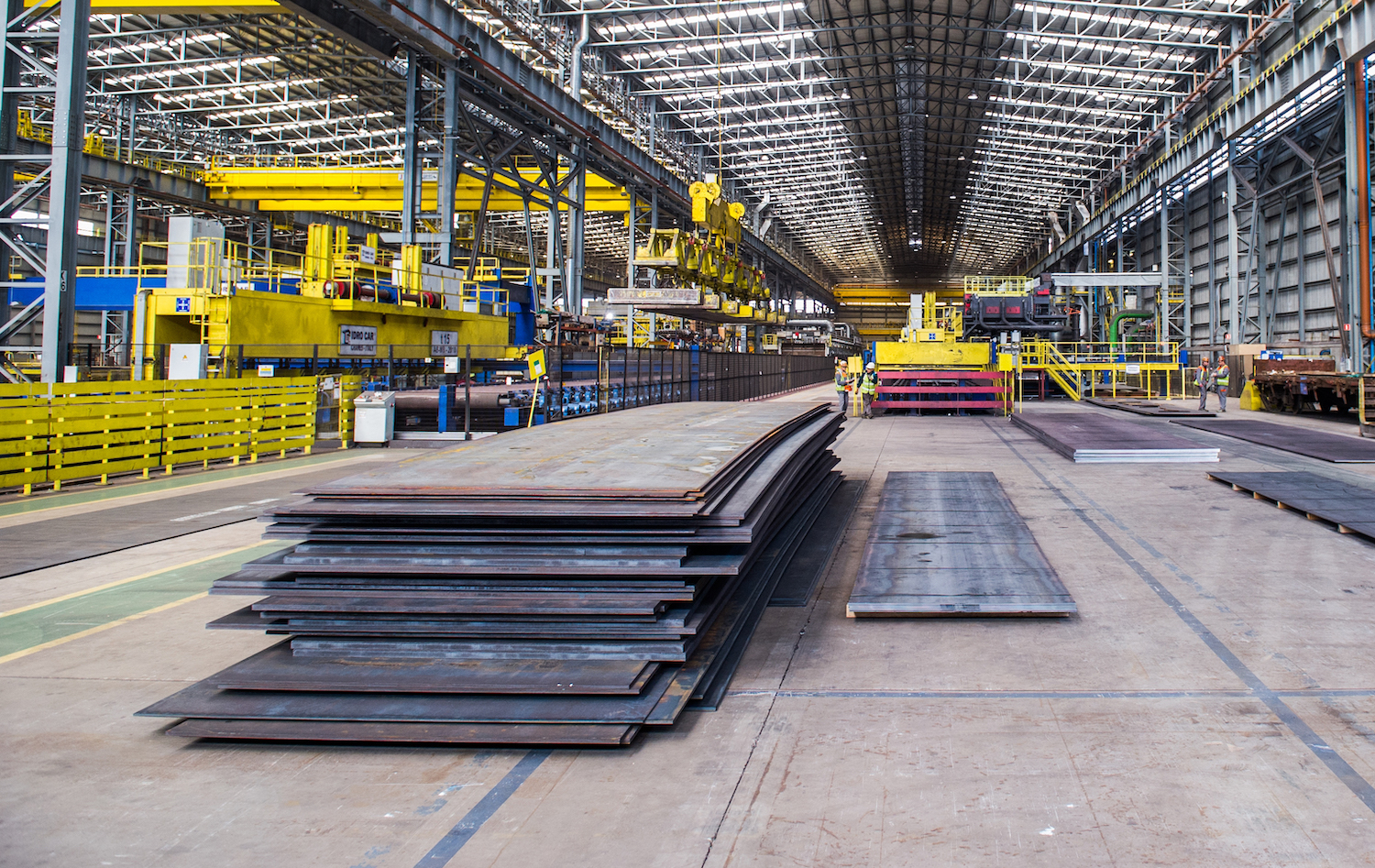
The short supply of French heavy plates is hampering sales and slowing the market. The current shortage is connected to coil’s limited availability and the priority given from the country’s largest steelmaker to coil-making from slabs, distribution sources tell Kallanish.
Prices for plates have been pushed up steadily over the past weeks in France and grade S275 is being sold by distributors at over €800-810/tonne ex-works ($951-963/t).
“I sell a large range of plates and I normally have a 10% lack of availability. This month the share of unavailable material has gone up to 80%,” one source comments.
Meanwhile, across the border, Italian S275 is now at €700/t ex-works on average in the latest contracts and €15/t more for the higher 355 grade. The gap in price between Italian and French material is mostly due to later Italian availability, which is offset by weak and fluctuating demand. Last month plate contracts for S275 were at €640-650-660/t ex-works on average and produces had short lead-time. In March, prices have been pushed up thanks to a surge in demand at the beginning of the month. This has suddenly lengthened lead-time, pushed back to May for some producers. Italian plate re-rollers are selling high volumes to France at French prices, sources say
Despite having been the sick product of the Italian steel industry, plates producers have compensated for the unreliable domestic demand with exports to Europe. One producer says that in 2020 plates sales have slightly grown compared to the previous year but domestic prices remain too low in light of the high values of imported slabs.
CIS slab was sold last week by a Ukrainian producer to Turkey at the expected level of $750/tonne cfr, netting back to $730/t fob Black Sea (see Kallanish 17 March).
Natalia Capra France