


Russia’s stainless output dips in February
Russia’s production of stainless steel decreased in January-February, show national statistical service Rosstat data monitored by Kallanish.
Output amounted to 32,000 tonnes, down by 4.7% on-year. In February alone Russian steelmakers produced 15,500t of stainless steel, less by 9.7% on-year and down 6.4% compared with January.
Russia’s production of stainless steel in 2020 increased by 1.3% on-year to 204,260t.
January output was more by 0.4% on-year to 16,500t, but down 2.2% on-month (see Kallanish passim).
“At the end of 2020, prices for stainless steel rolled products in the domestic market increased significantly,” national special steel association USSA said previously. “This was due to higher demand, reduced stocks, higher prices in the external market and the arrival of more expensive imported products to Russia.”
The share of foreign products in the consumption of stainless cold rolled flat products in Russia is 97% and that of hot rolled flats is about 75%. Higher dependence on foreign products forms the price trend in the domestic market, the association observed.
Svetoslav Abrossimov Bulgaria

E-commerce platform aims for supply chain transparency
The entire supply chain of raw materials has to be taken into account when producing “green steel”, says Sebastian Kreft of Metalshub, a Düsseldorf-based e-commerce trading platform for ferroallyos.
Speaking at the recent “Zukunft Stahl” conference organised by German business daily Handelsblatt, Kreft bemoaned the opacity of the global supply chain with respect to the reliability of sources. In his presentation he said that 90% of the world’s manganese production takes place in China, with manganese ore bought mostly from Africa. But “mills in Europe buy mostly via traders, and have no idea what emissions occurred in the production,” Kallanish heard him say at the event.
Another example is that South Africa, a typical mining country, operates on electricity mainly from coal power plants. Against that, Finland, with its water-based hydropower, accrues only a third of the emissions South Africa does. But European mills do not evaluate and honour that. However, “they will have to in view of a looming supply chain law”, he admonished.
Cloud-based digitalisation would lay the basis that provides audits of the suppliers, and all the documents needed for shipping companies, financing partners, and traders along the chain, Kreft said.
Christian Koehl Germany
CMC Poland foresees margin expansion after deliveries drop
CMC Poland anticipates healthy sales volumes driven by growing demand from construction and industrial end-use markets, while margins should grow sequentially following price hikes in the February quarter, says US parent CMC.
CMC Poland’s deliveries declined 7% on-year in the second fiscal quarter through February to 353,000 short tons. Merchant and other products shipments rose 17% to 275,000st, but rebar sales slumped 46% to 78,000st, Kallanish notes.
Demand from construction and industrial end markets remained healthy, but deliveries declined due to the high base effect, as the previous year’s quarter saw “unusually high volumes” being shipped, CMS says. The reduction in rebar shipments from a year ago reflects a shift in product mix to capitalise on market conditions, rather than any softening of market conditions, it adds.
Average sales price surged to $532/short ton versus $449/st a year earlier, but cost of ferrous scrap utilised also grew to $328/st from $251/st. This meant metal margin was $204/st versus $198/st a year earlier.
February-quarter net sales rose 12% on-year to $202.1 million, while adjusted Ebitda grew 20% to $16.1m. Profitability improved thanks to the expansion in margin over scrap, as well as the impact of selling lower-cost inventory amid rising steel prices.
In the six months through February CMC Poland’s shipments thus grew 4% on-year to 750,000st. Net sales grew 15% to $396.7m, with adjusted Ebitda up 23% to $30.6m.
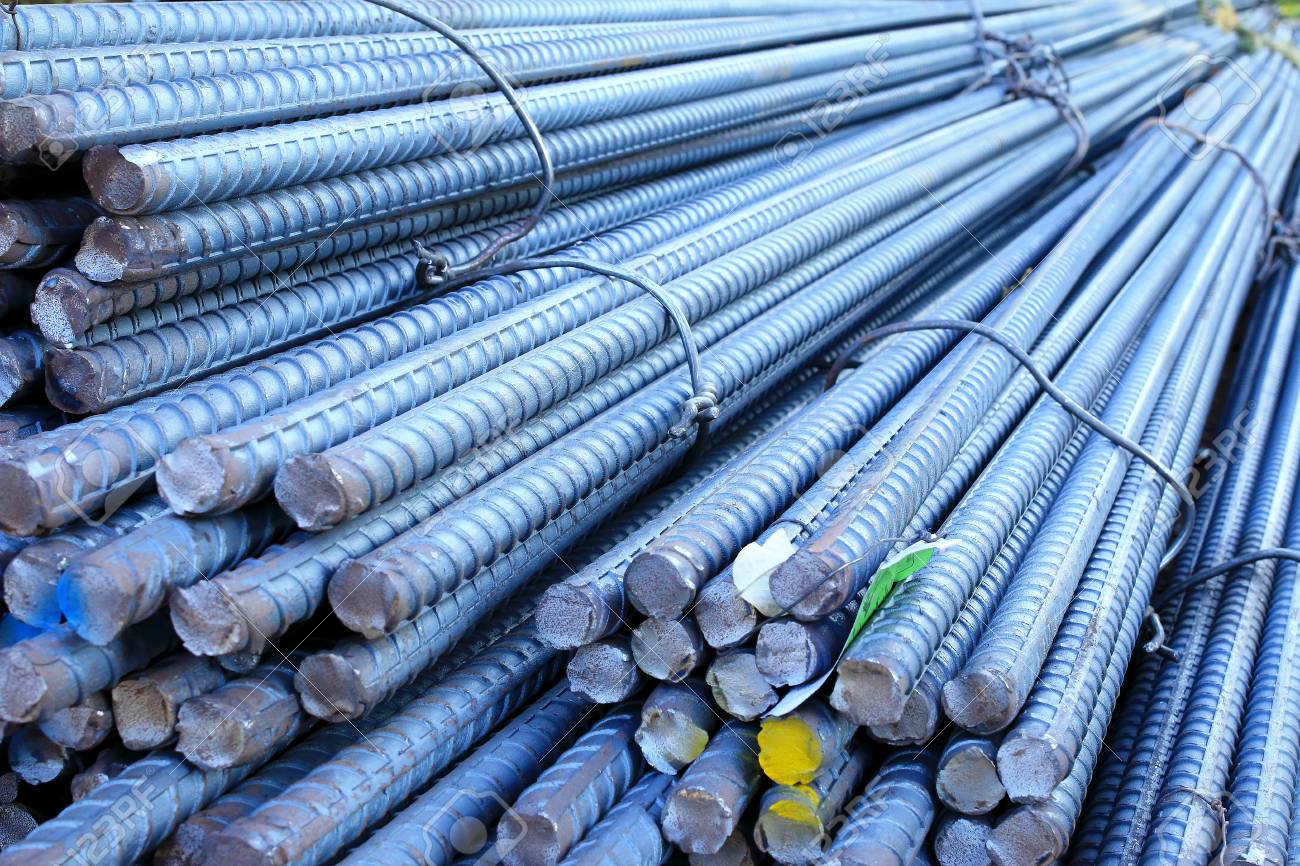
The Polish mill currently produces up to 1.3 million st/year of rebar, wire rod and merchant bar. The firm plans to add by August 200,000 st/year of long steel production capacity and absorb excess melting capacity.
Adam Smith Germany
Turkish long steel market subdued amid big currency, shares decline
The Turkish long steel market started the week subdued as Turkish lira and stock markets lost more than 10% value on March 22, following the dismissal of Central Bank governor with a presidential decree on March 20.
The Central Bank raised interest rates by 200 basis points to 19% on March 18, 100 basis points higher than market expectations, as Platts has reported.
This decision drew a reaction from Turkish President Recep Tayyip Erdogan, who objects to interest rate hikes. He dismissed the bank’s governor, Naci Agbal, and appointed Sahap Kavcioglu, a professor and former parliamentarian of Erdogan’s ruling AK party, as the new governor with the weekend decree.
Kavcioglu became the fourth central bank governor in the last five years. These changes are harming market stability expectations and causing sharp currency fluctuations, sources said.
Turkish lira was trading in a wide range of Lira 7.85-7.95/1 on March 22 afternoon, compared to 7.28-7.32 range seen on Friday, March 19.
The Turkish long steel market started the week silent in this sentiment, as market participants generally preferred to monitor the currency fluctuations before making new purchases.
The depreciation in Turkish lira is expected to pull up lira-denominated domestic rebar list prices notably in Turkey in the coming days, which could restrict end-users demand, although mills’ list prices declined on a dollar basis on March 22, amid lower scrap costs and slow demand.
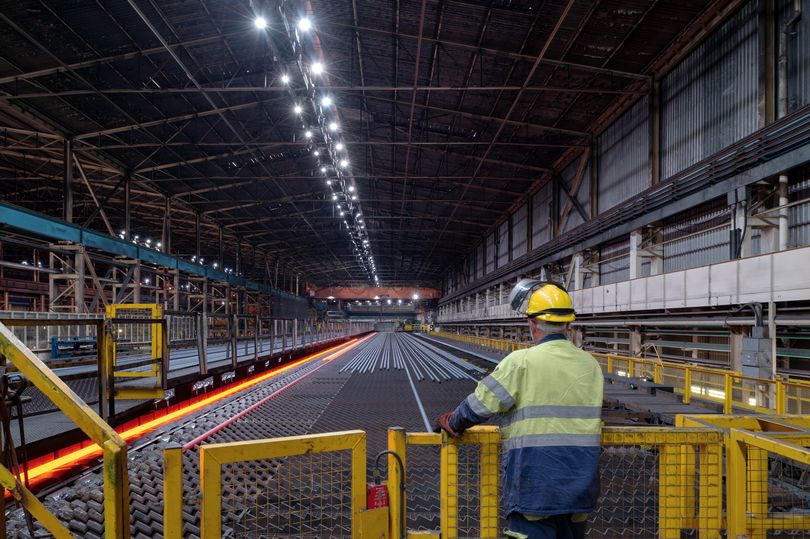
Major Turkish long steel producer Icdas pulled up its lira-denominated domestic rebar list prices by a notable Lira 280/mt in this sentiment. The company started offering 12-32 mm rebar at Lira 5,790/mt ex-works Biga on March 22, including 18% value-added tax (VAT), which equated to $621/mt ex-works, excluding VAT, around $20/mt lower on a dollar basis week on week. The exchange rate was Lira 7.90/$1.
Icdas’ offer prices for 12-32 mm rebar in the Istanbul region were around $10/mt higher at Lira 5,870/mt ($630/mt) ex-works.
The company’s 10 mm rebar list price was at Lira 5,910/mt ex-works and the 8 mm rebar price was at Lira 5,950/mt ex-works in the Istanbul region, including VAT March 22.
Bastug Metalurji, based in Osmaniye, southern Turkey, also opened its lira-denominated domestic rebar order book March 22. But instead of announcing its lira-based list prices, the company said their 12-32 mm domestic rebar list price will be calculated from the daily currency exchange rate, equating to $620/mt ex-works plus 8% value-added tax (VAT), the company informed Platts.
The company’s new list price was also reflecting a roughly $20/mt week on-week decline on lower scrap prices and slow demand.
Other Turkish steel producers could also join this move in the coming days, taking into account the currency fluctuations, demand conditions and scrap pricing, sources said.
— Cenk Can

German crude steel output drops 10% on year in February: WV Stahl
Weather disruptions took their toll on Germany’s crude steel production in February as output dropped 10% year on year, according to data published by German steel federation WV Stahl March 22.
The drop to 3.1 million mt in February put an end to the continuous production increase following ramp-up efforts by German mills once steel demand came back in mid-2020.
WV Stahl said the recovery of German steel production remains “volatile.”
The drop in crude steel production could be seen in blast furnace as well as electric arc furnace production. BF-based production decreased 9.9% year on year to 2.1 million mt, while EAF-based output fell 11.3% on year to 991,000 mt. Pig iron production fell 8.4% to 1.9 million mt.
Hot-rolled production fell 5.9% year on year to 2.8 million mt, the data showed.
German mills were severely hampered by adverse weather in February with steelmaker Salzgitter declaring force majeure in February. Severe disruptions caused rail tracks to block, truck deliveries on hazardous goods temporarily banned and waterways disrupted as well.
“It was two weeks of mills having to produce at minimum level because materials such as gases couldn’t get delivered,” a German market participant said.
“This led to worsening backlogs, and those were already long,” the source said, adding that normally mills would be able to make up for performance issues, but because the material shortage has continued to mount, this was no longer possible.
“I do expect a bounce-back in March however,” the source added.
Lead times across European mills were currently in August as mills try to meet demand. The market usually has an eight- to 12-week delivery time.
The persistent material shortage boosted Europe’s steel price rally, with the Platts hot-rolled-coil assessment for EXW Ruhr close to reaching its all-time high at Eur795/mt EXW Ruhr March 19, Eur5/mt below its record seen in June 2008.
— Laura Varriale

European HRC prices reach highs not seen since 2008 financial crisis
European hot-rolled steel coil prices were heard to be at their highest levels since the peak of the financial crisis in June 2008, when prices rallied to Eur800/mt ex-works Ruhr.
As the steel market grapples with unprecedented steel shortages, long lead times from mills, and tightening imports, prices exceeding Eur800/mt have been highly anticipated, sources told S&P Global Platts.
Customers have become more agreeable to accepting higher prices with few buying outlets available for material, with those caught between mill and buyer finding deals exceptionally hard to finalize because of limited credit options.
“I see real difficulty for customers, service centers, and distributors to finance deals,” a German distributor said, adding “you need a higher credit limit, and that’s the problem for many participants in the supply chain. Our insurance companies don’t give enough credit limit[s] for our use. We agree [to] the price and material, but we cannot do the contracts with end-users.”
Mills were also heard to still be holding back offers because of increasingly large backlogs and extended lead times, with second-quarter delivery times now extending into early Q4.
“Mills don’t take new orders — they are so delayed with their order book that they’re simply not able to offer,” the same German distributor said.
Meanwhile, in the Italian market, prices were also encroaching on Eur800/mt territory, with tradable values heard at Eur810/mt EXW Italy.
An Italian service center said he expected prices to move “little by little” to the new asking prices ArcelorMittal announced last week at Eur850/mt EXW.
— Amanda Flint