

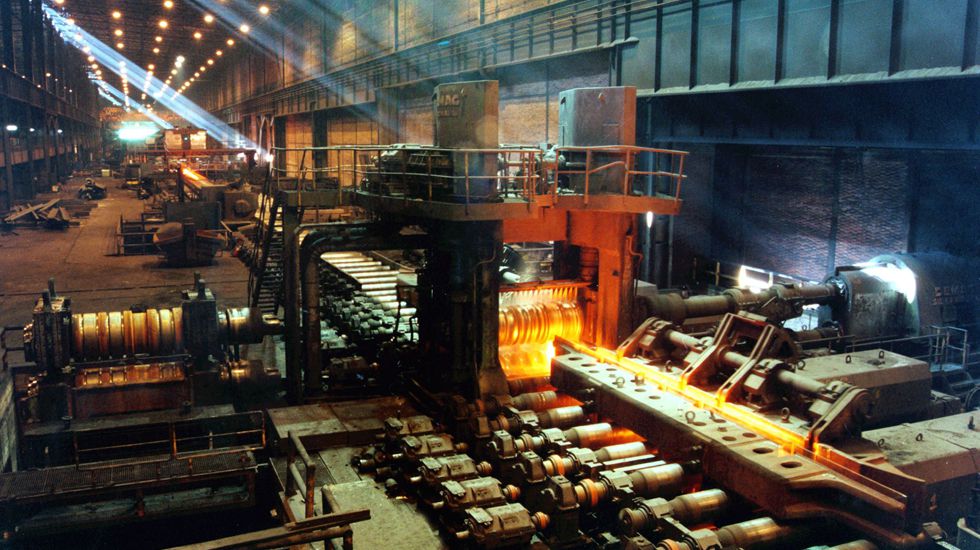
Global output growth slows as India, EU record dip
Crude steel production in the 64 countries reporting to the World Steel Association (worldsteel) rose 4.1% on-year in February to 150.17 million tonnes, slowing further from January growth, Kallanish notes.
Chinese production is estimated to have risen 11% to 83.05mt, but Indian and Japanese output fell 3% and 5.6% respectively to 9.15mt and 7.47mt. South Korean output rose 1.2% to 5.48mt and Vietnamese production is estimated to have grown 18% to 1.58mt.
EU27 production fell for the second consecutive month, by 7.1% to 11.87mt. German output was down 10.4% to 3.1mt but Italian production rose 1.6% to 2.07mt. French and Spanish output was down 8.8% and 0.1% respectively to 1.12mt and 1.1mt.
The UK saw output grow 7.5% to 619,000t.
Turkish production meanwhile rose 5.9% to 3.02mt.
US production slumped further, by 10.9% to 6.3mt, while Brazilian production grew again, by 3.8% to 2.85mt.
CIS production fell 1.5% to 8mt, with Russian output estimated down 1.3% to 5.73mt and Ukrainian output confirmed down 2% to 1.68mt.
Global crude steel production in January-February thus grew 6.6% on-year to 314.99mt.
Adam Smith Germany

Saarstahl, Dillinger look for new markets, innovation
Saarland steelmakers Saarstahl and Dillinger want to expand more in markets like wire rod and rebar for construction, but also other segments, said Saarstahl/Dillinger chief executive Karl-Ulrich Köhler.
“We must continue to evolve and look for future markets, where we can find our place,” Köhler said during their annual press conference monitored by Kallanish. “The turnaround will also require a strategic realignment, as we want to lead the market in our segments and close gaps in our product portfolio in order to occupy new market areas.”
Dillinger and Saarstahl are continuing to work strategically towards the goal of carbon-neutral steel production and are technologically ready to provide solutions for this, the enterprises claim. One solution is the implementation of hydrogen technology and electric arc furnaces.
“Until the political conditions for profitable production of carbon-neutral steel are in place, Dillinger and Saarstahl will be pursuing an intensified reduction strategy,” the companies said. “The efficiency limits of decarbonisation on the existing blast furnace route will meanwhile be further explored and improved.”
In addition to the coke gas injection system at the ROGESA blast furnaces, which were commissioned in August 2020, further projects are currently being advanced with the goal of carbon-neutral production. An IPCEI funding application was submitted in March for the H2SYNgas hydrogen project at the Dillingen site.
This project is developing technology at a ROGESA blast furnace to enable use of the company’s own process gases as well as considerable quantities of hydrogen for the blast furnace process. This will displace coke used in the blast furnace process and avoid carbon emissions.
Svetoslav Abrossimov Bulgaria
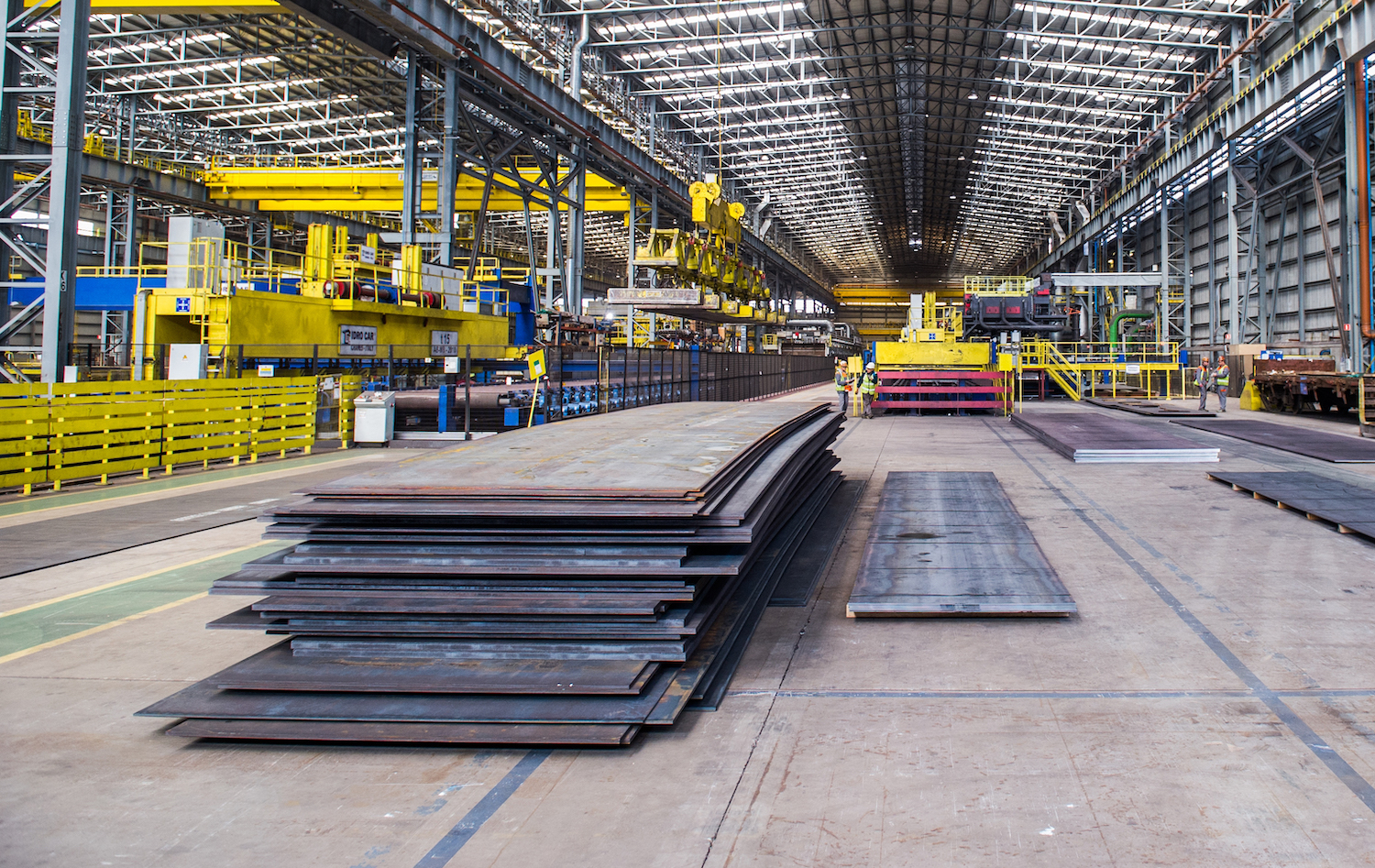
World crude steel production up 4.1% on year in February: worldsteel
World crude steel production in February grew 4.1% year on year to 150.2 million mt for the 64 countries reporting to the World Steel Association, the group said March 23.
Asian and Oceanic countries registered a production increase of 7.5% to 109.7 million mt, worldsteel said in a statement.
Last month, China — the largest global steel producer — saw an increase in output of 11% on the year to 83 million mt, while India — the second largest producer — registered a contraction of 3.1% to 9.1 million mt, as a surge in coronavirus cases hit the economy.
Production also fell in the 27 EU member countries, with the bloc currently experiencing its third wave of coronavirus infections.
Crude steel production dropped by 7.1% to 11.9 million mt. with Germany — the largest European steel producer — registering a decrease of 10% to 3.1 million mt, putting an end to the series of continuous production increases since mid-2020.
As the European steel market grapples with low supply, long lead times and tightening imports, the price of the main steel product, hot-rolled-coil, reached its highest levels since the peak of the financial crisis in June 2008.
In European countries outside the EU, including Bosnia-Herzegovina, Macedonia, Norway, Serbia, Turkey and the UK, production increased 5.2% to 3.9 million mt. Turkey once again triggered the increase, with a hike of 5.9% year on year to 3.0 million mt.
North American production dropped 8.9% to 8.8 million mt. As in the EU, US hot-rolled-coil also reached its highest point since 2008.
African production moved down 6.4% to 1.2 million mt.
Worldsteel includes output from Egypt, Libya and South Africa in its production tally, but not major producer Algeria.
South American production went up by 2.2% to 3.5 million mt, led by Brazil, the ninth-largest steel producer in the world, which saw production increase by 3.8% to 2.8 million mt.
CIS production went down by 1.5% to 8.0 million mt of crude steel with the fifth largest steel producing country, Russia, registering a preliminary decrease of 1.3% to 5.7 million mt.
— Annalisa Villa

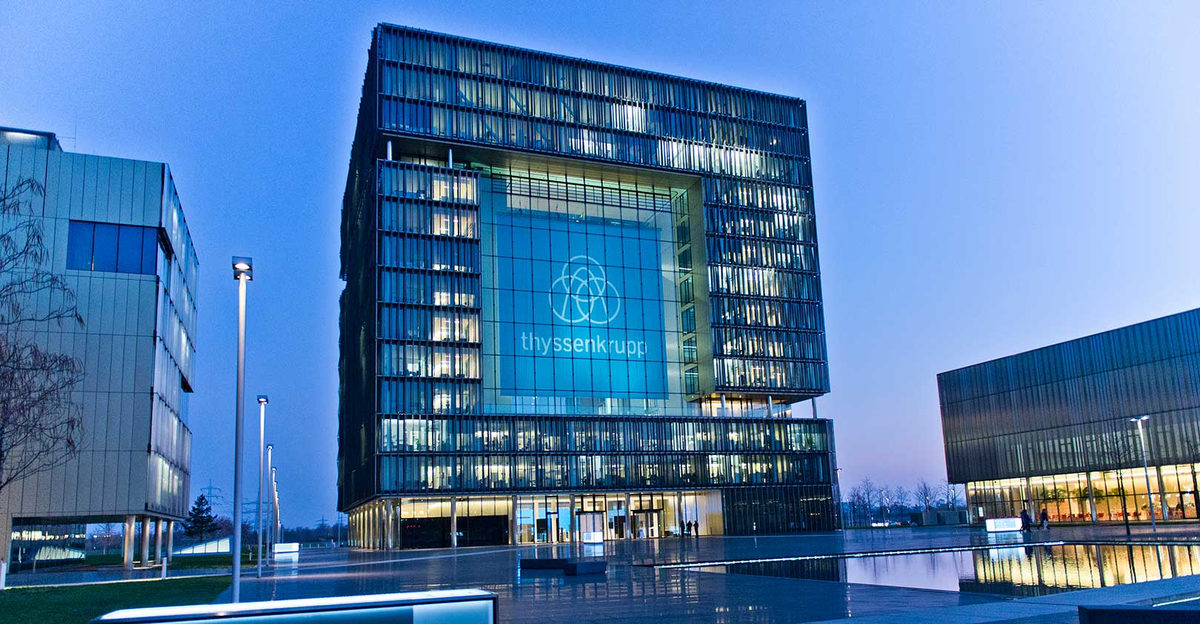
Thyssenkrupp Rasselstein launches tinplate recycling information platform
German tinplate maker thyssenkrupp Rasselstein has started addressing consumers to inform them about the recyclability and sustainability of tinplate.
“Unfortunately, consumer knowledge about the excellent recycling properties of tinplate is still too low,” says Carmen Tschage, market development head at tk Rasselstein.
A representative survey by YouGov commissioned by the company showed that consumers think the recycling rate of tinplate is only 55%, while the actual figure of 91% is significantly higher. “Just a few years ago, public interest in sustainability issues was very restrained. But that has changed since Greta Thunberg and ‘Fridays for Future’ appeared on the scene,” Tschage says.
The survey also showed that when faced with a choice between two identical products with identical prices, 62% of consumers would prefer tinplate packaging, and only 14% would opt for plastic packaging. Motivated by the media coverage of the plastic waste problem in the world’s oceans, 67% of all consumers stated that they want to buy less or no more products in plastic packaging.
The articles on the firm’s purpose-built “www.weissblech-kommt-weiter.de” website highlight the ability of tinplate to be recycled multiple times, the closed material cycle of steel, and explain how tinplate is produced, Kallanish learns from the company.
Christian Koehl Germany
Brazil flat steel distributors’ February shipments down 3.8% on year
Shipments by Brazilian independent flat steel distributors and service centers in February decreased 3.8% year on year to 313,300 mt, recent data from Inda, the national flat products distributors association, showed March 23. Shipments were up 9.8% on month.
Shipments of hot-rolled coils totaled 167,300 mt in February, up 16.1% on year, while zinc-coated flat steel sales volume totaled 69,800 mt, an increase of 1.8%.
Domestic purchases from mills in February were up 5.1% year on year to 321,900 mt, according to Inda. Month on month, domestic purchases fell 4.2%.
Flat product inventories in the Brazilian distribution network reached 696,500 mt at the end of February, up 1.4% from the end of January, while the inventory-turnover average closed February at 2.2 months of supply. Historical average levels are around three months.
““In this environment of steel price volatility, reduced inventories is a way to reduce costs,” said Inda President Carlos Loureiro.
Flat steel imports in February by distributors totaled 101,950 mt, up 57.3% year on year.
— Jose Guerra