

ArcelorMittal specifies costs of DRI conversion in Germany
The conversion of ArcelorMittal’s German integrated mills in Bremen and Eisenhüttenstadt to make direct reduced iron will result in steel production costs that are around 60% higher than they are today.
The company is therefore pleading “for the necessary [political] support and access to funding, to make the implementation of our plans happen,” Kallanish reads in a press release.
The group also put a figure to the technology conversion at the plants, which it says requires investments in the range of €1-1.5 billion ($1.17-176 billion). It also specifies that the conversion will involve the construction of electric arc furnaces at both sites, and an innovative DRI pilot plant in Eisenhüttenstadt.
This year, two blast furnaces – one in Bremen and one in Eisenhüttenstadt – will be converted to inject natural gas, reducing the use of coal in the iron ore reduction process (see Kallanish passim).
At a later stage, hydrogen is to be made available as part of the regional North German Clean Hydrogen Coastline network. The sponge iron produced at the Bremen DRI unit will initially supply the steelworks in Bremen and Eisenhüttenstadt, until the regional hydrogen cluster in East Brandenburg can also supply the Eisenhüttenstadt site with sufficient hydrogen.
In the transition phase, the additional hydrogen required in Eisenhüttenstadt will be generated from natural gas with the help of a pyrolysis plant that will be built on the steel plant’s premises.
Christian Koehl Germany

UK government awaits GFG refinancing, prepared for collapse
The UK government wants to see what new financing GFG Alliance can arrange before taking any action to support its UK plants. But officials are prepared to let Liberty Steel collapse into administration before stepping in, says UK business secretary Kwasi Kwarteng.
“It’s an important national asset and what we have to do is distinguish between Liberty Steel and the company that sits above it, which is called the Gupta Family Group,” Kwarteng told BBC radio on Tuesday. The government’s top priority is to make sure the group’s UK plants continue operating, he added.
When asked if the government wants to let Liberty collapse so that it separates from GFG, Kwarteng said officials are “looking at all plans at the moment”. But they want initially to see how GFG can refinance its debt, Kallanish notes.
The government rejected GFG’s request for a £170 million ($235m) emergency loan because of concerns over the group’s opacity. “We are custodians of taxpayers money and there were concerns over the very opaque structure of the GFG group, and we feel that if we gave the money there is no guarantee that money would stay in the UK and protect our British jobs,” Kwarteng commented.
The business secretary also said UK net zero legislation has “changed the dynamics in terms of government’s relationship to parts of the economy”, making government intervention in the private sector more acceptable in some circumstances.
The GMB union said it would seek an urgent meeting with Kwarteng, following the government’s rejection of GFG’s emergency loan request, to discuss a “Plan B” that would include public ownership of Liberty’s UK businesses.
Adam Smith Germany
ArcelorMittal to invest over Eur1 billion to speed up CO2 reduction
Steelmaker ArcelorMittal has announced a long-term project to propel its sites at Bremen and Eisenhüttenstadt in Germany towards sustainability, involving capital expenditure of between Eur1 billion and Eur 1.5 billion.
“With our concept for the transformation of the plants in Bremen and Eisenhüttenstadt, we are accelerating the implementation of carbon-neutral steel production,” ArcelorMittal Flachstahl Deutschland CEO Reiner Blaschek said in a statement. “These projects have the potential to have a significant impact in reducing CO2 emissions, in line with the European Union’s climate commitments. We are now asking for the necessary support and access to funding, to make the implementation of our plans happen.”
ArcelorMittal plans to build a direct reduction iron ore plant and electric arc furnace at Bremen and in Eisenhüttenstadt. As well as the need for funding, ArcelorMittal will also need to access the national hydrogen grid. Using green hydrogen, up to 3.5 million mt of steel could be produced by the two sites by 2030 with significantly lower CO2 emissions, by about 5 million mt of CO2/year and would result in production costs that are around 60% higher than they are now.
Overall, ArcelorMittal aims to reduce its CO2 emissions in Europe by 30% by 2030 and produce carbon-neutral steel by 2050.
The company has two blast furnaces at Bremen, with a combined annual capacity of 3.8 million mt. It has another blast furnace at Eisenhüttenstadt with an annual capacity of 1.7 million mt.
As a first step, one blast furnace at Bremen and one at Eisenhuttenstadt will be converted from coal to natural gas inection, which will already reduce emissions significantly.
A subsequent step will be to build the new DRI-EAF plants, with the largest one to be installed at Bremen.
The sponge iron produced at the Bremen DRI unit will initially also supply Eisenhüttenstadt.
Switching from natural gas to decarbonized hydrogen will depend on market developments, with Germany focusing on kick-starting a green hydrogen economy through domestic production of decarbonized hydrogen as well as imports.
In Bremen as in Hamburg, where ArcelorMittal already operates a DRI-EAF plant, hydrogen could be supplied from a regional initiative involving Germany’s five coastal states.
In Eisenhuettenstadt, east of Berlin on the Polish border, this could ultimately be provided by the East Brandenburg hydrogen cluster, although few details are known as yet.
In the meantime, a pyrolysis pilot plant is planned at Eisenhuettenstadt with the process using natural gas and resulting in only solid carbon as well as hydrogen. This relatively new process, also known as turquoise hydrogen, is also supported by Germany’s hydrogen strategy.
Germany in June 2020 published a hydrogen strategy with some Eur9 billion support for electrolyzers that can convert electricity into hydrogen, seen as key to achieving its 2030 climate targets.
In addition to capex for electrolyzers, the strategy also envisages support through so-called carbon contracts for difference for the steel sector.
In the long term, supply of sufficient amounts of hydrogen would require the facilities to be integrated into regional, national and European hydrogen networks with regulation and infrastructure details only slowly emerging.
In Germany, ArcelorMittal already has Europe’s sole DRI-EAF plant at its site in Hamburg, where the switch to using hydrogen instead of natural gas in the iron ore reduction process is being prepared.
— Annalisa Villa, Andreas Franke


Commission imposes anti-dumping duties on imports of aluminium extrusions from China
The Commission has published a regulation imposing definitive duties on imports of aluminium extrusions originating in the People’s Republic of China. The anti-dumping duties imposed range from 21.2% to 32.1%. This is another example of the EU’s commitment to ensure that EU industry can compete on a level playing field and to defend jobs – 40,000 across the Union in this €12 billion industry.
The Commission started the investigation on 14 February 2020 based on the complaint lodged by European Aluminium on behalf of producers representing over 50% of total EU production. The investigation found that unfair trade practices (dumping) by Chinese exporters caused significant damage to EU industry, and that measures to tackle such practices are necessary and in the interest of the EU. All parties concerned had full opportunities to defend their interests.
This sector suffers from many distortions caused by Chinese overcapacity and other State-induced practices, undermining fair competition and endangering EU companies and jobs. Given indications that certain operators are ready to circumvent the measures, the Commission will monitor this market closely and react swiftly to any attempts to avoid duties.
For more information
Regulation
Case AD664 – Aluminium extrusions
EU trade defence policy
Australia expects record iron ore exports
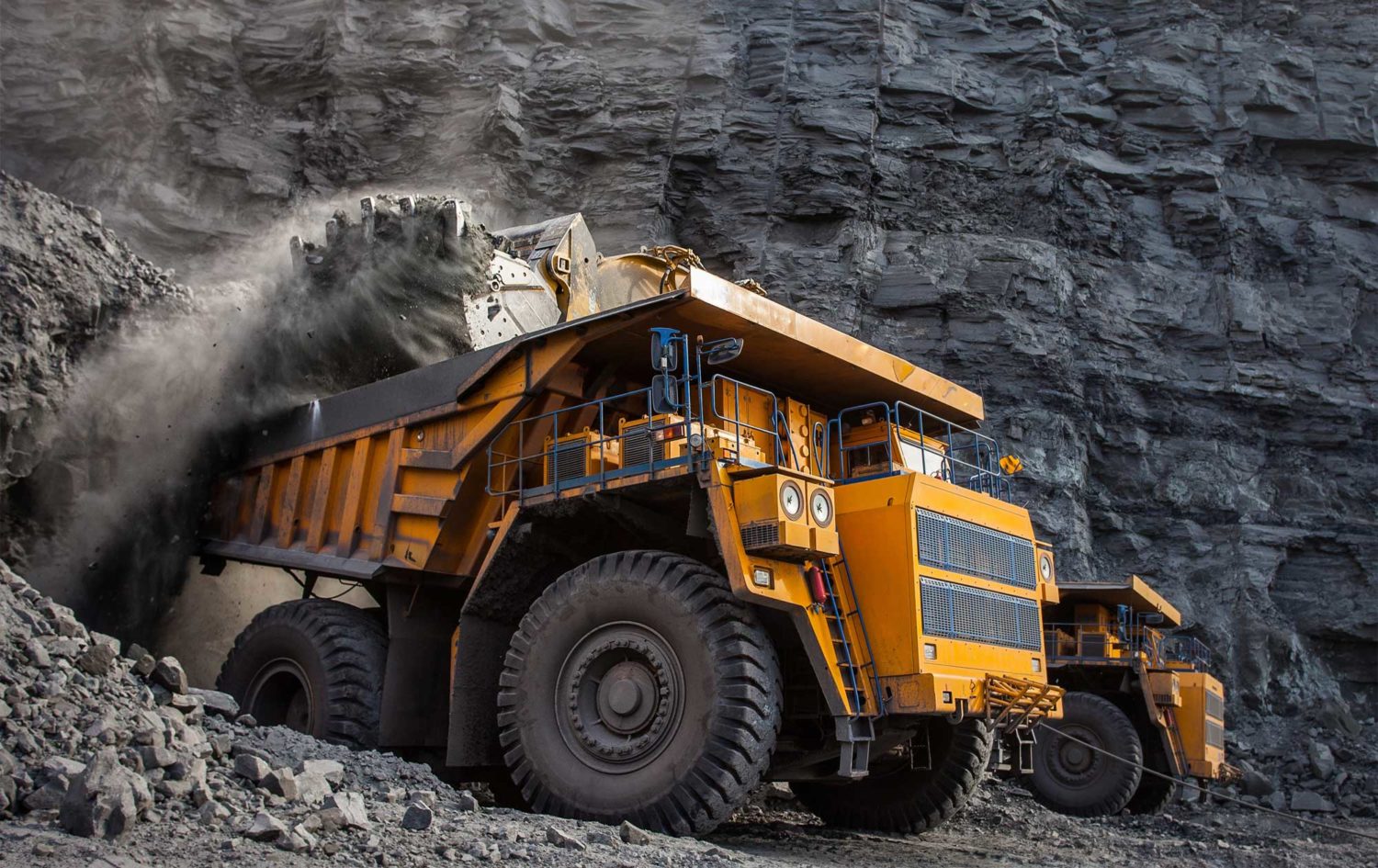
Australia expects its iron ore exports to hit a record high of AUD 136 billion ($104 billion) this financial year, supported by a global demand recovery after the long stagnation caused by Covid-19. This is according to the Resources and Energy Quarterly report released by the Department of Industry, Science, Energy and Resources.
Over the coming years, Australia’s iron ore exports are expected to earn around AUD 100 billion annually. But the expected earnings of AUD 136 billion this year should be a peak, Kallanish notes.
Australia also wants to retain its market share over Brazil, so will ensure its iron ore shipments rise from 900 million tonnes in 2020-2021 to 1.1 billion tonnes five years later. Prices are expected to keep above $100/tonne until late 2021, and finally reach $72/t by the end of 2026. In its previous report, authorities had expected prices to stay above $100/t only until the second half of this year.
The report also predicts global steel output could rise by 3% in 2021, and 2.8% in 2022.
China is advancing the development of overseas iron ore mines, such as in Guinea, and aims to reduce dependence on Australian iron ore. In 2019-2020, China purchased 87% of Australia’s iron ore exports.
By Kallanish Team