


German steel market expects more price rises on weak home supply: Platts survey
German steel market participants expect prices to rise further in April, following the latest round of hikes from market-leading mill ArcelorMittal in March as well as long domestic lead times and tight supply gripping the European market, data from the monthly steel sentiment survey by S&P Global Platts showed April 7.
In the survey, conducted among German producers, distributors, traders and end-buyers at the start of April, the index for steel price development stood at 92, indicating a notable expansion — an index of 50 indicates stability — from March when the index tallied 73.
It was difficult to ascertain workable HRC prices following the Easter holidays, with few offers in the market and more buying-interest geared towards imports. However, the outlook of those surveyed suggests Eur900/mt ex-works Ruhr is likely to be achieved.
“It actually looks like we will reach Eur900/mt for HRC. There is not too many offers from mills — you need to beg for material,” a German distributor said. “If import restrictions stay in the market, then there is no reason why the market should become weak.”
Just one month after their previous announcement of a price increase, ArcelorMittal initiated an additional round of offer hikes March 26, with offers at Eur900/mt ex-works Ruhr and Eur1050/mt EXW Ruhr for hot-dipped galvanized coils.
EU market looks toward imports
After a pause of several weeks, Indian producers were heard to be offering into the European market again, with domestic European distributors and buyers more open to foreign possibilities.
“I am always looking for imports, but the offers are very few. Only long lead times are available for shipment in July-August,” the same German distributor said.
However, with the Indian steel quota now exhausted and the slashed tax rebate on Chinese imports, a Benelux service center said buying foreign steel would be no easier than getting material domestically.
“Imports are getting expensive, besides the Indian quota is already completed; China will lower exports. Russia might be an option and further exotics like Thailand, Mexico, Egypt — maybe,” the service center source said. “Turkey is a big question mark as well.”
For price movement, most bullish among the groups were end buyers at an index of 100, whereas traders were at 89 and producers at 87.
Inventories declining faster than production
With German producers needing to ration stocks and slash allocations to contract holders, the sentiment survey showed participants expected further declines in inventories, with the index at 40, just slightly up from March at 39.
Producers and distributors tallied at 25, suggesting expectations of a drastic decreases in stock levels, while traders and end-buyers were mostly in agreement at 46 and 50, respectively, suggesting stable inventories.
Compared to a year ago when demand was poor, the chronic imbalance between supply and demand suggests the positive trend in EU steel prices is here to stay, according to a Europe-based mill source.
“[Prices] are showing that the industry needs a huge amount of steel, not like last year, when nobody needed steel,” the mill source said. “There is an appetite, it is encouraging, but the prices are not good [long-term] for the industry.”
With delays expected on additional capacity, the index for production stood at 50 indicating stability, slightly down from March at 52. Producers were at 75 — the most bullish on production levels — whereas traders were at 50 and end-buyers much lower at 25.
On the future of European production, a European steel service center source said it was unlikely capacity would come back in full force, so long as mills focused investment on greener steel production.
“In the past, steelmakers pushed on production, but now it’s changed in Europe and China,” the source said. “There is a new vision about pollution. Mills are preferring to maintain their margins because they need to cover the investment to do the necessary conversions towards greener production.”
— Amanda Flint

US steel fabricators call for end to 232 tariffs
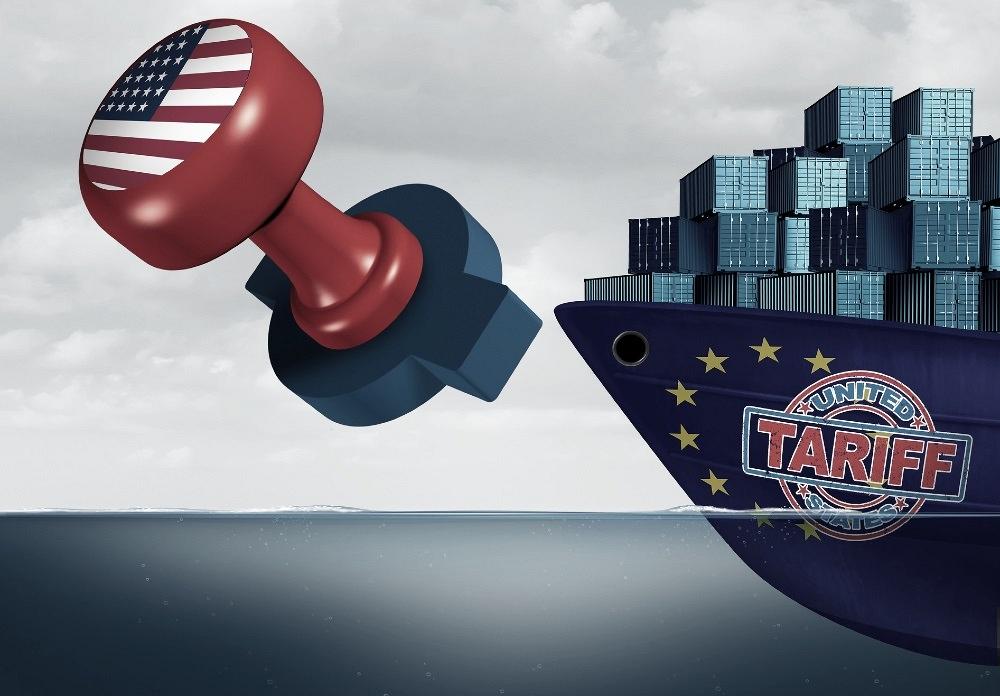
A leading publication for the metal forming and fabrication industries is calling for an end to former President Donald Trump’s Section 232 tariffs, Kallanish reports.
The Fabricator editor-in-chief Dan Davis argues in his latest column that primary metal producers have gotten their day in the sun. It’s time for the downstream folks to have theirs.
Historically high steel prices are anchoring the nascent manufacturing renaissance that could take place under President Joe Biden, Davis says.
“After a full year of pandemic living, the country’s citizens are ready to live, work, and spend their money, both saved and incoming stimulus funds,” Davis says. “Manufacturers need assistance to fully take advantage of the opportunities that await during what some are calling the new Roaring ’20s.”
Imports could provide a sort of pressure valve to the crushing steel prices they are currently experiencing, he says.
“Domestic manufacturers need relief for one of the major fixed costs for their businesses. They can’t reinvest in their companies and reward their workers if steel prices keep increasing,” Davis writes. “Industry observers suggest that these high prices won’t recede anytime soon as mill capacity goes offline at this most inopportune time and imported steel, now competitive even with the tariffs because of current high prices, can’t get to US shores quickly enough.
Ultimately, he argues, it comes down to the realisation that steel consuming industries represent a bigger chunk of the US economy than primary steel producers.
“The 6.8 million people that work for steel-consuming manufacturing companies in the US would appreciate the support. If three years of tariffs was good enough to protect the future of 140,000 in the US steel industry, officials in Washington, D.C., should be able to recognize what removal of the tariffs will do for the domestic manufacturing base,” Davis says.
Dan Hilliard USA


Hybrit prepares hydrogen storage facility
Hybrit, the SSAB, LKAB and Vattenfall joint venture aimed at developing fossil-free steelmaking, has started construction of a rock cavern storage facility for fossil-free hydrogen next to its pilot facility in Lulea, Sweden.
The facility is expected to be operational from 2022 until 2024 and is set to play a pivotal role in large-scale hydrogen production, LKAB tells Kallanish.
“Storage provides the opportunity to vary demand for electricity and stabilise the energy system by producing hydrogen when there’s a lot of electricity, for example in windy conditions, and to use stored hydrogen when the electricity system is under strain,” says Andreas Regnell, head of strategy at Vattenfall and chairman of the board at Hybrit.
Later in 2021, the Hybrit pilot facility is expected to start producing fossil-free sponge iron for the manufacture of fossil-free steel. “The initiative has the potential to reduce carbon dioxide emissions by 10% in Sweden and 7% in Finland. The steel industry today accounts for 7% of total global carbon dioxide emissions,” Hybrit explains.
Emanuele Norsa Italy
AMKR eyes Europe, Turkey pig iron export expansion
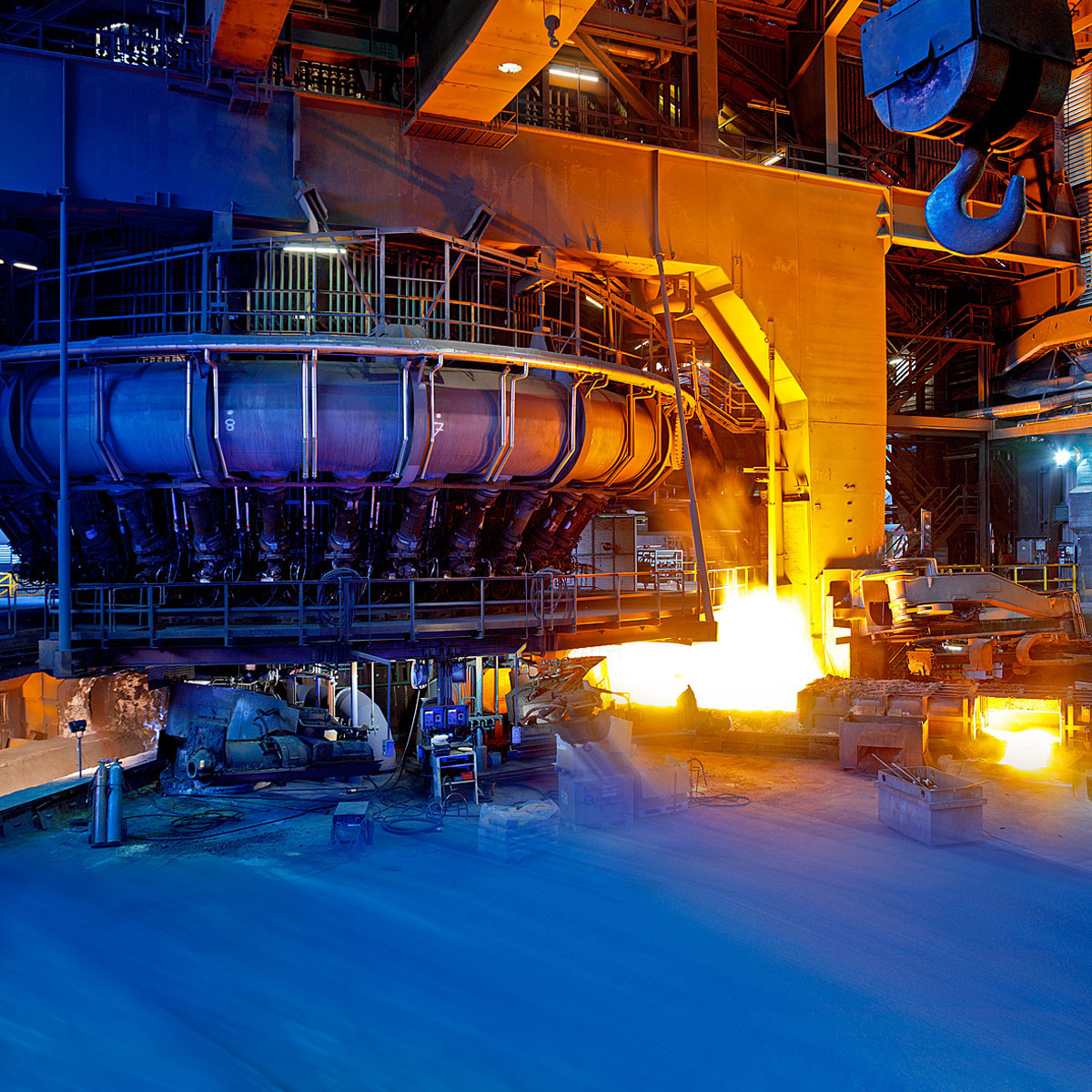
ArcelorMittal Kryvyi Rih (AMKR) is eyeing an expansion of pig iron supplies to buyers in Europe and Turkey, says chief executive Mauro Longobardo.
“After maximising volumes for own production, we do not exclude the expansion of supplies to these buyers, because these markets are the closest geographically,” he observes in an interview published on AMKR’s website. “In addition, we do not exclude deliveries to non-CIS markets, like North and South America, and Asia.”
According to Longobardo, the volumes of merchant pig iron will depend on the order book for finished products and semi-finished products, which in turn depends on steel demand.
The company’s investments during the next three years are expected to total around $600 million, Kallanish notes. They include the construction of an iron ore pellet plant, reconstruction of blast furnace No.9 and the upgrade of the exhaust gas treatment system in BOF shops. The plan is to complete the projects by the end of 2023.
Thereafter, the firm can consider further investments, aimed at increasing efficiency of steelmaking and rolling capacities, and the development of new products with high added value, Longobardo observes.
AMKR expects its own pellet production will lead to higher productivity. In 2024 it plans to operate with one pellet plant with a capacity of 5 million tonnes/year and one sintering plant of more or less the same capacity.
In 2021, the enterprise does not forecast any problems related to reliability of equipment. However, the international market situation is difficult to forecast, the ceo observes. “According to the current outlook, maybe we will see a stable year without drops and decreases like in 2020,” Longobardo notes. “But, considering last year’s experience, it is still possible that the situation might change drastically within weeks.”
Svetoslav Abrossimov Bulgaria

Italian HRC rally continues, market leader hikes again
Italian hot rolled coil producers are still not quoting this week as the market grapples with continued short supply. Some re-rollers are consequently understood being forced to reduce production this month. Domestic as well as imported prices for coil and coil derivatives keep skyrocketing, sources tell Kallanish.
The latest contracts for HRC are hovering at €880-900/tonne ($1,046-1,070) base ex-works. Some traders sold at port last week at €860/t. Today, this price is impossible to find for service centre material. HRC bought by re-rollers is slightly lower quality and therefore cheaper.
ArcelorMittal is meanwhile said to be increasing its prices again this week. HRC now starts for southern Europe at €920/t, while cold rolled coil is priced at €1,040/t base ex-works. The company is quoting €1,075/t for hot-dipped galvanised coil, sources say.
While demand significantly weakened last week as a result of the previous price increases implemented by ArcelorMittal, it is now resuming. However, the limited material availability is hampering producers’ ability to respond to requests.
Only one domestic HRC producer is seen quoting for June-July casting, while other producers are already offering for August-September. When producers resume quoting again next week, asking prices for domestic HRC are seen reaching €950/t base ex-works, Kallanish hears.
Natalia Capra France