

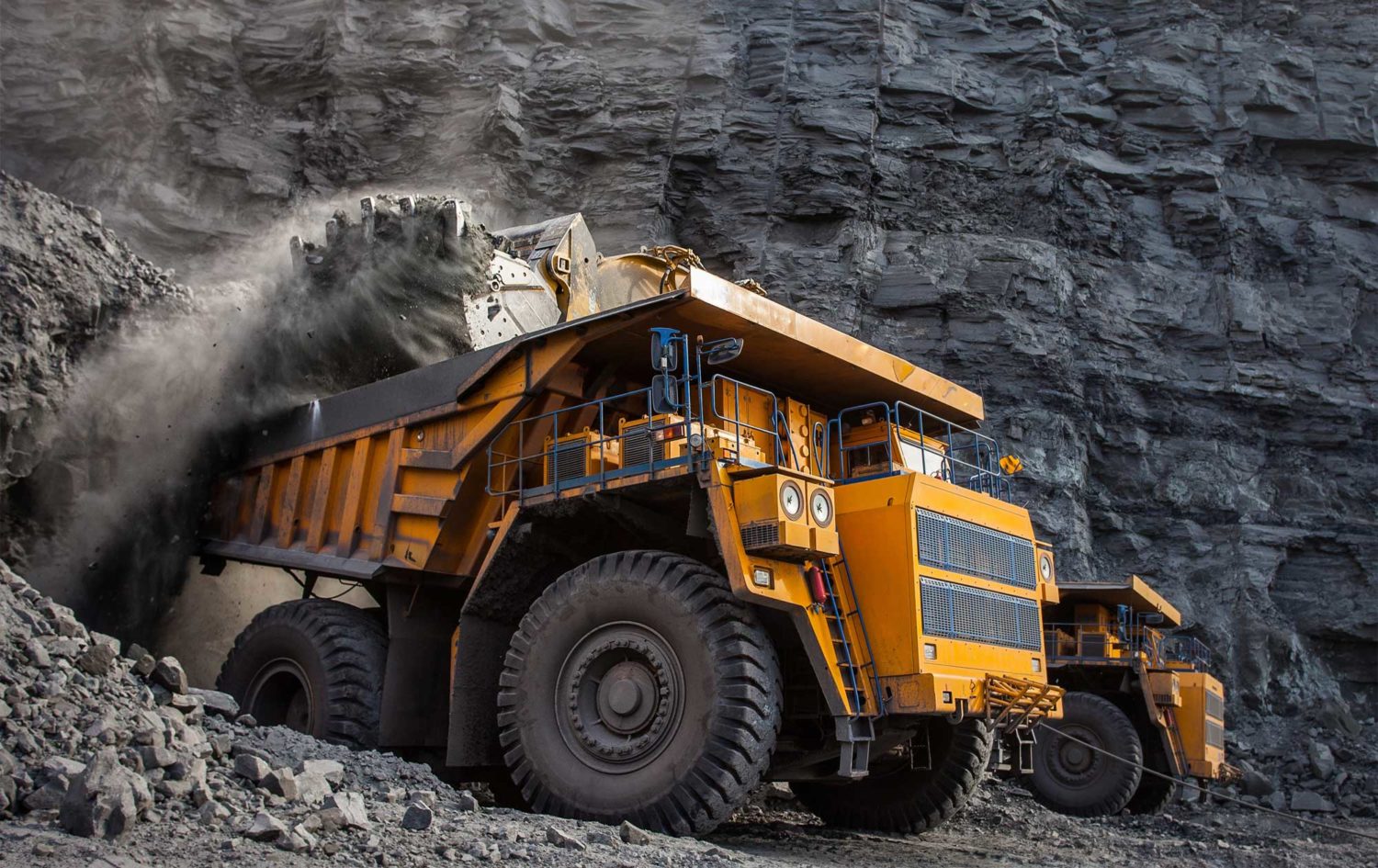
Iron ore jumps on speculation
Seaborne iron ore prices increased on Monday even as steel futures pulled back. Comments on inflation and the absence of a revision to export rebates created confusion in markets.
The Kallanish KORE 62% jumped $2.39/t to $172.48/dry metric tonne cfr Qingdao. The Kallanish KORE 65% Fe index broke through the $200/t barrier on Monday, gaining $2.81/t to $202.68/dmt cfr. The KORE 58% Fe index meanwhile increased $0.58/t to $154.92/dmt cfr.
On the Dalian Commodity Exchange September iron ore settled up CNY 11.5/t at CNY 990/t ($151.05/t), while on the Singapore Exchange May 62% Fe futures settled up $1.27/t at $166.65/t. The same contract for 65% Fe and 58% Fe futures settled up $1.50/t at $199.34/t, and up $2.19/t at $150.87/t respectively. In Tangshan, billet prices fell CNY 80/t, after falling CNY 70/t on Sunday, to CNY 4,390/t.
China’s long-awaited announcement on a change in stell export tax rebates again failed to materialise over the weekend. As the change would restrict exports, it would mean more pressure on Chinese steel production and has been seen as negative for iron ore.
Over the weekend, meanwhile, government departments noted that producer price inflation was being driven higher by commodity prices. If controlling inflation becomes a bigger priority than reducing steel output, then inflationary policies such as production restrictions could be less strongly enforced. This would support iron ore demand.
Market movements so far, however, have been entirely speculative this week. Until further policy announcements are made, markets could remain in a state of confusion.


European stainless coil lead times hit fourth quarter
European prices for stainless hot and cold rolled coil remain mostly stable compared to the end of last month at very high levels. However, lead times from all European mills are now stretching into the fourth quarter, sources tell Kallanish.
Stainless HRC for October-December delivery is now sold at €2,580-2,620/tonne ($3,072-3,120) delivered, depending on tonnage and month of delivery. CRC prices are pegged at €2,750/t delivered on average, also for Q4 delivery. No mills in Europe are quoting material for earlier than October casting, with one large European stainless steelmaker now quoting for Q1 2022 casting.
Business is said to be booming throughout the value chain as order books are full for producers, distributors and end-users. Lead times are also stretching for distributors, who are pushing up their flat products prices across their entire range as coil supply shortages remain the main issue, sources say.
Sources believe the situation of high flats values will continue this year. Rumours are spreading that the European Union will confirm its anti-dumping measures and impose safeguards on stainless CRC coming from India and Indonesia, Kallanish hears.
Natalia Capra France
Various products exhaust EU second-quarter safeguards within days
A number of EU safeguard quota allocations were rapidly exhausted during the first week of April, confirming the fears of buy-side sources in the bloc, Kallanish notes.
As expected, Indian-origin hot rolled coil allocations of slightly over 160,000 tonnes for the second quarter were all used up during the first days of becoming available. Importers of Indian HRC can now use the remaining almost 300,000t quota from the “other countries” allocation. However, sources note that most of this will be used rapidly as volumes previously ordered are on their way to European shores.
In the long products segment, quotas for Turkish-origin merchant bar and light sections have also been exhausted, as have quotas for Russian wire rod.
Meanwhile, quotas have also been exhausted for hollow sections from Turkey and Russia, indicating the strong demand for imports of this product. It is worth noting that the UK’s second-quarter safeguard quotas for Turkish hollow sections have also already been fully used.
Emanuele Norsa Italy
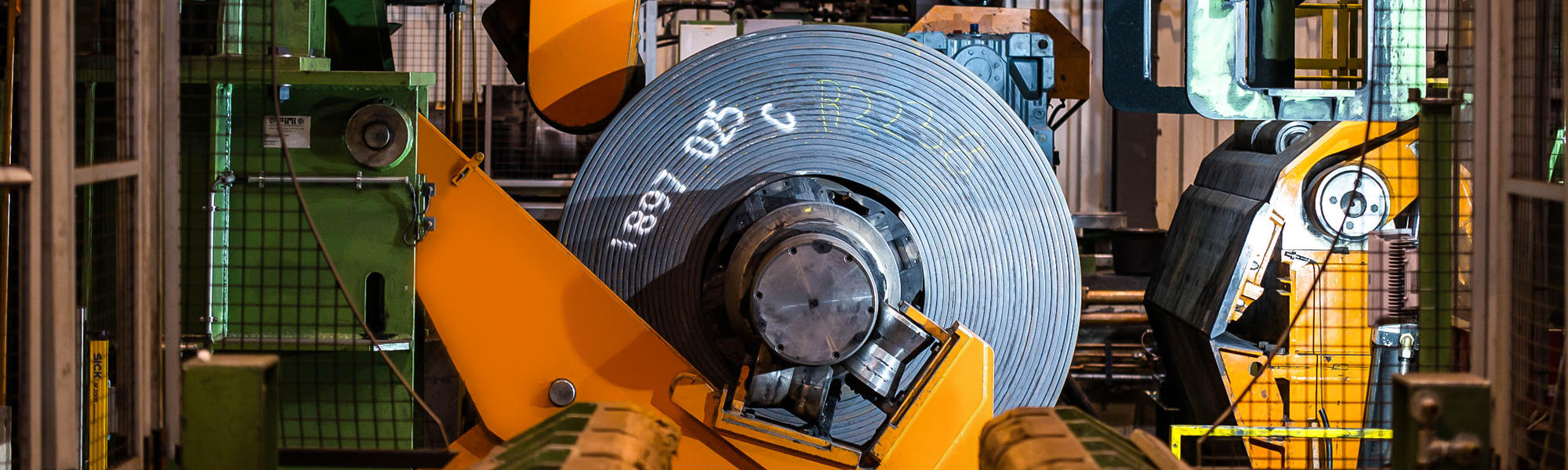
EU coil price downturn is certain, but distant
Northwest European buyers are adamant the current coil price high cannot last forever, although they cannot make out a turning point in the foreseeable future.
“Such phases don’t last, and what goes up will come down,” a manager at a stockholder group tells Kallanish, but also concedes that the corrective downturn is behind the visible horizon. “I hear different opinions every day. In January, I thought it will be over soon, but in fact it has become more dramatic,” he says of the prevailing confusion.
A buyer at a processing group is more precise in his outlook. “For the next two months I see zero indicators for a drop,” he comments. He cites many indicators for continued demand. In addition to China’s curbed exports and problems at European mills like Liberty, Ilva and Dunaferr, he notes that order activity at miners like Vale for heavy vehicles points at increasing activity upstream.
The jury is out on whether this means, as some market participants suggest, that one should accept prices surpassing €900/tonne ($1,072) for hot rolled coil, which could this week be tagged at €950 by mills. This is especially the case, those sources say, since delivery times now stretch late into the third quarter.
The stockholder’s manager issues a warning here: “Unless you have back-to-back agreements, I’d be very cautious. The bubble could burst in, say, October, when today’s orders arrive. So, you paid €900 today, and may have to sell at €700,” he says.
Price would matter less if supply arrived sooner, thereby reducing the current exposure to months of risk. “I can look three to five weeks ahead, but not that far,” he concludes.
Christian Koehl Germany

Spiralling costs hit European coil buyers’ liquidity
Many European coil buyers currently see no alternative to paying exorbitant prices to secure the material they need for their production. But that may not save their businesses from a liquidity crisis.
Most observers see a general willingness among consumers to pay high spot prices if they need to close material gaps in a short time. One tells Kallanish of a recent spot deal for a smaller tonnage of hot rolled coil at €1,040/tonne ($1,239), when major mills were still about to jump the hurdle of €900.
However, one German manager points out that smaller customers, especially, who normally can pay cash, will now have to ask their banks for a loan to finance a purchase. “And that will be a growing problem as we go ahead, because the banks might not be all that willing,” he says.
This is especially so now that a case of collapsed financing has happened high up in the coil industry, with Liberty Steel losing its main lender. This is pushing liquidity problems downstream, as Liberty “has started asking its customers to pay in advance for current orders”, a Dutch service centre manager reports.
Another German buyer notes that “many customers are still paying, but also many are suspending investments, like delaying the construction of a building, etc”. He tells of a case of a construction plan with a cost quote amounting to €1 million in December. Meanwhile, the construction company came back asking for €1.2 million because the material costs have gone up so rapidly.
The result was that the deal was suspended, due to a domino effect of costs. “Now, the calculation does not work anymore,” he says. And this also involves banks and the financing. “I’d need to cover more of the costs by a higher loan, for which the bank would then charge a higher interest rate,” he concludes.
Christian Koehl Germany
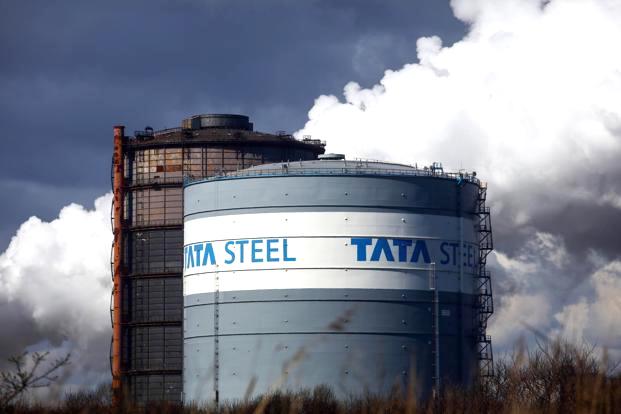
Tata Europe launches Eur12/mt carbon surcharge on all steel contracts
Tata Steel Europe will implement a fixed Eur12/mt carbon surcharge on all new steel contracts across Europe, with the plans introduced late last week, a company spokesman confirmed S&P Global Platts April 12.
The initiative is novel for the European steel market, as more market-leading mills strive toward efficient and greener means of steel production, with Tata Steel pledging to reduce its own carbon emissions by 40% by 2030, and to zero by 2050.
Tata Steel Europe’s emissions per tonne of crude steel tallied 1.98 in 2019-20, data from the company’s annual report showed, with the current cost of emission credits nearing the new Eur12/mt surcharge.
The fee will essentially pass on the cost of carbon emissions allowances to the buyer at a time when European HRC prices have reached record highs, exceeding Eur900/mt ex-works Ruhr, an increase of Eur450/mt since the previous year.
The decision comes at a time when sellers’ have had the upper hand, and buyers having little choice but to accept the additional charge due to the limited opportunities for buying material.
“The money [from the surcharge] will flow back into the steel industry to create a less polluted environment,” a European mill source said, adding, “the pushback is always there from customers, but they have a choice – you buy steel or you don’t buy steel. We are in a sellers’ market, because of limited availability, people are willing to buy it.”
The spokesman said the increasing shortages and rising prices of emission rights suggests there is a need for steel producers to adjust to the growing costs in production.
“In order to ensure a sustainable EU and UK-based steel industry for the future, we need to pass these costs on,” he told Platts.
Other European steel producers are expected to adopt similar surcharges, with discussions ongoing among mills.
“This is something the market is looking into. Emissions allowances are increasing – and the cost to produce is more for hot-dipped galvanized steel,” a second European mill source said. “We’d like to introduce this surcharge. I thought ArcelorMittal would start this, I did not expect this from Tata Steel Europe, which is a much smaller player.”
— Amanda Flint

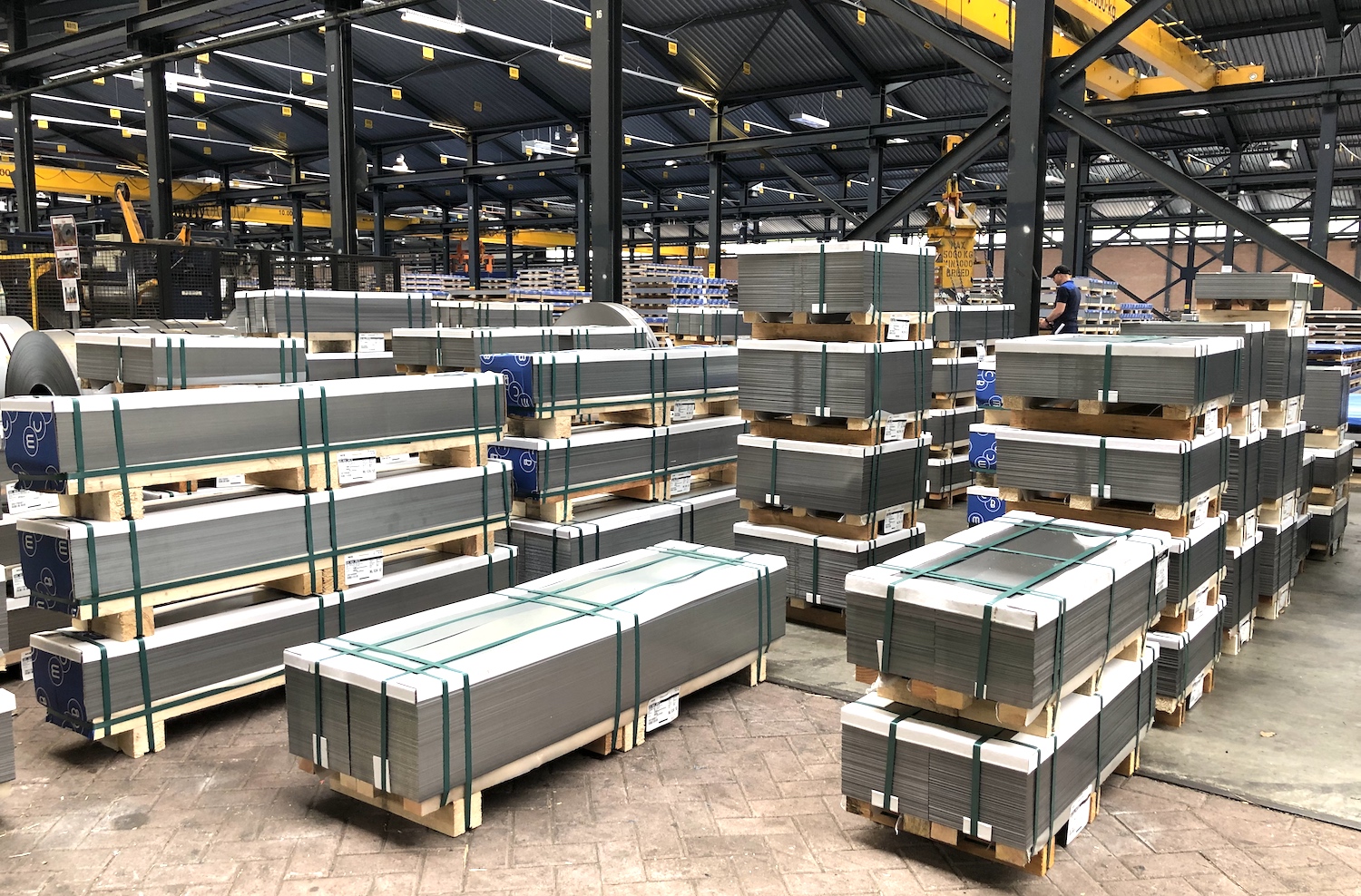
Beycelik Gestamp to build a new mill to make auto chassis products
One of Turkey’s biggest automotive components producers, Bursa-based Beycelik Gestamp, will build a new mill at the Automotive Procurement Industry Organized Industrial Zone (TOSB), in Kocaeli, western Turkey, to produce chassis products to the automotive sector, according to a company statement to the local media during the signing ceremony of the project over the weekend.
“Our new mill investment worth Eur50 million will provide 750 new jobs,” said CEO Baran Celik at the ceremony, adding that they will begin to produce chassis products as of 2022.
The Beycelik Gestamp Sheet Forming and Welding Plant operates in a closed area of 60,000 square meters in Bursa and has two plants in Kocaeli, western Turkey.
Spanish automotive components producer Gestamp Automocion acquired a 50% stake in Bursa-based Beycelik in 2007. Beycelik Gestamp then acquired the majority share of a Romanian automotive component supplier in 2017.
Beycelik Gestamp is supplying automotive sheet components to major domestic and global auto producers.
— Cenk Can