

Russel, Marubeni consolidate Canadian energy tubular businesses
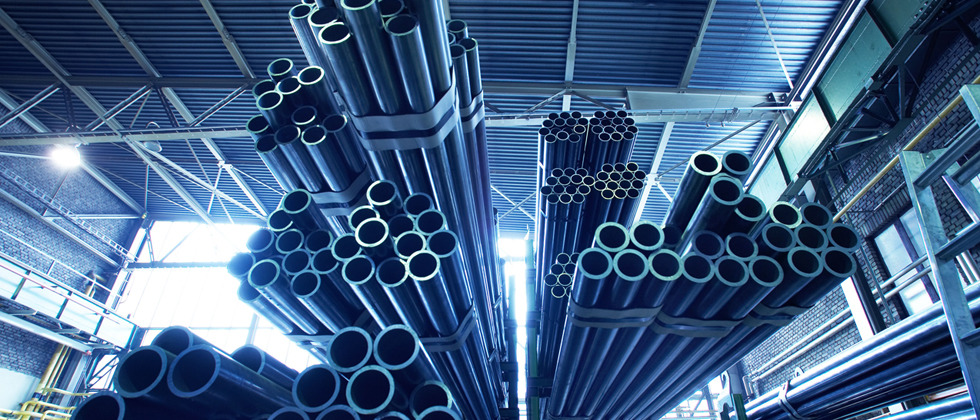
North American service centre chain Russel Metals and Marubeni-Itochu Tubulars America plan to merge their Canadian energy tubulars businesses, Kallanish learns from a company statement.
Triumph Tubular & Supply and Hallmark Tubulars – the Canadian energy tube businesses of Russel and Marubeni, respectively – will be merged into a new joint venture dubbed TriMark Tubulars.
Russel notes that the energy tubulars market has changed markedly in past years “…as a result of a challenging energy market as well as the disintermediation of distributors by certain direct-to-market manufacturers,” the company says. “As a result, this combination will create a business that has the necessary economies of scale, including a diverse product offering and business platform to efficiently and effectively serve its customers.”
While not directly named, the statement seems to be a reference to Tenaris’ Rig Direct program, which effectively sidesteps distribution in favour of selling directly to end-users.
Russel’s asset contribution to the 50:50 joint venture will be about $111 million. For that, it will receive $79m in cash, $32m in shares, and the aforementioned 50% interest.
“Over the past nine months, we have been strategically focused on both rationalising the operations and reducing the capital deployed in our OCTG/line pipe businesses,” says Russel ceo John Reid. “This transaction provides an opportunity to substantially repatriate capital for deployment in other value enhancing opportunities, but also retain an ongoing interest and participate in the future success of the combined business.”
Dan Hilliard USA


Prices could retreat this year: Schneider
Once steel prices retreat from their current upward trend, the drop for flat products in Europe could amount to between €150 and €270/tonne ($180-323), potentially even €300, according to a German steel consultant.
The steeper drop would bring coil prices back in line to a more realistic spread between raw materials costs and sale prices, as it has been on average over a long-term observation. However, such a drop is unlikely, and the correction should be closer to the lower value, says Andreas Schneider of Stahlmarkt Consult. He believes in any case that prices will keep inching up for a while longer, and not come down before the second half of 2021, he said at the “Digibrunch” webinar organised by e-commerce platform Xom.
Iron ore prices saw a huge surge until the end of last year and have not moved much since, while steel product prices have continued their rigorous surge, decoupled from raw materials prices.
Schneider also observes that order intake at mills peaked in the fourth quarter of 2020, but since then there has been no further leap or boom. “This tells us that there are shortages on the supply side, and that prices are overheated,” Kallanish heard him say at the webinar on Thursday.
For long products, the drop potential is smaller, at between €50 and €100/t, and mostly linked to scrap prices, “and the problem here is that scrap prices themselves are hard to grasp”, Schneider commented. He believes that over the following years scrap prices will gain strength in principle. As main reasons he cites the trend for decarbonisation and EAF-based steelmaking, as well as scrap resource nationalism. In the near term though, Schneider expects further oscillation of scrap prices this year.
Christian Koehl Germany