

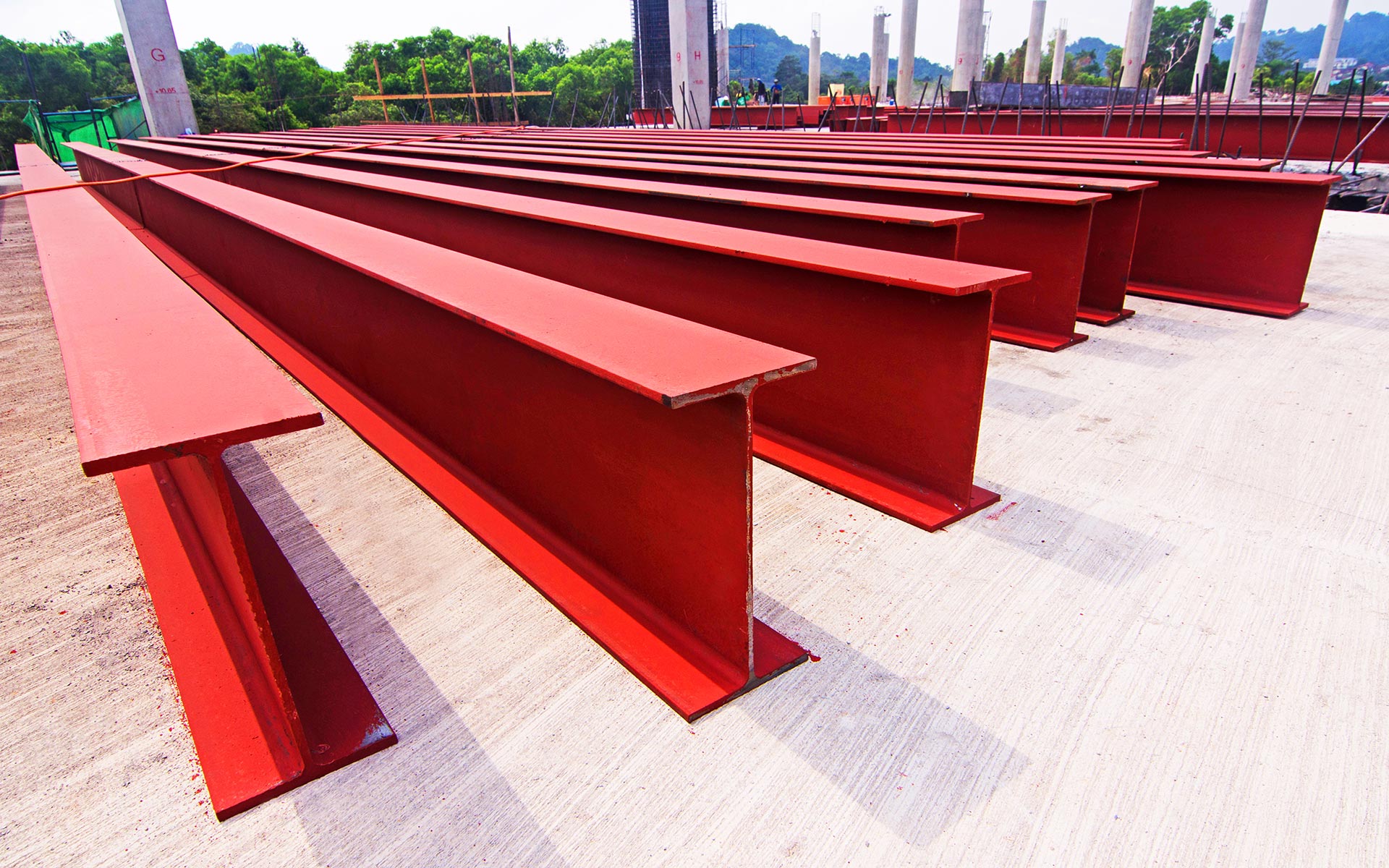
EU steel sections prices climb amid positive market sentiment
European domestic steel sections prices increased over the week to April 21, as market sources reported higher workable levels amid positive market sentiment.
S&P Global Platts’ European medium sections price (category 1, S235 JR) was assessed at Eur735/mt delivered April 21, up Eur12.50/mt on week.
One distributor source in Benelux reported a deal for 2,000 mt at Eur730/mt delivered Benelux booked the week ended April 18, as the market showed strong demand. He told Platts that the economy is good while the measures to prevent coronavirus are also in place, which is improving the overall sentiment.
The source also noted that lower than 1,000 mt tonnage deals will probably be Eur10/mt higher, up to around Eur740/mt delivered Benelux.
Another distributor source told Platts that mills are expecting scrap prices to inch up further in the near term amid strong order books, driving prices higher for medium sections.
“It is very strange that the international scrap is under pressure, but here European mills are anticipating higher prices for the month of May. And they have good order books. Lead times are up to June,” he told Platts.
Platts assessed Turkish imports of premium heavy melting scrap 1/2 (80:20) April 21 at $427.50/mt CFR, up $7.50/mt day on day.
In Northern Europe, Platts’ April assessment for Northern European domestic shredded scrap was Eur357.50-362.50/mt delivered, down month on month from Eur365-370/mt delivered in March.
In addition, the source said the ongoing export rebate situation in China is providing a good opportunity for Turkish and European mills to sell at higher prices in the export market than in the domestic market.
— Rabia Arif, Staff

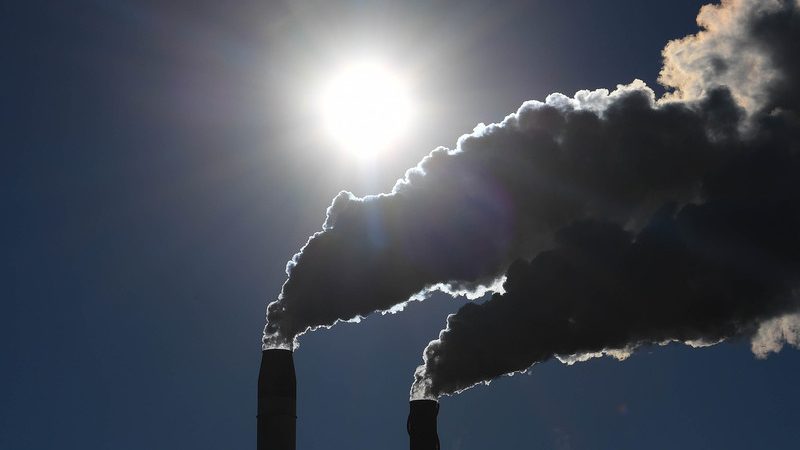
US Steel aims for carbon neutrality by 2050
US Steel plans to reach carbon neutrality by 2050, Kallanish learns from a company release.
The company will “…leverage its growing fleet of electric arc furnaces coupled with other technologies such as direct reduced iron, carbon-free energy sources, and carbon capture, sequestration, and utilisation,” the release states.
“Climate change is a global crisis that requires a global response. Today, by announcing our net-zero goal, US Steel is committing to doing our part to support the UN Paris Agreement on climate change to achieve global carbon neutrality by 2050,” says ceo David Burritt. “With our 120-year history of innovating to solve any challenge, US Steel intends to be a part of the climate solution.”
Recent company milestones in the net-zero direction include launching a new sustainable steel line – verdeX – and becoming the first North American-based steel mill to join ResponsibleSteel.
US Steel is also now the owner of Big River’s LEED-certified mill in Arkansas. It had previously announced its intention to cut its greenhouse gas emissions by 20% by 2030.
“Climate change is the challenge of this generation and doing our part is a core component of our ‘Best for All’ strategy for profitable growth,” Burritt adds. “We believe that we have a path forward that allows us to profitably produce sustainable steels well into the future, and we know that when businesses, governments and people work together to improve our shared destiny, transformative innovations can follow.”
Dan Hilliard USA

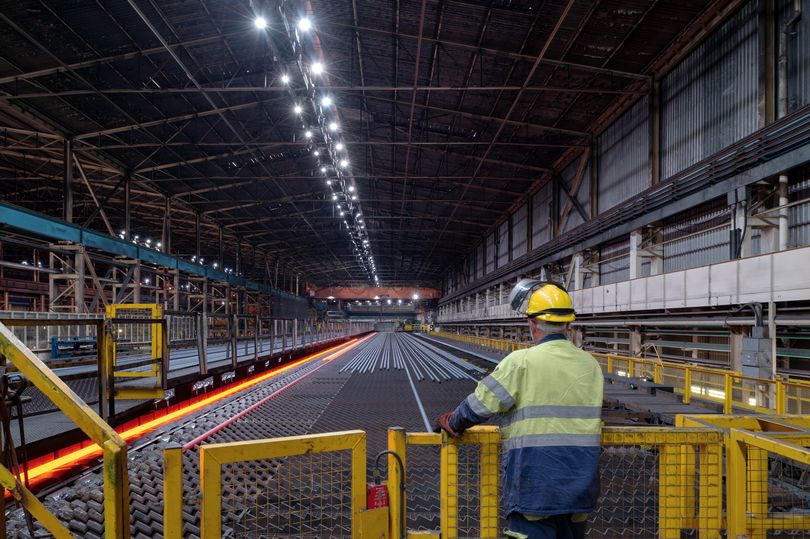
EU funds could guarantee Liberty France continuity: unions
European commissioner for internal markets Thierry Breton has reassured union representatives over the possibility of a collapse of Liberty Steel in France. In case Liberty’s Ascoval and Hayange mills go into administration, he said in a recent meeting, funds from the EU recovery plan could be used to guarantee continued activity and employment, Kallanish learns from union members.
Fears for Hayange and Ascoval have been prompted by the default in France of three Liberty downstream engineering businesses, which are part of the Alvance Aluminium unit. The aluminium and iron foundries at Poitou and the wheels manufacturing plant at Chateauroux went into administration last week.
A source close to the matter says unions sent a letter this week to French finance minister Bruno le Maire urging the government find a solution. If funds are injected to save Ascoval and Hayange, the government should find a way to shield its financial help from Liberty as the money must remain in France.
The source says that €18 million ($21m) of state-guaranteed loans granted to support the three iron and aluminium plants have disappeared within the large debt that Liberty owes to Greensill Capital. Last month the French government provided Liberty’s Ascoval and Hayange plants with a €20m loan to go towards paying wages and procuring feedstock (see Kallanish 22 March). Both mills currently have full order books and are working at full capacity to satisfy orders from national railway company SNCF.
Among other solutions in case of Liberty’s collapse, unions are proposing temporary nationalisation that will allow time to find a buyer.
A spokesperson for Liberty parent GFG Alliance declined to comment on Ascoval and Hayange.
An Alvance Aluminium spokesperson says the company “took the difficult decision [last week] to apply to have its three downstream engineering businesses in France placed into voluntary administration … All three businesses have faced structural changes in their markets which have been compounded by Covid-19 and a reduction in working capital support available from GFG Alliance following the collapse of Greensill Capital.”
“This decision does not affect or include Alvance’s other sites – Alvance Aluminium Dunkerque in northern France, Alvance Aluminium Duffel in Belgium or Alvance British Aluminium in Lochaber, Scotland – all of which are operating normally, benefitting from strong market positions and are cashflow positive,” the spokesperson adds.
Natalia Capra France
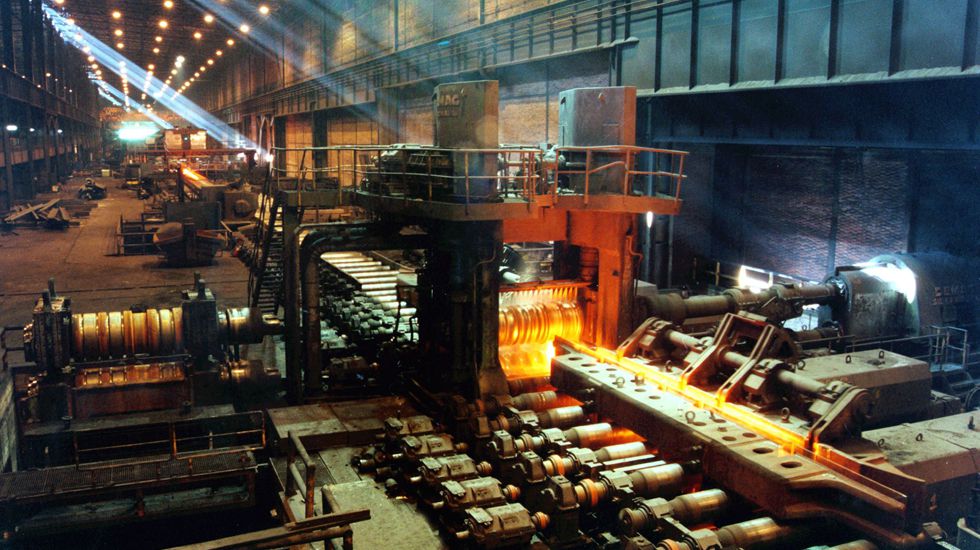
Supply gap, high steelmaking margins to continue: EUROMETAL
The steel supply shortage in the European domestic market is set to continue at least for the remainder of the current year, EUROMETAL explains in a presentation. The association also calculates that margins for steelmakers are now at record levels.
EUROMETAL says European domestic supply has since 2019 been below real consumption levels. In 2020 real consumption reached 141 million tonnes, 10mt above market supply. This year the shortage of local supply is expected to remain, with real consumption expected to be some 3mt above domestic supply.
Imports have nevertheless also continued declining since 2018 when safeguard measures were introduced. EUROMETAL estimates that in 2020 the share of EU market supply taken by imports fell below 20%, from the 22.5% calculated in 2018, Kallanish notes.
“Since mid-2020, the EU steel market is a perfect sellers’ market where supply gaps, low stock levels and extended mill lead times have triggered soaring steel prices, rising by 125% between July 20 and April 21,” EUROMETAL comments. The association also notes margins for steelmakers are at record levels.
For hot rolled coil, for example, margins over raw materials in Q1, at over €260/tonne, largely surpassed the median levels of the last ten years. In recent weeks, margins have soared further to well above €350/t compared to a median level of some €230/t during the last ten years.
Emanuele Norsa Italy

Steel futures climb again on more restrictions
Chinese rebar and hot rolled coil futures have kept rising as expectations of production cuts were strengthened by new restrictions starting from Thursday in Fengrun, Tangshan, as well as restrictions in Handan, Kallanish notes
On 21 April on the Shanghai Futures Exchange, October 2021 rebar futures closed CNY 23/tonne higher than Tuesday at CNY 5,188/t ($798/t), and the same contract for HRC closed up CNY 55/t at CNY 5,484/t.
A total of 522,000 tonnes of steel products is expected to be reduced due to the latest restrictions in Fengrun (see separate article). Half of the vehicle transport capacity for the steel industry has already been banned in the region.
Handan City in Hebei province also announced its plan to limit production from 21 April to 30 June. Designated inspectors will be placed in steel and coking companies to supervise the implementation of restriction measures. The specific reduction ratio will be released according to the rating of local enterprises, and may be adjusted due to changes in air quality. The ratios were not yet available by Wednesday evening.
By Kallanish Team

Stainless coil lead times reach December, mill exits
Lead times for European stainless hot rolled and cold rolled coil are extending to the end of the year for most European mills. Only one producer is still selling for September but, having stopped sales this week, it is not quoting at the moment, market participants tell Kallanish.
Stainless tubes are also rising by €100/t this month and will increase a further €100/t in May, a re-roller confirms. Stainless tubes are following the coil increases but there is more availability compared to flat products.
Stocks of flat products at distributors across Europe are lower than in March as they are shipping more than they are receiving from mills. Margins are high throughout the entire value chain, but material availability remains low as mills, service centres and re-rollers in Europe are reporting delivery delays.
Given the short supply for all stainless products, sources believe that safeguard measures will be lifted. But this will not release the current tension in the European market as all countries are reporting a situation of strong demand and short supply, Kallanish hears.
European mills are quoting stainless HRC and CRC for November and December delivery. HRC contracts are pegged at €2,570-2,620/t delivered and €2,720-2,750/t for CRC, sources suggest.
Natalia Capra France

German plantmaker SMS becomes sole owner of Paul Wurth
German plant manufacturer SMS has become the sole owner of Luxembourg-based engineering company Paul Wurth, a move that would expand research and development for decarbonization of the steel industry, SMS said April 21.
SMS acquired the remaining 40.8% shares from the Luxembourg state and state-owned banking organizations for the takeover. The acquisition value was not disclosed. SMS partially acquired Paul Wurth in 2012.
The companies will be working together on R&D focusing on technologies for reducing CO2-emissions in existing steel mills, hydrogen-based and CO2-free direct reduction of iron ore as well as Power-To-X technologies for producing synthetic fuels and downstream products.
As part of the transaction, a partnership was also agreed with the University of Luxembourg to strengthen scientific research and development of hydrogen technologies at the Luxembourg site.
“In the coming decades, decarbonizing technologies will replace the traditional blast furnaces and coking plants in integrated steel plants,” said Edwin Eichler, chairman of SMS. “Therefore, the energy balance at the steel plant will have to be reconsidered and reorganized.”
SMS said late last year that despite the long-term decline in plant manufacturing, the company’s service and digitalization unit has seen more stabilization and is expected to grow as companies move towards automation, while the move toward green steelmaking has opened up new opportunities.
— Laura Varriale
European HDG prices move higher; buyers look for Far East imports
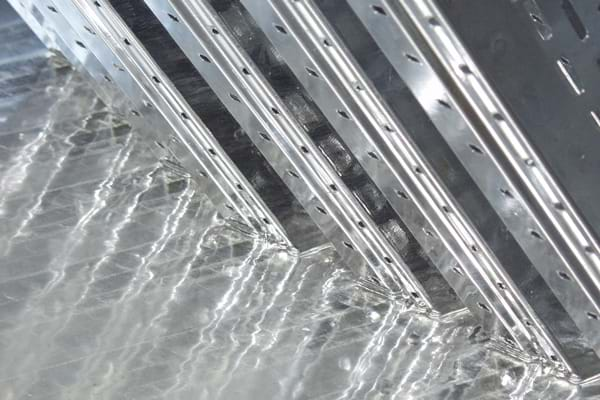
European hot-dipped galvanized prices were heard higher in the market following steep increases announced by Arcelor Mittal last week, and amid stringent supply restraints weighing on buyers, who were unable to locate material in the domestic market, sources told S&P Global Platts.
Demand was heard to be healthy — primarily from automotive and white goods industries — but also for commodity products, though it was difficult to finalize transactions due to ongoing supply issues.
“Every day we receive 20 [HDG] requests from people, but I decided to not give material — but in this moment they are asking me because they don’t find it from their main channels,” an Italy-based service center source said, with HDG lead times heard for August.
The same source noted an HDG deal for Eur1,095/mt ex-works Italy, with tradable values in Northern Europe as high as Eur1,100/mt ex-works Ruhr.
Meanwhile, import prices for HDG were heard at Eur1,200/mt CIF Italy Ports ex-Far East for shipping at the end of August and arrival in October, and into CIF Antwerp at Eur1,170/mt ex-Vietnam.
Due to the short domestic supply, a Benelux buyer source said they were combining west European material with imports from Vietnam, India and Taiwan available for delivery in Q3.
Service centers were said to have just two months of visibility and offering ex-stock where possible, an Italian mill source said, with some new stock heard to be available after the delivery of delayed material from mills.
— Amanda Flint

Supply chain cooperation must tackle ‘fictitious’ coil prices
As coil prices rise ever higher above justifiable levels, buyers along the value chain should stand together to prepare for all scenarios, a German steel consultant advises.
“In order to secure steel volumes, I need to pay extreme amounts of money but cannot know if I can keep passing down the high prices further on,” says Andreas Schneider of Stahlmarkt Consult. “It is therefore crucial that I involve my customers in my calculations early on.” On the difficulty of obtaining steel, he observes that “several months ago you contacted five suppliers for a query, and now you need twenty”.
A manager at a German cold-roller calls the current pricing outright “fictitious”. “Prices are quoted but you cannot place orders for them for a certain date; they are a theoretic value that’s being pushed up,” he tells Kallanish. The latest such price calls reported from the leading EU mill bring prices for hot rolled coil up to €980/tonne ($1,165), and for cold-rolled and galvanized coil to over €1,100/t.
“The pricing mechanism is very strange nowadays,” he finds. “We take the spot price as an indicator for half-year negotiations, but they don’t help much, fictitious as they are.” For urgent orders to fill production gaps, buyers may pay twice that in individual cases, he observes.
He expresses some understanding for mills’ ambition to catch what they can. “After all, they have come out of a deeply red year,” he comments. “Maybe they kept output deliberately low after demand came back, to drive up the price. But now it has developed a self-driven momentum they don’t control anymore.”
Christian Koehl Germany