

UK must act urgently to address critical materials access
The UK urgently needs to develop policy responses to the critical materials challenge post-Brexit, according to a report by the University of Birmingham.
Britain’s exit from the European Union brings both challenges and opportunities to different industries, and the critical materials sector is no different, Kallanish learns. Researchers, investors and industry experts believe the government needs to create a single body responsible for developing a strategy on technology-critical metals, enabling effective inter-departmental collaboration at government level.
This entity should then be in close contact with the EU, because “the UK has part of the supply chain, and the EU the other part,” explains Allan Walton, professor of Critical and Magnetic Materials at the School of Metallurgy and Materials and co-director of the Birmingham Centre for Strategic Elements and Critical Materials.
Yet, the UK government should also seek opportunities to diversify its access to primary resources through resource diplomacy, which could be part of any new trade negotiations. Countries like Australia, Japan, the US, India and Greenland are a few countries the British should be aiming to work with, according to member of parliament Alexander Stafford.
Actively attracting and supporting large-scale strategic private investments for supply chain development should also be part of the government’s goals. The University of Birmingham report notes the UK could become an international refining centre for specific technology-critical metals by 2025.
The report lists a total of 12 recommendations to secure these metals and materials of the future. With limited natural resources, the country needs to act quickly to ensure access to these crucial resources if it’s serious about building an electric vehicle supply chain. A national strategy is the first step to be taken, experts argue.
The government should also foment research in areas such as refining, separation, sensing, automated sorting and re-processing of critical metals, the report says. Efficient processing routes for selected materials to reduce the environmental burden of production, reduce waste and improve performance could give the UK a competitive advantage in terms of cost, it adds.
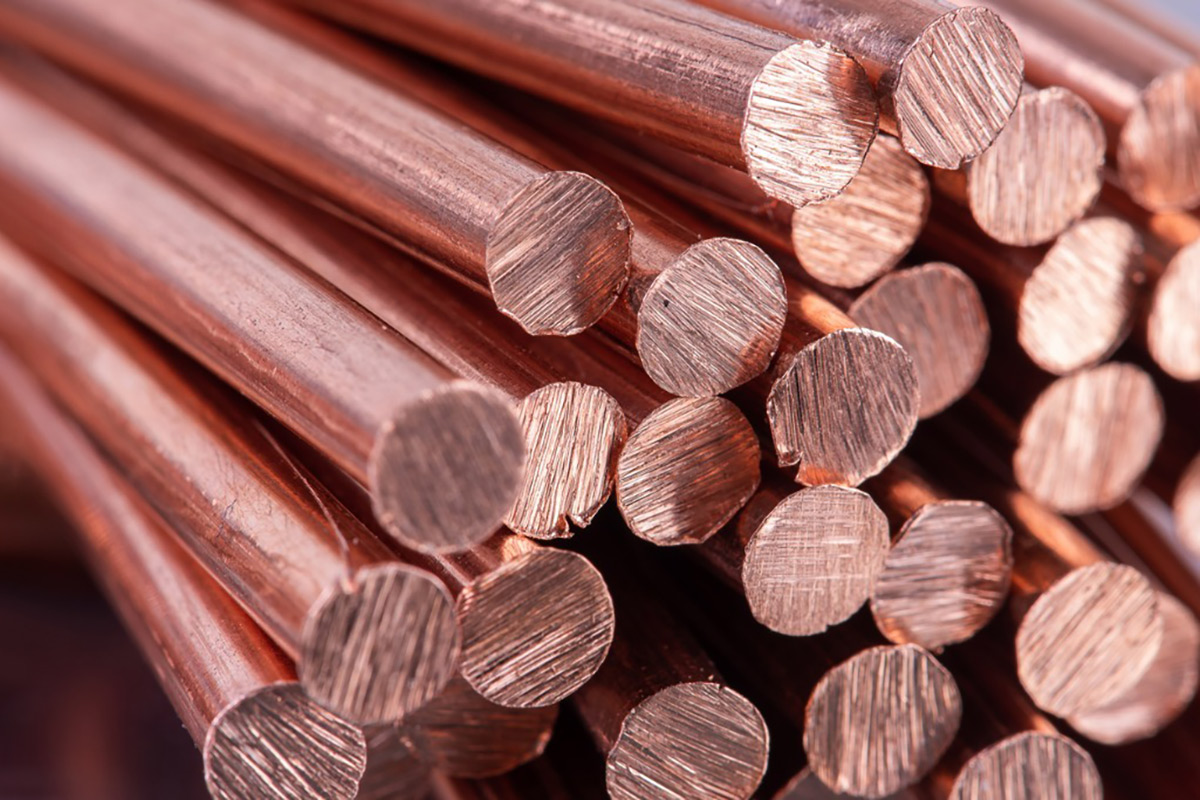
Critical materials include copper, nickel, lithium, cobalt and rare earth elements.

Iron ore declines, scrap faces short supply
Seaborne iron ore prices continued to fall, as steel mills slowed their purchases before the Labour Day holiday.
The Kallanish KORE 62% Fe index fell $1.04/tonne to $186/dry metric tonne cfr Qingdao. The Kallanish KORE 65% Fe index slipped $0.71/t to $220.22/dmt cfr, but the KORE 58% Fe index inched $1.86/t higher to $170.16/dmt cfr. A cargo of 80,000 tonnes of JMBF fines for June shipment sold at floating prices.
On the Dalian Commodity Exchange September iron ore settled down CNY 5.5/t at CNY 1,130.5/t ($174.66/t), while on the Singapore Exchange May 62% Fe futures settled higher by $0.25/t at $187.70/t. The same contract for 65% Fe and 58% Fe futures settled at $223.32/t and $178.15/t, up $0.66/t and $8.08/t respectively.
Following China’s adjustment to import and export tariffs, the market expects a decline in crude steel production that will affect iron ore demand. However, in the short term, steel mills’ profits are supported by high steel prices, and steel mills are more enthusiastic about production, which also supports iron ore.
The short supply has caused China’s scrap prices to continue to rise. Variety 6mm+ heavy scrap delivered to mills in the Yangtze River Delta region inched CNY 13/t higher on Wednesday to CNY 3,556/t. In Tangshan, billet prices increased by CNY 10/t at CNY 4,990/t.
By Kallanish Team
Klöckner reports strong earnings, expects rising prices
Steel distribution group Klöckner & Co has made a strong start to 2021 with its best quarterly earnings in over 12 years.
As a result of an exceptionally strong positive price trend, sales increased despite a pandemic-driven fall in shipments, rising by 5.3% on-year in the first quarter to €1.5 billion ($1.8 billion). The operating income (Ebitda) of €130 million – versus €21m last year – before material special effects was at the upper end of the guidance range, which had been given at €110-130m.
Klöckner sees the overall economic situation and demand for steel increasingly recovering, which is why it forecasts an Ebitda range of €130-160m for the second quarter. At a press conference call, outgoing chief executive Gisbert Rühl said he expects steel prices to continue their journey upwards, but at a slower pace than in the preceding weeks. He added that the surge of recent months and weeks turned out even stronger in the USA than in Europe. The group has a strong representation in both regions.
Regarding lead times from mills, he told Kallanish that the fourth quarter is now the period for deliveries from current orders to arrive. “This is certainly unusually long,” he noted. Rühl added that Klöckner & Co, thanks to its operating strategy of “smart working capital”, has in recent months suffered only slightly from supply shortages. “We did not deplete our inventories towards year-end as many do, because we expected a time of shortage coming, so we maintained our delivery capability,” he said.
Christian Koehl Germany
Italian equipment-maker Fimi expands in US
Italian equipment maker Fimi Group is partnering with US-based Janus Automation with the aim of gaining market share in the North American market, Kallanish learns from a Fimi representative.
“The partnership with Janus gives us the possibility of guarantee a customer presence in the area in terms of service and customer care for those who already own Fimi equipment or intend to purchase it,” the representative comments. “Customer support is and will always be a top priority of our mission.” He adds that Janus Automation is already meeting major US players and promoting the Italian group.
The equipment maker is also pursuing its strategy to reach markets such as Germany and Switzerland, as well as the CIS region.
Headquartered in Pittsburgh, Janus Automation is an expert in steel automation equipment and industrial IT systems. It has six facilities in the US, Mexico, Argentina, and Brazil.
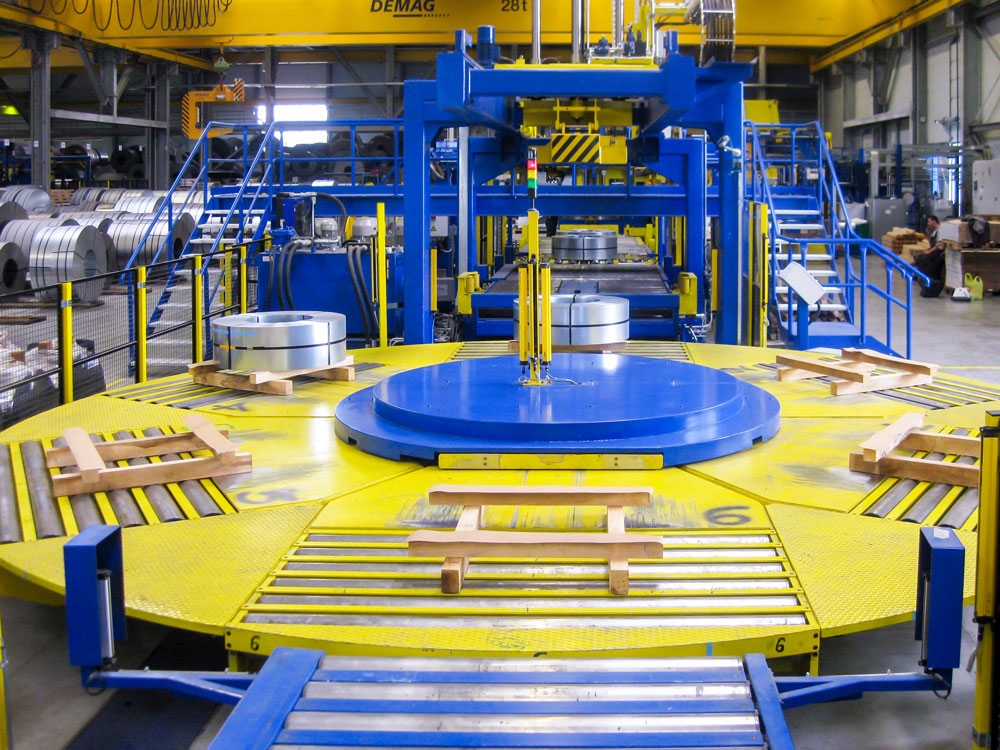
Fimi Group represents five companies, Fimi, Sacma, Selema, Adda fer and Svm, involved in designing and manufacturing coil processing systems in a wide range of materials such as high-strength steel, stainless steel and pre-painted steel.
Natalia Capra France

Marcegaglia to issue new price list
Italian re-roller Marcegaglia is launching a new tube price list effective from next week, Kallanish learns from the company.
Consecutive hot rolled coil feedstock price increases have forced the re-roller to change its price list for the third time in four months. The change will be a technicality involving relative discounts as the general structure of the new price list will remain mostly similar to the old one.
Distributors use a lower Marcegaglia discount to include their margins and costs in their own sales. Kallanish understands that discounts in Italy are currently at 15-16 points; therefore, distributors are not able to sell at the levels of the previous Marcegaglia price list and cannot retain their margins. The new list will increase the level of discount to allow distributors to use the re-rollers’ price list.
Welded tube sales prices are rapidly rising in all European countries following the steep increases in HRC. Other re-rollers are also coming up with new price lists due to the rapidly decreasing discounts. Welded tube discounts are now at the level of 15-16 points in all European countries. Each point of discount is currently equal to €13/tonne ($16/t).
HRC prices have reached an average level in Europe of €1,000/tonne base ex-works. Prices for welded tubes in all European countries are expected to rise again next week, sources say.
Natalia Capra France

Pig iron prices continue rising, trade sparse
Merchant pig iron trading activity in the Black Sea export market was focussed narrowly on the Mediterranean and wider European markets in the past week, with limited trading volumes.
The past week has brought no US trade to either CIS or Brazilian suppliers, as US buyers continue to reject offer indications. These remained flat on-week from CIS suppliers, but increased quite considerably from Brazil.
Brazilian suppliers were heard indicating offers at $575-590/tonne fob in the past week, with some sources reckoning one sale took place at $620-630/t cfr. This could however not be confirmed at the time Kallanish went to press.
CIS suppliers’ offer indications were up to a rather wide $600-630/t cfr, but no trade was possible as US buyers look set to continue waiting with purchasing until after the domestic May scrap price settlement. As this is expected to be upwards from current levels, market sources foresee some CIS offers being finally accepted.
Meanwhile, small lots of CIS pig iron continued to be traded to Europe and Turkey at $590-595/t cfr, and $620/t cfr for semi-nodular material. Current levels of demand have supported a $10-15/t price rise on-week.
China’s plans to reduce exports of finished steel and increase imports of semi-finished steel and metallic products suggest there could be another surge in demand from China, eventually, but this is not expected imminently. Most likely, this demand will come, if at all, towards the fourth quarter, when restrictions are likely to intensify, sources say.
As prices continue to rise, the volume of formula-based long-term contracts outside the spot market has also increased, as buyers and sellers aspire to manage volatility. This trend may also intensify in the coming year, as volatility is unlikely to subside, and will depend a lot on China’s metallics buying.

EU importers pay safeguard duties for Indian HRC
EU importers have been paying safeguard duties on Indian hot rolled coil cleared at customs since the end of last week after quotas were quickly exhausted.
Traders confirm the first safeguard duties were paid by importers clearing material on 23 April. That day, the average quota paid was 8%. Since then, any new HRC from India cleared until end of June will face a 25% duty.
“Most buyers with material waiting to be cleared are now doing it slowly, only selecting the material they need urgently,” a trader tells Kallanish. If new quotas are confirmed from the beginning of July, it is likely they will be completely used during the first days of the month.
“We need to keep in mind, nevertheless, that Indian HRC currently at docks in Europe was ordered in January, mainly, meaning even a 25% duty will make them competitive with today’s new offers from domestic mills and importers,” the trader adds.
Currently, new Indian-origin offers are not competitive, similarly to Turkish HRC prices, which are also levied with anti-dumping duties. Some offers of HRC from Asia have been reported this week at €900-920/t ($1,090-1,114) cif Europe, Kallanish understands, but delivery would be at the end of the third quarter.
Emanuele Norsa Italy
ArcelorMittal continues EU coil offer increases
ArcelorMittal has informed customers this week of yet another new offer increase for coil in the European market, Kallanish learns from sources.
Hot rolled coil is now being offered at €1,020/t ($1,236) ex-works base in northern Europe, while cold rolled and hot-dip galvanized coil offers are also increasing, to €1,200/t ex-works base.
The previous offer increase was announced only a week ago. Demand remains well above supply and buyers are forced to accept price hikes to secure enough feedstock. Coil users are suffering due to long delivery times from European mills and a scarcity of import options in the market (see related article).
Emanuele Norsa Italy

Saarstahl, Dillinger syngas-hydrogen pilot plant to operate by mid-year
German steelmakers Dillinger and Saarstahl will start operating a syngas-hydrogen-based pilot plant by mid-year in cooperation with engineering company Paul Wurth in a move that could cut carbon emissions by 12%, the two sister companies said April 29.
The pilot plant currently in construction will use gas produced in the coke oven of the steelmakers’ Rogesa subsidiary and convert it to syngas, enriched with hydrogen and then used as a reducing agent for the reduction of iron ores. The syngas will then be injected into the blast furnace, which should lead to a “significant reduction in coke consumption and thus to a reduction in carbon emissions.”
“The use of process gases for metallurgical purposes makes it possible to cut carbon emissions by up to 12%,” said Karl-Ulrich Kohler, chairman of the management board of Dillinger and Saarstahl. “By using hydrogen, we can further improve and actually nearly double the potential reduction of carbon. The creation of an adequate energy infrastructure is a precondition for this.”
Once the pilot plant is operational, the next project phases will be developing the process to semi-industrial and later to industrial scale with support from public funding with the aim to produce large quantities of synthesis and inject them into a blast furnace.
The project “H2Syngas” is part of a cross-border hydrogen project in the Saar region.
In a report this week, the Energy Transitions Commission said it identified the steel industry as an area where hydrogen application is likely to develop over the longer term “as the relevant application technologies develop and capital assets are replaced.” By 2050, hydrogen could account for 50% of the final energy demand in the steel sector, it said.
The report, Making the Hydrogen Economy Possible, said that, in the shorter term, hydrogen could be co-fired with coal in blast furnaces.
“Using hydrogen as the reduction agent rather than coking coal may increase steel prices by 40%,” it said, but added that the “green consumer premium” would be much less significant in finished products, adding less than 1% to the cost of a vehicle built with 1 mt of steel.
In addition, the ETC highlighted that constraints on the location of hydrogen production facilities could lead to changes in optimal locations for steel plants. Industrial clusters around a set of linked hydrogen infrastructure would be one such model, the commission said.
— Laura Varriale, James Burgess

Strong demand, prices support Erdemir’s sales and profit
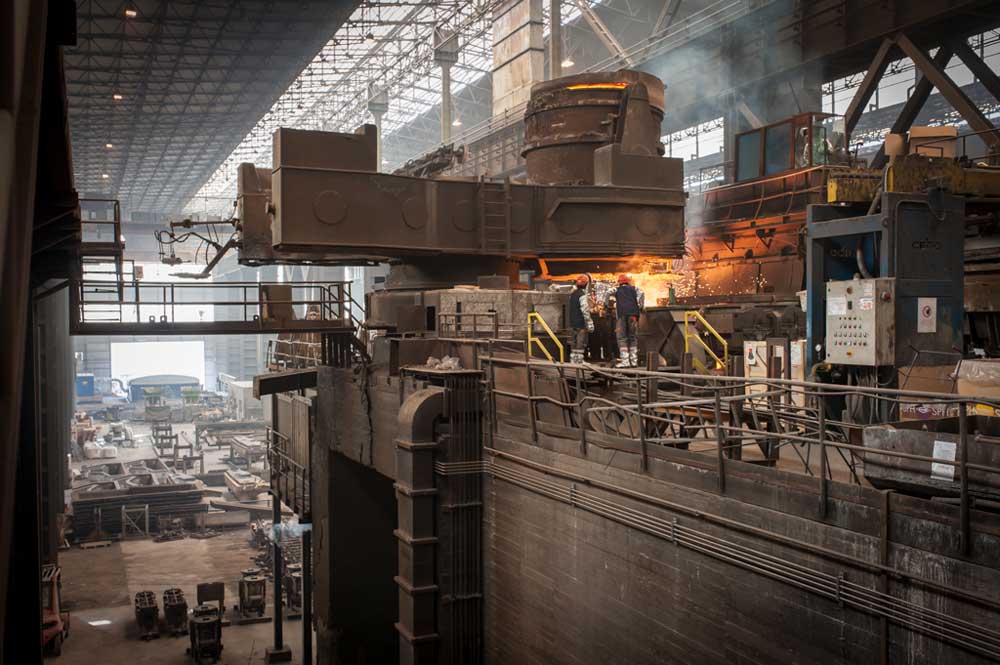
Globally strong demand and prices supported the output and sales of Turkey’s largest integrated steelmaker, Erdemir, in the first quarter, while the company’s profit soared.
Erdemir sold 1.81 million mt of flat products in Q1, up from 1.66 million mt sold in Q1 2020.
While the group’s flats sales to the domestic market were up by 9% in the period to 1.6 million mt, its total long product sales to the domestic market fell 23% on the year to 205,000 mt. Erdemir Group exported 213,000 mt of steel in Q1.
The group’s crude steel output totaled 2.31 million mt in January-March, up 3% on year. The group produced 889,000 mt of crude steel at its Eregli steelworks in Q1, down 6% year on year, while its larger Iskenderun works (Isdemir) produced 1.42 million mt, up by 8% on year.
The group’s Q1 revenue reached Lira 10.5 billion ($1.3 billion), up 64% on year, while the company’s income totaled Lira 2.62 billion, up from Lira 300 million registered in the same period the previous year.
The company’s Eregli steelworks produces hot-rolled, cold-rolled and galvanized coils, plate and tinplate, while Isdemir produces billet, wire rod and hot-rolled coils with a total crude steel production capacity of 9.1 million mt/year.
— Cenk Can