

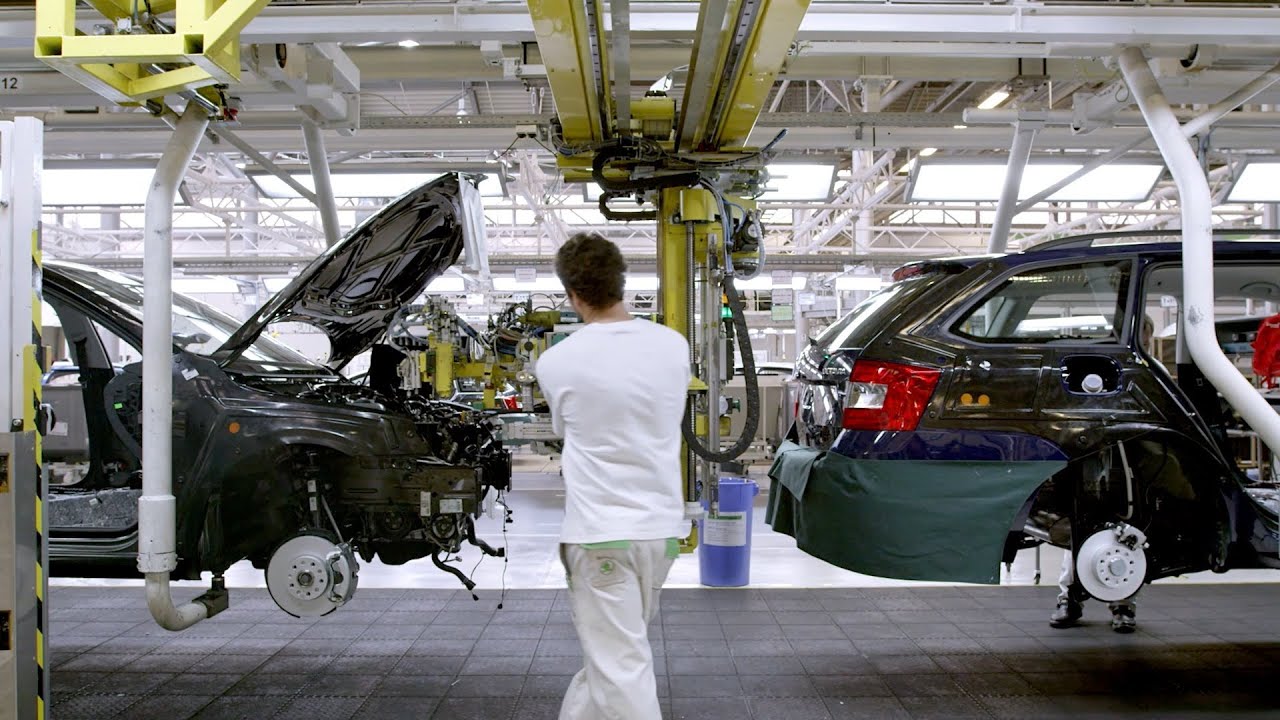
Spain wants to remain EU’s second-largest auto producer
Spain is putting mobility and the automotive industry in the centre of its economic recovery plan, according to the country’s industry secretary Raul Blanco.
“We have a clear goal. We want Spain to remain the EU’s second-largest car producer in 2030, 2040 and 2050, regardless of the technology,” he said earlier this week.
His comments echoes those of industry minister Maroto Reyes, noting that the government is committed to lead the future of the sector with more sustainable, digital, connected and safe mobility. She was the first one to announce plans for Spain to host its first battery cell gigafactory, in a partnership between the government and Volkswagen, Seat and Iberdrola, Kallanish notes.
Blanco said Spain has earmarked €13 billion ($15.68 billion) in spending through 2023 to promote EV take-up, improve charging infrastructure and build the battery plant. Another €70 billion is expected in EU funding, with the government pushing for the acceleration of electrification of the auto industry.
Spain faces intense competition from Germany and France, Europe’s No. 1 and No. 3 biggest auto markets.

Essar to re-enter steel in Indian joint venture
The Andhra Pradesh government has picked Essar Group to be the new joint venture partner for the prospective YSR Steel plant in Kadapa, according to Indian press reports. This comes after authorities dropped previous pick Liberty Steel due to its renowned financial troubles.
The move would represent Essar Group’s return to the steel business after it was forced to relinquish its circa 10 million tonnes/year capacity flat steelmaking operation to ArcelorMittal following protracted bankruptcy proceedings (see Kallanish passim). Essar representatives did not respond to a request from Kallanish for comment on Wednesday.
The prospective plant will eventually have a 3 million tonnes/year capacity of steel. Authorities have proposed the joint venture will commission 1m t/y of capacity in the first stage by March 2024. The joint venture partner was to be required to hold at least 51% of the new plant’s subscribed and paid-up equity share capital.
YSR has already agreed to procure 5m t/y of iron ore feedstock from NMDC, but the JV partner would be allowed to source from elsewhere if beneficial to the plant.
Adam Smith Germany
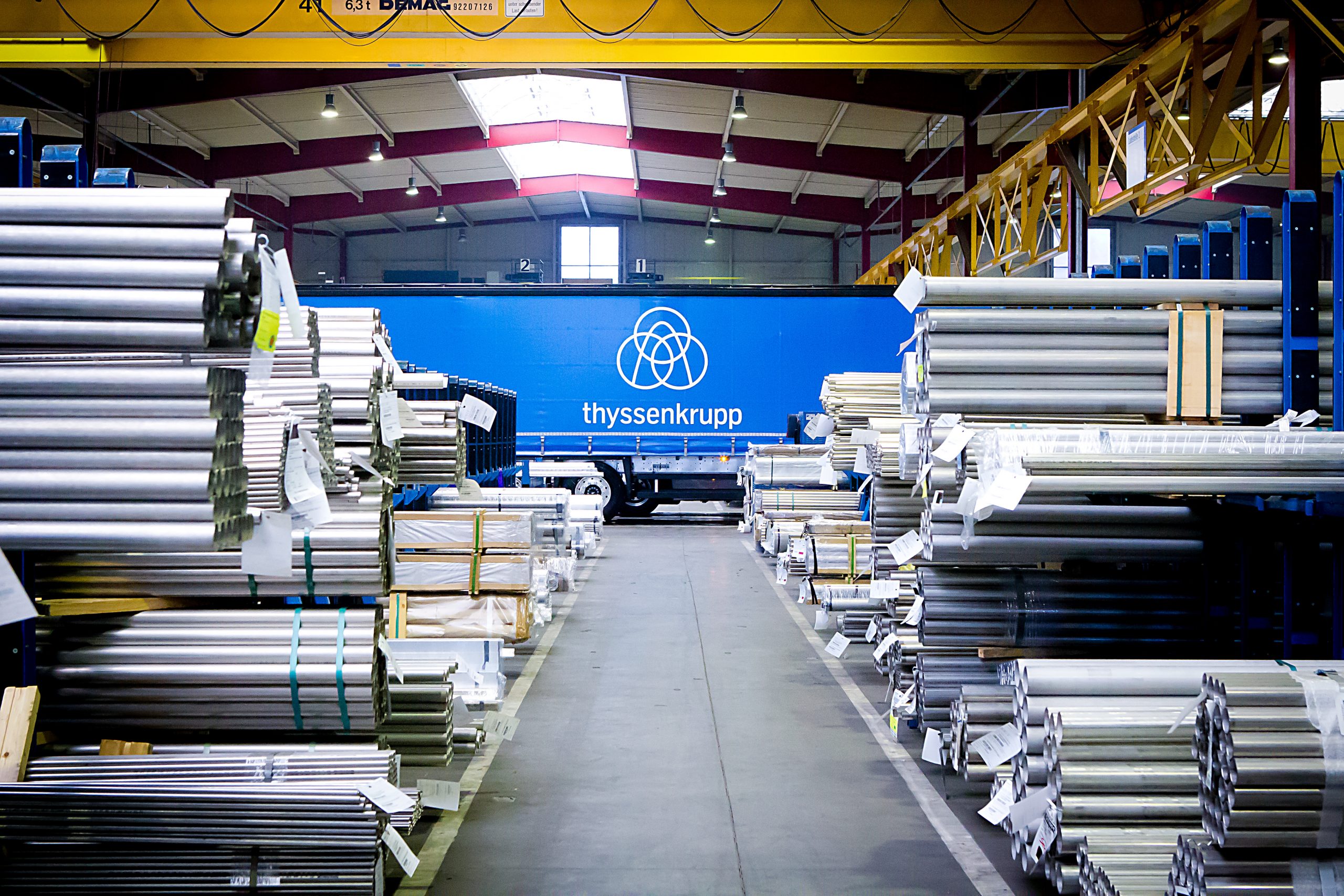
Thyssenkrupp Mannheim starts offering narrow stainless strip
Thyssenkrupp Materials Processing, the service centre unit of distribution group thyssenkrupp Materials Services, is opening a new narrow strip centre for stainless steel at its Mannheim site.
It is investing a total of €5 million ($6m) in expanding its range of services in response to increasing demand for additional services in this product area, Kallanish hears from the company. Following the completion of construction work at Mannheim’s Rheinauhafen harbour, the first stainless steel strip will roll off the precision slitting line this week.
The facility is able to produce up to 25km of long strip, in addition to individual rings. A similar service for carbon steel is offered at tk Materials Processing sites in Willich and Dabrowa Gornicza, Poland. It is made possible by the connected coiling of packs, in which several narrow strips are welded together, the company explains.
In future, the new stainless steel narrow strip centre will increasingly serve small-batch requirements such as sampling and spare parts, it notes. The new production line, supplied by Georg, makes a thickness range from 0.4-4mm, and widths of 8-650mm, at a speed of up to 400 meters per minute.
In six European countries, tk Materials Processing supplies around 2 million tonnes of custom-tailored products annually, steel as well as nonferrous metals.
Christian Koehl Germany
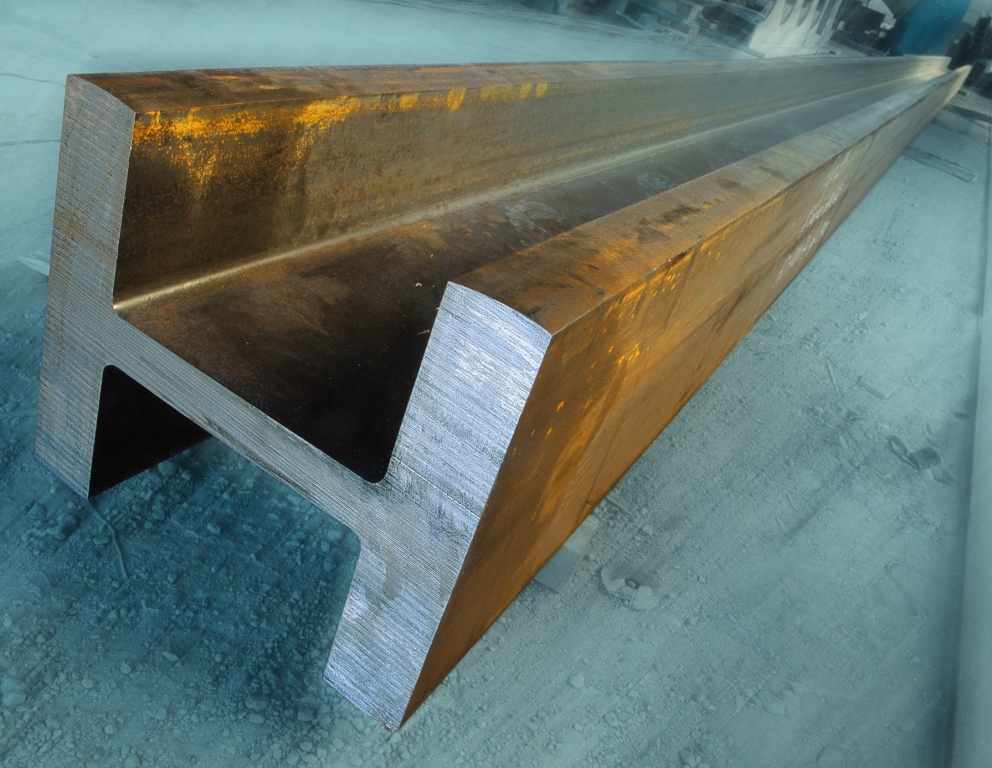
Italian sections prices rise
Italian beam producers are seeking €40/tonne ($48) hikes compared to April, while contract prices are gradually increasing, driven by scrap and strong demand for all steel products, Kallanish learns from market sources.
Domestic sections are rising after a difficult second half of 2020 when demand remained weak due to the lack of new infrastructure projects. Producers are now asking for €380/t base ex-works in new transactions. A previous round of increases towards the end of April was accepted by all buyers, sales executives and purchasing groups confirm.
Transactions this week are at €360-375/t base ex-works for the first category of beams. Including €385/t average size extras, values are reaching €745-760/t ex-works. Prices increase by €20/t for each subsequent category, sources suggest. Buyers however still complain about local demand being “average”.
Meanwhile, Italian merchant bar is also increasing in asking prices and contracts this month, by €30/t. May contracts have gone through the level of €700/t for the first time in years (see Kallanish 5 May).
Natalia Capra France
Liberty appoints restructuring committee, eyes underperforming units solution
Liberty Steel has appointed four new board directors to lead and accelerate its restructuring and refinancing. The appointments represent a step forward in Liberty’s response to the collapse of its principal lender, Greensill Capital, the firm says.
Liberty Primary Steel and Mining Australia agreed on Wednesday terms to refinance its Greensill exposure (see separate Kallanish story). Record steel prices and Liberty’s operational improvement programme have enabled its core businesses to maintain their strong performance since the beginning of the year.
The new appointments will join the Liberty board with immediate effect and form a new Restructuring & Transformation Committee (RTC), which will be led by an independent chief restructuring officer (CRO). It will include an independent chief transformation officer (CTO), a chief governance officer (CGO) and a newly appointed chief financial officer. The RTC will be supported by Liberty management and report to the full Liberty board.
“The RTC will be given full autonomy to restructure Liberty’s operations to focus on core profitable units, and either fix or sell underperforming units,” Liberty Steel says. “This restructuring combined with the continuing strength in steel and iron ore markets will present a solid basis for the future of Liberty.”
The RTC will work to “negotiate an amicable solution with Greensill’s administrators and other stakeholders which protects value and provides the best outcome for all stakeholders”, the firm adds.
Jeffrey Stein, a US-based certified turnaround professional, will be CRO, while London-based Jeff Kabel, chairman emeritus of the International Steel Trade Association (ISTA), will be CTO. Dubai-based Iain Hunter, a former Wyelands Bank chief executive, will be CGO. The new chief financial officer, and also GFG Alliance interim CFO, is Dubai-based Deepak Sogani, former managing director for metals & mining at Essar Capital Services. Current Liberty cfo V Ashok is stepping down at end-May for personal reasons.
Both CRO and CTO roles are independent interim roles brought in for a special purpose to restructure and refinance the group. The roles are paid fees and are not employees of the company.
Adam Smith Germany
UK Steel urges government to extend steel safeguards
UK Steel is calling on the UK government to extend steel safeguards beyond their current June 2021 expiry date, the UK steel association told S&P Global Platts on May 5.
The UK has had the safeguards in place as part of the EU since 2018 and then transitioned them into UK law in January 2021 to avoid trade diversions as US introduced steel tariffs.
“We are confident the EU and US will retain their equivalent measures. If the UK unilaterally removes its measures, it will open our market to import surges as the sector recovers from COVID-19, and crucially at a time when our exports to the EU and US will still be subject to tariffs and quotas,” the association stated.
According to the association, before the introduction of the EU steel safeguards, UK imports of steel went up by 25% between 2013 and 2017, but because of the continued problems of global overcapacity, and the increased use of import restrictions around the world they expect that it is almost certain the increase will resume if the UK unilaterally removes measures.
The association pointed out that as the measures allow for tariff-free imports equivalent to 111% of historic levels, with further relaxations every year, this could give enough rooms to import some products if needed.
“In general the UK quotas were designed to allow for an average 61% import penetration level of 2015-17 demand levels. This will have been liberalized to allow for import penetration levels of closer to 70% of 2019 demand, and 90% of 2020’s severely reduced demand levels. Even with a modest recovery next year we would expect further liberalized quotas to allow for 80-85% penetration levels,” the UK Steel Policy Manager explained to Platts on May 5.
ISTA, the UK International Steel Trade Association, is against the continuation of the Steel Safeguard Measures. “Here in the UK, as UK producers cannot produce enough material in most product category groups to service the independent steel service centers and stockholders, without imports over the last twelve months many [service centers] may not have survived,” an ISTA spokesman said. “Service centers had to rely on imported material, mainly from outside of the EU, as European mills have cut back severely their own production over the last year.”
Some products were very close to extinguishing all their allocated quota very quickly such as the large welded tubes, hollow sections and organic coated steel (OCS) products.
Domestic market sources said some large service centers have mixed views as most of them, although they have challenges finding material, are making good profit margins and benefiting from high prices.
The UK government is expected to determine whether to maintain the safeguard by June, but it is understood that a date has not been decided yet. For the UK Safeguards, the Trade Remedies Investigations Directorate (TRID) will be making an independent determination, expected possibly next week. Then this recommendation goes to the Department for International Trade and the Trade Secretary will accept or reject it.
For the EU Safeguards the decision is made by the European Commission and will likely be finalized after the UK, or at least later than TRID’s determination as is expected in July.
“While the decisions are separate, the EC’s decision will impact the UK’s ability to export to the EU so a situation where the EU extends the measure but the UK does not would be detrimental for the UK steel sector,” the UK Steel Policy Manager added.
According to worldsteel data, the UK produces 7.2 million mt of crude steel a year, around 71% of the UK’s annual requirement.
A DIT spokesperson when reached by Platts on May 5 said that they are working to protect the steel industry and trade remedies are an important element of the international trade framework:
“The Trade Remedies Investigations Directorate (TRID) is currently reviewing steel safeguard measures on 19 steel product categories that we transitioned to ensure they reflect the requirements of the United Kingdom. The review will conclude before the measures expire at the end of June. TRID has yet to conclude its analysis and as such it is not appropriate or possible for it to speculate about the outcome of the review at this stage.”
— Annalisa Villa

Turkish steelmakers demand acceleration of EU dumping investigation
Drawing attention to the European Commission’s recent anti-dumping duty decision against Turkish HRC, Turkish Steel Producers’ Association (TCUD) has demanded the acceleration of the AD investigation opened by Turkey against HRC imports from the EU.
“Considering EU’S efforts to restrict Turkish HRC exports to the region by protection measures, it is important to conclude the ongoing anti-dumping investigation against HRC imports from EU, to protect the Turkish steel sector’s competitive power,” TCUD said at a statement sent to S&P Global Platts May 5.
Turkey officially started the dumping investigation of HRC imports from the EU and South Korea with a presidential decree published in the country’s official gazette Jan. 9, just two days after the EU imposed provisional AD duties on imports of HRC from Turkey. The EC on April 23 said it decided to impose definitive AD duties of 4.7%-7.3% effective July 1.
“Even if it is decided not to extend the EU protection measures [quotas] which will expire at the end of June, EU will continue to protect its steel sector with the latest anti-dumping duty decision,” TCUD said, noting that Turkey should take counter measures under these circumstances.
According to the latest TCUD data on May 5, steel imports into Turkey rose by 15.7% on year to 3.9 million mt in the first quarter, while Turkish mills’ steel exports rose 2.8% in that period to 4.2 million mt, amid ongoing trade barriers in their main export markets, the EU and the US.
Steel consumption in the country increased by 15.8% on year to 8.9 million mt in Q1, while Turkish mills’ crude steel output totaled 9.8 million mt in that period, up 9.5% on year.
— Cenk Can