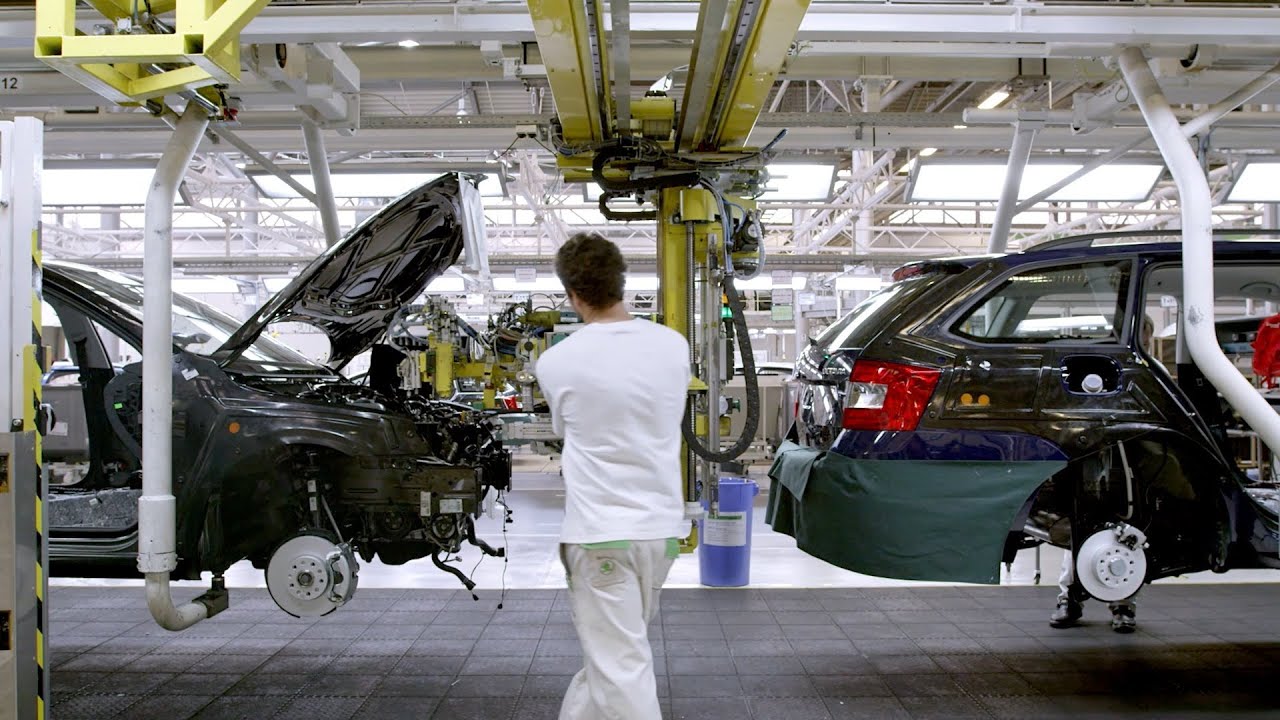
Semiconductor shortages hurt first-half automotive output: Oxford Economics
Persisting global semiconductor shortages will further hurt the global automotive industry and could disrupt the output of millions of cars, according to Oxford Economics.
“The list of major global industrial players reporting shortages is growing every day and its impact on production is becoming visible,” the agency observes. “According to our estimates, due to this factor, the total world car production in the first half of the year may decrease by two million units.”
At the moment, chipmakers expect a complete solution to the problem no earlier than 2022, although it was previously thought that tech companies would be able to solve supply problems by end-2021, it adds.
The situation was further exacerbated by snowstorms in Texas, as large chip manufacturers located there had to stop or reduce their production, and by a fire at Japanese semiconductor producer Renesas.
This affected a number of global carmakers in Japan, the US and Europe, given Renesas is the second-largest producer globally of car microcontroller unit chips. The shortage is also disrupting automotive production in Russia.
In general, Oxford Economics does not view the shortage of chips as a serious problem for the global economy. Rather, it is largely the result of high demand, reflecting the active state of the industrial sector.
Carmakers are now not only resorting to cutting production, but also simplifying components to use a minimum of chips, it adds.
Earlier, German carmaker Volkswagen predicted more disruptions at its production sites. Technology company Intel meanwhile said it expects it will take a couple of years to make the significant investments to meet the growing global chip demand (see Kallanish passim).
Svetoslav Abrossimov Bulgaria

GCC set to impose definitive safeguard duties
The Gulf Cooperation Council’s permanent committee has recommended the imposition of definitive safeguard duties for three years on various steel products, following the trade defence authority’s probe concluded in February. The first year would see a duty of 16% imposed on the cif value of imports, followed by 15.2% in the second year and 14.44% in the third year.
The GCC’s ministerial committee must now decide whether the duties will come into force. They would not apply to certain countries designated as developing, including Hungary, Egypt and Pakistan. They also do not apply to EFTA countries that have bilateral agreements with the GCC, although supply from these countries represents less than 1% of overall imports.
In July 2020 the GCC-Bureau of Technical Secretariat for Anti Injurious Practices in International Trade (GCC-TSAIP) made a preliminary determination that an increase in imports has caused serious injury to the bloc’s steel industry. No preliminary duties were imposed. In February 2021 it recommended definitive steel safeguard measures are imposed and excluded a number of products from the probe, including hot and cold rolled coil, as well as plate (see Kallanish passim).
“There are currently sufficient production capacities in the GCC countries to meet Gulf demand, and thus users or customers will not be affected by imposing preventive measures,” the GCC Secretariat General says in a report. “If the final measures are not imposed, the prices and market share of the Gulf industry will decline further in favour of increasing imports at low prices … The aim of imposing these measures is not to prevent imports at all, but rather to correct the situation of the Gulf market, and create fair competitive conditions.”
Local production can currently cover 108% of the local market’s requirement for these products, and the industry would be able to meet 189% if it fully utilised its capacity, the report states.
Imports of the subject products into the GCC reached 2.06 million tonnes in July 2018-June 2019 versus 2.17mt in full-year 2018, 2.23mt in 2017, 2.29mt in 2016, 2.52mt in 2015 and 1.97mt in 2014.
Imports of flat products under investigation reached 595,340t in July 2018-June 2019 versus 618,600t in 2014, but increased by 61% in relation to local production. Longs imports were 696,530t in July 2018-June 2019 versus 665,600t in 2014 but increased 25% in relation to production. Tube imports were 770,970t in July 2018-June 2019 versus 689,570t in 2014 and increased 9% in relation to domestic output.
Domestic production of all products under investigation fell in July 2018-June 2019 to 79.8% of the 2014 level, with capacity utilisation down to 74.6%. Flats were most affected, seeing output and utilisation down to 59.7% and 54.9% respectively of 2014 levels.
GCC industry share in local market sales fell to 94% of 2014 levels in July 2018-June 2019, while imports’ share rose to 128.8%. Based on this criteria, local tube mills were most affected, with GCC industry share in sales falling to 87%, while imports’ share rose to 111%.
Adam Smith Germany
Import options increasingly problematic as Europe HRC prices rise further
European HRC prices were heard higher May 7, with the market now executing higher prices after another offer increase from market-leading mill ArcelorMittal May 7, sources told S&P Global Platts.
One German distributor said the increase announced by ArcelorMittal to Eur1,050/mt for HRC was a theoretical price.
“The announcement is not connected with the allocation on quantities,” the source said, also citing a deal at Eur1,030/mt ex-works Ruhr.
A European mill source said: “A lot of industry is doing updates, as they postponed maintenance because of poor cash flow.”
European producer NLMK was heard to have returned from its maintenance period May 7, two sources said.
A second German distributor said sentiment was very bullish, with iron ore prices now higher than $200/mt.
“I’ve heard rumors at Eur1,100/mt, and I expect other people to test this. There is a limited portion of offers. I expect next week the market to try Eur1,100/mt or something close,” the source said.
While imports have been a viable buying outlet for some buyers, the same German source said it was going to be increasingly difficult to obtain foreign material from countries like India because of the severity of the coronavirus pandemic, as well as the pending decision from the European Commission regarding the quota allocation system.
“The quota [system] doesn’t make any sense. Domestic producers aren’t able to supply the market, so we are hurting ourselves,” the distributor said. “Asian region prices went up after [China] removed the export rebate. The Chinese domestic market dropped a bit. We are still well below the US market.”
In the Italian market, an Italy-based mill source said prices were Eur980-1,000/mt ex-works Italy but said the new Eur1,050/mt would be accepted by the market. Meanwhile, an Italy-based service center source cited a tradable value at Eur1,000/mt ex-works Italy.
— Amanda Flint, Laura Varriale

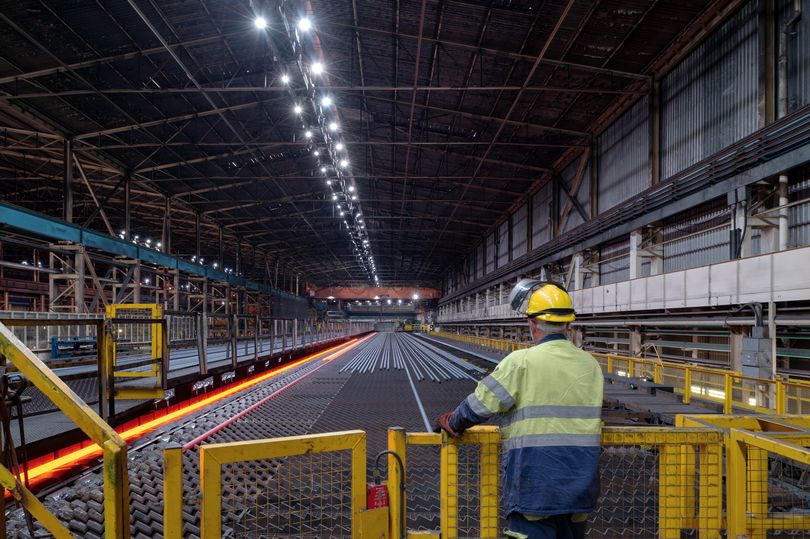
Czech government could buy Liberty Ostrava ‘if necessary’
The Czech government would be prepared to step in and take over the country’s biggest steelmaker, Liberty Ostrava, if such a move were to become necessary, industry minister Karel Havlicek told the country’s parliamentary lower house May 6. Ostrava’s parent company, Liberty Steel Group, announced May 5 that it might consider selling some units as it restructures and refinances after the March collapse of its major financier, Greensill Capital.
Havlicek said the state could “intervene” during a verbal report and debate on current concerns over the Ostrava steelmaker.
“The state declares that if the situation becomes critical and if it appeared likely that the company would collapse and people would lose their jobs and that the whole region could be affected, then it is prepared for such an extreme solution [as state intervention] and we have already prepared for that option,” Havlicek said. The minister however indicated that the current situation probably did not call for such action.
Havlicek pointed out in his report that the previous government of Andrej Babis had taken a similar step and nationalized the country’s sole hard coal miner, OKD, in April 2018 when “no other path was possible.”
Havlicek’s comments come amid tension between the Czech government, local trade unions and Liberty Steel’s managers and owners over the future of the 3.6 million mt/year capacity integrated Ostrava mill amid the financial squeeze besetting Liberty Steel Group and its parent GFG Alliance. Tensions escalated when emissions allowances owned by the mill were sold April 30 to Liberty’s Galati mill in Romania, despite promises to Havlicek and Czech prime minister Andrej Babis that this would not happen.
Turned-around
Liberty Steel said May 5 that it “will fix or sell underperforming units” following the appointment to its board of a four-strong team of restructuring specialists. Sources close to Liberty however indicated that the company would opt to keep the Ostrava mill along with other performing businesses, including Liberty Galati, which have turned around their operations in recent months.
In a move likely to ease tensions May 7, Liberty Steel Ostrava said in a statement that all the proceeds from the sale of emissions allowances to Liberty Galati have been paid onto the company’s account.
“The Ostrava steelmaker now has on its account the whole of the Koruna 1.24 billion [$59 million dollars] from the sale of its unneeded 1.0 million carbon emission allowance] units to sister company Liberty Galati,” Liberty Ostrava said in the statement. Part of the amount has already been used to pay bonus to the Czech mill’s workers with the remainder to be used for investments at the Ostrava mill, it added.
Liberty Steel added in its latest statement that the Ostrava mill would be able to buy the emissions allowances back at a lower price than those prevailing on the market if they were needed in the future. “This legal transaction, at a high profit, has fulfilled the company’s pledge that the allowances owned by the Ostrava mill will continue only to be used for its benefit,” it added.
Management urges return to normal
Ostrava mill’s production director, Vaclav Habura, called in the statement for a return to normal working. “It’s now necessary that we continue with our normal business and focus on production and meeting the needs of our customers and attempt to take the best advantage of the current situation on the market, which is the most favorable in recent years,” he added, referring to the spate of high global steel prices and firm demand.
Labor unions at the Ostrava mill have been on strike alert since April 16 over concerns about the impact of the parent company’s financial problems on local operations. They stepped up their action April 26 with announcement of a work to rule, which includes a ban on overtime, adding that the moves will impact steel production at the Czech mill.
— Chris Johnstone
LME scrap, rebar surge on physical market strength
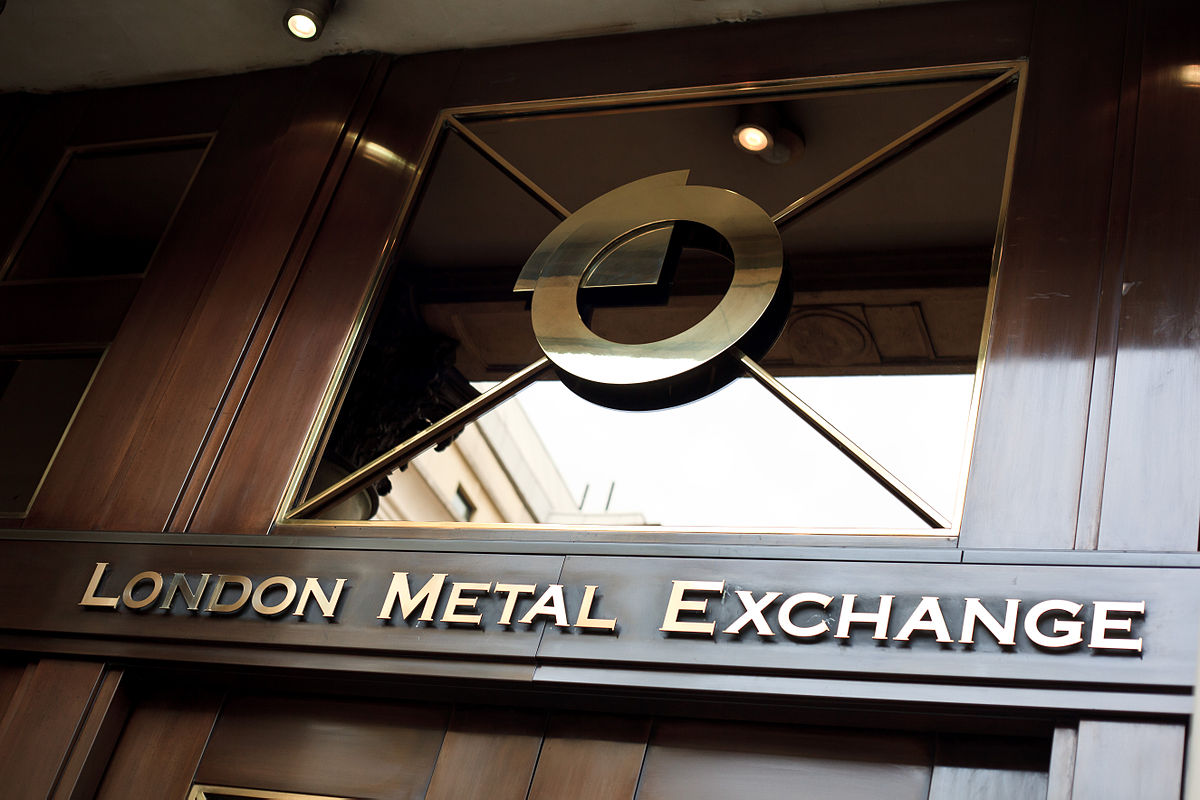
Scrap and rebar futures contracts on the London Metal Exchange jumped over the week to May 6, reflecting significant physical market strength on the back of the removal of Chinese steel export rebates for several products.
S&P Global Platts assessed the May scrap contract $45 higher on the week at $505.50/mt on May 6, while the June contract jumped $49 to $515.50/mt on week. The July contract also rose $33.50 on week to $515/mt.
Amid a strong hike in physical scrap prices, the forward curve contango structure for May to June contracts rose sharply over the week, suggesting futures traders expect significant near-term strength in the physical market, before shifting into slight backwardation over June-July contracts, albeit at significantly strong levels.
Spot prices for physical imports of premium heavy melting scrap 1/2 (80:20) gained $44.25 on week to $479.25/mt CFR Turkey on May 6, as the market reported fresh deals at elevated prices amid a significant increase in finished steel levels.
“With all this strength in the finished steel market, $500/mt CFR for scrap is a real possibility,” a Turkish trader said, adding that “the US is not there [offering yet] in the deepsea market.”
Weekly scrap futures trading volumes over the week to May 6 totaled 53,930 mt, down from 63,080 mt recorded last week.
Rebar futures also jumped on week in line with scrap. The forward curve also displayed a strong contango structure over May to June contracts, before shifting into a backwardation over June-July contracts, albeit maintaining significantly elevated levels.
This suggests that futures traders expect near-term price strength to continue in the physical market, while expecting a dip in prices although at elevated levels by the start of third quarter.
Platts assessed the May contract up $65 on week to $730.50/mt on May 6, while the June contract increased $90 on week to $750.50/mt and July contract rose $80 on week to $740.50/mt.
Turkish physical rebar export prices increased $35 on week to $690/mt FOB on May 6, as market sources reported fresh deals and mill offers at elevated levels reflecting the impact of Chinese tax rebate removal news released April 28.
Domestic rebar demand also appeared to have returned after buyers had postponed domestic purchases. Domestic consumers were keen to book material as they were seeing scrap and export rebar prices increase daily.
One UK trader expected the bullish sentiment resulting from the Chinese tax rebate news to continue at least for one month as mills were heard to offer rebar around $700-$715/mt FOB.
“I don’t think mills have to accept lower today, they can just wait for the market to catch up,” he said.
The daily outright spread between Turkish export rebar and import scrap was assessed at $210.75/mt May 6, down $9.25 on day.
Rebar futures weekly trading volumes this week on the London Metal Exchange totaled 3,830 mt, up from 2,650 mt recorded last week, reaching its highest level since March 31, when weekly trading volumes were recorded at 7,660 mt.
— Rabia Arif

Turkish scrap approaches $500/t, steel prices skyrocketing
Following the latest scrap booking on Thursday, from Sweden, scrap suppliers further increased their offer prices on Friday.
The Swedish-origin deal was concluded by a long steel producer at $488/tonne cfr Turkey for HMS 1&2 80:20 and $498/t cfr for shredded and bonus grade. On the same day, numerous Baltic-origin bookings were concluded at $479-480/t cfr. Following the latest deal at $488/t cfr, scrap prices have taken one step closer to the $500/t cfr threshold.
On Friday, there were numerous Baltic-origin offers varying at $490-500/t cfr for HMS 1&2 80:20. European suppliers are heard offering at above $485/t cfr, while US suppliers, who are targeting higher prices, are not in the market.
Romania-origin scrap was concluded at $450/t cfr on Friday.
Most Turkish mills, facing higher scrap offers, meanwhile, were seen to have backed off from the export market on Friday. Iron ore and billet prices also further increased on the same day.
Most mills refrained from giving rebar and wire rod export offers on Friday, while preparing for higher prices on Monday. The ones that were offering material have increased their rebar prices to above $720/t fob actual weight from $700-715/t fob a day earlier.
Kallanish hears that a Turkish mill has sold rebar to Singapore at a $710/t fob actual weight equivalent price. This was however not confirmed at press time. Containerised and smaller-volumes cargoes were sold at $710-720/t fob, depending on the region.
Wire rod offers have also seen a sharp increase. While offers are at above $800/t fob, a Turkish mill is heard to have sold 5,000 tonnes to Brazil at $800/t fob.
Domestic rebar offers also increased further on Friday, to $705-717/t ex-works, excluding VAT, from $691-710/t on Thursday.
Burcak Alpman Turkey

Italian fight for coils continues, HDG, CRC jump
Italian hot-dipped galvanised and cold rolled coil are increasing in contracts again, by as much as €100/tonne ($120) compared to the start of May. Hot rolled coil is meanwhile rising €30/t as tight supply persists, market participants tell Kallanish.
Domestic HRC contracts now start at €1,000/t base ex-works and go up to €1,030/t. While large buyers are purchasing indexed material at lower prices, producers have allocated most of their output until October and keep opening sales for limited tonnages and for a limited period of time.
Purchases on the import market are not frequent as Italy’s traditional suppliers such as India and Turkey are also quoting high prices. They open brief “sales windows” for a few hours while rapidly selling their spot allocations and then closing again.
A source says import offers may sometimes lag behind domestic increases and spot deals can be fetched for a time at competitive prices, “but all available material disappears in a matter of hours”, he concludes.
Meanwhile, CRC and HDG producers are also opening sales punctually for a limited time to sell material for spot contracts. Both products are being reported in Italy at €1,200-1,220/t ex-works, Kallanish hears. Ten days ago, HDG was sold in Italy at €1,100-1,120/t base ex-works.
Lead times stretch to October for HRC, CRC and HDG, but late deliveries are being reported.
Natalia Capra France

Liberty Steel UK closes in on financing
Sanjeev Gupta has agreed a term sheet with White Oak Global Advisors for £200 million ($278m) of financing for Liberty Steel UK. The loan will be subject to due diligence and the approval of Credit Suisse Group, an informed source tells Kallanish.
GFG Alliance declined to comment.
White Oak Global Advisors also agreed to provide financing to Liberty Primary Metals Australia earlier in the week (see Kallanish passim).
Liberty Steel meanwhile appointed four new board directors to lead and accelerate its restructuring and refinancing. The new appointments will join the Liberty board with immediate effect and form a new Restructuring & Transformation Committee (RTC), which will be led by an independent chief restructuring officer.
At the end of March UK business secretary Kwasi Kwarteng said the UK government wants to see what new financing GFG can arrange before taking any action to support its UK plants. At the start of April the firm resumed partial production at its Rotherham plant following a period of intermittent operations. The Stocksbridge furnace, and the Stocksbridge, Thrybergh and Brinsworth rolling mills are expected to follow.
Adam Smith Germany

IoT-Plattformen treiben grüne Transformation im Stahlmarkt
Ein systematisches Energiemanagement kann die Energieeffizienz in Unternehmen des Stahlmarktes fortlaufend erhöhen sowie den Energieverbrauch und die damit verbundenen Treibhausgasemissionen mindern. Basis für jedes Energiemanagementsystem ist das Messen. Die Kaltenbach.Solutions GmbH als führender Anbieter von Performance-Management-Systemen im Stahlmarkt hat nun seine bekannten BoosterBOXen zur Performance-Messung an Maschinen um EnergyBOXen erweitert.
Durch die Kombination aus IoT-basiertem Performance- und Energie-Messen werden Potentiale umfassend transparent gemacht. Mittlerweile unterhalten eine Vielzahl von Unternehmen der Stahlbranche Energiemanagementsystem gemäß der ISO 50.001. Basis für ein effizientes Energiemanagementsystem ist das Messen der relevanten Kennzahlen für Ströme,
Leistungen und Verbräuche
Die energetische Betrachtung ist eine Seite der Medaille. Am Ende geht es darum, die aufgewendete Energie so effizient wie möglich in relevante Produktionsergebnisse zu transformieren. Für Maschinen in der Stahlbearbeitung bedeutet das einerseits die Maschinen-Performance zu steigern, andererseits den Energieverbrauch zu senken – zwei Seiten ein und derselben Medaille.
Die KALTENBACH.SOLUTIONS GmbH unterstützt Unternehmen der Stahlbranche mithilfe IoT-basierter Gesamtlösungen. Sie vereint alle relevanten Bereiche vom Performance-Management über das Order-Management, das Maschinen-Monitoring bis hin zum Energy-Monitoring auf einer integrierten digitalen Branchen-Plattform. Diese ist modular aufgebaut und passt sich an die kundenspezifischen Bedürfnisse, Prioritäten und jeweiligen Rahmenbedingungen an.
Quelle und Foto: KALTENBACH.SOLUTIONS GmbH
05.05.2021 von Hubert Hunscheidt