

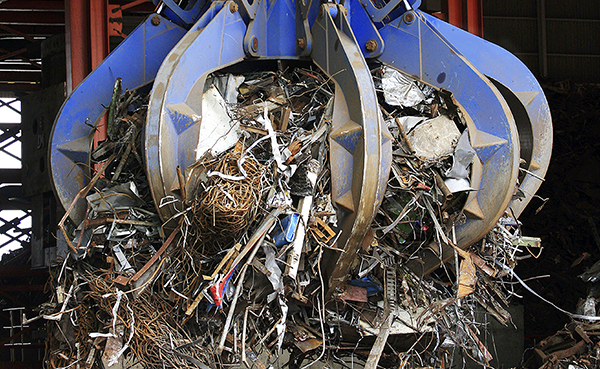
Scrap exceeds $500 in Turkey
Turkish mills have been forced to pay above $500/tonne cfr for scrap despite trying to keep their imported scrap buying prices below this threshold, Kallanish notes.
A long steel producer in western Turkey has concluded a scrap booking from the UK that consists of 18,000 tonnes of shredded at $519/t cfr and 6,000t of HMS 1&2 80:20 at $499/t cfr Turkey. Shipment is in the second half of June.
Although HMS 1&2 80:20 appears at $499/t cfr in this booking, the unusual $20/t premium over shredded indicates that HMS 1&2 80:20 is actually valued at above $500/t cfr.
The historical difference between these two grades is $5/t. There have been occasions when it has widened to up to $15/t, when shredded supply is tight and demand is strong. The $20/t spread is even higher than the typical differential between HMS 1&2 80:20 and P&S grade scrap, which is $10/t.
Turkish mills’ current demand for shredded scrap is seen to be strong. These traditional price spreads are expected to vary due to imbalances in supply and demand.


EU, UK largely exhaust second-quarter hollow sections quotas
Second-quarter safeguard quotas for hollow sections have largely been used up in both the EU and the UK, Kallanish learns from official data.
EU tariff-free safeguard quotas for hollow sections imports have been filled for most provenances, including Belarus, Russia, Turkey and Ukraine. The “other countries” quota has been exhausted, and currently quotas remain available only from Switzerland and North Macedonia.
The overall tariff-free hollow sections allocation is of slightly above 200,000 tonnes per quarter.
Similar pressure on hollow sections users is visible in the UK where Turkish-origin as well as “other countries” quotas have been fully used. UK importers can now only clear volumes of hollow sections arriving from within the EU.
The safeguard quota system is set to remain in place until at least the end of June. An extension is yet to be announced by either the EU or UK authorities.
Emanuele Norsa Italy
Thyssenkrupp sees some slowdown of strong market
After two quarters of increasing sales and orders in its first fiscal half-year through March 2021, thyssenkrupp remains upbeat for the overall economy this year, but sees the momentum throttled currently.
The share of the automotive industry is relatively high for the group’s steel sales, with more than half of output sold on long-term contracts. Hence, it does feel repercussions of production breaks at carmakers due to the global shortage of semiconductors, “but also due to other logistic issues”, group chief financial officer Klaus Keysberg said during a conference call. Demand will remain high in the long run, “but for these reasons our expectations for the current quarter are more modest”, Kallanish heard him say.
In the March quarter, order intake and revenue at tk Steel Europe were up 13% to €2.4 billion ($2.9 billion) and 8% to €2.2 billion respectively from the prior year. As a result of catch-up effects, above all from the automotive industry, and strong demand from restocking, particularly at steel processors, business continued to pick up.
Adjusted Ebit improved significantly, to €47 million, after a loss of €181m a year earlier, due to higher capacity utilisation, improved product mix, positive price trends as well as restructuring measures.
At distribution division tk Materials Services, order intake increased by 9% to €3.1 billion in the March quarter, while revenue was down slightly by 3% to €2.9 billion, due to shortage of supply. At €126m, adjusted Ebit came up from a loss of €29m. Key factors here were the increase in finished and stainless steel prices caused by the materials shortage. Tk also points at its ongoing network optimisation: since 2019, the segment has reduced the number of logistics sites by 39, including five in the reporting quarter.
Christian Koehl Germany
Aperam foresees strong second-quarter volumes and prices
Aperam forecasts strong second-quarter volumes and higher prices after registering in Q1 its best-ever quarter thanks to record sales and prices in Europe, Kallanish learns from the company’s Q1 report.
“In Brazil our flexible multi-product business set a new earnings record due to strong demand, paired with higher prices and a strong mix,” the report says.
Steel shipments stood at 493,000 tonnes in Q1, up 14% compared to 431,000t in Q4 2020. In Q1 2020 steel shipments were 430,000 t, Kallanish notes.
The company is to invest in revamping the long product rolling mill at its Imphy facility in central France, as well as the restart of the AOD converter in Genk, Belgium, which was idled in 2019. “Both projects, together with the planned specialties centre in Gueugnon, will further contribute to the reorientation of our product portfolio towards specialties,” Aperam says.
The Stainless and Electrical Steel division had sales of €977 million ($1,188m) in Q1, up 26% year-on-year. Steel shipments were 483,000t, an increase of 12% on Q1 2020. Average selling prices for the division increased by 14% compared to the previous quarter. “Profitability was supported by higher volumes and prices and a low double-digit inventory valuation gain in Europe and a record adjusted Ebitda in Brazil due to higher prices and a stronger mix,” Aperam observes.
The Alloys and Specialties division also registered a 21% increase in sales compared to last year and high selling prices.
In total, Aperam’s Q1 sales increased by 28% to €1,177m, compared to €916m in Q4 2020 and €1,049m in Q1 2020. Ebitda stood at €175m in Q1, compared to €70m in Q1 2020.
Aperam is expanding upstream into the recycling business with the acquisition of stainless scrap company ELG (see Kallanish 11 May).
Natalia Capra France

EU traders book Chinese CRC despite rebate risk
European traders are continuing to look for import options and have even made some bookings of Chinese cold rolled coil in recent weeks, to secure volumes for clients suffering from scarce availability in Europe.
According to market participants surveyed by Kallanish, Chinese CRC was ordered last week, after which offer prices have gone up further, making it no longer competitive.
The CRC ordered is understood to be of 1mm thickness, to be shipped in August and expected to arrive in October in southern Europe. The price is reported to be €950/t ($1,156) cfr southern Europe, with an anti-dumping duty of 20.5% to be added.
At the end of April China confirmed the cancellation of 13% rebate rates for most steel exports, but spared CRC from this change. Nevertheless, further changes to rebates can still happen, according to market analysts in China. “We have decided to take the risk of the potential 13% rebate change,” a trader ordering Chinese CRC confirms. “We shall see – if this happens, we would make a loss on the trade.”
Meanwhile, hot rolled coil offers from importers are reported to be scarce this week as India is not in the market and Turkish mills are preparing for the Eid holiday. Even with the latest duties confirmed for Turkish HRC, offers could be in line with the latest European domestic quotes – €1,000-1,100/t cfr including duties. But the latest spike in scrap prices is set to push Turkish offers up further.
Emanuele Norsa Italy
Thyssenkrupp to maintain supply despite summer overhaul: cfo
Despite a shortage of steel on the market, thyssenkrupp Steel is sticking to its plan for a reline of one blast furnace, which means an outage from July to September.
To bridge this period, the company is providing inventories, Klaus Keysberg, chief financial officer of parent thyssenkrupp AG, said during a quarterly earnings call. Asked about the company’s ability to deliver, Keysberg told Kallanish that orders of volumes in the four-digit tonnage range for delivery in the final quarter of the year should still be possible.
After two failed run-ups for a merger of its steel division, thyssenkrupp is now pushing the independence of the unit, and possibly a stand-alone spin-off. Recent attempts of going together with Tata Steel and Liberty Steel did not work out. With the latter partner especially, “price-related as well as structural questions never made real progress”, Keysberg said.
He pointed at the ambitious plans for a big conversion of technology at tk Steel’s works in Duisburg, which involves the construction of direct reduced iron plants. He underlined that the steel industry will need much financial support from governments for the transformation to “green” steel.
In Italy, the group is currently talking to “several candidates” for a sale of its stainless steel company Acciai Speciali Terni. In Germany, it is preparing the spin-off of a sheet piling services unit.
Keysberg also said that thyssenkrupp has not lifted steel exports, for example to the USA to benefit from the higher price levels there. In the past two reporting quarters, “European customers and OEMs had the priority to be served”, especially since their call-ups for volumes had risen. Currently, these have slowed down somewhat due to production brakes at carmakers (see separate story).
Christian Koehl Germany
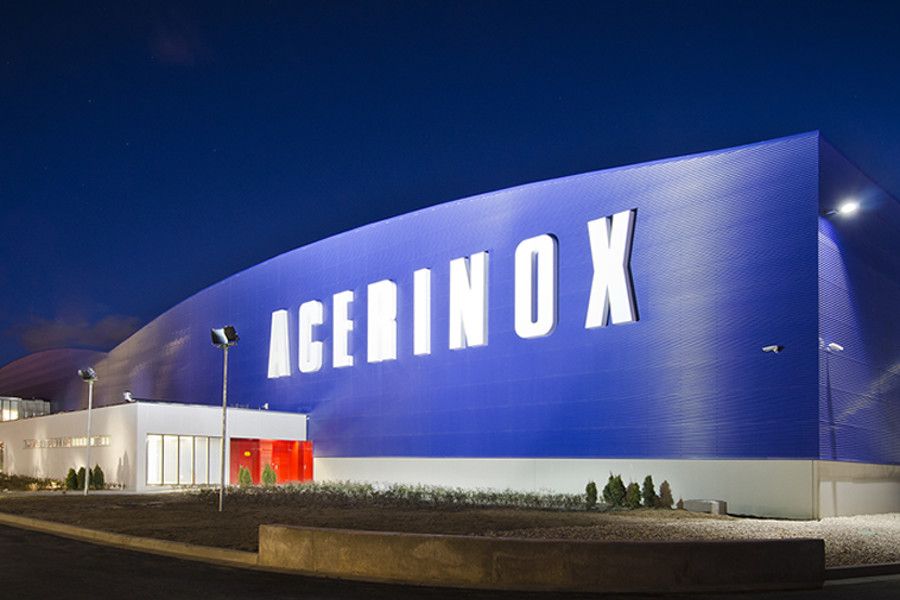
Spanish stainless group Acerinox bullish on H2 volumes
Spanish stainless steel group Acerinox said May 11 it is optimistic about the second half of 2021 with 80% more volume on its order books than March 2020 and 40% more than March 2019.
The company cited good demand from all stainless steel consuming sectors, while healthy orders for alloys, means its German-based VDM subsidiary should also recover from June, it said.
Acerinox said inventories are being rebuilt along the supply chain consumer sectors such as autos, food processing and domestic goods boosting demand and lifting margins.
In the first quarter, Acerinox produced 650,000 mt of melt shop output, up 9% year on year and up 8% form Q4 2020.
Its cold rolled output was flat year on year at 394,000 mt, but up 7% from Q4.
Its long product output was 63,000 mt, up 11% year on year and up 19% quarter on quarter.
The company said demand for its flat product increased both in the US and Europe, although export competition was still high in the latter. Its Asian business, however, remains impacted by latent overcapacity, it said.
In 2020, 46% of its volume was in the US market, 38% in Europe, 11% in Asia and 4% in Africa.
Acerinox operates manufacturing facilities in Kentucky, in the US, which has around 35% share of the US’ stainless and high performance steel market, while in Europe its market share is around 26% through plants in Spain and Germany.
Its other operations are in South Africa where it owns 76% of Columbus Stainless and Malaysia where it owns 98% of Bahru Stainless cold rolling shop.
— Gianluca Baratti

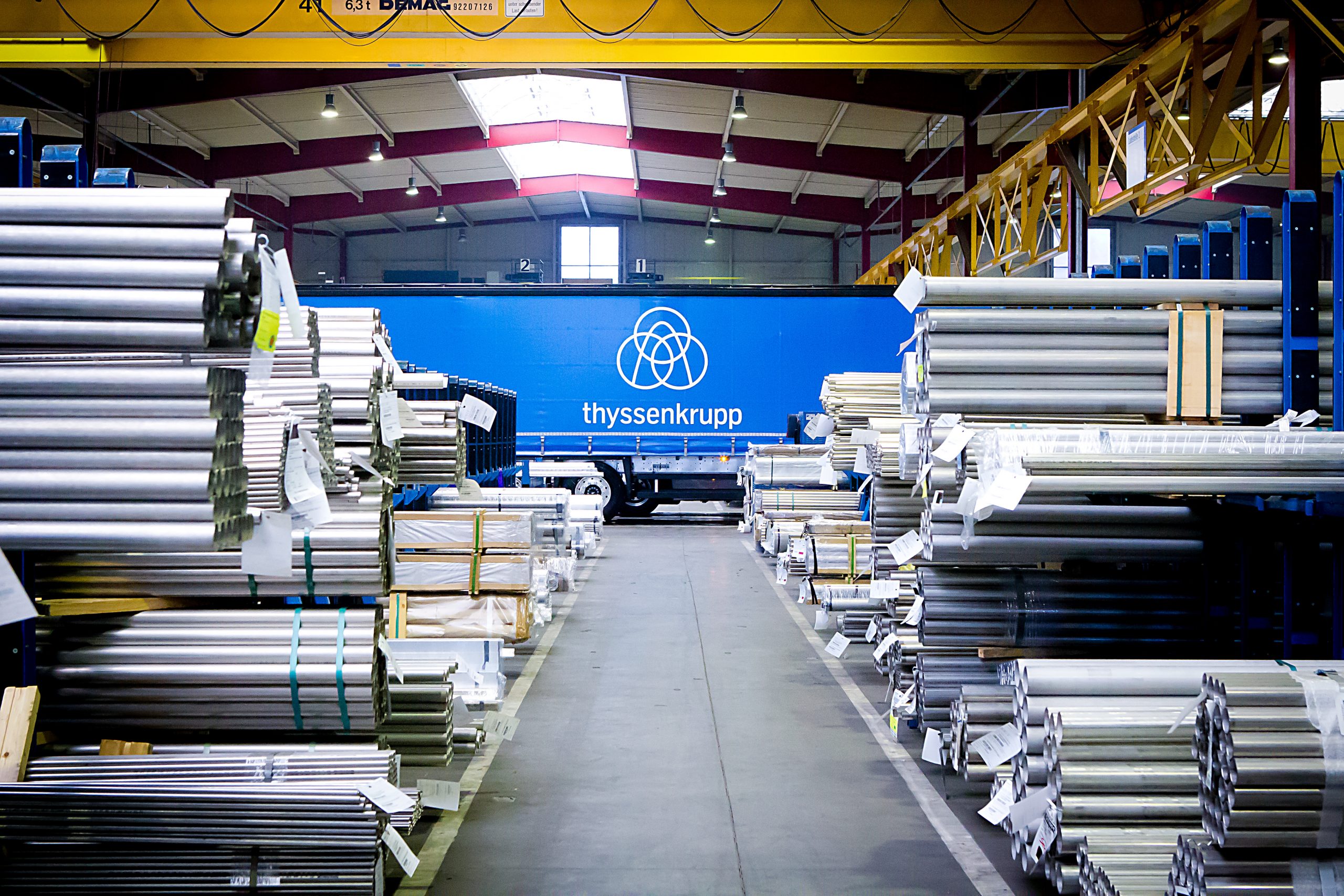
No steel spinoff this year: Thyssenkrupp CFO
German Thyssenkrupp’s steel unit has seen further improvements on robust demand and higher prices and will not be spun off this year, CFO Klaus Keysberg said May 11.
The company said the main driver for steel was its main customer group, the automotive industry, though demand was somewhat tainted by components and logistics issues in the automotive supply chain.
“There is muted dynamic. We know about the stoppages at Ford and others. We do not believe call-off figures will be the same as before,” Keysberg said at a press call for Thyssenkrupp’s Q2 results (January-March). “OEMs cannot produce as much as they can sell, but we believe the volumes will be taken up eventually.”
Restructuring of steel
In terms of the expected spin-off of the steel unit following several attempts to find an external partner or buyer, Keysberg said there would be no timeline for it but it would not happen this year. “There is no time pressure,” he said.
The sale of Italian stainless steelmaker AS Terni was ongoing and Thyssenkrupp said it would be in talks with several interested parties. Italian re-roller Marcegaglia said in April it would be “firmly” interested in acquiring Terni.
Thyssenkrupp has already cut 5,400 jobs out of the planned 12,000 job reductions across the units and does not currently anticipate the need for more.
Thyssenkkrupp will keep the plan to reline one of its blast furnaces from July and will be pre-produce and purchase material for the approximately half year the blast furnace will be taken offline.
Market participants said they expected the reline and pre-production to intensify the steel shortage gripping the European market.
Steel unit Q2 performance
Keysberg said that due to the primary focus on contract business rather than spot, the effect of rapid steel price rises in the European steel market will be factored in with a time lag. The current all-time high in iron ore will also have to be factored into coming contract negotiations, he said.
“We have seen over the past weeks that iron ore is extremely high, which means it will effect margins and that we will be discussing this with OEMS,” Keysberg said.
According to analysis by S&P Global Platts, April’s HRC-raw materials spread at Eur632/mt ($765/mt), up from, from Eur477/mt in March, was the highest since at least April 2016 when the spreads were first tracked by Platts. A break-even for mills is estimated at Eur250/mt.
Keysberg hinted that higher production costs of green steel will have to be passed on to customers. He said there was no financial incentive for sustainability in the supply chain and for the auto industry to purchase green steel.
Crude steel production increased 5.7% year on year to 2.2 million mt at the integrated steelworks in the company’s financial Q2, largely stable quarter on quarter. Thyssenkrupp’s semis producer HKM saw an output increase of 5.6% to 756,000 mt, a quarter-on-quarter uptick of 1.7%.
Shipments of cold-rolled slightly decreased from 1.8 million mt in Q2 last year to 1.7 million mt Q2 this year, but saw a 6.3% increase quarter on quarter. Hot-rolled shipments grew from 122,000 mt Q2 last year to 129,000 mt this year, recording a 5.7% increase compared with the first quarter of the year.
At the material services unit, which includes the company’s steel distribution, sales were down by 3% year on year mainly due to materials shortages in the warehousing and distribution business. The unit did record higher sales only in Eastern Europe and at the European service centers.
For the current fiscal year Thyssenkrupp expects further continuing economic recovery, “albeit with subdued momentum”, the company said.
As a result of expected improvements Thyssenkrupp expects an adjusted EBIT to increase significantly towards a positive result in the “mid three-digit million euro range”. The previous forecast predicted break-even.
— Laura Varriale
ArcelorMittal Germany acquires bright steel producer
ArcelorMittal has expanded its presence in Germany by acquiring bright steel bar maker Dortmunder Blankstahl located in the Ruhr area, ArcelorMittal Germany said May 10.
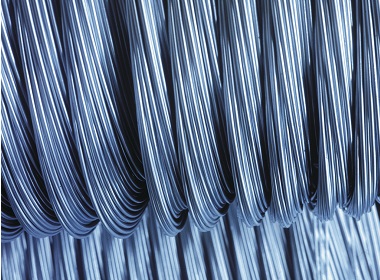
The plant produces drawn bright steel rounds, squares or hexagonal products, tool steel and wire on nine drawing lines. The total production area is 70,000 sq m. The plant mainly caters to the automotive industry.
The company will be integrated into the ArcelorMittal Group as ArcelorMittal Dortmund.
ArcelorMittal Germany is Germany’s second biggest steel producer after Thyssenkrupp Steel and has four main production sites in the country, producing 8 million mt of crude steel per year.
These include two integrated flat steel production sites in Bremen and Eisenhuttenstadt as well as two long steel production sites in Hamburg and Duisburg. In addition, the group maintains ArcelorMittal Construction in Sandersdorf, a production site for sandwich panels.
ArcelorMittal said in its Q1 results statement May 6 that strong automotive demand is expected to drive apparent steel consumption in Europe, forecast to grow within a range 7.5%-9.5% in 2021.
— Laura Varriale