

Short E8 scrap supply pressures Italian rod further
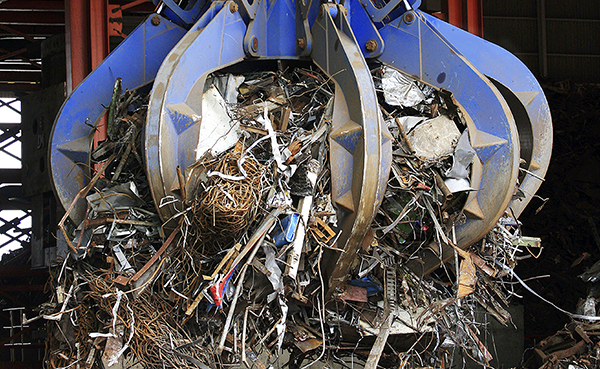
Tight supply of mixed and high-grade new arisings E8 in Italy is causing prices to rapidly increase and disrupting drawing-quality wire rod production.
A similar if not worse situation is being reported in France and Germany, where wire rod producers are looking for E8 to be able to respond to increasing European demand. Short supply of E8 is also pushing prices up throughout Europe, scrap and wire rod sources tell Kallanish.
In Italy, all rod producers stopped sales last week due to escalating prices. They are now struggling to find the high-quality of E8, particularly, and will not go back to quoting unless they resolve the issue of price and supply
The high grade of E8 was sold last week in Italy at €420/tonne ($509) delivered. This price, however, has become outdated as mills are now paying €440/t delivered and €450/t is being quoted.
Italian mills purchase this grade from Eastern European countries, France and Germany. This month, however, these regions will be shipping considerably lower volumes to Italy due to the short supply. Compared to northern Europe, southern Europe has some more E8 availability due to the presence of large re-rollers. This is however not enough to respond to booming demand from mills.
Before Italian wire rod producers stopped sales, local drawing-quality material was sold at €700-720/t ex-works, up from €680-700/t previously, with drawing mills requesting material thanks to their high level of orders. When producers go back to quoting, the product is expected to approach the level of €800/t ex-works, as current scrap prices make even €750/t unworkable, a source believes.
The escalating tension with E8 in Europe is not seen easing in the short term. French drawing-quality material is also at €700/t base ex-works. Domestic transaction prices in other northern European countries for drawing-quality wire rod are currently at €670-690/t ex-works but producers are also asking for €700/t ex-works on average (see Kallanish 7 May).
Natalia Capra France

Iron ore retreats, scrap jumps in uncertain market
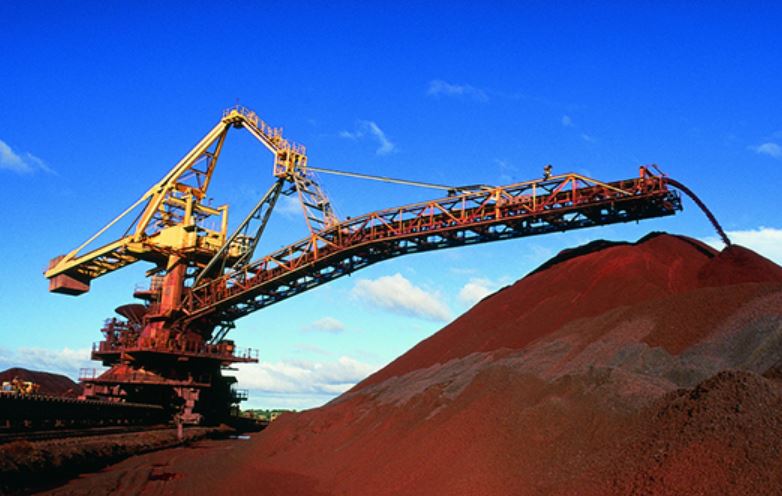
Seaborne iron ore prices fell back on Thursday, while scrap prices were still catching up rapidly. Strong Chinese steel output continues to support raw materials prices, but speculators took a hit to their confidence, sending futures prices lower.
The Kallanish KORE 62% Fe index fell $5.34/t to $220.64/dry metric tonne cfr Qingdao. The Kallanish KORE 65% Fe index dropped $5.09/t to $254.49/dmt cfr, but the KORE 58% Fe index was flat at $182.90/t,
On the Dalian Commodity Exchange September iron ore settled down CNY 47/t at CNY 1,268/t ($196.48/t), while on the Singapore Exchange June 62% Fe future settled down $16.51/t at $210.83/t. The same contract for 65% Fe and 58% Fe futures settled down $16.44/t at $245.20/t, and unchanged at $184.47/t respectively.
Chinese scrap prices continue to increase however after lagging the sharp increases in iron ore. 6mm+ heavy scrap delivered to mills in the Yangtze River Delta increased CNY 133/t on Thursday to CNY 4,180/t. There was some mix in confidence however. Binxin Steel in Jiangsu cut its scrap purchasing prices by CNY 30/t on Thursday. Many more mills hiked their purchasing prices however, including a CNY 270/t hike in Shagang’s Heavy 3 purchasing price to CNY 4,190/t. In Tangshan, billet prices increased CNY 50/t to CNY 5,820/t.
Chinese steel output remains at high levels, supporting both iron ore and scrap demand. According to the China Iron and Steel Association (CISA), its member mills produced crude steel at a rate of 2.418 million tonnes/day in the first ten days of May. That was up another 0.75% from the end of April and 17.84% higher y-o-y.
Sentiment has been hit however by weak lending data for April, and by continuing comments by senior politicians that commodity prices need to be brought under control. This took the wind out of some of the speculative buying on futures markets.
Taiwan eyes more semiconductor supply for Europe
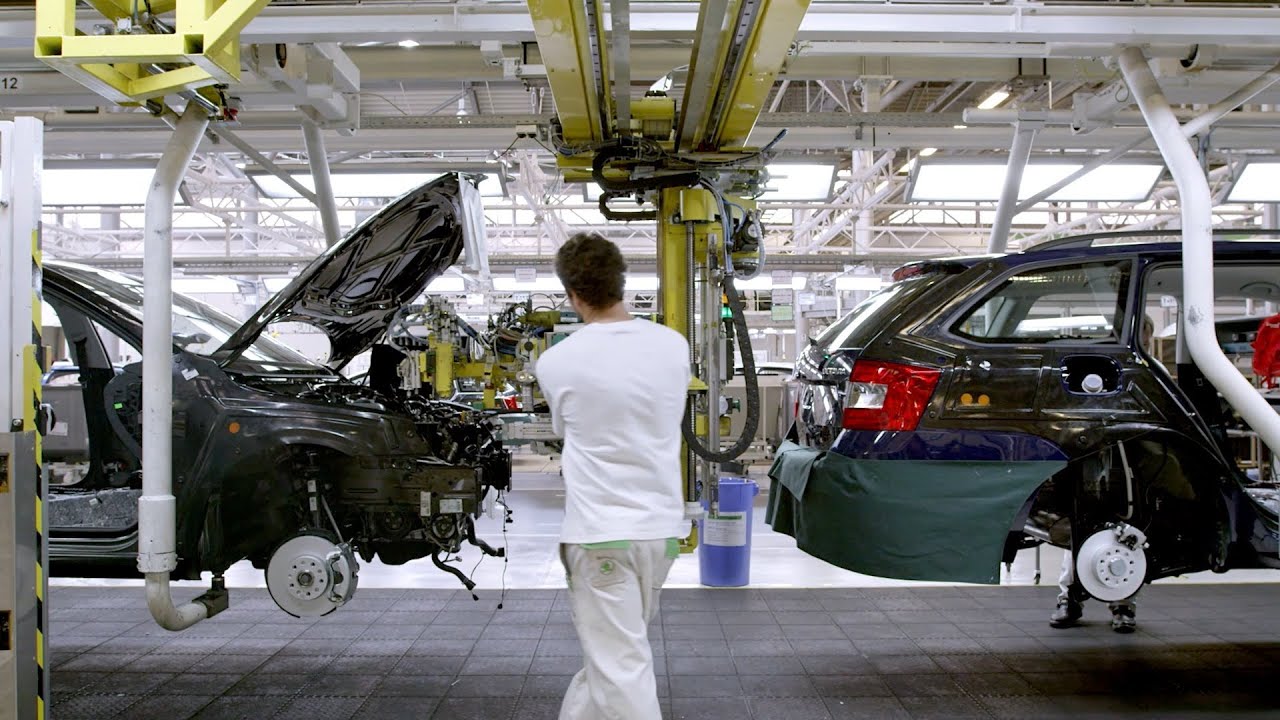
Taiwan’s president promised to work with the European Union to boost its supply of semiconductors due to a global shortage that has mostly impacted the automotive industry.
“Taiwan will continue to cooperate with the EU to establish a more resilient supply of critical commodities such as semiconductors,” said this week President Tsai Ing-wen in a video message broadcast at a democracy conference in Copenhagen.
She also renewed her call to negotiate an investment agreement between the EU and Taiwan.
In April, the country’s leading semiconductor manufacturer Taiwan Semiconductor Manufacturing Company (TSMC) said the automotive industry can expect semiconductor shortages to begin easing in the second quarter.
However, overall deficits of critical chips will last throughout this year and potentially into 2022, it added.
The fire in March at semiconductor manufacturer Renesas in Japan exacerbated existing supply chain disruptions (see Kallanish passim). This is likely to hamper the automotive sector recovery and impact steel demand, said Fitch Ratings.
This disruption has affected a number of global carmakers in Asia, US and Europe, given Renesas is the second-largest producer globally of car microcontroller unit chips. The shortage is also disrupting automotive production in Russia.
Russia’s Ministry of Industry and Trade expects semiconductor shortages affecting various automotive manufacturers in the country will be resolved by the end of this summer.
In 2021, lost profits for the global automotive industry due to semiconductor shortages could amount to more than $60 billion, according to Bloomberg.
This problem will further hurt the global automotive industry, and global car production in the first half of the year may decrease by 2 million units, says Oxford Economics.
Svetoslav Abrossimov Bulgaria
Decision on future of Italy’s top steelmaker delayed as demand keeps rising
The Italian flat steel market faced continuing uncertainty after a key legal body put off a decision May 13 on the future of the largest domestic producer, the former ArcelorMittal Italia, now Acciaierie Italiane.
The market had awaited the Italian State Council’s decision on whether Acciairie Italiane could keep producing crude steel after the Lecce regional administrative court said Feb. 13 that ArcelorMittal had to shut all hot-end operations within 60 days at its Taranto plant to curb emissions.
ArcelorMittal appealed the decision to the Italian State Council, with a final hearing expected May 13, but the court said it would take more time to decide. A decision should come within 45 days, but sources said it is likely to be made sooner.
“Italy is a major transformer market that consumes around 12 million-13 million mt of coils a year, so we need a strong domestic player,” a source from a large Italian distributor said. “It is impossible to find materials at the moment, and whoever has materials can do the prices that they want. It is so crazy what is happening to Acciairie Italiane, as we need material.”
Amid the uncertainty, import quotas from crucial markets such as India have been exhausted. Steel demand is strong and supply is low.
Italian HRC prices have gone up this year Eur423/mt, with prices reported around Eur1,100/mt base ex-works with imports from Vietnam heard at $1,320/mt CFR Italian ports.
Acciairie Italia is working with two blast furnaces, No. 1 and No. 2, because No. 4 has been temporarily shut for maintenance and should restart by mid-June. The company is targeting 5 million mt of crude production by year’s end.
Each blast furnace has a design capacity of 1.8 million-1.9 million mt/year of crude steel, but they are not operating at capacity. Blast furnace No. 5, the largest in Europe with a production capacity of around 3.5 million mt/year, was idled in 2015. Blast furnace No. 3 has a capacity of about 2 million mt/year of crude steel but was idled in 1994 and is to be dismantled.
Italy has two large flat steel producers: Acciaierie d’Italia, with an installed capacity of 9 million-10 million mt of crude steel capacity a year, and Arvedi, with about 5 million mt of crude steel capacity.
Italy is the second-largest European steel producer after Germany. Last year, according to Italian steel association Federacciai, the country produced about 20 million mt of crude steel.
— Annalisa Villa
