


Italian stainless scrap prices rise
Italian stainless steel scrap prices are rising significantly, in line with European values and increasing nickel values that are contributing to push up finished product.
304 and 316 grade stainless steel scrap are increasing by €100/tonne ($121) on average month-on-month depending on quality and tonnage.
304 is being sold at €1,440-1,500/t delivered. Grade 316 remains in short supply and is sold this month at €1,860-1,920/t delivered, also depending on quality and quantity.
After dropping in March and April, nickel prices are climbing. Offers for nickel cash buyers were at $16,778/t on 8 April and reached $17,404/t on 14 May, Kallanish is told.
Like last month, demand for finished stainless products in Italy remains particularly strong, and prices are increasing for flats, tube and long products.
Natalia Capra France

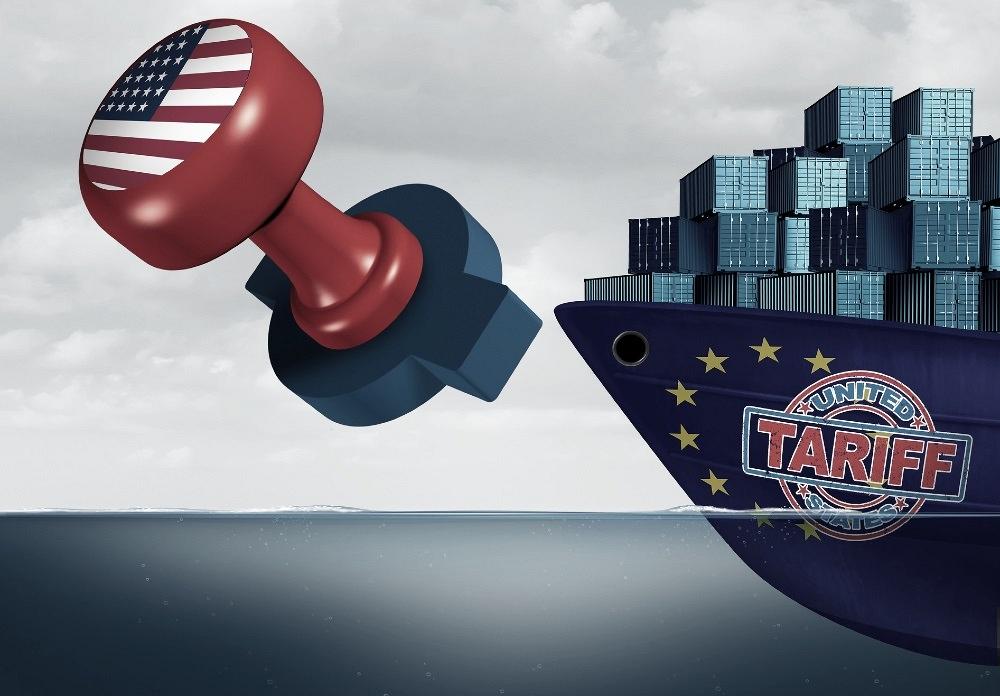
EU, US agree truce over Trump steel tariffs
The EU and US issued on Monday a joint statement to announce the beginning of a collaboration to tackle global steel and aluminium excess capacity.
The move is the first concrete one towards the ending of existing disputes started with the imposition of US Section 232 measures in 2018.
“During a virtual meeting last week, the leaders acknowledged the need for effective solutions that preserve our critical industries, and agreed to chart a path that ends the WTO disputes following the US application of tariffs on imports from the EU under section 232,” European Commission Executive Vice President Valdis Dombrovskis, US Trade Representative Katherine Tai and US Secretary of Commerce Gina M. Raimondo say in the statement seen by Kallanish.
The first result of this new collaboration was the decision to avoid implementing new trade barriers negatively affecting bilateral trade. Section 232 measures remain in place at this stage, but the EU, for example, is suspending the planned doubling of retaliatory measures on some US goods.
The EU and the US have now committed to find solutions before the end of the year, to address excess capacity and ensure long-term visibility for the steel and aluminium industries.
When Section 232 measures were imposed by the Trump administration on steel and aluminium, Europe was among the most important US trade partners that did not reach a bilateral agreement to limit their impact. The latest announcement marks a first step towards a real trade truce between the EU and the US, and could lead to important changes in existing trade measures going forward.
Emanuele Norsa Italy
Italian longs producers seek €100 increases
Italian long products mills’ asking prices are increasing by a staggering €100/tonne ($121) compared to last week as the price craze has extended from flats to longs, sources tell Kallanish.
After a lull last week when all Italian longs producers halted sales, new merchant bar asking prices are reaching €400/t base ex-works. Until Monday this week domestic transactions for merchant bar were at €300-350/t base ex-works. Including size extras, contracts are at €720-770/t ex-works. This, however, is forecast to increase by the end of the week to well over the level of €800/t ex-works.
The steep increases are now causing a standoff in the market, but as stocks are low throughout the value chain, distributors are expected to go back to purchasing at the new prices. Concerns are being voiced over the “capability of distribution and end-users to absorb such steep and continuous increases”, a source comments. The issue of bank guarantees and insurance may slow the sector as each truck load will need increased bank guarantees that are difficult to obtain at a time of crisis.
Meanwhile, beams producers also increased their prices by €100/t compared to the beginning of last week. Values for the first category of beams have gone from €380/t base ex-works of last week to €480/t. New sections asking values are now at €870/t ex-works including size extras. The target for the first category of beams is to go over the level of €900/t ex-works, Kallanish hears.
Meanwhile, Spanish beams and merchant bar producers are also said to be going back to quoting this week at increased prices.
Germany is currently driving Italian demand for beams, while strong demand for merchant bar from northern and Eastern Europe is filling Italian and Spanish producers’ order books.
Natalia Capra France
US steel sector backs US, EU talks on overcapacity, but wary of impact on trade
US steel groups welcomed an announcement May 17 from US and EU trade officials signaling the beginning of discussions to address global steel and aluminum overcapacity, but they asserted that such talks should not alter any existing trade measures that the US has imposed on the EU to protect the domestic steel industry.
American Iron and Steel Institute CEO Kevin Dempsey said he appreciated the commitment from the US and EU to work together on market distorting concerns, but this cooperation should not necessarily lead to the removal of current US steel trade policy.
“I am hopeful that the US government can work with the EU toward substantive solutions to the global overcapacity crisis in steel while maintaining the necessary trade measures to prevent surges in steel imports that could quickly undermine the US industry and our national security,” Dempsey said in a statement.
United Steelworkers President Tom Conway provided similar commentary, expressing hope that the US and EU can reach a solution to limit damaging global overcapacity without “any approaches that undermine the strength of our industry and the opportunities provided to US workers,” according to a separate statement.
Despite the upcoming discussions between the two governments, Conway said US trade enforcement, such as tariffs against the EU, should remain in place.
“The EU is an important ally, but in the past, it has been part of the problem, not part of the solution,” Conway said. “We have more than 40 unfair trade relief measures in place against EU steel and aluminum products that resulted from their dumping and subsidies targeted at our market.”
The comments from the AISI and USW follow a joint statement from US and EU trade representatives in which they expressed commitment to finding “solutions before the end of the year that will demonstrate how the US and EU can address excess capacity, ensure the long-term viability of our steel and aluminum industries and strengthen our democratic alliance.”
“During a virtual meeting last week, the leaders acknowledged the need for effective solutions that preserve our critical industries, and agreed to chart a path that ends the WTO disputes following the US application of tariffs on imports [of steel and aluminum] from the EU under section 232,” according to the statement.
The joint statement was released by US Trade Representative Katherine Tai, US Secretary of Commerce Gina Raimondo and European Commission Executive Vice President Valdis Dombrovskis.
While the officials pledged to consider appropriate trade measures to preserve their respective metals industries, they “agreed to avoid changes on these issues that negatively affect bilateral trade.”
Talks could pave way for US repeal of tariffs
Industry analysts speculated that the cooperation between the US and EU to address steel and aluminum overcapacity could lead the US to remove its Section 232 steel and aluminum tariffs against the EU.
“We assess there is a strong likelihood that Section 232 tariffs are eventually removed against Europe as the region has historically not dumped steel into the US and removing tariffs should be net positive to manufacturing employment,” UBS analyst Andreas Bokkenheuser said in a report May 17.
Bokkenheuser said an end to the tariffs against the EU could benefit US manufacturers who are currently paying the highest steel price globally and are struggling to remain competitive against imported finished goods.
Any near-term impact from a tariff removal would be limited due to current supply tightness in Europe, he added.
Keybanc analysts said the US-EU discussions come at a time when metal users in both regions are facing margin and demand pressure with steel and aluminum prices reaching record highs.
“Assuming trade barriers on the countries, notably the Section 232 tariffs on carbon steel and aluminum, are dispelled, this could create another viable and more economical supply path for US steel and aluminum consumers and potentially chart a course to displace more of the draconian trade measures in both regions with other trading partners enacted over the last few years,” KeyBanc said in a report.
Aluminum Association welcomes joint US-EU action
Aluminum Association CEO Tom Dobbins said joint discussions on global overcapacity represent an important step towards a better trading relationship between the US and EU.
“It is time for nations committed to a market and rules-based global trading system to come together to combat this shared challenge,” Dobbins said in a statement.
“Any final agreement with Europe should emphasize strong trade enforcement based on a common set of rules. We look forward to supporting this process and are hopeful that the ultimate outcome will address both global aluminum overcapacity and help normalize the US-EU trading relationship.”
The Aluminum Association has repeatedly called for a strong, multilateral effort to address global aluminum excess capacity driven by overproduction in China.
“Massive state subsidies for aluminum production — especially in China — have distorted markets and made it difficult for many aluminum producers to compete on a level playing field for too long,” Dobbins said.
— Nick Lazzaro

US Steel’s Slovakia mill may replace blast furnaces with EAFs with state support
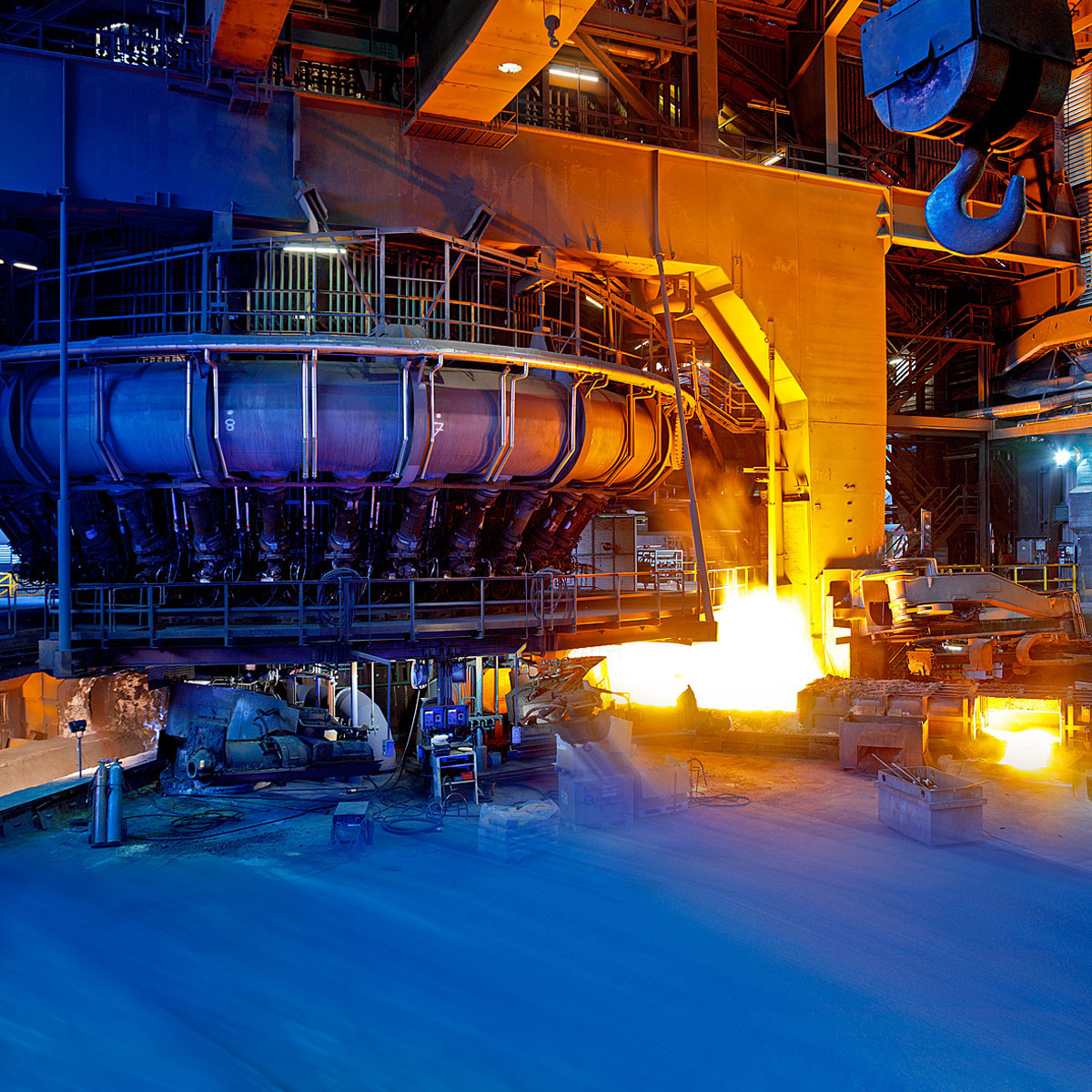
Slovakia’s finance minister Igor Matovic said recent talks with top managers of US Steel have been focused on replacing the three current coke-fueled blast furnaces at its US Steel Kosice mill with two electric arc furnaces and other modernization investments to drastically cut the plant’s carbon footprint.
“We want to secure the future of the Kosice plant, there is no other way than decarbonisation,” Matovic said in a press conference May 14 on his return to Bratislava after two days of talks in Pittsburgh. “That means replacing the coke-fueled blast furnaces with electric arc furnaces.”
Matovic added that talks centered on investment in two electric furnaces and other carbon cutting modernizations in moves which would cut carbon emissions at the Kosice steelmaker by 80%.
“Without this investment, steelmaking in Eastern Slovakia will gradually disappear,” the minister warned.
The total investment costs are estimated at around Eur1.5 billion (1.82 billion dollars), Matovic said. Talks with US Steel’s top managers, including CEO David Burritt, were aimed at explaining how the Slovak government’s Renewal and Resilience Plan and Modernization Fund could be used at the Kosice steel mill to transform it into “an environmental leader in Eastern Europe,” he said. The Slovak plan has earmarked Eur363 million for modernization of Slovak industry aimed at reducing carbon emissions with funding possible for the best available technology currently available.
Other investment help could be offered by the Slovak government “within the framework of what is permitted under European Union rules,” Matovic said, without giving further details. “Without this cooperation from Slovakia, the [modernization] investment will not happen,” Matovic warned.
US Steel still has to take a final investment decision on the Kosice modernization, Matovic said. “We will have to see what the result of these discussions [in Pittsburgh] will be. I believe that the decision will be positive, but there is still a long way to go,” he added.
Secretary of State at the Ministry of Finance, Marcel Klimek, who was part of the Slovak delegation, said US Steel is unable on its own to consider the Kosice mill modernization. “US Steel Corporation in the last two years made a combined loss of almost $1.8 billion…. The situation in the steel sector is so unfavorable that many steel mills are closing because of excess capacity, are facing severe financial problems, or have gone bust altogether,” he added.
Many market analysts in the US question whether it would be better for US Steel to focus on its core American business rather than maintain its only significant European steel production operations at Kosice, Klimek said. The EU’s ambitious carbon cutting and environmental targets had raised doubts at US Steel whether there was still a place for heavy industry, such as steel production, in Europe, he added.
US Steel Kosice has raw steel production capacity of 4.5 million mt. It produces and sells slabs, plate, sheet, tin products, spiral welded pipe, and refractory ceramic materials, and mainly serves customers in the car production, construction, container, electrical appliance, oil and gas and petrochemical markets.
— Chris Johnstone
USTR, EC team up to tackle steel, aluminum overcapacity, discuss tariffs
The US government and European Commission will embark on discussions aiming to address the issue of global steel and aluminum overcapacity, and chart a path to end World Trade Organization disputes arising from the US application of taxes on imports from the EU under Section 232.
The initiative, which could herald both a partial easing of Section 232 tariffs and the EC’s steel imports safeguards due to expire June 30, was announced in a joint statement by US Trade Representative Katherine Tai, US Secretary of Commerce Gina M. Raimondo, and European Commission Executive Vice President Valdis Dombrovskis, May 17.
“During a virtual meeting last week, the leaders acknowledged the need for effective solutions that preserve our critical industries, and agreed to chart a path that ends the WTO disputes following the US application of tariffs on imports from the EU under section 232,” the statement said.
Market sources indicated the EU and US discussions will involve potential changes to the so-called “rebalancing” list of taxes introduced in June 2018 by the EU in response to the US Section 232 tariffs on steel and aluminum. These initially targeted a list of products worth Eur2.8 billion ($3.4 billion) and were scheduled to target a further Eur3.6 billion worth of trade in June 2021.
“It would seem the EU and US are mostly focusing on the next tranche of the rebalancing list for now,” said a spokesman for European Steel Association Eurofer, a producer group.
Steel safeguards
The introduction of Section 232 tariffs in March 2018 was followed later that year by the EU’s introduction of steel import safeguards, involving a quota system on imports from third countries and designed to prevent trade deviation from the US market.
The system has been gradually relaxed and it is expected that any extension beyond the three years for which it was initially designed could lead to a barrage of complaints via the WTO, especially at a time when some steel prices are at all-time highs as supplies remain tight on surging demand.
Independent market analyst Georges Kirps said he considered that “a re-conduction of EU steel safeguards under present market circumstances would be a major economic misstep, with negative impact on today’s main industry drivers of post-pandemic economic recovery in the EU and the UK.”
“Stringent antidumping and anti-subsidiary steel trade measures will continue to stay in effect on imports of main products like strip mill steels,” he said.
The market analyst added the Biden administration could be expected to continue with 232 restrictions regarding China.
Aluminum tariffs
Gerd Götz, director general of European Aluminium, a producers’ association, said the group “welcomes the news that the EU and US are entering discussions to chart a path that ends the WTO disputes following the implementation of the Section 232 tariffs.”
“Rather than slapping tariffs on each other, the US and EU should work together to address the root cause of the challenges faced by the aluminum industries on both sides of the Atlantic, namely the growing subsidized excess capacity of aluminum in China.”
Aluminum trade sources moreover noted that the EU had planned to increase retaliatory tariffs June 1, so the timing of the talks now announced may be “an effort to de-escalate the trade tensions between the EU/US.”
Partnering against overcapacity threat
The US/EC statement acknowledged the “serious threat” and “distortions” posed to the market-oriented US and EU industries, stemming from global excess capacity driven largely by third parties.
The USTR and EC have “agreed that, as the United States and EU Member States are allies and partners, sharing similar national security interests as democratic, market economies, they can partner to promote high standards, address shared concerns, and hold countries like China that support trade-distorting policies to account,” the statement said.
The US and EC will enter discussions on the mutual resolution of concerns in this area. addressing steel and aluminum excess capacity and the deployment of effective solutions, including appropriate trade measures, to preserve their critical industries, they said.
The aim is to find solutions before the end of the year that will “ensure the long-term viability of our steel and aluminum industries, and strengthen our democratic alliance.”
Eurofer, European Aluminium and US steel association AISI all welcomed news of the plan to tackle global excess capacity.
Global steel overcapacity was recently estimated by the OECD as standing at around 650 million mt in 2020. According to Eurofer, this is driven not only by China, but also increasing capacity in India, Turkey, Iran, South Korea, Vietnam, Russia and Indonesia.
Kirps noted that Chinese steel producers are increasingly compelled by party politics to turn their priorities to a fast-growing internal market and to be less reliant on export markets.
Therefore, “Chinese steel overcapacity will progressively be partly absorbed in the medium term by internal Chinese steel consumption growth,” he said.
Global excess primary aluminum capacity stood at some 14 million mt in 2018, European Aluminium reported. The industry group added that an OECD report released last week shows that below-market finance has been found to play a major role in favoring certain aluminum producers, the vast majority being Chinese.
— Diana Kinch
Liberty Steel receives buying interest for Ascoval, Hayange, sale: sources
Liberty Steel, which previously started the process to sell French steel producer Ascoval and rail producer Hayange, has received buying interest from several companies, including steel mills and private equity firms, a source close to the matter told S&P Global Platts.
Liberty has appointed Rothschild & Co to oversee the sale, the company said in a statement to Platts. The move comes amid the metal group’s ongoing financial troubles after its main financier Greensill Capital filed for bankruptcy in March.
“Liberty Steel France, which incorporate, LIBERTY Ascoval and LIBERTY Rail Hayange, has faced a significant reduction in working capital support since the collapse of Greensill Capital. Given the strength of the steel market and the high quality products we produce, we remain confident that we can secure new financing,” a Liberty Steel spokesman said in a statement to Platts.
“At the same time, we are taking prudent steps to explore sale options for these businesses and will be inviting interested parties to submit offers. Through this process we will collaborate with stakeholders to evaluate options and identify the best possible solution for the businesses and their employees,” the statement added.
The company declined to comment further about the sale, the production and the deal with the French government.
Five European mills, one non-European mill and two private equity firms have already expressed some interest in the mills for the first stage of the sale process, according to a source close to the matter.
Both the companies continue to operate normally, with Ascoval producing 25,000 mt of steel a month, of which 80% goes to Hayange, sources said.
The French government in March loaned Eur20 million to the two plants to cover working capital and capital expenditure costs, according to sources. At the time, the French government obligated Liberty to refinance operations by the end of May with additional Eur20 million, and put the two companies for sale in case it failed to refinance, sources said.
Liberty House bought Hayange, which was formerly part of the British Steel group, in August. Ascoval was previously controlled by Greybull Capital, the private equity firm that also owned British Steel, with Liberty buying Ascoval around the same time. Chinese steelmaker Jingye bought British Steel’s UK and Dutch assets last year after the UK-based steelmaker went into liquidation in May 2019. Hayange, however, was not included in this transaction.
The French government had put Hayange up for sale in 2019 separately as it considered the company a strategic asset. The government put in charge the Tribunal of Strasbourg for the sale.
Rothschild and the French government did not reply to Platts inquiry. Hayange produces between 250,000-300,000 mt of rails a year, most of them for France’s state-owned railway company, SNCF.
— Annalisa Villa