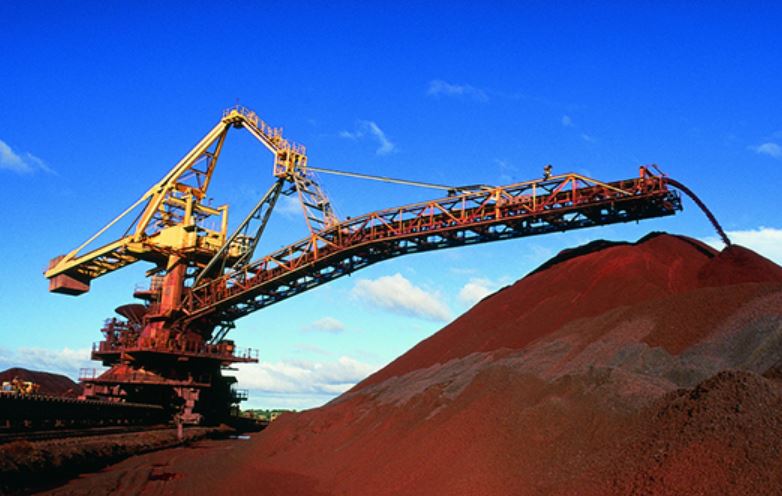
Iron ore rebounds, scrap lags
Seaborne iron ore price rebounded on Thursday on the back of a sharp recovery in futures prices. Scrap is also stabilising after the sharp declines of the last week.
The Kallanish KORE 62% Fe index gained $1.66/t to $195.45/dry metric tonne cfr Qingdao. The Kallanish KORE 65% Fe index recovered $1.74/t to $228.08/dmt cfr, but the KORE 58% Fe index slipped $0.88/t to $170.94/dmt cfr.
On the Dalian Commodity Exchange September iron ore settled down CNY 14/t to CNY 1,021/t ($158.77/t), while on the Singapore Exchange June 62% Fe futures settled up $10.64/t at $183.04/t. The same contract for 65% Fe and 58% Fe futures settled up $11.09/t at $214.12/t, and down $2.23/t at $157.73/t respectively.
In Tangshan, billet prices gained CNY 30/t to CNY 4,730/t. Scrap prices meanwhile are stabilising more slowly. 6mm+ heavy scrap slipped CNY 9/t to CNY 3,463/t delivered to the Yangtze River Delta
Amid all the speculative volatility in prices, fundamentals have been partly forgotten. China Iron and Steel Association (CISA) data this week showed however that steel output saw its first decline in months in mid-May. Average daily crude steel output at CISA members fell 1.59% from early May to 2.38 million tonnes/day. That was still 14.4% higher year-on-year however.


EU to extend safeguards for one year: sources
EU safeguard measures are expected to be extended for one year from the beginning of July, Kallanish learns from sources in the market.
The European Commission is yet to publish a proposal on the future of the measures. Sources in Europe, though, report that local steel associations are communicating that a decision is close.
According to rumours, the measures could be extended for a period of one year with an increase of tax-free quotas of 5% compared to the current volumes.
An extension of measures would be welcomed by steelmakers in Europe, but a decision to extend them only for one year could create further uncertainty in the market, among buyers and suppliers alike.
“An extension until mid-2022 would only mean re-creating the current scenario of uncertainty in 12 months,” a steel processor says. “Imports need to be ordered many months in advance and the uncertainty over the measures is hurting the possibility to make long-term plans.”
Emanuele Norsa Italy
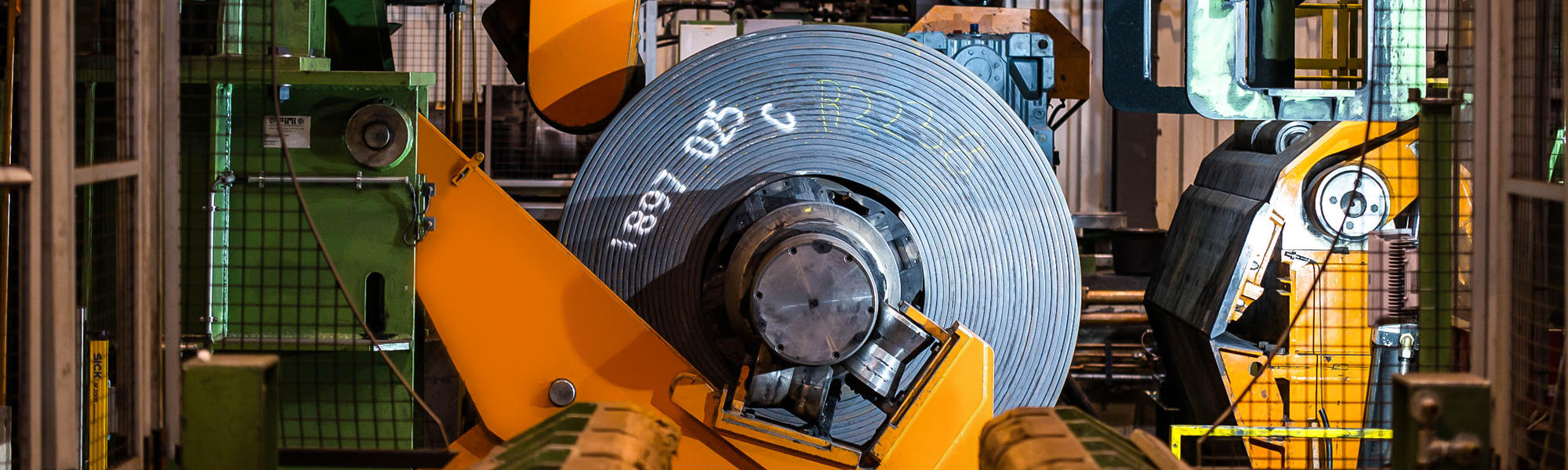
Sentiment changes among EU coil importers
European traders and coil importers have noted a sudden sentiment shift during the last week. This comes after Chinese prices moved down and while the market awaits more clarity over a possible new tax on Chinese hot rolled coil exports, which could be imposed as soon as June or July.
One trader says official import offers from large suppliers have not changed much in Europe, but mills are now more actively trying to close deals, before prices potentially move down. From South Korea and Japan, HRC offers are reported at €1,060-1,070/tonne (1,293-1,305) cfr southern Europe.
“We have seen a change in mood from suppliers, now much keener in selling than during the last months,” a source tells Kallanish. “Buyers have not really changed their attitude as they still need to secure volumes due to the shortage in the domestic market.”
Two market observers report hearing traders selling short positions this week in the EU market, at as low as €950/t cfr from Asia for HRC. This would indicate they expect the market to move down rapidly in the coming weeks.
The imposition of an export tax on Chinese HRC would also have a direct impact on other coil products, such as hot-dip galvanized coil. One trader notes, for example, that Vietnamese HDG continues to be the most competitive for European buyers, but a sudden change in Chinese HRC supply could create problems for future deliveries.
Emanuele Norsa Italy
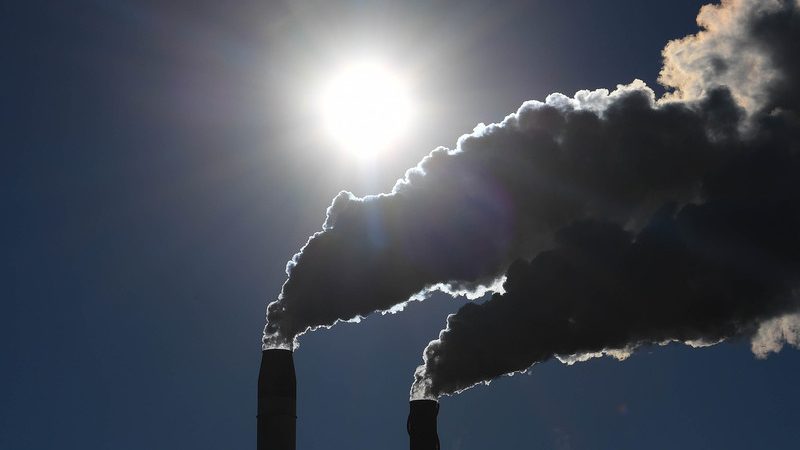
ING leads banking industry group to decarbonize steel sector
Banks led by ING and including Citi, Goldman Sachs, Societe Generale, Standard Chartered and UniCredit have formed a working group to help decarbonize the steel sector and achieve net-zero steelmaking by 2050.
The banks are all major lenders to the steel industry, ING said in a May 27 statement. The banks’ Steel Climate-Aligned Finance Working Group will define common standards for measuring progress on climate targets, proactively supporting the steel sector’s decarbonization.
“Many industries have low-carbon technologies, but the steel sector, which emits roughly 7% of global energy emissions and is heavily dependent on coal, currently lacks commercially viable alternatives,” ING said. “Since the sector is so carbon intensive, there are expectations that financial institutions should support its decarbonization, but so far financial institutions lack the practical tools to do this effectively.”
Senior representatives from each bank’s metals and mining teams will work to draft a climate-aligned finance agreement for the sector, including the scope, emissions pathways, methodologies and governance structure, ING said. The draft will align with other initiatives as much as possible, and help set global best practices on climate for financial institutions that facilitate steelmaking.
“The challenge for the steel sector to decarbonize is significant, with alternative technology paths unproven and not yet commercialised,” said Arnout van Heukelem, global head of Metals, Mining and Fertilizers at ING, in the statement.
Current steel production in Europe is heavily reliant on coking coal, met coke and iron ore as raw materials, along with metallics and scrap, where global trade financing, shipping and risk management forms a crucial part of the steel industry. Investments supporting the sectors, including low-carbon projects in steel and raw materials processing and logistics, have increased demand for capital and debates around public sector support.
“The agreement will be modelled after the Poseidon Principles, the first sector-specific climate-aligned finance agreement for maritime shipping,” ING said.
“The Poseidon Principles were launched in July 2019 with 11 banking signatories representing $100 billion — or 20% — of senior shipping debt and have since more than doubled to 24 signatories representing $175 billion as of March 2021. Developed through unprecedented multi-stakeholder collaboration between major shipping lenders, industrial corporates, and experts, the Poseidon Principles set the stage for a similar framework in other sectors, such as steel.”
The six banks aim to get more banks to join in the final climate-alignment agreement, which will be released at the 26th UN Climate Change Conference of the Parties, or COP26, in November 2021, it said. The working group falls under the umbrella of the recently launched Net Zero Steel Initiative, which is part of the broader Mission Possible Platform, it added.
— Hector Forster

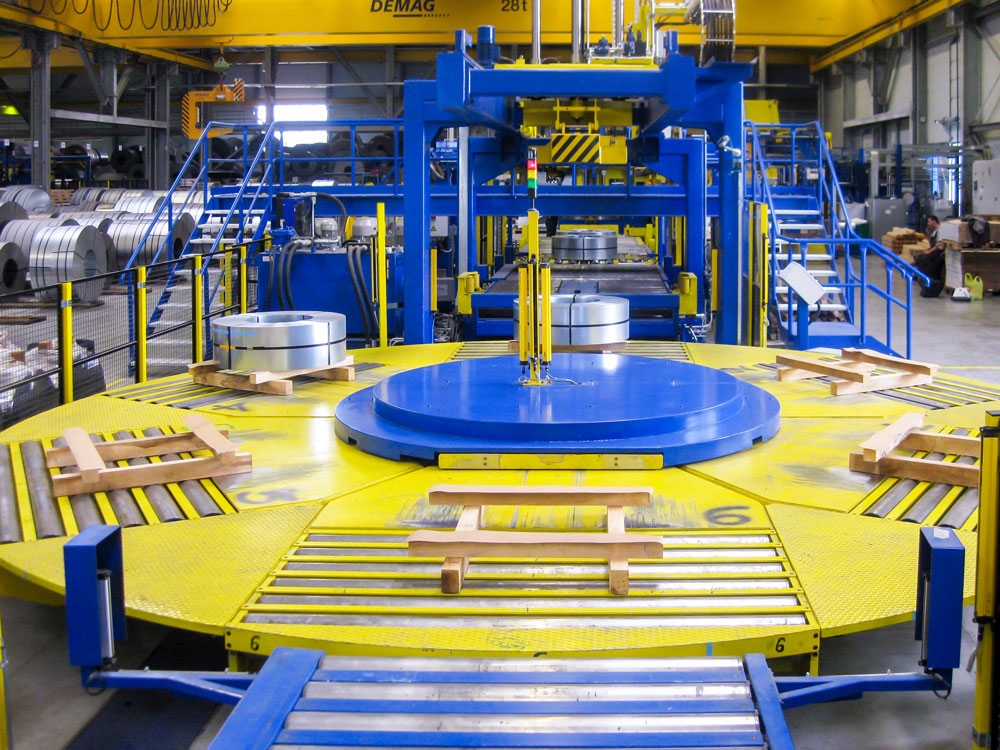
Flat steel inventories in Germany fall further, continue at historic low
Flat steel stocks at German stockholders dropped further in April, continuing on a historical low, resulting from a persistent shortage in the market, according to data from the German steel stockholder association BDS.
Average flat steel stocks in April fell 1.9% month on month to 1.03 million mt. according to the data obtained by S&P Global Platts May 27. Stocks were also down 16% year on year.
Sales volumes in April fell 15% month on month to 546,483 mt, but they rose 41.1% year on year, reflecting the near standstill of the market last year when pandemic-related restrictions were first put in place.
Contrary to flat steel, average long steel stocks in April grew marginally by 0.5% month on month and 1.9% year on year to 819,929 mt. Average sales, however, fell 11.3% month on month to 290,778 mt. In comparison to April 2020, sales grew 3%.
According to Platts monthly German steel sentiment survey published earlier this month, market participants expect further declines in stock levels, with an index of 28 – 50 denotes stability – as stockholders scramble for material, particularly flat steel, with the industry unable to restock in large volumes.
Hot-rolled coil prices have continued to hit new all-time highs since March as a result of the shortage. Platts daily HRC assessment EXW Ruhr stood at Eur1132.50/mt May 26.
European mills continue to have long order backlogs and sources say there are no significant capacity increases planned that could ease the shortage in short or medium term.
— Laura Varriale
Revista InfoAcero Mayo 2021
En el siguiente enlace pueden acceder a la edición de Mayo de nuestra revista: INFOACERO MAYO 2021
A continuación destacamos algunos de sus contenidos:
- Opinión – D. Javier Ucar– Junta Directiva de la UAHE.
- Evolución del Índice de Precios de Productos Siderúrgicos – UAHE
- Formación UAHE: “ 2ª edición del curso Finanzas para no financieros”.
- Conferencias organizadas por UAHE– “ Inteligencia artificial, una oportunidad en tu negocio” y “Perspectivas en el sector siderúrgico, la opinión de los expertos”
- Siderurgia: Previsiones sectores consumidores de acero 2021-2022 -Eurofer