

Spain’s crude steel production continues to recover: Unesid
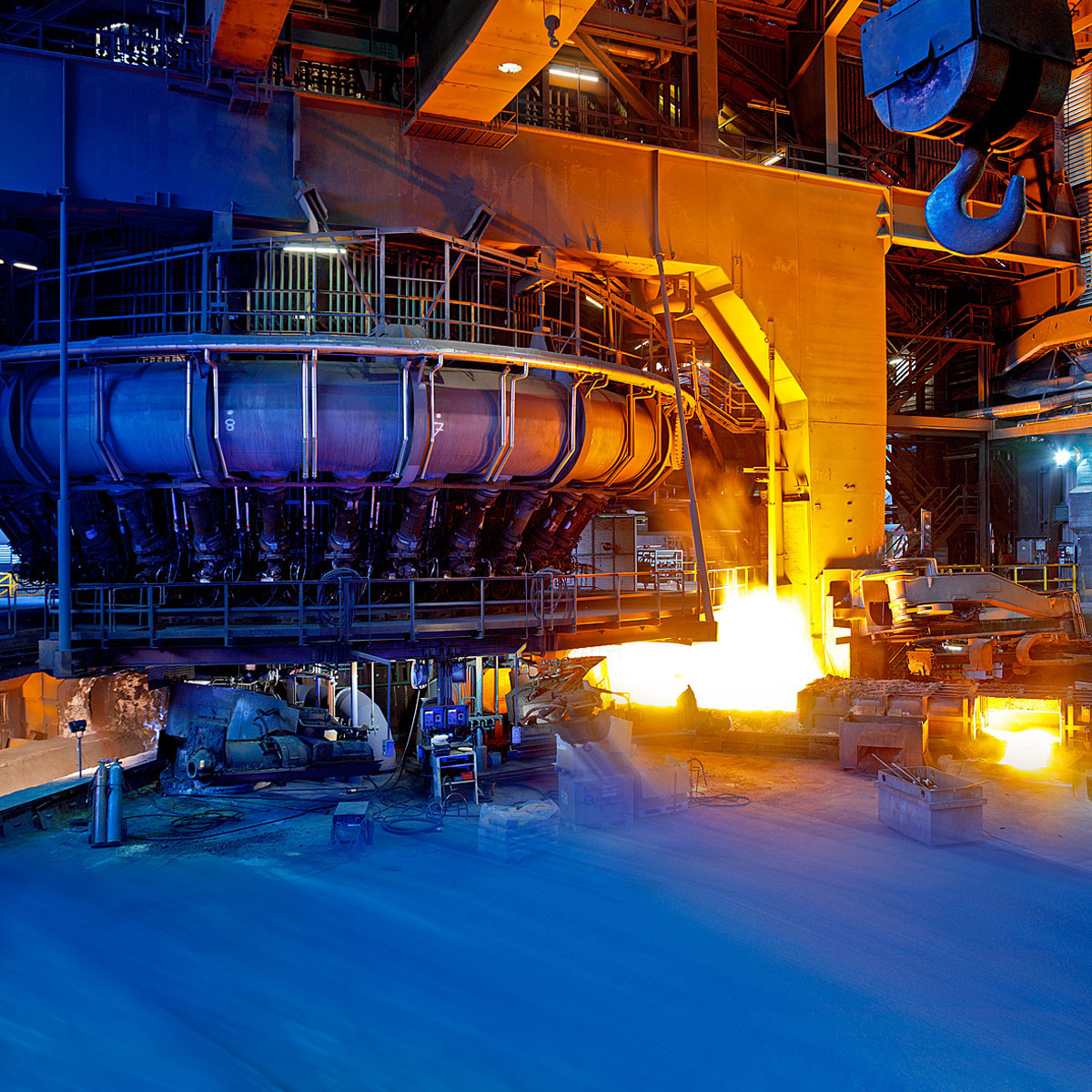
Spanish steel sector activity has continued its post-Covid-19 recovery, registering in April the second-highest monthly production of the last 12 months.
According to Spanish steelmakers’ association Unesid, the local steel industry produced around 1.3 million tonnes of crude steel in April. This volume was just 0.9% less compared to the record output of 1.31mt in the previous month, but 108.6% higher on-year.
During the last seven months, Spanish monthly output ranged between 1.05mt to 1.31mt, except in December when activity is typically reduced, data show.
Since the beginning of 2021, the country saw its crude steel production reach 4.78mt. Unesid did not disclose an on-year comparison in its latest report, but taking worldsteel figures into account, the growth is estimated at 23.4%, Kallanish notes.
Spain used 1.01mt of ferrous scrap for steelmaking in April, the highest monthly volume over the last 12 months, Unesid confirms. During January-April, scrap usage was 3.7mt, representing 77.4% of total crude steel production in the period.
Todor Kirkov Bulgaria

Panic purchases harm German construction, stockist warns
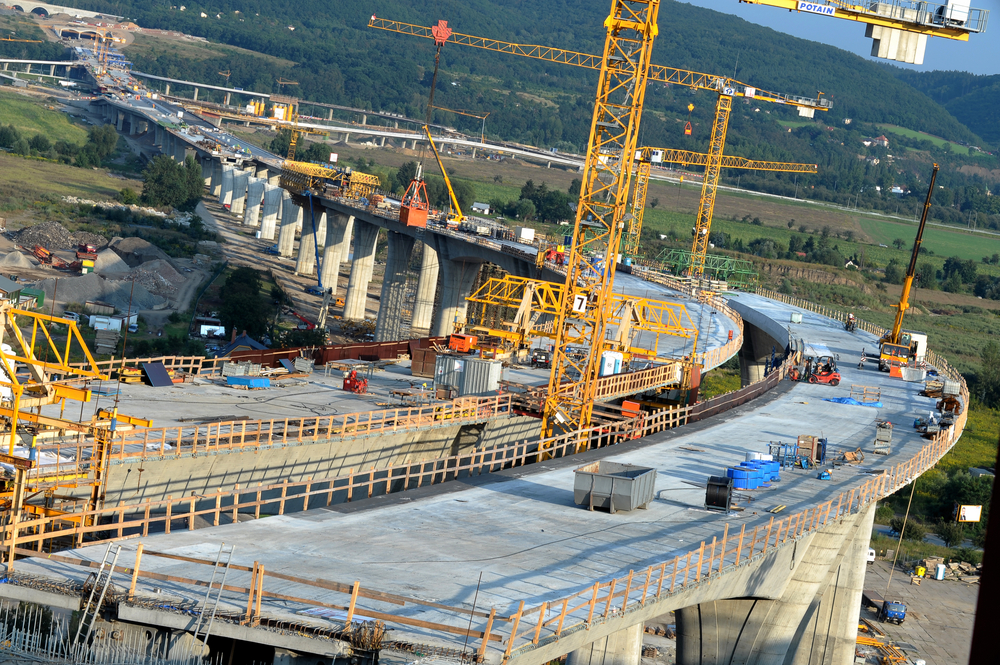
The current rush on the German construction market to secure rebar volumes is likely to aggravate shortages and fuel price hikes even further, a German stockholder and bending firm warns.
In a letter to its customers, the company recommends to make bookings far in advance, but only to the extent needed for projected production. It warns of speculation, and recommends to make deals only on the basis of current purchasing prices.
The company normally informs its customers several times per month, but hesitated to do so in the course of May “because it would have meant ongoing news of shortage and price increases. This would have led to more panic buying, and stressed the tension on the market”, Kallanish reads in the letter. The firm compares the buying attitude with last year’s panic purchases for toilet paper during the first wave of Covid-19.
Rebar base prices from German mills have recently reached a peak of €550/tonne ($669), translating to a delivered price of €815. The construction industry’s main association, Hauptverband der Deutschen Bauindustrie, attributes the increase of steel prices to the overall high utilisation of mills due to higher activity at preferred customer groups like automotive and mechanical engineering. This argument, however, does not explain the surge in rebar prices, a product made by mills exclusively for construction purposes.
Christian Koehl Germany

Severstal eyes ‘disruptive’ technologies for hydrogen-based steelmaking
Disruptive technology is needed to make hydrogen a viable fuel for steelmaking, given its current prohibitively high cost, Severstal tells Kallanish.
The Russian steelmaker views hydrogen as one of the most important drivers of steelmaking decarbonisation in the medium and long term.
“There is a need for hydrogen with a low carbon footprint and at a low cost, but hydrogen from an electrolytic cell powered by renewable electricity costs $5-7 per kilogram,” the firm’s press office says. “This is prohibitively expensive if we do not want low-emission steel to cost significantly more …30% to twice as much. That’s way we need disruption – low-carbon hydrogen for $1.5 and cheaper, and such hydrogen will certainly find demand in other heavy industries as well.”
Taking into account the energy transition and the abandonment of less environmentally friendly fuels, Severstal sees the possibility of replacing coal with hydrogen in the production chain. Hydrogen will thus be used for ore processing, hot iron production and steel production.
“Today, we see that reducing greenhouse gas emissions is important not only for minimising negative environmental impacts, but also important for our main stakeholders, investors, employees, insurers, customers and society, and sustainability our business in general,” the enterprise observes.
The steelmaker and Russia’s largest independent natural gas producer, Novatek, have signed a memorandum of cooperation to develop hydrogen, alternative energy, and greenhouse gas emissions reduction technologies.
Under the agreement, the parties will consider launching a joint pilot project for the production of blue hydrogen from natural gas, using carbon capture and storage technology.
The companies intend to jointly develop the capabilities, necessary standards and engineering solutions for the production and supply of hydrogen transportation pipelines, turbines, and hydrogen storage systems and transport tanks, Severstal says.
Both companies also agreed to partner on the production and supply of hydrogen and the development of technological solutions for the use of fuels based on hydrogen and its carriers, including ammonia.
“With the collaboration with our strategic partner Novatek, we are continuing to develop a number of solutions to reduce the carbon footprint of its activities and expand its range of products produced using carbon-free fuels,” says Severstal chairman Alexey Mordashov. “We expect to see rapid growth in technologies and projects for the capture and storage of CO2 as well as for the production of hydrogen, both in Russia and globally.”
Svetoslav Abrossimov Bulgaria
Miner Vale’s Q3 iron ore pellet premiums rise $10/mt
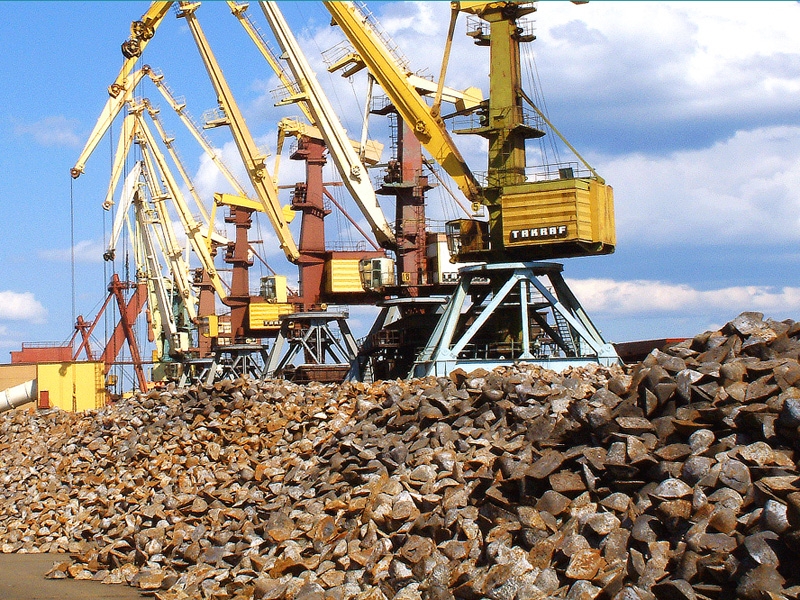
Steel producers may face higher contract iron ore pellet premiums in the third quarter, as Vale reported an increase to premiums, and other producers indicated offers would rise from Q2 premiums.
Vale told S&P Global Platts on June 4 it had defined a $62/dmt premium against 65% Fe fines CFR China pricing, for BF pellets in Q3, which is up $10/dmt from Vale’s reported Q2 premiums. Vale sells limited quantities of pellets under contract in Europe, which mainly buys BF pellets.
For direct reduction pellets, Vale said Q3 premiums were defined at $70/dmt, up from $60.20/dmt reported for Q2.
The DR premiums also apply to 65% Fe fines pricing.
Vale pellet definition
Vale, the world’s largest pellet supplier, said it has concluded its “pellet premium definition process” with buyers. Vale is said to have agreed with customers a single premium per grade, which matches supplies available with contract commitments, and any unperformed or unplanned volumes would be directed to other customers or spot markets. Vale has seen lower pellet output in the past two years, on restricted supplies of pellet feed in Brazil.
The company typically uses fixed freight netback terms for its contracts, which would lead to higher FOB iron ore prices compared with spot Capesize rates between Brazil and China references, using May data, according to a supplier familiar with the terms.
In Europe, Q3 negotiations were at an early stage, sources said, with several companies yet to offer firm levels or enter into premium discussions. Europe may stick to largely pricing BF pellets on a 62% Fe fines basis, with increases expected from settlements for Q2, a producer said this week.
A DR pellet buyer confirmed Vale’s Q3 premium after the reported settlement. BF pellet buyers contacted on June 4 still saw limited settlements, and tight supply from Vale determining a premium offer, rather than demand alone leading to the quarterly increase.
Q2 pellet premiums were heard in a low $60s to low $70s per dmt range, with large volumes of higher-grade pellets agreed at mid-$60s/dmt premiums to IODEX 62% Fe fines, according to market sources.
Pellet premiums were earlier expected to rise due to strong demand in Atlantic and Asian markets, and continued supply constraints and disruptions.
Vale’s pellet indications are in line with the market view on high demand and tight supply, with customers maintaining full contractual quantities, a supplier said.
Steel order books appears to be full into Q3, and steel producers have progressively increased steel prices, with no signs of change outside China, he added.
Iron Ore Co. of Canada’s Sept Iles terminal remains at below-capacity loading after a fire at the end of March affected storage and the loading of pellets and concentrates onto vessels, according to sources close to the operation.
Vale sells pellets under contracts to global markets, including to joint venture partners at its Tubarao pellet complex.
S&P Global Platts Americas and EMEA steel prices, and Europe and US steel mill spreads with raw materials, have seen strong increases through May. This may help absorb increased iron ore costs, after iron ore prices reached record levels in May, and remain at higher levels than in Q1.
The wider 62%-65% Fe fines spread in April and May was expected to support blast furnace pellet premiums, as the market in Europe largely uses premiums off the 62% Fe IODEX index. Suppliers may seek to close the gap by raising premiums to compensate or, alternatively, sell pellets and concentrates off the 65% Fe fines index.
— Hector Forster

Global 2020 steel output rises, demand holds, despite pandemic: worldsteel
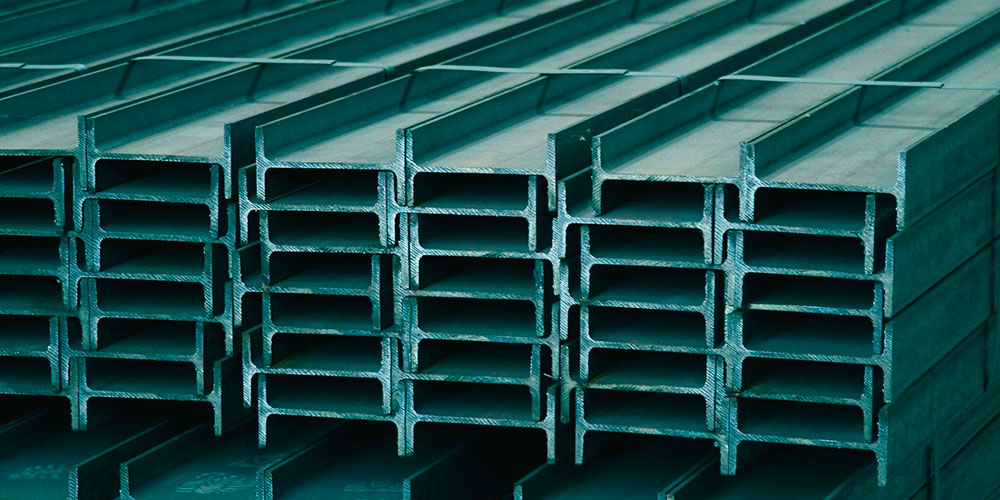
Global crude steel production inched up in 2020 as demand held relatively steady despite coronavirus pandemic disruptions, the World Steel Association said June 4.
Despite the influence of the pandemic, through its different regional impacts, the global steel industry was fortunate to end 2020 with only a minor contraction in steel demand,” worldsteel Director General Edwin Basson said in a report. “We look forward to normalization in demand during 2021, owing to steady progress on vaccines and changed behavior in the global society.”
Steel output reached 1.88 billion mt in 2020, rising slightly from 1.87 billion mt in 2019.
Production was led by China, which accounted for 56.7% of global output at 1.06 billion mt, according to the worldsteel report.
Following China, top steel-producing countries included India (100.3 million mt), Japan (83.2 million mt), the US (72.7 million mt), and Russia (71.6 million mt).
Apparent steel use worldwide totaled 1.77 billion mt in 2020, down only slightly from 1.78 billion mt in 2019.
Rather than slash demand, Basson said the pandemic “has accelerated some key trends” to support long-term prospects in the steel market.
“The steel industry will see exciting opportunities from rapid developments through digitization and automation, infrastructure initiatives, reorganization of urban centers, and energy transformation,” he said.
Steel usage in China rose 9% to 995 million mt in 2020. The country accounted for 56.2% of global demand.
— Nick Lazzaro
Czech steelmakers call for prolonged EU measures against imports
Czech industry association Steel Union has written to the minister of industry and trade, Karel Havlicek, to ask him to back continued EU measures against steel imports.
The letter, seen by S&P Global Platts June 4, said the Czech steel sector was still in a fragile state despite strong price increases in recent months.
Prolonging the measures are expected to have a positive effect on the Czech steel industry whereas steel imports into the EU are likely to flood in if the EU measures, adopted in 2018, are dropped, Steel Union said.
The reasons for adopting the original measures to protect EU steel producers were, if anything, even stronger now than they were then, it said.
The biggest reason is that the US is still imposing 25% duties on imports with Joe Biden’s administration showing no sign of changing that situation.
The European Commission was expected to decide in coming days whether to continue the measures against imports. These include quotas on imports from various countries based in exports to the EU between 2015 and 2017 plus 5% with 25% duties on imports beyond those levels. The quotes were increased by 3% in July 2020, the same level as the increase in the previous year.
Auto manufacturers
Some steel users, such as auto manufacturers, have called for the EU measures to be dropped.
The Steel Union letter, which was also supported by the biggest Czech union representing steelworkers, KOVO, said the annual increase in quotas reduced the impact on consumers and the threat of retaliatory measures against the EU.
Recent rises in the price of steel were not directly caused by the EU measures against imports, Steel Union said, but were primarily caused by strong demand from China, fiscal measures to encourage demand in most large global economies, and the fact that most steel stocks were severely run down in Europe during the COVID-19 pandemic with not all production capacity fully returned to operation.
The Czech steel union counts the country’s biggest steelmakers, Liberty Steel Ostrava, Trinecke Zelezarny, and Vitkovice Steel, among its members.
— Chris Johnstone

Italian plate makers maintain lion’s share of EU spot market
North European plate prices are rapidly catching up to hot-rolled coil prices, with some sources expecting them to surpass HRC by year-end, reinstating the usual premium plate prices have held over HRC. Demand has cooled down slightly over the last few days but market participants were optimistic the positive pricing trend would continue, sources told S&P Global Platts June 4.
While HRC prices saw insurmountable levels, plate prices climbed in the background as slab prices sustained steep prices and plate supply dwindled due to continuous destocking in Germany.
A European mill source said the plate market is healthy and that prices were moving faster than HRC due to scarce availability.
“[Plate] prices are well above [Eur1000/mt ex-works Ruhr] and catching up to HRC rapidly,” the mill source said. “Lead times are already for October minimum for new orders from mills.”
The same source said he expected North European prices to near Eur1100/mt ex-works Ruhr.
In the Italian market, prices were catching up to Ruhr, with offers heard at Eur1050/mt ex-works, according to one mill source.
“Main German players are struggling to offer prices because their lead times are so long so they would rather not offer – it opens up the market for us in Italy,” the mill source said. “The pace is catching up, if someone is in need of material, any price will work.”
The same mill source did notice that demand was starting to lag, as was evident in the coils market.
“The demand for volume is stalling, some buyers are waiting to see where this is going, whether it’s a real or new push. The reality is that slab prices are not going downward, so no reason for prices to change,” the mill source said.
Despite the lag in demand, producers remain optimistic that if HRC prices remain where they are, and government incentives begin to kick in, the market will stay buoyant.
“Recovery plans from all over Europe haven’t materialized yet but when they do, many infrastructure projects will start up, and these projects will take capacity out of the market,” said the same mill source.
Italian plate producers have been wrapping up July orders and looking to offer Eur50/mt more for August delivery, whereas German producers were offering as late as November for new production.
— Amanda Flint