Steel safeguards until June 2024
The Commission has notified the WTO of its intention to renew the steel safeguards for a period of 3 years until June 30, 2024
The notification is attached.
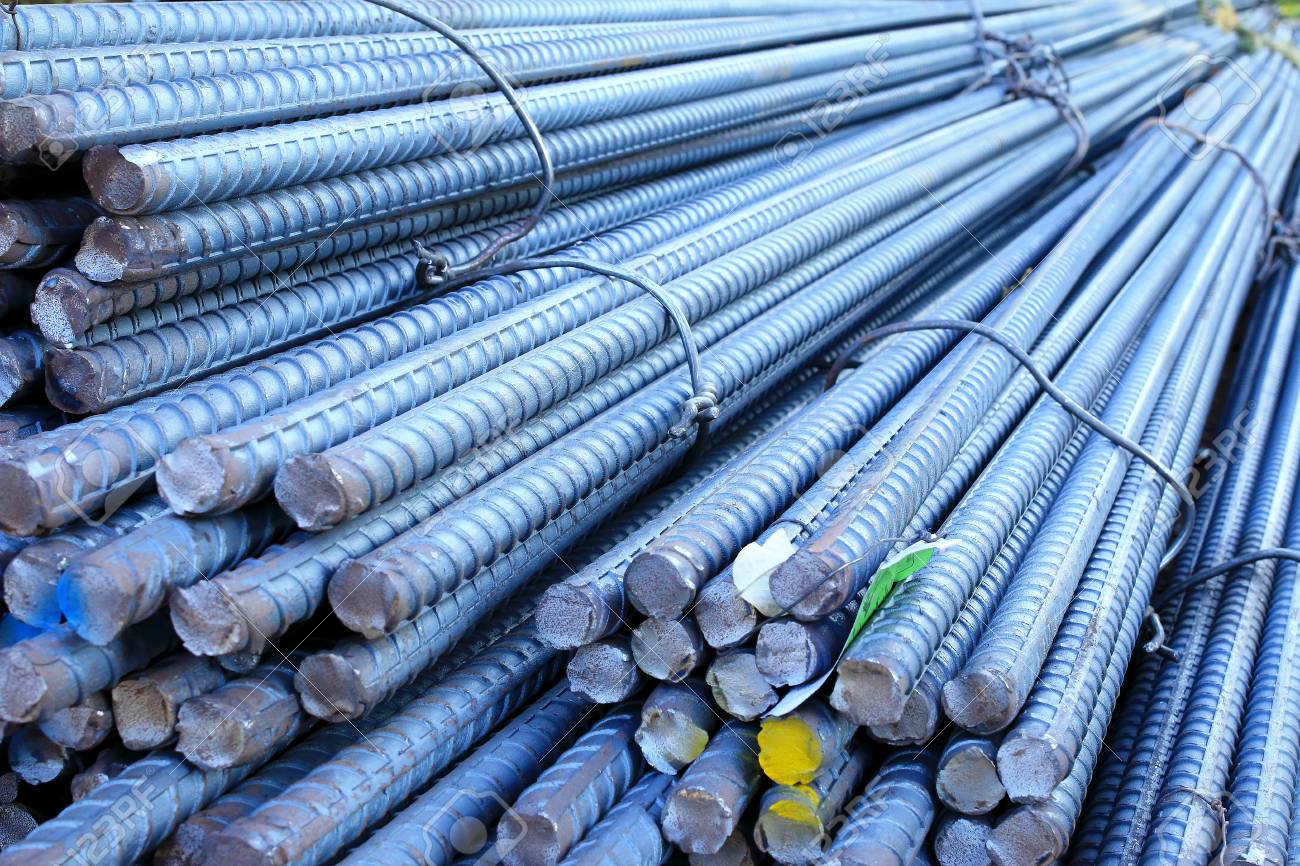
Celsa France, Intersig France team up to supply French rebar market
Long steel producer Celsa France and Intersig France, a subsidiary of the Van Merksteijn International Group (VMI Group), the largest European independent manufacturer of steel wires, have signed a commercial agreement to supply the French rebar market, the two companies said June 10.
Celsa will supply wire rod from its Bayonne, France, mill to VMI Group for processing, the group’s French unit, VMI Atlantic, said in a statement. VMI Atlantic is installing new stretching lines to process the rebars into rebar on coils under the registered name “Flex Wire,” it said.
Celsa in Bayonne has one electric-arc furnace with a capacity of 1.2 million mt of crude steel. It also has a billet rolling line and will add a wire rod rolling mill in the next couple of months, Celsa said in its own statement. Celsa France plans to start production at its new rolling mill, which will have a production capacity of 550,000 mt/y, before the end of the current financial year, and thus start supplying both Intersig France and the rest of its French customers, Celsa said.
The agreement will increase vertical integration along the supply chain in France and will boost supplies of locally manufactured and supplied steel, Celsa said.
According to market sources, apparent and real demand for rebar and wire rod is strong across Europe as supply is limited, in particular for rebar in coils, also due to the safeguards put in place by the European Commission that are limiting the imports of products into the EU.The Platts weekly Northern EU rebar benchmark has increased Eur245/mt since end-2020 to Eur790 ex-works on June 4, the date of the latest available data.
“With this alliance the Group culminates in time and form, in an environment of maximum difficulty due to the pandemic, the Strategic Plan 2017-2021 thanks to the start-up of the rolling mill, its main industrial objective, whose construction has meant a total investment of Eur60 million,” Celsa Group Chairman and CEO Francesc Rubiralta said.
Van Merksteijn Group is a family-owned company based in the Netherlands whose portfolio includes wire in coil, reinforcement mesh (including ECO and ECO+ mesh), lattice girders, spacers and fencing products. The group has a total rod processing capacity of 2.3 million mt/year with its subsidiaries in Almelo, the Netherlands; Dendermonde, Belgium; and Saint-Pourçain-sur-Sioule, France. VMI’s mill in Saint-Pourçain-sur-Sioule has a rebar in coils capacity of 60,000-70,000 mt/year, while the mesh plant will have a capacity of 50,000 mt/year.
Celsa Group is Europe’s largest rebar producer and is the largest recycler in Spain and the second-largest in Europe, recycling 8 million mt/year of ferrous scrap. The group’s activity accounts for up to 1.3% of Spain’s industrial GDP, 0.7% of its exports in the industrial sector and 9.9% in the metallurgical sector.
— Annalisa Villa

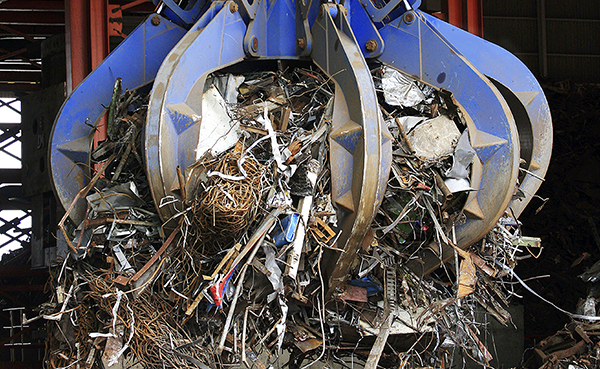
June EU shredded scrap contracts rise sharply on strong mill demand
June scrap prices across Europe rose sharply on month to record index highs for the second consecutive month, as strong demand for premium ferrous scrap grades supported prices, market participants said.
In Northern Europe, Platts’ June assessment for domestic shredded scrap was at a record high of Eur432.50/mt delivered, up on the month from Eur392.50/mt delivered in May.
Shredded scrap contracts for June settlements were largely heard ranging from Eur415-Eur450/mt delivered to the mill in Northern Europe, as prices rose steadily over the start of June, outpacing export ferrous scrap prices.
“We will keep on selling to Spain, Italy and Germany – they are also buying our export quality HMS material at better levels than Turkey,” one EU trader said.
Suppliers reiterated strong scrap demand from European mills, amid record high finished steel prices for both flat and long products.
Platts assessed TSI Northwest Europe Rebar at Eur790/mt ex-works June 4, up Eur15/mt on the week to reach the index’s highest level since July 23, 2008, when it stood at Eur815/mt ex-works. The weekly index is expected to rise further on June 11, with some market sources indicating prices well above Eur800/mt delivered.
Platts assessed Northwest European hot-rolled coil June 10 at a record high of Eur1,145mt ($1,396.50/mt) ex-works Ruhr, almost double since the beginning of the year when the index sat at Eur665/mt ex-works Ruhr Jan. 4.
“Shredded should be around Eur430-450/mt delivered for June depending on location and quality – at least Eur40/mt up on month,” a German supplier said. “We’re also expecting July to be a tight market and then we’ll see how August is – possible summer shutdowns at mills could lead to some softening in scrap prices then, but who knows?”
Limits to automotive production, owing to a sharp squeeze in semiconductor supply, have also tightened supply of high-quality ferrous scrap grades, usually sourced from automotive production and other industrial sectors.
Southern European market
In Spain and Italy, prices remained above the Northern European market for the second consecutive month. Except for January-April 2021, the Southern European shredded scrap assessment was consistently assessed higher than the Northern EU assessment since July 2017.
Platts’ assessment for Southern European shredded scrap was at Eur447.50/mt delivered for June contracts on June 10, up from Eur397.50/mt delivered in May. This meant the index also reached a new record high.
Shredded E40 scrap was offered in Spain at Eur450/mt delivered, with market sources cited Eur440/mt delivered to the mill as the minimum workable level in Italy. Some Italian suppliers cited sharply higher workable levels at Eur490-520/mt delivered for shredded scrap, reflecting tight supply and strong demand.
“Scrap prices in Italy have moved up by Eur50/mt in June, compared to a month ago, across all grades,” one Italian supplier said. “Demand is very strong and long steel producers have low raw material stocks at the moment.”
Sell-side sources cited bushelling prices as high as Eur500-530/mt delivered to the mill in Italy and Spain for June contracts, highlighting the sharp premiums enjoyed by recyclers.
Platts assessed South Europe export rebar at Eur720/mt FOB June 4, stable on week.
“There is strong rebar demand from the domestic and European market,” an Italian mill source said, citing a tradable level at Eur730/mt FOB Italy. “The seaborne market is strong although until yesterday some buyers were worried that prices could go down as Turkish producers had tried to move down scrap prices but they did not manage to do so.”
Turkish deepsea import ferrous scrap prices have hovered just under an index record high price of $515.75/mt CFR last achieved on May 25. Platts assessed Turkish imports of premium heavy melting scrap 1/2 (80:20) June 10 at $509/mt CFR, up $8/mt on week.
— Viral Shah, Annalisa Villa

Global stainless production continues registering record levels
Global stainless crude steel output jumped by almost 25% year-on-year during the first quarter to 14.5 million tonnes, according to International Stainless Steel Forum (ISSF) data seen by Kallanish.
The jump was mainly supported by Chinese output, which recovered 36.9% y-o-y during the quarter to almost 8.2mt. In Europe the recovery stood at 5.3% y-o-y, while US output was in line with Q1 2020 at 624,000t.
According to ISSF figures, Q1 output was the highest on record for stainless steel, increasing 2.7% q-o-q from the latest record, which was registered in Q4 2020 at 14.1mt.
Since 2012, when quarterly global output was in the range of 900,000t, the stainless steel sector has been registering steady increases, fuelled by the jump in production in China and other parts of the world excluding EU, the USA and Asia.
As a comparison, global carbon crude steel output during Q1 this year recovered “only” 10% y-o-y, ISSF points out.
Emanuele Norsa Italy

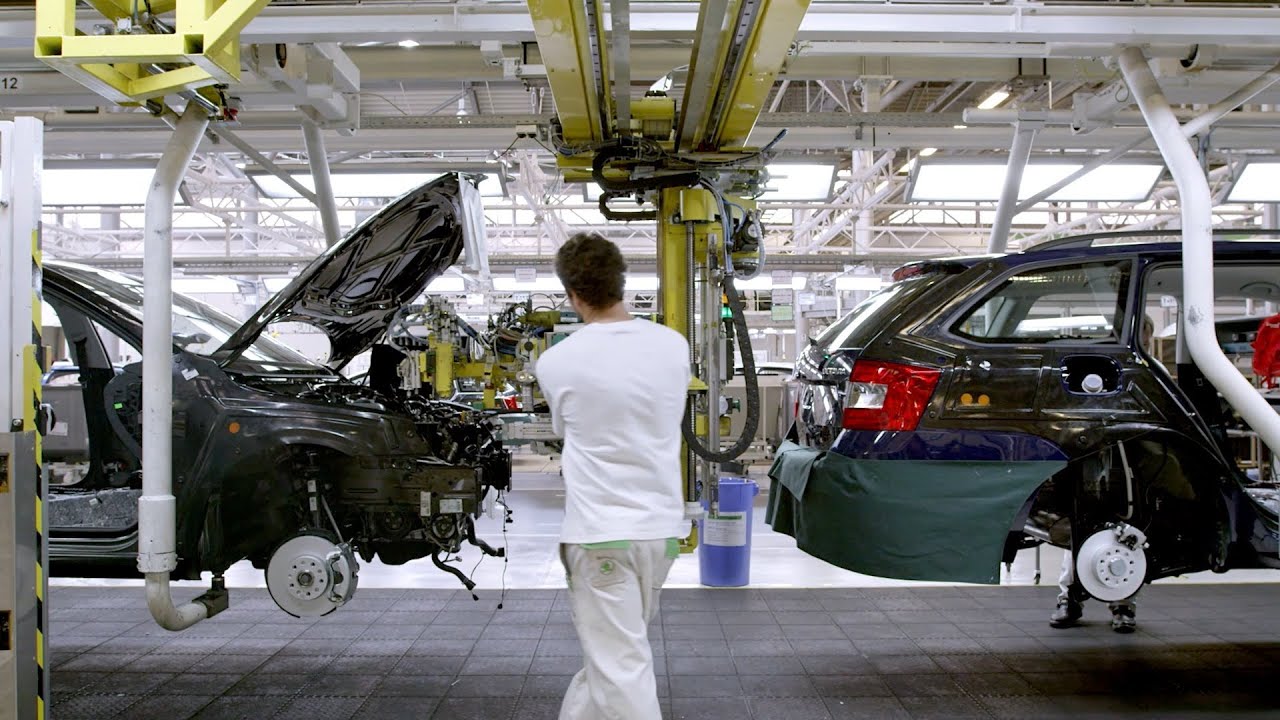
VW expands press shop for e-cars
Volkswagen has officially inaugurated the press shop expansion at its electric car plant in Zwickau, Kallanish learns from the carmaker.
The €74 million ($90m) invested in expanding the press shop represents one of the largest single investments in the course of transforming the site, VW notes. The heart of the expansion is the new XL press from Schuler. It weighs more than 1,000 tonnes and has a press force of 6,900 tonnes across five stages due to a particularly efficient drive mix of conventional and servomechanism technology, VW says.
In addition, an automatic stacking line and a high bay warehouse of 30 metres in height for logistics have been put into operation on the extra 8,400 square metres of space. From now on, all required outer skin body parts, such as doors and boot lids, can be pressed on site for the electric models.
Next to the parent plant in Wolfsburg, the Zwickau facility now has the second-largest press shop within the Volkswagen brand. Around 20 million parts per year have been produced on average in Zwickau in the past ten years. With the new XL press, this figure is set to increase to up to 30 million parts per year by the beginning of 2022.
Christian Koehl Germany
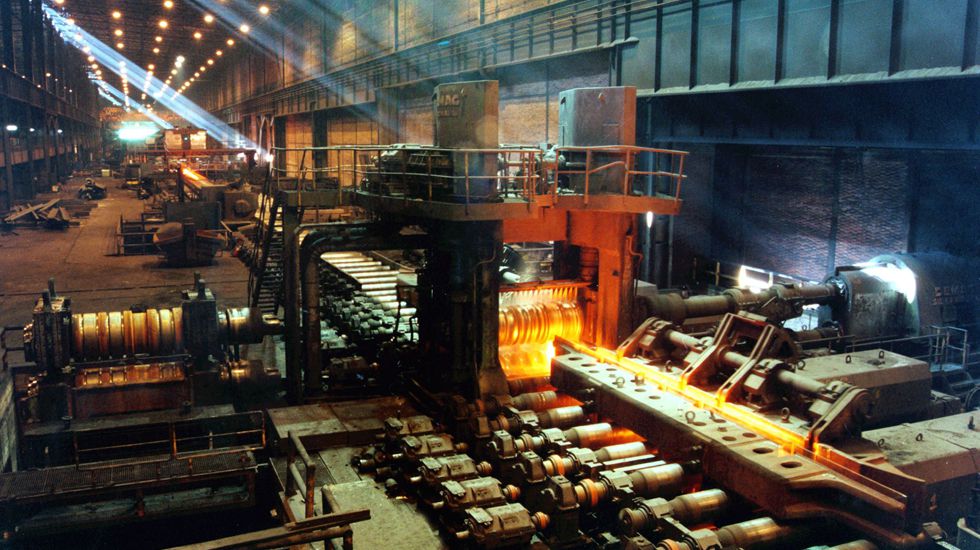
NLMK Clabecq invests to modernise rolling mill
NLMK has announced it is investing more than €30 million ($36.5m) to modernise its mill for the production of premium steel plate in Belgium.
“The revamping of the rolling mill includes installing a new descaling system and modernising the four-stand finishing mill,” the company tells Kallanish. “The three accumulators dedicated for the new pump room are scheduled to be commissioned in June this year. The assembly will ensure the new descaler operation, which is scheduled to be installed during summer maintenance.”
Effectively, NLMK Clabecq aims at further enhancing and strengthen the position of its mill in the market.
Emanuele Norsa Italy
Celsa France, VMI to produce rod, rebar coil
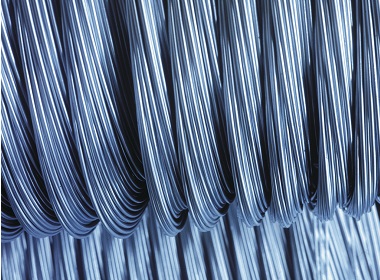
Celsa France is partnering with Van Merksteijn International, part of Netherlands-based VMI group, to scale up their presence in the French wire rod and rebar in coil market, a VMI representative confirms to Kallanish. The firms signed a collaboration agreement via VMI subsidiary Intersig France.
Celsa France currently produces billet at its French facility in Bayonne and is investing in a new production line for wire rod. This will be launched in approximately four months with a yearly capacity of 500,000 tonnes. At the same time, VMI group, under VMI Atlantic, will install on Celsa’s site cold stretching equipment for the production of rebar in coil.
In France there is currently a shortage of rebar in coil. VMI will produce the flex wire quality that corresponds to the French standard 500B, the VMI representative confirms. Production for this product should start in a couple of weeks. At present, rebar in coil is produced in France only by Riva France.
VMI Atlantic has another wire plant in Saint Pourçain-sur-Sioule. It produces wire on coil, reinforcement mesh, ECO and ECO+ mesh, lattice girders, spacers and fencing products.
Natalia Capra France
Northern European wire rod eyes €900
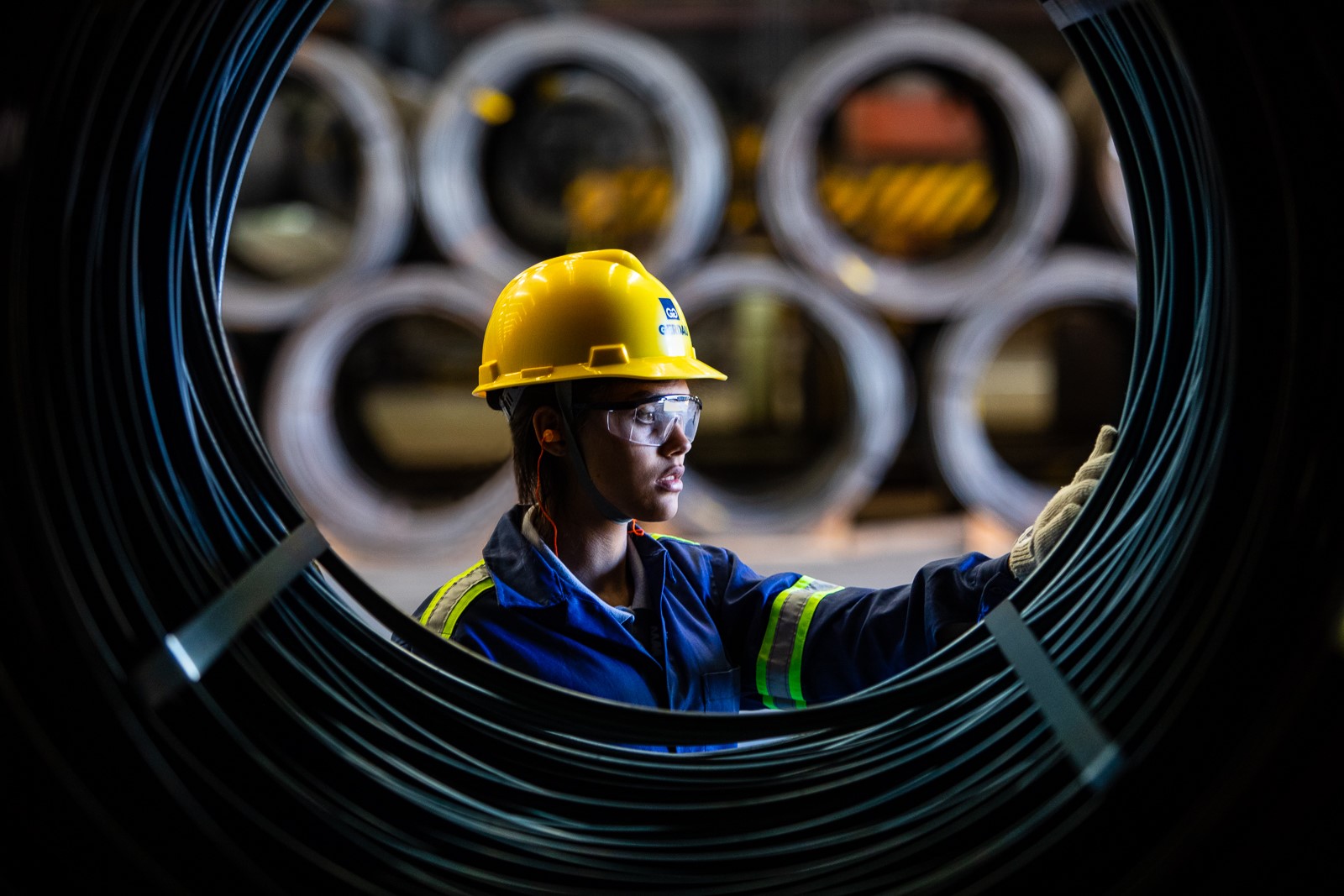
Northern European wire rod prices have continued to increase this week, by €20-30/tonne ($24-36/t). The expectation is still for further hikes due to higher demand, limited supply and increased scrap prices, market participants observe.
“Wire rod prices continue to go up and will probably reach new highs this month,” a buyer in the Netherlands confirms to Kallanish. “We bought last month a significant amount of wire rod from Turkey in the amount of 60,000 tonnes for €830/t ex-works and some 40,000t from Russia for our customers for July.”
Domestic transaction prices for drawing-quality wire rod are currently at €830-870/t ($1,009-1,060/t) ex-works and at €820-830/t ex-works for mesh quality, sources say. Most buyers are participating in the market because prices continue to climb.
Producers are now asking for €850-870/t ex-works, on average, for drawing-quality rod.
“Our company is cautious and we are still waiting for the safeguard proposal of the EU,” says another participant.
“The new high increase this week was again expected due to higher demand in Europe and lower stocks,” a German merchant observes. “If things continue this way, we can soon reach new highs of up to €900/t and above. Most producers are now selling for end-July, due to the traditional summer construction season.”
Wire rod quotes are being supported by scrap prices in Germany, which have also continued to increase, another market participant notes.
Old thick scrap sort 3, for example, rose to €390-400/t in June’s negotiations. In Austria, prices also increased €30/t. The price for new scrap sort 2/8 also increased to €420-430/t in southern Germany.
In Italy, some rod producers are already beginning to talk about pushing up their prices to €850/t ex-works due to strong demand and new arisings scrap grade E8 hiking to €500-515/t delivered in Italy (see separate story).
Most northern European rod market sources expect prices will continue to go up and, for now, do not see the market stabilising due to higher consumption by mills and low stocks.
Svetoslav Abrossimov Bulgaria
US Steel players debate 232 fate
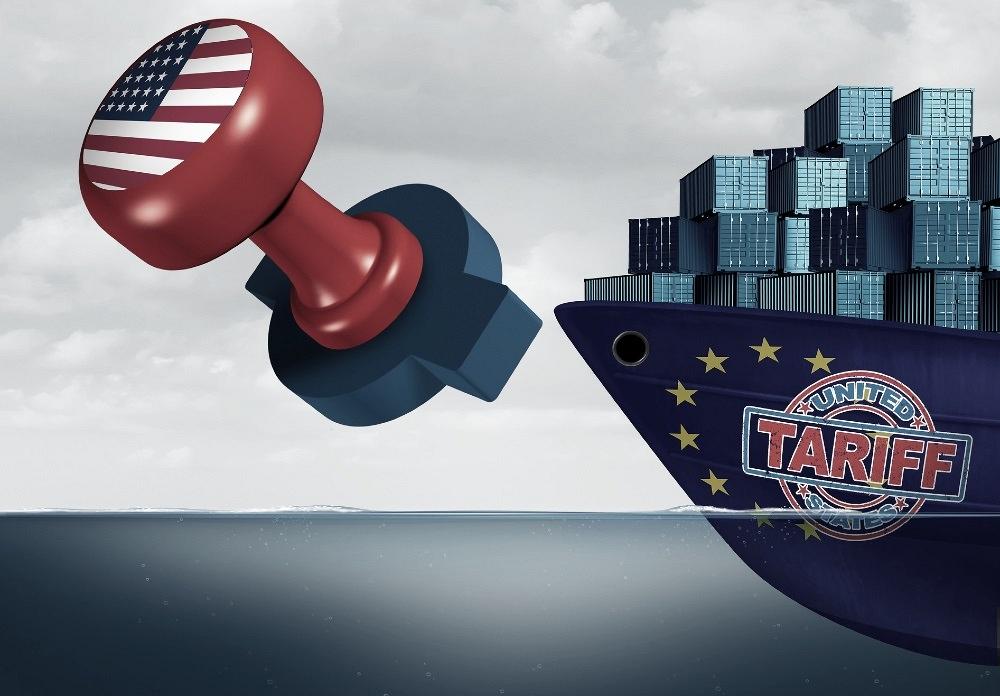
US sheet players are reacting with scepticism to the news that the US and the EU may soon reach an agreement to ditch the Trump-era 232 tariffs, Kallanish reports.
News agency Reuters allegedly obtained a copy of a draft agreement that seems to say the tariffs will be lifted by December, but details are scant and the draft itself is not a public document.
In a 9 June press gaggle with White House press secretary Jen Psaki and national security advisor Jake Sullivan en route to England, the officials declined to give a specific timeline for when a 232 decision might be made.
“Well, you know, in a real spirit of constructive engagement, the US and the EU have agreed to a pause in the escalation of tariffs in response to the 232,” Sullivan says. “That has given time and space for a negotiation to hopefully produce an outcome that meaningfully addresses the problem of Chinese overcapacity. And we regard that as a serious challenge that affects both Europe and the United States and must be dealt with effectively.”
Sullivan added that the tariffs are not currently being rolled back and “…I think that’s going to take some time to work out, which is why that stand-down on the tariffs was so important… because it gives us the time and space.”
A Midwest sheet buyer says doing away with the tariffs – traditionally, a Democratic trade tool – would likely cause trouble for the Biden administration.
“If they take all tariffs off from all countries it will make a huge impact, but I don’t think that will happen,” he says. “The United Steelworkers would be at arms with the Dems.”
A West Coast buyer, however, says some of the administration’s infrastructure plans might not be workable with domestic prices so high.
“I saw something about this over a month ago – I was under the impression it is still a 2022 thing,” he says. “I would think if the federal government is going to spend on infrastructure they might want to ease some trade restrictions. Otherwise, we might get one lane done with the trillion dollars allotted for the project.”
A second Midwest buyer was more succinct – if the EU benefits from dropped 232 tariffs, what will the trade-off be for the US?
“What do we get?” he says.
Dan Hilliard USA
EU to investigate Turkish, Russian HDG
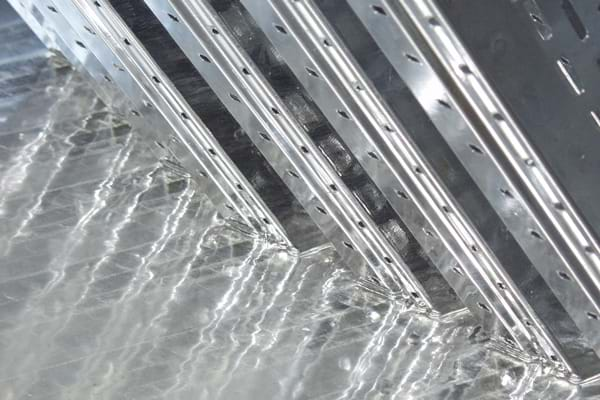
The European Commission is expected to launch an anti-dumping probe into Turkish and Russian hot-dipped galvanised steel imports, following a petition from producers, according to market participants.
European steel association Eurofer refused to comment, but multiple participants said they expect the move because HDG imports from the two countries have risen amid a shortage of material in the bloc.
Turkish imports hit 916,600t in 2020, up from 692,700t in 2019, while Russian receipts increased to 311,900t from 261,900t. In the first quarter of 2021, Russian imports rose by 41pc on the year to 114,600t, and Turkish imports by 70pc to 315,400t. The rise could reflect scarce EU supply, which has led to sharp price increases — ArcelorMittal has been targeting €1,320/t since late May — as well as the imposition of dumping duties on Turkish and Russian HRC.
“The product concerned is defined as flat-rolled products of iron or alloy steel or non-alloy steel; plated or coated by hot-dip galvanisation with zinc and/or aluminium and/or magnesium, whether or not alloyed with silicon; chemically passivated; with or without any additional surface treatment such as oiling or sealing; containing by weight not more than 0.5pc of carbon, not more than 1.1pc of aluminium, not more than 0.12pc of niobium, not more than 0.17pc of titanium and not more than 0.15pc of vanadium; presented in coils, cut-to-length sheets and narrow strips originating in Turkey and Russia. The following products are excluded: (i) of stainless steel, of silicon-electrical steel, and of high-speed steel, and (ii) not further worked than hot-rolled or cold-rolled (cold-reduced),” according to a letter to sellers seen by Argus. Turkish mills have recently been able to take advantage of competitive Chinese substrate, which is also subject to duties in Europe.
Market participants expect EU HDG prices to surge now, with traders already preparing.
By Lora Stoyanova