

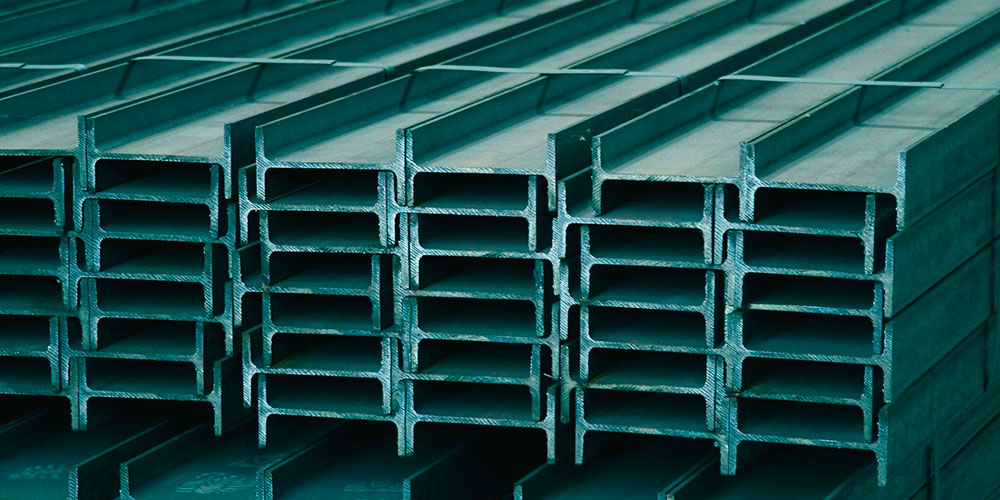
Europe steel prices may strengthen with planned quota extension: sources
European steel prices are expected to strengthen further as steel shortages are likely to continue with the European Union’s proposed extension of safeguard quotas on steel imports into the EU, sources told S&P Global Platts June 14.
The EU notified the World Trade Organization June 10 that it is proposing to extend steel safeguard quotas for three years, with a 3% annual liberalization of quota levels. The current safeguards system, which has governed imports into the EU since 2018, is due to expire on June 30 after three years in operation. The EU has invited market reaction to the proposal by June 18.
Market participants showed mixed reaction June 14. While most sources expected safeguards to continue, exporters to the EU and buyers of imports were hoping for a 5% increase in quota levels to combat the current steel shortage that is gripping Europe.
European buyers expect shortage to continue
“I think it will be difficult for the economy, Western European mills are obviously not able to cover the demand in Europe,” said a German stockholder. “An increase of 3% makes absolutely no difference. Southern Europe will be most affected, they are very addicted to imports normally and if they’re blocked, especially in Italy – with the Ilva issue, it will be difficult for them to cover their full demand,” the source added.
Italy, a market that usually relies on imports, has been seeing a shortage in coils products especially as Acciaierie d’Italia, the ex-Ilva plant in Southern Italy, has not been producing at full capacity.
“The decision is surprising because we thought that due to the general situation in terms of raw material and increased domestic prices, we were expecting some opening on imports in order to balance the demand of steel which is very unbalanced,” said an Italian reroller source. “For sure steel buyers will not welcome this measure because definitely it’s difficult to understand in such an environment how we can keep imports under such discipline. Buyers will need to adjust their strategy.”
European hot-rolled prices have been plateauing with some downward tendency as of late, though prices are still at historical high levels. The daily Platts assessment for HRC stood at Eur1132.5/mt EXW Ruhr June 14, having surpassed its previous, June 2008, high of Eur800/mt in March this year.
The weekly Northwest European rebar assessment stood at Eur800/mt EXW Northwest Europe June 11, close to its all-time high at Eur815/mt during June and July 2008.
“This will bring more fire into the market – two weeks of pricing stability but confident with safeguard decision coming – market will react with more return of buyers and prices will increase,” the Italian source said.
Exporters to EU unsurprised
Veysel Yayan, general secretary of Turkish Steel Producers’ Association (TCUD), called the proposed extension of the safeguards “protectionist,” against free trade rules, and a demonstration of an inconsistent attitude on the part of the EU.
“While they are negotiating with US for the removal of the trade barriers, they are extending the barriers against us unfairly,” the general secretary said. Turkey’s steel industry, where production capacity is currently being expanded, is set to be one of the most impacted by an EU safeguards extension.
A Turkish agent said that Turkish exporters could still sell to alternative export markets in the US and Latin America, but that European buyers will feel the consequences of limited availability.
“European buyers will have a problem – HRC prices are very high and they have left the market to Arcelor,” said the agent.
Another Turkish trader said exports will continue “as usual” and that an expected European Commission anti-dumping investigation into hot dipped galv imports from Turkey and Russia to the EU would be troublesome for exporters.
— Laura Varriale, Amanda Flint, Viral Shah and Staff

Steel shipments from EU+UK rise 18% on year over January-April: EUROMETAL
Steel shipments from the EU+UK flat steel service centers rose 17.9% year on year over January-April 2021, the EUROMETAL steel stockholders and distributors association said June 14.
In April, strip mill product shipments more than doubled, rising 109% on the year, while in March they rose 21.7%, the latest data available from EUROMETAL showed.
Demand for flat products in Europe have risen since end-2020, with prices climbing Eur665/mt to a record high of Eur1,140/mt base ex-works Ruhr in June.
During the first four months of the year, EU multi-product and proximity steel stockholding distribution, mainly for long products, rose 7.2% year on year. Over January-April EU27+UK Multi-Product & Proximity Steel Stockholding Distribution registered lower shipments for long products and higher shipments for strip mill products, tubular products and stainless steel.
Total steel product shipments increased 38.4% in April, with all products showing rises, the association said.
EU flat steel service centers had 62 days of stock in April 2021, compared to 142 days of stock they had in April 2020. EU Multi-Product & Proximity Steel Stockholding Distribution centers had stocks for 61 days in April, compared to 94 days in April 2020.
For April 2021, stock volumes index for steel service centers fell to 86 compared with 96 in April 2020. EU Multi-Product & Proximity Steel Stockholding Distribution stock volumes index for April was at 77, compared with 87 in April 2020.
— Annalisa Villa

European steel market debating EC safeguards extension proposal
The European steel market appears very much divided between steel buyers and producers following the European Commission proposal to the WTO regarding a possible three-year extension of market safeguards against imports. Buyers are concerned not only that prices will continue to increase but that it will be very difficult to find material as well.
On June 11 the EC notified the WTO about a proposal to extend the EU Safeguard Measures on Steel Imports, which is set to expire on June 30, while reducing to 3% the annual liberalization of quota levels compared to 5% previously.
“The proposal to extend current restrictions by three years comes in the face of acute shortages in automakers’ European steel supply chain,” the European Automobile Manufacturers’ Association (ACEA) said on the day of the notification, underlining how these shortages have led to a slowdown in manufacturing with prices that “continue to surge to record highs in the European market.”
According to S&P Global Platts data, European hot-rolled prices have been plateauing with some slight downward movements in the last few days, though prices are still at historical highs. Prices reached their highest level on May 31 at Eur1145/mt. The daily Platts price assessment for HRC closed June 15 at Eur1137.50/mt EXW Ruhr. Since the end of last year prices have gone up by Eur472.50/mt. The weekly Platts Northwest European rebar assessment stood at Eur800/mt EXW Northwest Europe June 11, not far from its all-time high of Eur815/mt during June and July of 2008.
Eurofer, the association of European steel producers, when contacted by Platts on June 15, said that “the steel safeguard is not a measure to stabilize prices in the domestic market… nor does it restrict supply to the market in any way. European downstream users of steel can still access all the third-country steel they need based on traditional trade flows.”
However, steel buyers’ associations emphasized the difficulties procuring steel. They noted that many importers started as early as March 2021 concluding supply agreements with non-EU mills for arrivals in the second half of 2021 due to the lack of material.
“This [EC] decision appears to be… lacking in common sense in light of the current market trend of the EU steel industry, profoundly different from that of early 2020 and, moreover, [coming] only 19 days before the expiry of the measures still in force today, thus confirming a total temporal misalignment with respect to long lead-times of EU producers, which in several cases even reach 5-6 months,” said Assofermet, the association of Italian steel service centers, on June 15.
The current safeguards were put in place in response to the US Section 232 tariffs in July 2018 – using import data from 2015-2017 – to prevent economic damage to European steel producers.
“Analyzing the statistical data reported in the text of the European Commission proposal to the WTO it emerges that the period examined is 2018-2020; pity that such evaluation does not consider, in the way more absolute, the forecast relating to the years 2021 and 2022 when reasonably we will see a significant increase in consumption,” Assofermet said.
EUNIRPA, the association of European non-integrated wire rod processors, also expressed concerns. “The liberalization rate of 3% is absolutely not enough to give the EU metal fabrication industry the chances to grow in the next upcoming years. Besides the risk of retaliation from other countries (via WTO measures) the economical squeeze of the user industry is not fair and even dangerous,” Kris Van Ginderdeuren, president of the association, told Platts on June 15, underlining how there could be the possibility that more and more end-products will be imported into the EU if there is not enough steel to process within the EU.
“I think that a liberalization of an absolute minimum 15% to 20% per year for wire rod would be a correct step from the commission,” he said.
Eurofer stressed that the safeguards extension provides ample opportunity for users to source material they might require from abroad, as the tariff-free quota level is now at least 15% higher than the record import levels on which the safeguard’s tariff rate quota is set (2015-2017).
“This is completely ridiculous because it is based on old historical data. The figures of 2015-2017 cannot meet the actual consumption levels of 2019 to 2021. This is not the right way to do it. The commission should at least use the figures of the last three Non-COVID years: 2017, 2018, 2019,” Van Ginderdeuren said.
Other sources echoed this opinion, stressing that the EC itself, as a result of COVID, has planned to invest billions for infrastructure that will translate into more steel demand.
“The figures of 2015-2017 are based on old supply patterns that do not reflect the actual situation any more… there will be a boost in steel demand and the commission wants to freeze itself on old historical figures that absolutely do not reflect the actual and future consumption. If safeguards really MUST go, let them take import figures per country, based on 2018-2019 and 2020 adjusted for COVID,” EUNIRPA’s president said.
— Annalisa Villa
Japan initiates WTO dispute complaint against Chinese steel duties
Japan has requested WTO dispute consultations with China concerning anti-dumping measures imposed by China on certain stainless steel products from Japan. The request was circulated to WTO members on 15 June.
Japan claims the measures in question, imposed in 2019 by China’s Ministry of Commerce, appear to be inconsistent with various provisions under the General Agreement on Tariffs and Trade (GATT) 1994 and the Anti-Dumping Agreement.
Further information is available in document WT/DS601/1
What is a request for consultations?
The request for consultations formally initiates a dispute in the WTO. Consultations give the parties an opportunity to discuss the matter and to find a satisfactory solution without proceeding further with litigation. After 60 days, if consultations have failed to resolve the dispute, the complainant may request adjudication by a panel.

ASSOFERMET Acciai press release on extension of EU Safeguard Measures
ASSOFERMET Acciai press release relating to the request of the EU Commission to the WTO for the extension of the Safeguard Measures, for steel imports into Europe.

German rebar benders issue customer supply warnings
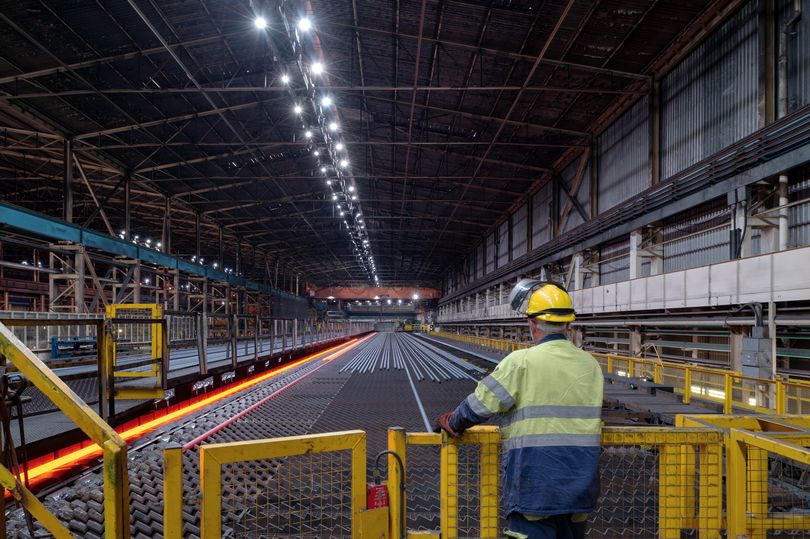
The shortage of rebar and other construction material in the German market has led to official warnings from companies to their customers.
“We need to inform you that we are facing a shortage of materials never seen before, with consequences for us and you as our customers,” a large stockholding group writes in a circular. Inquiries from customers often go unanswered by mills, and offers for new volumes sometimes carry the disclaimer that mills cannot guarantee deliveries at all, the stockholder adds.
Consequently, it informs construction companies that it will make offers only on the condition that its own supply is warranted, and for the price valid at that time.
Various sources tell Kallanish that lead times from mills are at two months or more, compared with a maximum of one week in normal times. Downstream, lead times from benders to construction firms are now at four weeks, according to a manager of another stockholder. “But the supply upstream, from mill to bender, takes twice that long. Hence, the looming supply gap is certain,” he says.
Christian Koehl Germany

EU distribution shipments keep up recovery
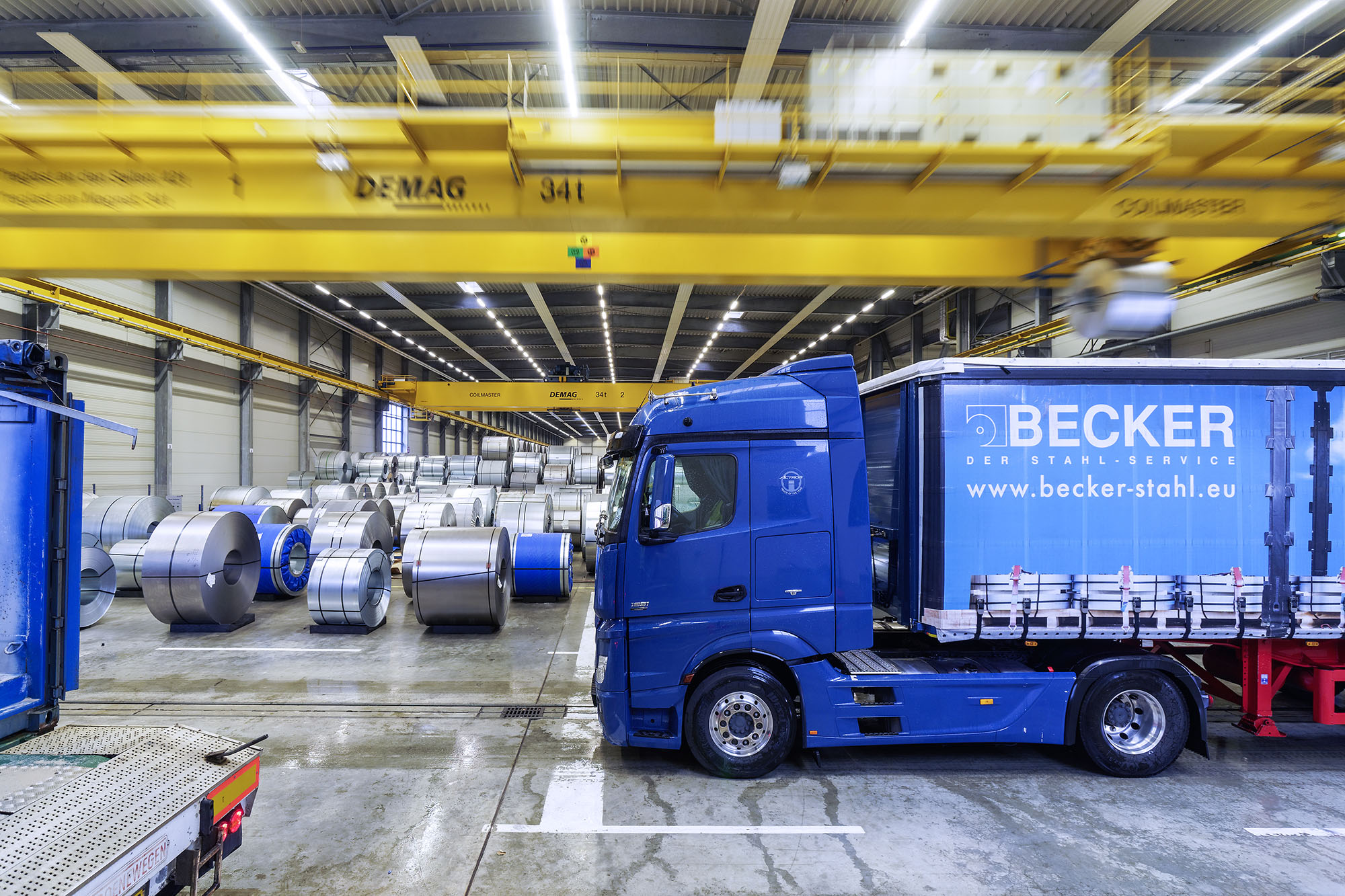
Shipments from European steel distributors continued to recover in April, according to the latest numbers from European distributors’ association EUROMETAL.
EU27 and UK flat steel service centres (SSC) in April saw their shipments increase some 109% year-on-year and almost 22% on-month. During the first four months of the year the recovery reached almost 18% y-o-y, EUROMETAL says in a note sent to Kallanish.
Meanwhile, EU27 and UK multi-product distributors registered a shipment recovery in April of some 38.4% y-o-y, pushing up aggregated shipments for the first four months of the year by 7.2% y-o-y.
For both SSC and multi-product distributors the stock index at the end of April stood at around 10 points below the level registered in April 2020.
Emanuele Norsa Italy

German cutting centre installs laser line for plate
Otto Klostermann, a processing centre based in Castrop-Rauxel and specialising in heavy plate, has installed a new LaserMat II type machine from Messer Cutting Systems, Kallanish hears from the equipment manufacturer.
Klostermann mainly process very large plate in terms of width, length and thickness, which only few suppliers can handle, says its managing director, Philipp Klostermann. “Building vehicles and waggons, bridge construction, shipbuilding, crane manufacture and making sluice gates – our specialist field is XXL formats,” he says of the company’s portfolio.
According to Messer, the system was conceived especially for large plate processing with the CO2 laser, and combines precision with speed. With the new laser system, Klostermann can cut components out of construction steel up to 25mm thick or from stainless steel up to 20mm. Thanks to the on-board laser beam source – resonator – plate up to 4,500mm wide and up to 30m long can be processed.
As well as the new LaserMat, there are three of Messer’s OmniMat machines in use at Klostermann.
Christian Koehl Germany