

Iron ore, scrap remain steady on constrained supply
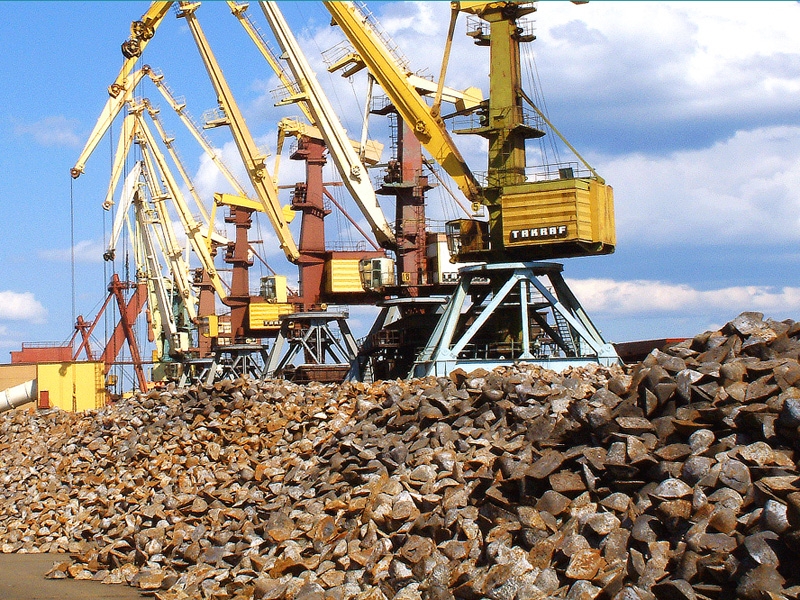
Seaborne iron ore and scrap markets were steadier on Thursday as markets took a breather to look for a clearer direction. Restricted electricity supply to some iron ore processors helped to support prices.
The Kallanish KORE 62% Fe index dropped $0.22/t to $209.76/dry metric tonne cfr Qingdao. The Kallanish KORE 65% Fe index fell $0.08/t to $240.97/dmt cfr, and the KORE 58% Fe index slipped $0.12/t to $181.96/dmt cfr.
On the Dalian Commodity Exchange September iron ore settled up CNY 16/t at CNY 1,170/t ($180.59/t), while on the Singapore Exchange July 62% Fe futures settled down $2.66/t at $206.74/t. The same contract for 65% Fe and 58% Fe futures settled down $2.63/t at $239.52/t, and down $2.34/t at $178.63/t respectively.
Chinese scrap prices inched a little lower on Thursday but are beginning to steady. 6mm+heavy scrap delivered to mills in the Yangtze River Delta dropped CNY 11/t to CNY 3,716/t. In Tangshan, billet prices were unchanged at CNY 4,820/t.
The fallout from the mining accident in Shanxi on 12 June continues to play out. The local Bureau of Industry and Information Technology has requested power be reduced to local iron ore processing and beneficiation plants, to ensure they are not using ore from unsafe mines. Domestic iron ore concentrate supply is likely to continue to be constrained in the short term.

Tata Europe units developing separately, EAFs still considered
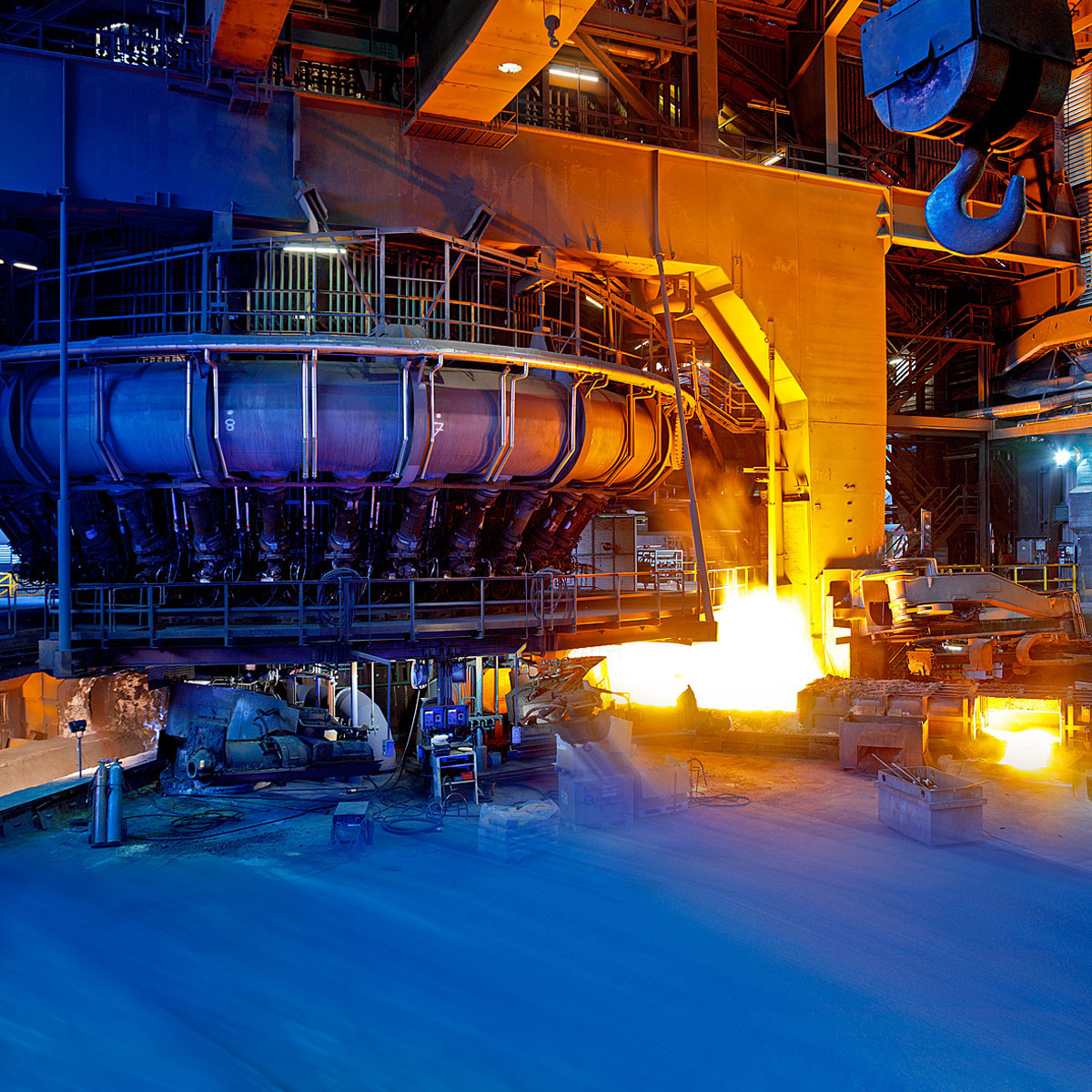
Tata Steel Europe is ploughing ahead with the separation of its Netherlands and UK operations into distinct units to allow them to develop differently according to the conditions of each country, says Tata Steel Europe chief executive Henrik Adam. The firm is still considering electric arc furnaces for its Port Talbot works, but a final decision is yet to be made.
Speaking to the UK’s Business, Energy and Industrial Strategy Committee this week, Adam said Tata suffers from higher costs of doing business in the UK than in mainland Europe. However, decarbonisation offers an opportunity because it is the “option to neutralise the uncompetitiveness of assets across Europe, especially in the UK”, he commented.
Following the collapse of the proposed IJmuiden steelworks sale to SSAB in January, Tata “has decided to find a single option for the businesses in Europe under one Tata roof”, Adam said at the meeting monitored by Kallanish.
“We are continuing with the separation of both businesses because we think, also with decarbonisation ahead of us, it is useful to follow tracks of the business to allow the business to develop differently,” the ceo continued. “We have certain global customers, we buy also globally; however, steel markets are to a large extent local, and may I just refer to [the fact] that more than two thirds of our products produced in the UK remain the UK. And that’s why I think the way forward is being under one roof but on separated tracks … to allow to follow separate strategic options, for example on decarbonisation and sustainability.”
Asked why talks with UK government over Project Birch funding for Tata ended last year without result, Adam said: “My sense is government and also Tata recognise we need a longer-term solution to support a sustainable and decarbonised future for our business”.
On plans for EAFs at Port Talbot, he added: “The decarbonisation of our industry is a serious and complex matter. We are assessing … a large number of different options to decarbonise the industry. Certainly, EAFs are part of the potential solution but it is too early to comment what is the specific way we are proposing to decarbonise our business.”
Moreover, “it’s important to know that large-scale public funding of enabling infrastructure is a key, for example in hydrogen, and without that and knowing more details of that it’s very hard for us to come up with a final plan [on future investments],” he concluded.
At last week’s KallanishEurope Steel Markets virtual conference, Adam said steel demand and prices are forecast to remain structurally high, while supply and demand should become rebalanced post-Covid-19-impact at the end of this year.
Adam Smith Germany
EC opens dumping probe of HDG steel from Turkey, Russia
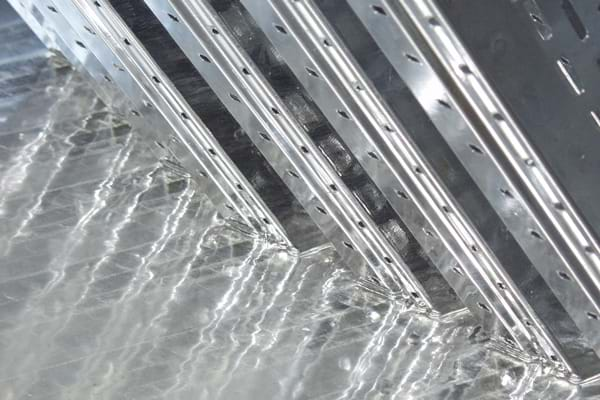
The European Commission announced June 24 it has opened an investigation into hot-dip galvanized coil imports from Turkey and Russia, alleging imports of certain corrosion-resistant steels originating from these countries were being dumped.
The allegation is based on a comparison of the domestic price with the export price on an ex-works basis of the product under investigation when sold to customers in the EU, according to the EC statement.
The probe will cover the period from Jan. 1, 2020 to Dec. 31, 2020 and determine whether the product under investigation is being dumped and if the dumped imports have caused injury to the EU industry. In addition, the EC said the examination of trends relevant for the assessment of injury will cover the period from Jan. 1 2017 to the end of the investigation period.
Discussions amongst market participants on a possible investigation of HDG imports on Turkey that could lead to anti-dumping duties have been circulating since February, with some sources saying producers had already received notification from the EC. Expectations of the investigation are thought to have been a contributory factor in the recent rise in prices, and some market sources believe confirmation of the trade case may further support prices.
“It would be supportive for the European market but of course we don’t know yet what the outcome will be,” one European mill source told S&P Global Platts. “There have been aggressive import offers in the past.”
EU price surge
Platts assessed HDG prices EXW Ruhr and Italy at Eur1,315/mt ($1,569/mt) June 24. Prices have risen 154% from a low of Eur515/mt on July 1, 2020, as demand increased on the back of COVID-19 related stimulus while supplies remained tight.
Russian steelmakers contacted by Platts June 24 did not immediately comment on the EC’s formal announcement.
However, Turkish steelmakers said June 24 they had expected the investigation.
“It’s not a surprise to us, as the rumors about the investigation have already started to restrict our export volumes in recent weeks, by creating concerns among European buyers,” one Turkish coated coil producer told Platts. “We raised our exports to the EU notably last year, amid material tightness in the region, which also supported our prices. So, we don’t think that EC could find any dumping in our prices. However, it is obvious that this investigation will seriously harm our export volumes, as European buyers will be cautious about a possible AD duty.”
Another coated coil producer questioned the period chosen for the investigation, as this was when the EU was demanding more imports due to regional product tightness resulting from COVID-19 mill curtailments. “They have determined 2020 as the investigation period, as it could affect the result of the investigation. Turkish mills exports to the EU rose notably on year last year,” the producer located in Turkey said.
Veysel Yayan, general secretary of the Turkish Steel Producers’ Association, called for counter measures to be taken by Turkey “immediately,” and accused the EU of being “inconsistent and unfair.”
Drop in Turkish domestic prices expected
The start of the EC probe is expected to push down galvanized steel prices in the Turkish domestic market.
A Turkish service center manager noted: “This decision will put further pressure on Turkish galvanized coil producers’ prices, as demand from the domestic market has slowed down notably in recent days. Declining imported HRC costs could also pull down mills’ quotations. We have witnessed around $50/mt decline in domestic mills’ HDG offer prices since last week.”
A manager from a coated coil producer located in Turkey noted June 23 that mills’ 0.50 mm thick HDG offers were in the range of $1,340-$1,360/mt ex-works. “We are offering the same grade HDG at $1,370/mt ex-works minimum,” the manager said.
Most Turkish mills’ 0.50 mm thick HDG offer prices to the domestic market were around $1,400/mt ex-works and above at the beginning of last week, Platts observed.
According to trade data published by European steel federation Eurofer, 315,378 mt of Turkish origin and 114,559 mt of Russian origin HDG coils were imported into the EU during the first three months of 2021 out of a total of 1.17 million mt of HDG imports in the period.
Spain and Italy were the main buyers of Turkish material during this period. Belgium and Latvia have been the main buyers of Russian material this year.
— Cenk Can, Laura Varriale and Diana Kinch


Russia mulls 15% metals export duty in bid to cool prices: analysts
The Russian government is considering introducing a 15% export tax on base and ferrous metals in a bid to curb price inflation, Moscow-based investment institution Aton said June 24 in a note, adding that the move would also be likely to yield an additional $2.3 billion for the federal budget.
According to various media reports and market sources, the economic development ministry has proposed introducing the 15% export tax as soon as Aug. 1, with the measure set to last through end of December.
The move would still require government approval in a form of decree.
Russian steelmakers declined to comment on the potential move until the issuing of an official decree, but several industry sources confirmed that a draft already exists and suggested the measure is inevitable, with the duty likely to be levied on exports of all major semi-finished and finished steel, aluminum, nickel and copper.
The base rate for the metals export duty would be set at 15%, but it would also have a specific component on top of it, with duties applying only to exports outside the Eurasian Economic Union (EAEU) between Russia, Belarus, Kazakhstan, Armenia and Kyrgyzstan. As a result, export rates for copper could be set at $1,126/mt, for nickel at $2,321/mt, for aluminium at $254/mt, for pellets at $54/mt, for flat-rolled steel products at $115/mt, for other rolled products at $133/mt, and $150/mt for ferroalloys, according to the Aton note.
“The draft is authored by the economic ministry, but it has solicited support of the ministry of finance and industry ministry,” said a source close to Russian steelmakers association Russkaya Stal, meaning a material possibility of the duty being applied.
“On the one hand, the government says it wants to support and grow non-energy exports, and on the other hand, it wants to slap these duties on exports of commodities that have added value,” the source said, adding that foreign metals producers would likely benefit from the move.
Sources added that metals industry lobbyists have already requested amendments in terms of duty sizes and their differentiated applications.
Impacts would vary
The impact of the possible duty would vary depending on a company’s exposure to the different metals and their export volumes, according to analysts from Aton and Moscow-based BCS Investment Group.
But the analysts estimated that overall, such a duty would negatively impact steel companies’ 2021 EBITDA by some 6%.
“Our take is that this export duty will remain only if profits will be high thanks to a longer super-cycle,” BCS said.
The analysts said that, beyond the government’s concern with rising domestic metals prices, the move is also an attempt to target metals companies’ recent profits, which it sees as excessive.
“According to First Deputy Prime Minister Andrey Belousov, higher domestic prices have a negative effect on large projects included in the state budget. It is noted that the proceeds from Russian metallurgists would be used to compensate for the growth of costs of state defense [projects], and the construction of roads, housing, and infrastructure,” Aton said. “The government estimates that it would be able to take about 20%-25% of metals companies’ excess profits through the duties. In August-December 2021, the budget could get Rb113-114 billion ($1.6 billion) from export duties on ferrous metals and by Rb50 billion ($0.7 billion) from duties on non-ferrous metals.”
— Ekaterina Bouckley
German minister takes Steel Action plan to Brussels
Representatives of major German steel companies met with economy and technology minister Peter Altmaier this week to discuss how the implementation of the Steel Action Plan can be further advanced.
As part of the IPCEI (Important Projects of Common European Interests) Hydrogen initiative, the German government is supporting investment in climate-friendly steel production with up to €2 billion, or $2.4 billion (see Kallanish 28 May).
Now, the implementation of the measures described in the Steel Action Plan must be stepped up, demanded Hans Jürgen Kerkhoff, president of steel association WV Stahl. Additional instruments such as climate protection contracts and green lead markets are needed so that sustainable business models for green steel can emerge in Germany, he said.
For this purpose, a sufficient free allocation to mills of EU emissions allowances is necessary, and should not be replaced by a CO2 limit compensation, Kerkhoff continued.
Altmaier agreed with Kerkhoff in this respect. He plans to travel to Brussels with top representatives of German steel employers and trade unions to discuss the EU Commission’s position on a CO2 limit compensation. Jürgen Kerner, member of the executive board of union IG Metall, emphasised that IPCEI Hydrogen is an important programme that must be followed by others.
Meanwhile, the federation of steel scrap merchants, BDSV, has criticised Altmaier for a steel strategy that seems exclusively focused on hydrogen-based production.
BDSV underlines the traditional significance of scrap in efforts to achieve cleaner steel production. In a statement, it bemoans that scrap did not seem to play much of a role in the talks between the minister and mills.
Christian Koehl Germany

Northern European hot-rolled coil moves up slightly
Northern European hot-rolled prices inched up again as mills in Northern Europe regained confidence in the longevity of elevated steel prices, sources told S&P Global Platts.
Steel mill ArcelorMittal issued a fresh price hike by Eur30/mt to Eur1,200/mt delivered across Europe though other mills have also been heard to offer up to Eur1,250/mt delivered Germany ex-Italy.
Overall the market is still seeing a material shortage for HRC with most of the material on offer for Q4. However, sources noticed a few more opportunities arising, although volumes are not big.
“There is more availability now, with some possibilities popping up for Sept/Oct,” said a German stockholder source. “Mills are negotiating now.”
A Northern European mill source said they would be busy preparing for Q4.
“Traditionally we would do that in August but now we’re doing that earlier. We’re completely over-asked, people are asking for more than they are traditionally,” the source said.
The mill said the occasional spot volumes coming to the market would be minimal, adding that the automotive industry is expected to take up more volumes from September.
The traditional summer lull is expected to get in full swing by the end of July, though mills will need to continue working on long order backlogs.
Import offers ex-Russia and Taiwan were heard at Eur1,080/mt CFR Antwerp, Eur105/mt below domestic Ruhr levels.
The Italian market was heard to see more pressure from imports, particularly from Turkey and India. Most purchases were heard to be on a back-to-back basis but nevertheless gave buyers more options to source material from, despite the looming new quarter of steel safeguard quotas that are expected to be filled quickly for Indian material.
An SSC source said the Italian market would be at Eur1,110-1,135/mt EXW Italy. Another offer was heard at Eur1,250/mt delivered Germany from an Italian mill, netted back to Eur1,200/mt EXW Italy.
— Laura Varriale