


French, Benelux scrap hardly moves, Italy supply tight
French and Belgian scrap prices are forecast to remain stable compared to June, with the lower grades possibly losing €10/tonne ($11) as new contracts are being negotiated for the month of July.
Despite hunger for material and full order books, prices of all long products in these countries, from wire rod to rebar and merchant bar, are losing momentum. Mills in France, like in southern European countries, will buy less scrap this month in view of the summer closures in August. Sales activity for longs and scrap is said to be quiet, in line with southern Europe, sources tell Kallanish.
Scrap demand remains strong for the higher grades, E40 shredded and E8 new arisings. E8 is seen remaining in the €450-460/t delivered range for the lower grade and €470-490/t delivered for the very high quality. This however may increase slightly considering the current short supply. Prices for lower quality E1C may lose €5-10/t this month on account of lower demand. June’s values for E1C were €400-410/t delivered in France and the Benelux.
Meanwhile, strong tension and demand is still being felt in the Italian market, particularly for the high grades of which prices in June went through the level of €500/t. Another week-on-week €15/t increase for a very good E40 grade was paid last week, pushing this material to €520/t, and the high E8 grade to €540/t delivered.
Natalia Capra France

Marcegaglia issues new stainless tubes price list
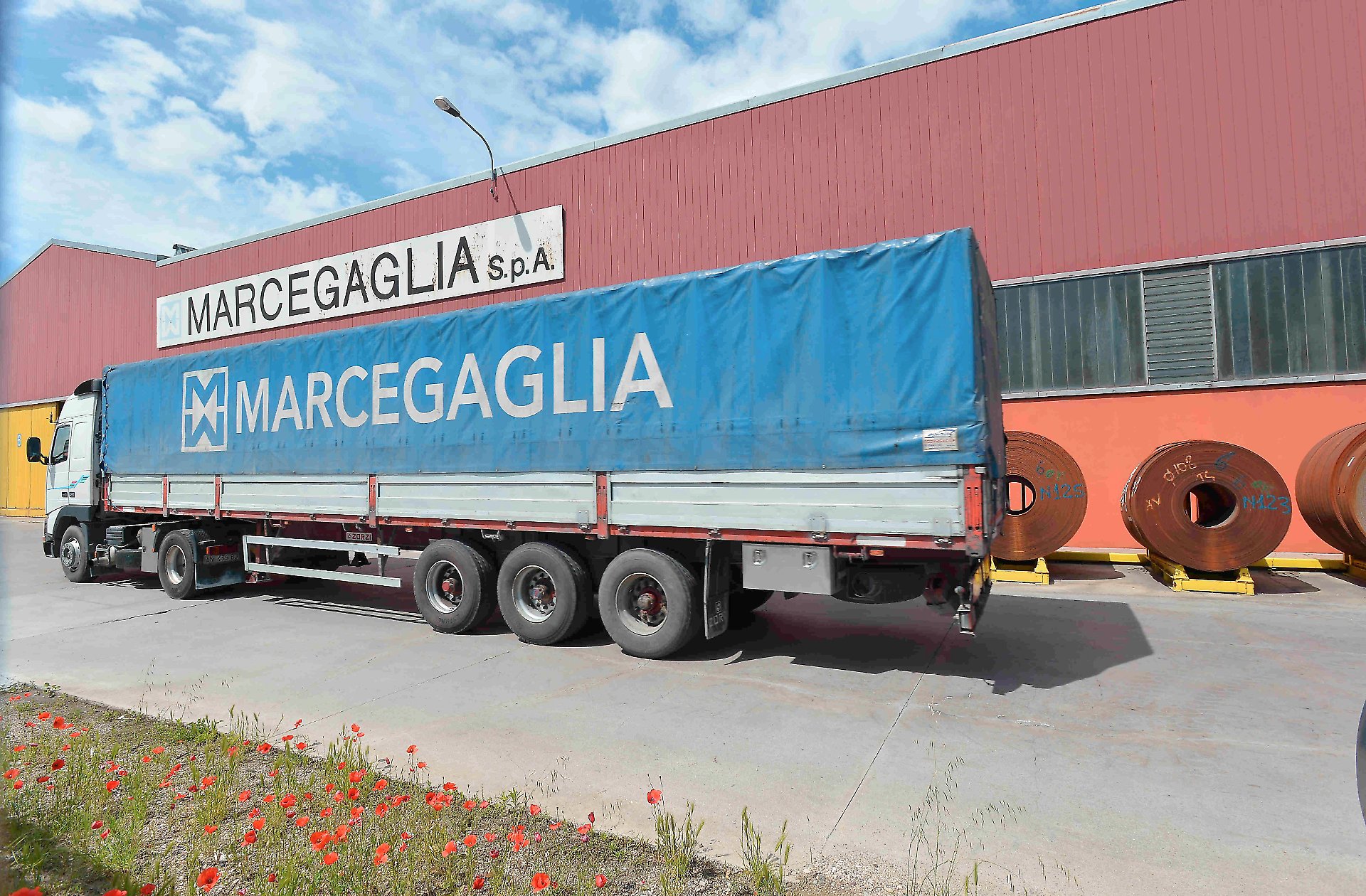
Italian re-roller Marcegaglia is publishing a new stainless tubes price list effective 5 July, Kallanish learns from the company.
The new list will increase prices of all stainless tubes by 10-15% depending on product. The move follows the steep hikes in stainless hot and cold rolled coil in Europe, for which prices are skyrocketing on account of shortages.
European mills are now quoting January 2022-shipment stainless CRC at €3,500/tonne ($4,238) delivered and €120-150/t less for HRC. While flat products and stainless 304 and 316 grade scrap prices are also increasing significantly in Europe, tube prices have lagged behind considerably.
With the new price list Marcegaglia will push up values by €300-500/t for 304 grade tubes and €600-800/t for 316 grade compared to June levels.
The company is also upgrading its stainless steel 20-Hi Sendzimir mill by the end of this year at its Gazoldo degli Ippoliti steelworks in Italy. The 20-Hi Sendzimir line rolls 1,500mm-wide stainless steel strip. Italian equipment maker Danieli Automation will be in charge of the upgrade.
Natalia Capra France

Thyssenkrupp AG schließt Werk in Remscheid

ThyssenKrupp Industrial Crankshafts GmbH (ca. 62 Beschäftigte) entscheidet in einer – für die IG Metall – ungewohnten sowie unerwarteten Art und Weise, die Werksschließung in Remscheid.
Als „skandalös“ reklamiert die IG Metall Remscheid – Solingen, dass die Entscheidung zur Werksschließung in einem Umlaufbeschluss entschieden wurde. „Die Verantwortlichen bei Thyssen haben es nicht einmal für nötig gehalten, bezüglich der Schließungsabsicht eine Aufsichtsratssitzung abzuhalten. Dies wäre auch unter pandemischen Bedingungen, in einer virtuellen Form möglich gewesen.“so Serdar Üyüklüer, Geschäftsführer und Kassierer bei der IG Metall Remscheid – Solingen.
Die Arbeitnehmervertretungen sind sich einig, allerdings können sie die unternehmerische Entscheidung der Werksschließung nicht umkehren. Gegenvorschläge zum Werkserhalt wurden bis Dato vom Arbeitgeber nicht anerkannt und nicht berücksichtigt. Die Betriebsräte wurden zeitgleich mit den Beschäftigten, über die anvisierte Entscheidung und die dazugehörige Vorgehensweise zur Werksschließung informiert. „Leider lässt die vertrauensvolle Zusammenarbeit, wie vom BetrVG vorgegeben, zu wünschen übrig und endet nicht zuletzt an einer mangelnden Wertschätzung in den Gesprächen!“ bilanziert Üyüklüer die bisherigen Gespräche mit Blick auf die, für einen Sozialplan angebotenen Abfindungen.
Diese Art und Weise des Umganges mit den Arbeitnehmervertretern hat nach Angabe der IG Metall zur Folge, dass die Betriebsparteien sich arbeitsgerichtlich über die Einsetzung und Besetzung einer notwendigen Einigungsstelle gestritten haben. Die Parteien streiten sich also weiter, nun über ein Einigungsstellenverfahren. Ein solches Verfahren sieht das Betriebsverfassungsgesetz vor, wenn Verhandlungen zwischen Arbeitgeber und Betriebsrat gescheitert sind.
Quelle: IG Metall Remscheid-Solingen / Foto: thyssenkrupp AG
29.06.2021 von Hubert Hunscheidt

European buyers lambast steel safeguard extension
European buyers of imported steel products are shocked by the extension of existing safeguard measures for another three years at a time when most of the industry’s segments are struggling from material shortage and, consequently, high prices.
European Union member states voted in the week ended June 18 in favor of a proposed extension of these measures for three years beyond their scheduled expiration on June 30, 2021, although the European Commission had not at that time released an official statement with final details of the case.
On June 11, the EC published a draft proposal to member states, suggesting a three-year extension to the existing safeguard measures on 26 steel products imported into the EU, with an annual quota increase of 3%.
The announcement surprised market participants who had anticipated the safeguard measures would be prolonged for one year with 5% year-on-year volume liberalization.
“We had been getting signals from both authorities and other market sources that the measures will be continued for another year. So it felt like a bad joke when we received a draft proposal with safeguard extensions for the next three years. This disregards the current situation in the market. We have shortage of steel, and there are no signs of when availability will improve,” a Southern European source said.
“This decision looks rushed, as if the EC changed its original decision of an extension for one year to three years in less than one week without regard for current availability and demand,” an Italian distributor said.
European steel prices have been rising in the first two quarters of 2021 supported by a continuous supply-demand imbalance after consumption recovered faster than production at facilities that shut down during Covid-19 lockdowns in 2020.
As a result, Italian steel distributors association Assofermet had called for removal of the safeguard measures. The European Non-Integrated Wire Rod Producers’ Association (Eunirpa) also criticized the decision of the EU authorities.
In addition, some market participants have expressed concerns that the safeguard measures have been extended for three years to limit imports until a proposed carbon border adjustment mechanism (CBAM) comes into force on January 1, 2023..
The EC plans to set a CBAM for imports of some goods, including steel and aluminium, to prevent the risk of carbon leakage, according to a draft of the EC’s proposal seen by Fastmarkets. The mechanism will be applied to imports of aluminium, iron, steel, cement, electricity and fertilizer from outside the customs union. The EC is scheduled to present the draft officially in mid-July, so the draft currently available might be subject to change.
Find out how the decarbonization challenge and impending carbon borders could impact steel production margins in our latest report: “The true price of green steel“.
Flat steel products
The uptrend in the European flat steel market has been supported by material shortages from both domestic producers (due to equipment shutdowns during lockdown) and from overseas (as a result of trade and safeguard measures in place).
Fastmarkets calculated its daily steel hot-rolled coil index, domestic, exw Northern Europe at €1,190.87 ($1,421.20) per tonne on June 24 this year, more than triple the level of €390 per tonne on June 17, 2020.
A combination of a supply shortage and strong demand has resulted in a substantial increase in lead times for coil products. Most European mills are trading fourth-quarter HRC, and downstream products have been reported to be sold out for the full year of 2021.
“This safeguard [extension] proposal is technically the same as what we were functioning with over the past three years. But the market has changed; we have new anti-dumping cases, we have troubles with Liberty Steel which all results in reduced availability. And the Commission ignores those changes in the market,” a German trader said.
“I think that over the course of the past three years we have learned how to live with the safeguards, we have found some alternative coil suppliers – we are buying more from Japan or other Asian countries. But when you combine new anti-dumping cases with the safeguard we might run out of options for sources of some coil products,” a second Italian distributor said.
Imported HRC from Turkey, India, Russia and Serbia are subject to country-specific quotas.
In January this year, the EC started a review of existing anti-dumping measures on HRC produced by Severstal, the only Russian producer still active in the EU market.
The EU authorities also plan to set definitive anti-dumping duties of 4.70-7.30% – marginally lower than the preliminary duties – on Turkish HRC. Anti-dumping duties are scheduled to be set on July 13, 2021.
On June 24, the EC also opened an anti-dumping investigation into hot-dipped galvanized flat steel from Turkey and Russia.
Meanwhile, the EU has anti-dumping tariffs on HRC from China, Russia, Ukraine, Brazil and Iran as well as similar measures against cold-rolled coil from Russia and China, and HDG from China.
The latest offers of HRC from India have been heard at €1,050 per tonne cfr Italian ports, including the 25% safeguard duty. Producers from India have already sold substantial volumes of HRC to Europe and are expected to exhaust their quota for July-September on the first day of the new quarter.
As a result, any toughening of safeguard or anti-dumping measures leave buyers with few overseas options and makes domestic production the main source, market sources said.
“All the trade restrictions give more power to the producers. So far distributors managed to pass the price rises downstream and end consumers accepted it. But this situation is unhealthy and we have some problems with credit lines. There is no hope for additional volumes in the market this year,” a Northern European source said.
Over the past few months, European coil buyers have struggled to obtain credit insurance and open credit lines for purchases because of the rapid price rises and extended lead times in recent months.
In addition, European buyers have been cautious about making new deals with Liberty Steel despite the shortage, market sources said.
On March 3, German financial watchdog Bundesanstalt für Finanzdienstleistungsaufsicht (BaFin) imposed a moratorium on Greensill Bank, the key funding facility for Gupta Family Group Alliance (GFG Alliance), which is the parent company of Liberty Steel.
Following the moratorium, Greensill Capital – Greensill Bank’s parent company – filed for insolvency on March 8.
Earlier in May, the United Kingdom’s Serious Fraud Office started an investigation against the GFG Alliance in relation to the organization’s financing arrangements.
“We have a void in the market the size of Liberty Steel. It produced something, they traded something at rather low prices, but… European authorities did not take into the account the situation around Liberty Steel and that these volumes might be absent from the market for some time,” a Northern European source said.
Long steel products
Long steel prices in the EU have surged to historical highs in recent months, gaining strength from a combination of solid demand and insufficient supply, especially of wire rod and rebar for coils.
Sources pointed directly to the lack of imports as a driver of long steel price rises. Consequently, the news of a further extension of safeguard measures that will limit access to import material was not well met by traders, distributors, and downstream steel users in the EU long steel market.
“The EC once again demonstrated a total neglect of downstream steel consumers’ and independent traders’ interests,” one EU steel buyer said.
“European mills absolutely control the market – they got no competition from imports. Whatever price they want the customers will have to pay,” a second trader said.
In May this year, Fastmarkets’ price assessment for steel reinforcing bar (rebar), domestic, delivered Northern Europe averaged €730 per tonne, up sharply from the monthly average of €471.25 per tonne in May 2020, and its highest since August 2008.
The corresponding assessment for steel wire rod (mesh-quality), domestic, delivered Northern Europe averaged €760 per tonne in May, rising from €455 per tonne in May 2020. This was also the highest since August 2008.
“Of course I would like to have high prices in the market, you make more from 5% in margins at €1,000 per tonne than €100 per tonne. I do not mind high prices but I do mind the speed that it went up, it is so huge, it is not healthy. If it goes down at the same speed it went up there would be problems,” a long steel stockholder said.
Besides, markets sources told Fastmarkets they believe the suggested 3% annual quota liberalization does not reflect real market growth.
“The liberalization rate of 3% is absolutely not enough to give the EU metal fabrication industry the chance to grow in the next few years,” the president of the European Non-Integrated Wire Rod Producers’ Association (Eunirpa), Kris Van Ginderdeuren, said in a statement seen by Fastmarkets.
“I think that a liberalization by an absolute minimum of 15-20% per year would be a correct step from the Commission and the politicians behind it,” he added.
Second-quarter steel import quotas into the EU for wire rod and rebar were either completely exhausted or almost filled less than a month after the start of the April-June 2021 period, as Fastmarkets has reported.
Before the introduction of the safeguard measures in 2019, imports accounted for about a 30% share of rebar consumption in Germany and the Benelux area. After the restrictions were imposed, this figure fell to 5%, the International Rebar Producers & Exporters Association (Irepas) said earlier this month
Rebar imports into the EU declined to about 989,493 tonnes in 2020, from 1.55 million tonnes in 2019 when the safeguards were first imposed, according to data released by Eurofer. Wire rod imports to the bloc declined more modestly. In 2020, they totaled 2.33 million tonnes, down from 2.45 million tonnes in 2019.
“There is a drastic shortage of wire rod in Europe due to main producers making mesh themselves rather than selling mesh-quality wire rod. We have to rely on imports to secure uninterrupted supply of material, but the EC doesn’t care about that,” a third distributor said.
In contrast to the views of distributors and associations, EU long steel producers have strongly supported the EC’s decision to extend the safeguards, calling it a necessary step to protect the EU steel market from trade flow diversion.
“Safeguards were initially the reflection of the United States’ Section 232 [tariff]. Section 232 still remains in place, and if the EC were to drop safeguards, we would have faced unprecedented steel imports covering the EU markets, denting the prices,” a mill source told Fastmarkets.
“EC did what it had to do to protect the domestic market,” a second mill source said.
Stainless steel
The extension of the safeguarding measures was met with dismay by stainless steel distributors, some of whom said the current market tightness has begun to negatively impact their business and has reduced the volume of material they have been able to trade.
Delivery dates for flat-rolled stainless steel produced in the EU are “deep into the fourth quarter,” according to distributors, with some EU producers said to be only able to supply newly-rolled material as late as January.
The proposal to extend the safeguarding measures came less than a month after the EC set preliminary anti-dumping duties on imports of cold-rolled stainless steel from Indian and Indonesia, and the combined effect on imports of safeguarding measures and anti-dumping duties was expected by market sources to be substantial.
“I don’t understand the timing from the [European] Commission. The EU mills are not able to supply the market, so bringing more limitations to the market, to imports, to me it sounds unwise,” a distributor that buys both European and Asia stainless steel said.
“[Downstream] producing industries are already suffering; car manufacturers, white goods makers, the catering goods industry. Everyone is complaining because the supply chain is being disrupted. And now we going to get even longer lead times and even higher prices,” the distributor continued.
“Probably the most significant [effect] at present is with regards to imports of cold-rolled flat products from South Korea and Taiwan. In the absence of safeguard measures, they were probably best placed to take some market share from Indian and Indonesian suppliers, which have recently been hit by large anti-dumping duties on such products. That ability will now be limited by the [safeguarding] quotas,” Fastmarkets senior analyst Rob Cartman said.
Fastmarkets’ weekly price assessment for stainless steel cold-rolled sheet 2mm grade 304 transaction domestic, delivered North Europe was €3,350-3,400 per tonne on June 18, up by 40.3% from €1,980-2,050 per tonne a year previously.
Prices are widely expected to increase more in July, and by a substantial amount, with one distributor suggesting a rise of €300 per tonne would not be surprising, although this would be driven not only by the short supply but higher alloy component costs as well, primarily that of nickel.
Demand is strong and the high prices have not been a deterrent to buyers. But the lack of material has meant that some distributors have not been able to find sufficient tonnages and have been trading lower volumes than normal as a result.
“We’ve been using up stock but now we can’t replenish. We’re paying the prices [producers] ask for, and we can pass them on to the [end] markets. But no matter what we pay we can’t get enough material,” the distributor above said.
Even some companies that traditionally welcome import restrictions believe the current measures should be more liberal. Demand is very strong but supply is simply insufficient for many sellers to benefit.
“We want to buy extra tonnages but [European mills] can’t supply it. We have allocations with some mills but to buy anything additional they ask ridiculous prices,” a distributor that buys only European material said. “I welcome safeguards but I think they should have been looser, it would have been the right thing to do.”
This second distributor also raised the risk of buyers’ exceeding their credit limit with financers if prices increase by much more, and being unable to obtain insurance on purchases as a result, which could hamper demand.
This risk aside, and disruptions caused by long delivery times notwithstanding, demand appears resilient and unlikely to be affected by further price rises. Distributors said current buying appears to be “real demand” driven by strong underlying economic activity and not a case of buyers trying to purchase extra material ahead of expected future price rises.
“Higher prices will be the main result to a degree [of the safeguarding measures]…I don’t think there will be many end users that won’t be able to absorb or pass on costs. In general, stainless is only used if necessary and has few cheaper substitutes,” Cartman said. “I think the main effect long term is higher margins for producers and this is already showing up in higher base prices.”
Fastmarkets’ weekly assessment for stainless steel cold-rolled sheet 2mm grade 304 base price domestic, delivered Northern Europe was €1,380-1,400 per tonne on June 18, compared with €700-750 per tonne a year earlier.
A stainless steel producer welcomed the extension of the safeguards and said that it expected domestic supply to catch up with demand over the course of the next quarter.
“It’s positive… together with the recent anti-dumping duties put in place it gives us the right room to breathe. Regarding the lead times, of course it’s an issue but we don’t see that they’re getting longer… it’s clear, I would say, that we’re going in the right direction,” the producer said.
The producer added that it believed the long delivery times had been at least partly caused by other issues such as port congestions and container shortages. It further added, contrary to the second distributor above, that some buyers had indeed been increasing order volumes in anticipation of future price increases, and that this had created an additional demand burden on the supply chain.
“It is obviously good for us as a producer. The import risk has not gone away, even if talk about US [Section] 232 being reviewed by end of the year, that would not mean all diverted tonnage which used to go to US from suppliers will still be floating around,” a carbon steel mill source said.

June 25, 2021
Maria Tanatar
Carrie Bone
Ross Yeo
Julia Bolotova
Russian steel association calls on government to revise 15% export duty on metals
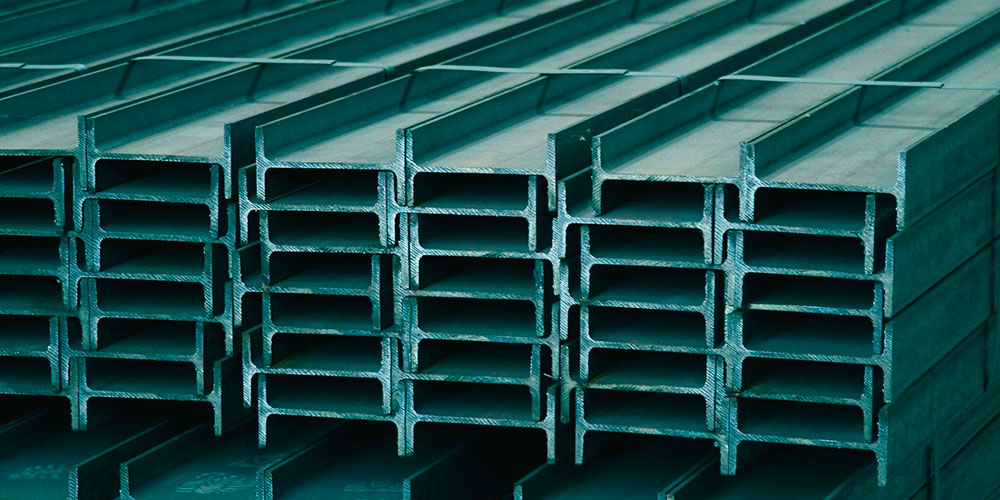
Russian steelmakers association Russkaya Stal called on the government to amend the introduction of 15% duty on exports of steel and steelmaking input products from Aug. 1.
The duties should be revisited to mitigate their adverse impact on the nation’s steel industry, the association said in its statement released July 2.
Russian steel producers already have to navigate 50 external trade barriers to their exports and the duties the Russian government is imposing will make things much worse, not only for them but for the state budget too, the association said.
The rise in steel prices in the global market, along with Russian steel mills’ efficiency, boosted their profits.
Accordingly, tax payments of members of Russkaya Stal in H1 2021, estimated at Rubles 200 billion ($2.7 billion), appear twice as much as the fiscal contribution to the state budget in H1 2020.
A potential year-on-year increase in full year 2021 tax contributions from the domestic steel industry was forecast at Rubles 250 billion and the government could have used this additional revenue to beef up the budgets of state-financed metal-intensive projects. However, the duties that will be effect in August-December 2021 will not let this expectations of extra earnings and payments materialize, according to Russkaya Stal.
Under the new tax, the association does not rule out 1 million-2.5 million mt reduction in mining and steel companies’ exports, which will equate to Rubles 150 billion-180 billion losses for the producers and to Rubles 30 billion-51 billion shortfalls in tax payments to the state budget.
The duties will also cover exports of commodities, the consumption of which is minimal in Russia — steel billets, pig iron and direct reduced iron.
The manufacturers for whom these products make up the bulk of output will be facing the risk of significant financial underperformance and production decline, said Russkaya Stal.
For the whole industry, the decline in output may total 1 million-2.5 million mt this year as a result of the duties, the association estimated.
Maintaining export volumes is in Russia’s best interests given that its own steel demand cannot absorb the volumes that the new fee will prevent from leaving the country.
Domestic annual consumption of rolled steel did not exceed 46 million mt even in the best years since 2000, while the country’s average annual production stands at 65 million mt with the steelmaking capacity being even larger at 86 million mt/year, according to Russkaya Stal.
— Ekaterina Bouckley


India HRC volumes awaiting clearance more than twice as big as country-specific quota: EC data
Indian hot-rolled coil import volumes awaiting allocation at European ports are more than double the amount of the country-specific quota that was given by the European Commission, according to EC data July 2.
With the fresh quota period now in full swing from July 1 until Sept. 30, 381,699 mt of Indian HRC is awaiting allocation at European ports – more than double the initial quota tally of 169,717mt.
The volume awaiting allocation for hot-dipped galvanized coil from India in category 4A was also almost 57% of the quota balance of 49,638 mt.
“Lots of people bought Indian material because they needed it not because the price was particularly attractive,” said one German stockholder.
The European Commission’s decision to extend import safeguard measures by three more years and increase allowances by 3% was met with criticism from buyers heavily reliant on imports, particularly in Italy. Following the exhaustion of quotas, a 25% duty applies.
“EU mills won’t be able to offer all the products we need, this year has been an awful year about their service with unbelievable delays,” an Italy-based service center source said. “We are really worried for the next few months.”
Since the end of last year, shortages across the coils market have been rampant, with buy and sell-side players clashing over weekly price increases and depleting stocks.
Import effect on Italian domestic prices
After the news of the European Commission’s decision to extend the safeguards, import material booked in April and May has now entered the marketplace, eliciting a temporary bearish effect on Italian HRC prices.
“Some bids for lots of 5,000 mt plus are as low as Eur1050/mt ex-works Italy, justified by huge availability of import offers from everywhere and signals from Asia,” an Italy-based mill source said.
“A lot of Indian material will be released in July with new quotas, and it has been booked well under Eur900/mt CIF Italy ports,” the same source said. “And now big buyers are getting Eur950-1,000/mt CIF Italy ports for new offers, October arrival.”
Some sources suggested that Indian imports will continue to be attractive even with a 25% duty if European prices remain elevated.
For Turkey, the new HRC quota is 330,388 mt and 47,038 mt is awaiting volume allocation. For Russia, the quota tally stands at 416,848 mt, with 8,686 mt awaiting custom clearance.
For rebar among long products, over 86% Turkish quota totaling 61,938 mt, and 46% of Russia’s total quota of 59,963 mt, is awaiting allocation at ports.
For wire rod, around 80% of the total quota volume of 82,910 mt for Russia is awaiting allocation.
— Laura Varriale, Amanda Flint, Rabia Arif
Price surges could stop German construction
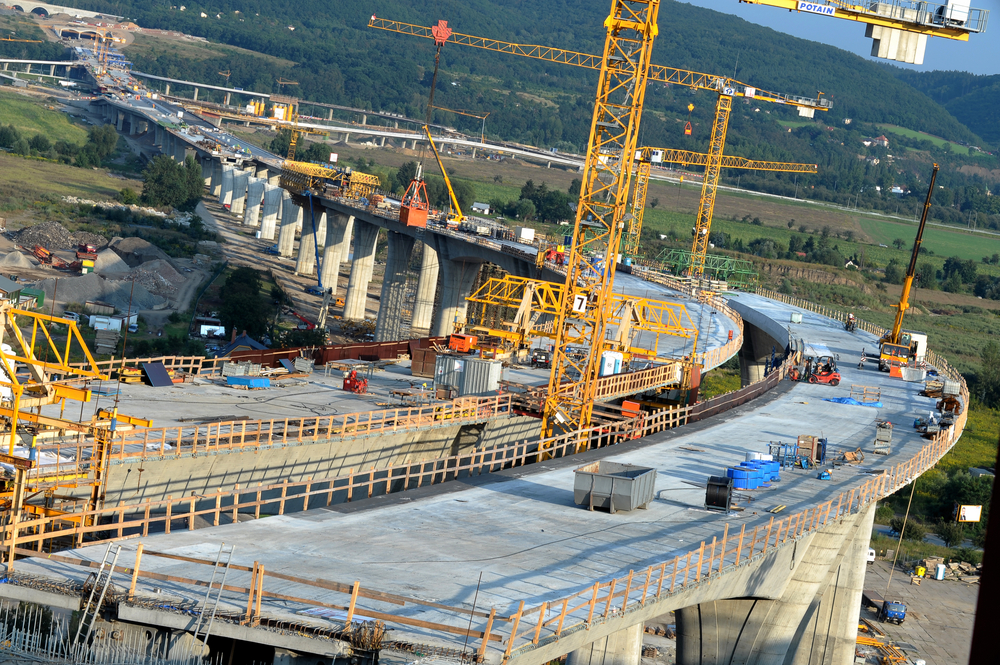
The continuous increase in prices and shortages of steel are paralysing large parts of the construction industry in Germany and Austria, and threatening to bring a halt to the local boom of recent years.
According to the most recent figures from German construction association Hauptverband der Deutschen Bauindustrie, order intake in April was 7% higher than in April 2020, a month much affected by the first Covid-19 wave. In the same time span, however, costs for materials like rebar, bitumen and wood have risen by 50%, the association points out.
According to Kallanish’s price series, delivered prices for rebar from mill to distributor in April 2020 were around €500/tonne ($592), and in April 2021 at €680. At present, they are peaking at €850. “The risk of the cost increases is all with the construction companies, unless they have included escalator clauses in their contracts,” the association notes.
But escalator clauses are just what construction companies normally do not like, according to an Austrian rebar bender’s manager. “They do not want to include them, and suppliers usually have to accept that if we want to secure an order,” he tells Kallanish.
The consequence is now that construction firms have to take much more drastic measures to save the day. According to a stockholder of plate in Germany, many contractors are returning orders from building developers. “I know of one in the Hanover region who offers its customers up to €20,000 if they step back from an existing contract,” he observes. He furthermore tells of cases where public construction plans were postponed because of Covid-19 and are still sitting on the calculation basis of September last year.
In May, 40% of Germany’s construction companies reported delays in performance due to material shortage, after 19% in April. “As a consequence, expectations for business in the next six months have turned negative,” Hauptverband says.
Christian Koehl Germany

Revista InfoAcero Junio 2021
En el siguiente enlace pueden acceder a la edición de Junio de nuestra revista: INFOACERO JUNIO 2021
A continuación destacamos algunos de sus contenidos:
- Opinión – D. Josep Arimany– Junta Directiva de la UAHE.
- Evolución del Índice de Precios de Productos Siderúrgicos – UAHE
- Información Asociativa: conferencias UAHE en julio- “Perspectivas en el sector siderúrgico ¿seguirá la incertidumbre? “
- Construcción: Previsiones para el sector de la construcción Europa y España 2021-22. Sumario del informe Euroconstruct Junio 2021.

NLMK starts building 64,000 mt/year Indian steel processing plant
Russian mining and steel company NLMK started construction work on its first steel processing plant in India, the company said July 1.
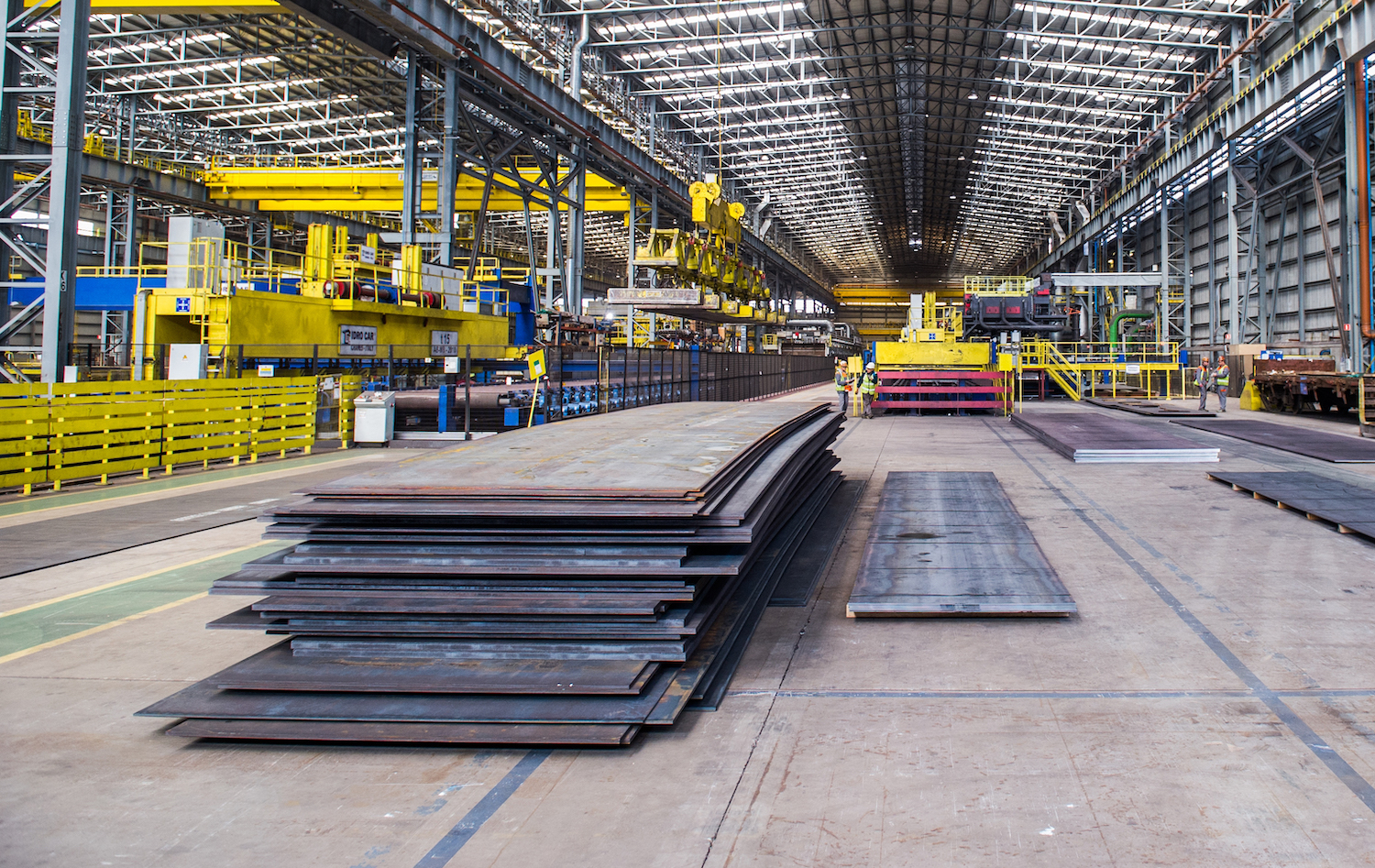
The grain-oriented, or transformer, steel plant in the western state of Maharashtra is expected to come online in the first half of 2022 and will have a capacity to produce 64,000 mt/year of premium cold-rolled grain-oriented steel products.
The plant will process coils shipped by NLMK from its Russian mills, and will become India’s second grain-oriented electrical steel producer after Thyssenkrupp Electrical Steel India.
The launch of captive production will enable NLMK to expand its presence on the Indian grain-oriented steel market, where it currently has a 25% share, the company said.
Over January-March, NLMK sold 67,000 mt of transformer steel with 85% of this being exported. India is the biggest market for NLMK’s transformer steel business.
NLMK is investing $100 million-$150 million to localize the finishing stages of grain-oriented electrical steel production in India, applying electrically insulated coating, straightening by annealing, cutting, and laser treatment of finished products.
— Ekaterina Bouckley