


European Commission corrects safeguard volumes allocation error
The European Commission issued on Monday a statement explaining that there was a “clerical error” in the document confirming safeguard measures beyond 30 June.
The original mistake was related to the allocation of tariff-free volumes for metallic coated sheets, both for the 4A and 4B sub-groups.
“Whereas the total tariff rate quotas (‘TRQs’) for category 4 was correct, the splits between categories 4A and 4B, as well as, between country-specific and residual TRQs were not correct,” the Commission says in a note seen by Kallanish. The issue has now been solved with the publication of an amended document.
EU steel safeguard measures were confirmed for a further three years from 1 July. The metallic coated sheet TRQ continues to be divided into two categories, with 4B volumes specifically allocated for material imported to be used in the automotive sector.
Emanuele Norsa Italy

Sheet passes $1,800 in US
In a pattern that has become all-too familiar since late 2020, US sheet pricing has reached another record high, Kallanish reports.
Kallanish puts hot rolled coil at $1,800-1,820/short ton, with cold rolled at $2,000-2,050/st. All prices are ex-works, domestic mill.
Market players reacted with shock and awe at current pricing levels – and there is still more growth to come, many opine.
“We have heard lately that mills expect hot rolled coil to continue to increase, passing the $2,000/st figure through the summer,” says a Gulf Coast tubular buyer. “Ouch. Remember – the higher the climb, the bigger the fall.”
There’s little-to-no relief in sight from the traditionally lower mini-mill sector, as both integrated mills and minis are sticking to the $1,800/st price point, says a Midwest buyer.
Even on the West Coast – which is forced to contend with import pressure from Asia – prices are wildly elevated. A buyer there puts local prices at $1,820/st, “which is crazy, but true”.
Dan Hilliard USA
EU hollow sections quotas come under pressure
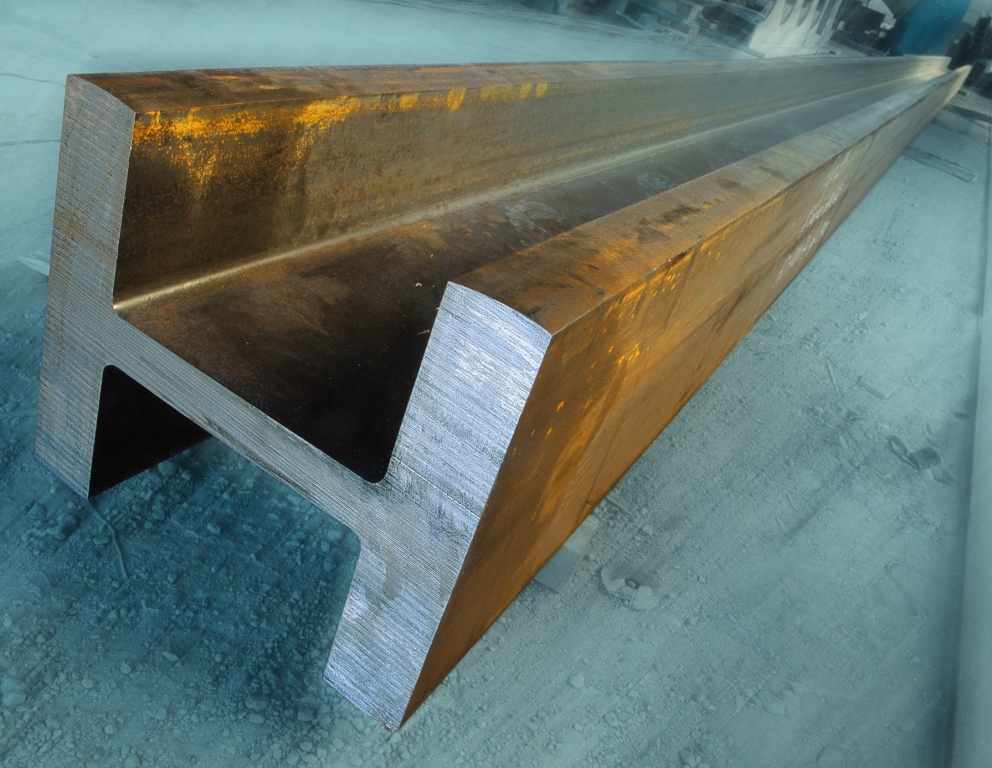
EU hollow sections tariff-free quotas for the third quarter have come under pressure in a matter of days from their becoming available, Kallanish learns from the official system of the European Commission.
Russian quotas were fully exhausted as they became available on 1 July. For Turkey the volumes of products waiting at the docks were 162% of the allocated 70,000 tonnes, meaning importers will now be forced to pay a share of the 25% import tax applicable beyond the tariff-free allowance.
Overall, over 70% of the hollow sections tariff-free quotas have been used, the highest percentage of all categories.
Emanuele Norsa Italy

Blast furnace restarts boost iron ore, scrap lags
Seaborne iron ore prices rebounded on Monday as blast furnaces have been resuming production following recent restrictions. Scrap prices, however, were weaker as mills are under less pressure to maximise output amid weak demand.
The Kallanish KORE 62% Fe index gained $2.65/t to $217.52/dry metric tonne cfr Qingdao, the highest level since 15 June. The Kallanish KORE 65% Fe index increased $2.96/t to $249.73/dmt cfr, and the KORE 58% Fe index inched $0.54/t higher to $184.10/dmt cfr.
On the Dalian Commodity Exchange September iron ore settled up CNY 36/t at CNY 1,197/t ($185.22/t), while on the Singapore Exchange August 62% Fe futures settled up $5.02/t at $208.73/t. The same contract for 65% Fe and 58% Fe futures settled up $5.53/t at $240.64/t, and up $0.94/t at $174.03/t respectively.
Scrap prices however have not been supported by the upturn. 6mm+ heavy scrap delivered to mills in the Yangtze River Delta slipped CNY 5/t over the weekend to CNY 3,728/t. In Tangshan, billet prices increase CNY 20/t on Monday to CNY 4,890/t.
Blast furnaces which had been banked for the 100th anniversary of the Communist Party of China have begun to resume production. The end of restrictions on movement in and out of port stocks also prompted restocking on portside markets.
Weak summer steel demand however means that mills are not aiming to maximise crude steel output with additional scrap purchases. As hot metal output is less constricted, there is less need to top up volumes with higher scrap use.
Turkey becomes net steel importer over Jan-May; new capacities on the way: TCUD
Turkey was a net steel importer in the first five months of 2021, though new steel capacities likely to start within the next 2-3 years are expected to limit import volumes.
According to the latest Turkish Steel Producers’ Association (TCUD) data sent to S&P Global Platts July 3, Turkish mills’ steel exports totaled 7.5 million mt in January-May, up 17.4% on the year, mostly on base effect, while the revenue generated from these exports rose by 58.4% to $5.2 billion, amid higher steel pricing globally.
Turkey’s overall steel imports in the first five months of the year saw a sharper rise, by 49.4% on the year to 7 million mt, while the cost of these imports reached $5.5 billion, up by 88.1% on the year.
Turkey’s steel export/import ratio in January-May, thus fell to 94:100, from 112:100 in the same period of the previous year, according to TCUD data.
TCUD said global protection measures, particularly by the EU and the US, were affecting global trade activities and Turkish mills’ steel export volumes.
“For to avert the foreign trade deficit, Turkish steel industry accelerated the works to create new steel capacities,” TCUD said.
Turkish steel producers have announced new steel mill and capacity increase projects one after another in recent months, especially in flat steel production.
Flat steel production capacity in Turkey is expected to rise 6 million-8 million mt in the coming 2-3 years with new investments, which are expected to ease shortages in the Turkish market and to decrease import volumes.
Major Turkish steelmaker, Tosyali Demir Celik, has been continuing construction works on its new 3.5 million mt/year integrated hot-rolled coil mill investment. The new mill is scheduled to be commissioned by the end of 2022.
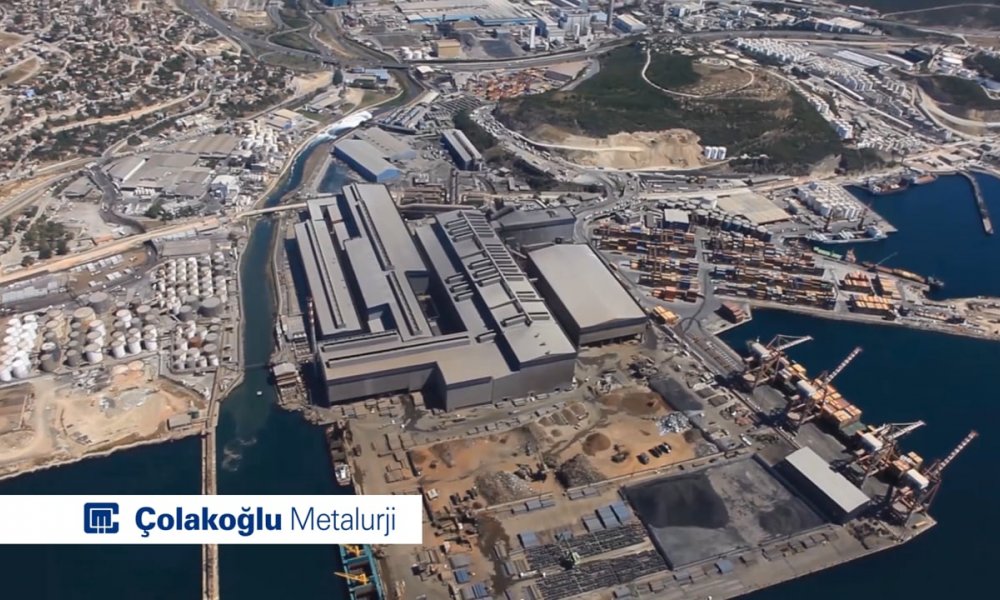
Turkey’s other major steelmakers, Colakoglu and Habas, are also continuing technical works at their projects to increase capacity.
Russian steel company MMK, which decided to restart the hot end of its Turkish coil making subsidiary MMK Metalurji, is expected to produce its first hot-rolled coil by end-July. The company, which is targeting entering the market gradually, is continuing commissioning works successfully, Platts learned from an informed source at the end of last week.
MMK Metalurji’s casting and rolling module comprises an electric arc furnace and a compact hot strip mill with an overall capacity of 2.3 million mt/year, which has been idle since November 2012.
Some Turkish long steel producers also have started investing to raise their capacities and to expand their product ranges, which are expected to support Turkey’s export volumes and unit prices in the coming few years.
— Cenk Can
